
Viperidae
Gloydius variegatus
VenomousThis species has no widely used English common name.
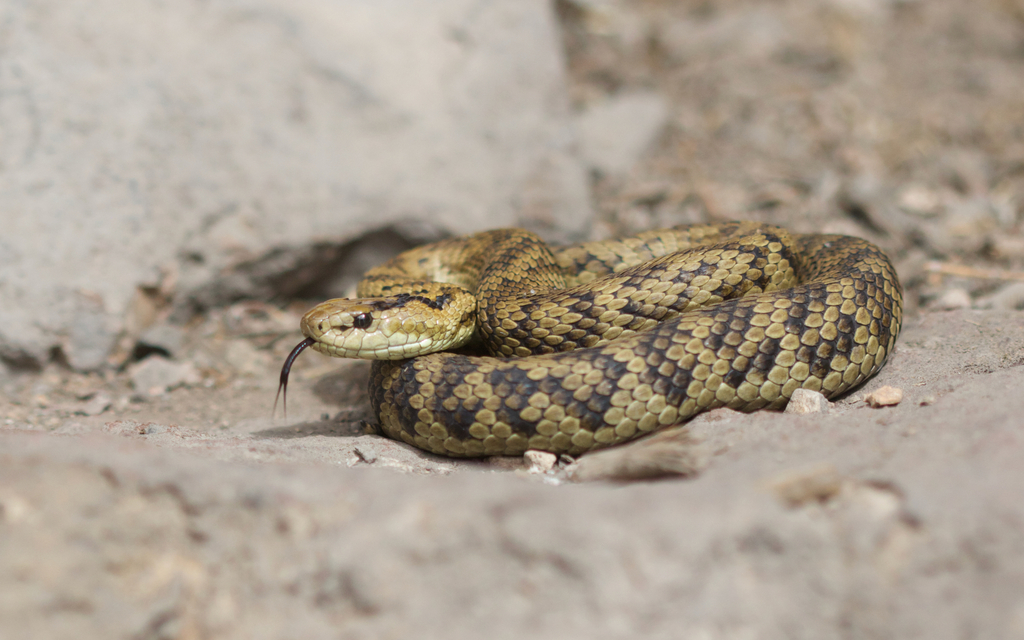
Gloydius variegatus is a venomous snake in the Viperidae family, recorded in 19 countries.
Gloydius variegatus is a small, stout pit viper from Central and East Asia, with verified records from Korea, China, Japan and the Russian Far East west through Kazakhstan, Mongolia and Central Asia. It is venomous and its bite is a medical emergency.
- Family
- Viperidae
- Danger
- high
How to identify the Gloydius variegatus
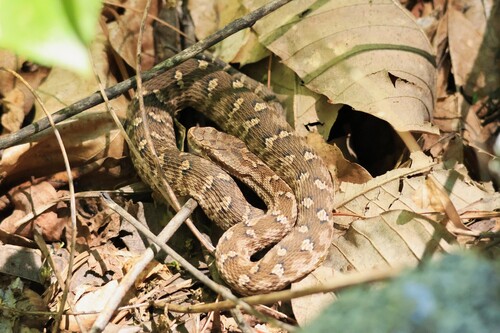
Look for a short, thick-bodied snake with a broad, triangular head, a heat-sensing pit between the eye and nostril, and dark blotches or bands on a brown or gray body.
- Head
- The head is broad and triangular and clearly wider than the narrow neck.
- Facial pit
- There is a small pit on each side of the face between the eye and the nostril, which marks it as a pit viper.
- Eyes
- The pupils are vertical slits, and a dark stripe often runs back from the eye toward the jaw.
- Pattern
- Its brown, gray or tan body carries darker blotches or crossbands down the back, sometimes paired or offset.
- Build
- It is a short, heavy-bodied snake, not long and slender like the ratsnakes that share its range.
- Tail
- The tail is short and tapers abruptly behind the vent.
Have a photo? Identify it from your photo and location.
Is the Gloydius variegatus dangerous?
Dangerous: needs emergency care
Its venom is medically significant, and bites cause pain and swelling and can lead to serious illness without prompt treatment. Most bites happen when people step on or reach toward a snake they have not seen.
If bitten: Stay calm, keep the bitten limb still and roughly level with the heart, remove rings and tight clothing, and call your local emergency number or poison center for emergency care at once. Do not apply a tourniquet, cut the wound, suck out venom, or use ice.
If you find one
- Step back slowly and give the snake several body lengths of space.
- Keep children and pets away and never try to pick it up, move it or kill it.
- Watch where you put your hands and feet around rocks, woodpiles and tall grass, and call local wildlife or animal control if it is inside a building.
Habitat and behavior
- Habitat
- It lives in open and rocky country across its range, including steppe, grassland, scrub, hillsides and forest edges. It also turns up near fields, stone walls and rural buildings where rodents are common.
- Behavior
- It usually relies on camouflage and stays still when approached, so it is easy to step near without noticing. If disturbed or cornered it may coil, vibrate its tail and strike quickly.
- Diet
- It feeds mainly on small mammals, along with lizards, frogs and other small animals.
- When active
- It is active in the warmer months and hibernates through winter, often basking in the day during cool weather and moving more at dusk and night in summer.
Local and regional names
The Gloydius variegatus is known by these names across the regions where it lives:
- Chinese
- 亞洲蝮屬
- English
- Asian Ground Pitvipers, Asian Moccasins
- Japanese
- マムシ属
- Korean
- 살모사속
- Russian
- Азиатские щитомордники
Frequently asked: Gloydius variegatus
- Is Gloydius variegatus venomous?
- Yes. It is a pit viper with medically significant venom. Any bite should be treated as a medical emergency.
- How can I tell it from a harmless snake?
- Check for a heavy body, a wide triangular head, vertical pupils and a pit between the eye and nostril. Harmless ratsnakes in the same region are slimmer, with narrower heads, round pupils and no pit.
- Where is Gloydius variegatus found?
- Verified records span much of Central and East Asia, including Korea, China, Japan, Russia, Kazakhstan, Mongolia and several Central Asian countries. It favors open, rocky and grassy habitats.
- Is it aggressive?
- Not usually. It prefers to stay still or slip away, and it bites mainly when stepped on, grabbed or cornered.
- Is the Gloydius variegatus venomous?
- Yes. The Gloydius variegatus is venomous and belongs to the Viperidae family (viper). Its bite is considered high risk to people. Treat any bite as a medical emergency.
- Is the Gloydius variegatus poisonous?
- Snakes are venomous, not poisonous. "Poisonous" means harmful to eat or touch; "venomous" means injecting toxins through a bite. The Gloydius variegatus is venomous, delivering venom through a bite.
- Is the Gloydius variegatus dangerous?
- This is a venomous snake. Treat any bite as a medical emergency: stay calm, keep the bitten limb still and roughly level with the heart, remove rings and tight clothing, and get to emergency care immediately. Do not apply a tourniquet, cut the wound, apply ice, or try to suck out venom. Call your local emergency number or poison center.
If you are bitten by the Gloydius variegatus
Do
- Get away from the snake and stay calm. Most bites worsen when people panic or try again to handle the snake.
- Call 911 or Poison Control (1-800-222-1222) right away. Antivenom works best when given early.
- Note the time of the bite and, from a safe distance, the snake's color and pattern, a phone photo is enough. Do not chase it.
- Keep the bitten limb still and at roughly heart level. Sit or lie down and limit movement.
- Remove rings, watches, and tight clothing near the bite before swelling starts.
- Gently wash the bite with soap and water and cover it with a clean, dry dressing.
Do not
- Do not cut the wound or try to suck out the venom.
- Do not apply a tourniquet or ice.
- Do not drink alcohol or caffeine.
- Do not take aspirin or ibuprofen, they can worsen bleeding. Acetaminophen is safer for pain.
- Do not try to catch or kill the snake. A dead snake can still bite by reflex.
First-aid guidance adapted from the U.S. Centers for Disease Control and Prevention (CDC NIOSH), Venomous Snakes. Educational only; always follow the instructions of emergency responders.
Where it is found
More Viperidae snakes
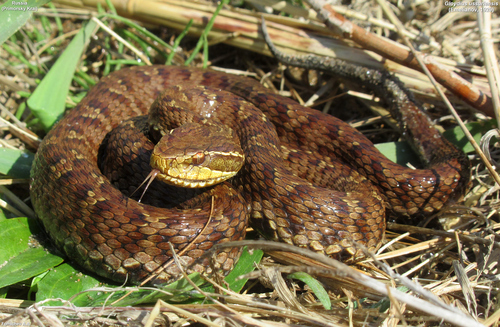 Ussuri MamushiGloydius ussuriensis
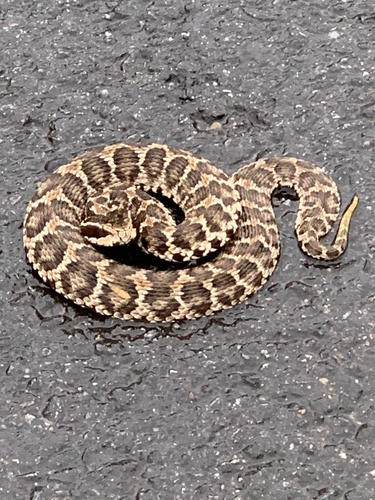 Short-tailed MamushiGloydius brevicaudus
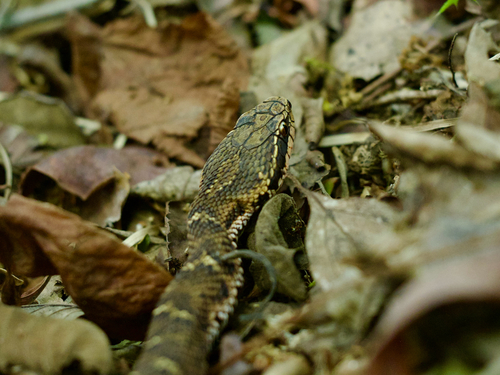 Short-tailed MamushiGloydius blomhoffii
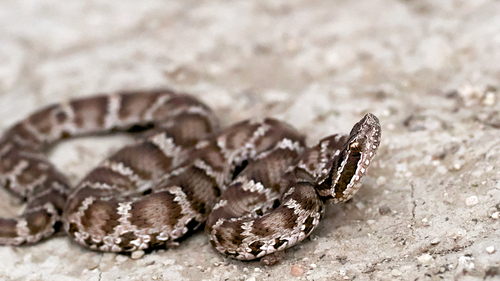 Halys Pit ViperGloydius halys
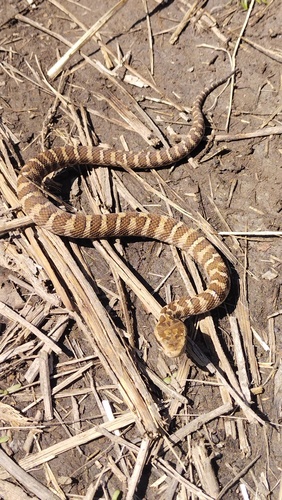 Central Asian PitviperGloydius intermedius
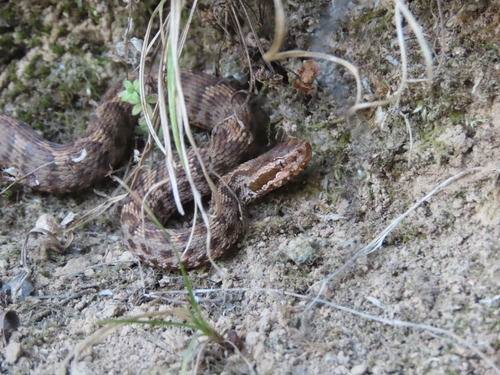 Himalayan PitviperGloydius himalayanus
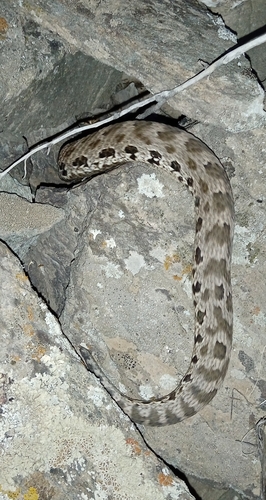 Karaganda pitviperGloydius caraganus
 Gloydius changdaoensisGloydius changdaoensis
Classification
How scientists group this snake, from the broadest category down to the exact species. Each step narrows to its closest relatives.
Keep learning
- Are Snakes Dangerous? The Real Risk, in PerspectiveMost snakes are harmless and avoid people. Here is the honest picture of snakebite risk worldwide and how to lower your own.
- Snakebite First Aid: What to Do (and What Never to Do)A clear, CDC-based guide to snakebite first aid: the steps that help, the popular myths that hurt, and how to tell a serious bite from a minor one.
- Venomous vs Nonvenomous: How to Tell the DifferenceThe folk rules for telling venomous snakes apart, where each one fails, and why location-based identification beats guessing by sight.
- What to Do If You Find a SnakeFound a snake at home or on a trail? Here is how to stay calm, give it space, identify it safely, and know when to call a professional.
Distribution from GBIF & iNaturalist. Venom status per CDC. Informational only. Never handle a snake to identify it.