
Viperidae
Short-tailed Mamushi
VenomousGloydius blomhoffii
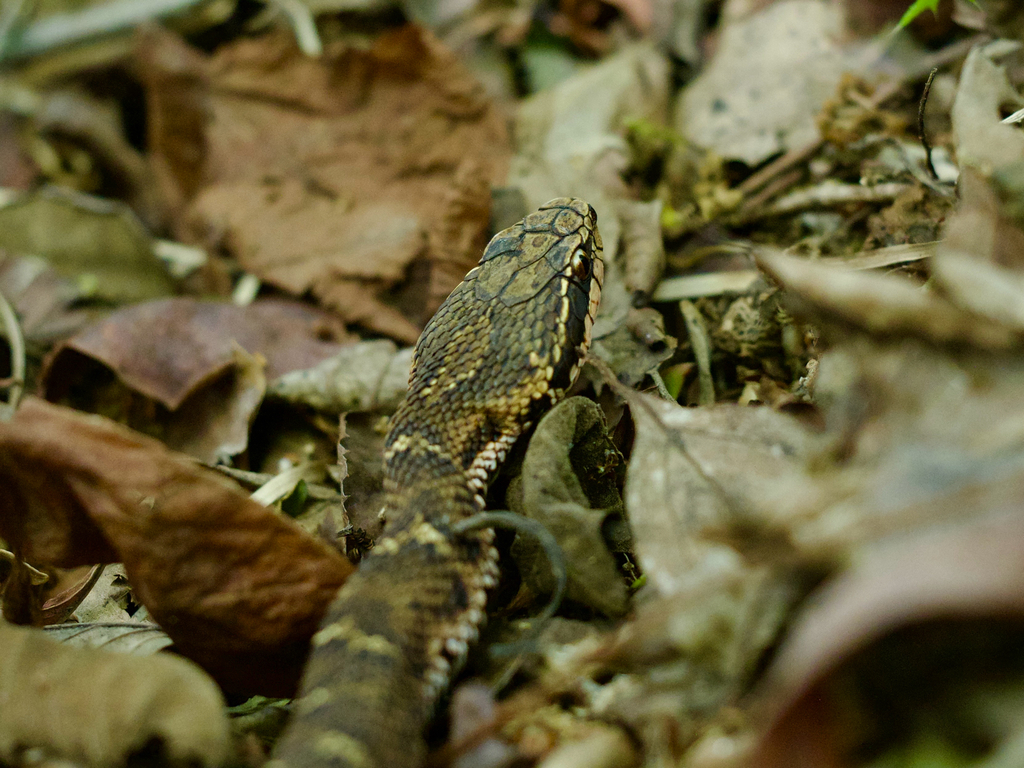
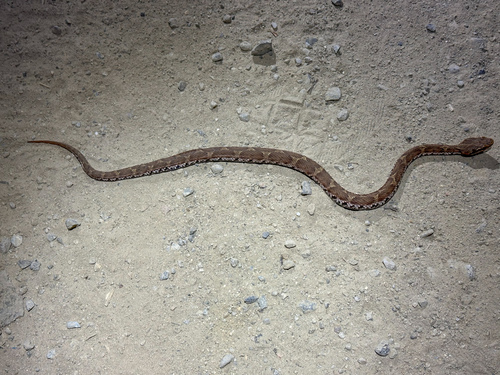
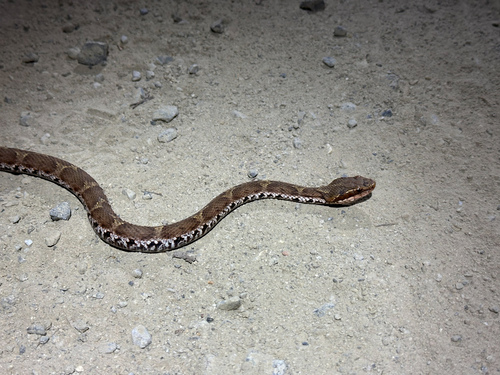
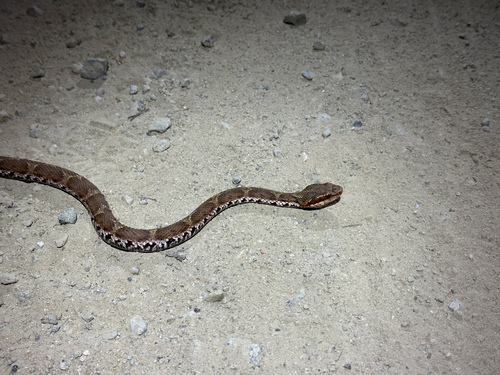
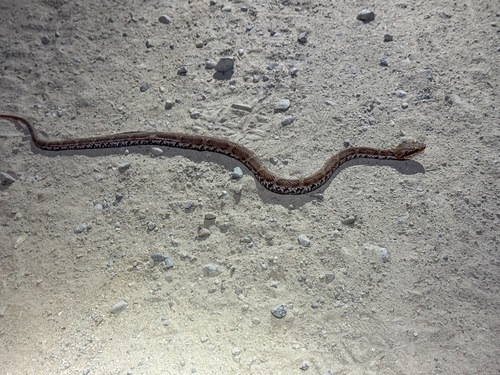
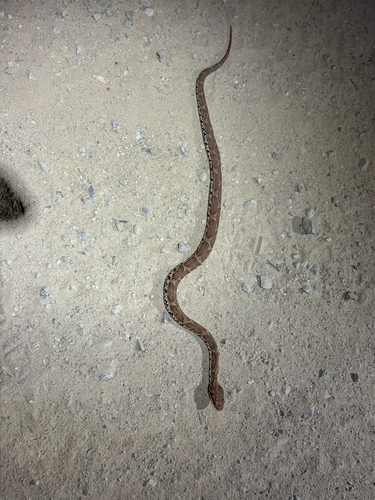
6 photographs of the Short-tailed Mamushi. © りなべる.
The Short-tailed Mamushi (Gloydius blomhoffii) is a venomous snake in the Viperidae family, recorded in 4 countries.
If you are bitten
This is a venomous snake. Treat any bite as a medical emergency: stay calm, keep the bitten limb still and roughly level with the heart, remove rings and tight clothing, and get to emergency care immediately. Do not apply a tourniquet, cut the wound, apply ice, or try to suck out venom. Call your local emergency number or poison center.
- Family
- Viperidae
- Danger
- high
About the Short-tailed Mamushi
Gloydius blomhoffii, commonly known as the mamushi, Japanese moccasin, Japanese pit viper, Qichun snake, Salmusa or Japanese mamushi, is a pit viper species found in Japan. It was once considered to have 4 subspecies, but it is now considered monotypic.
This species, along with the yamakagashi (Rhabdophis tigrinus) and the Okinawan habu (Protobothrops flavoviridis), are the most venomous snakes in Japan. Every year, 2000–3000 people in Japan are bitten by a mamushi. Bitten victims typically require one week of treatment in a hospital. Severe bites require intensive care, and approximately 10 victims die annually.
Etymology
The specific name, blomhoffii, is in honor of Jan Cock Blomhoff, who was director of the Dutch trading colony in Nagasaki, Japan from 1817 to 1824.
Description
The average length of mature individuals is 45–81 cm (17+3⁄4-31+7⁄8 inches); the longest specimen ever recorded had a length of 91 cm (36 in).
The body pattern consists of a pale gray, reddish-brown, or yellow-brown background, overlaid with a series of irregularly-shaped lateral blotches. These blotches are bordered with black and often have lighter centers. The head is dark brown or black, with beige or pale-gray sides.
Common names
The common name in English is mamushi, or Japanese mamushi. The common name in Japanese is mamushi (蝮). In Korea, it is known as Korean: 살무사; RR: salmusa or Korean: 살모사; RR: salmosa. In China, it is known as the Qichun snake (七寸子) or soil snake/viper (土巴蛇、土蝮蛇、土夫蛇、土公蛇).
Geographic range
It is found in Japan. According to Gloyd and Conant, there is no evidence to support claims that this species occurs in the Ryukyu Islands. The type locality given is "Japan".
Habitat
It occurs in a range of habitats, including swamps, marshes, meadows, open woodland, rocky hillsides, and montane rock outcroppings.
Diet
It is typically an ambush predator that uses its excellent camouflage to hide itself in vegetation or leaf litter. It hunts and eats mainly rodents, but also small birds, lizards, and insects. It is often found in and around farmland due to the associated rodent populations.
Venom
Characteristics
The venom of this species varies very little in Japan in terms of both its potency and its effects. According to Yoshimitsu (2005), this species and the Okinawan habu (Protobothrops flavoviridis), another pit viper, are the most venomous snakes in Japan. The venom's lethality as measured by LD50 in mice following intraperitoneal injection is in the range 0.3 mg/kg to 1.22 mg/kg. The venom mostly contains haemolytic toxins, but it also has two neurotoxins—an alpha-toxin that is a post-synaptic inhibitor and a beta-toxin that is a pre-synaptic inhibitor. Because the beta-toxin acts pre-synaptically, its effects cannot be blocked or treated by anticholinesterases. The venom contains an anticoagulant, mamushi L-amino-acid oxidase (M-LAO). It also contains the peptide ablomin which is highly similar in amino acid sequence to that of the venom, helothermine, of the Mexican beaded lizard (Heloderma horridum).
Treatments for envenomations
Adapted from Wikipedia, available under CC BY-SA.
Local and regional names
The Short-tailed Mamushi is known by these names across the regions where it lives:
- Chinese
- 日本蝮, 日本蝮蛇
- Czech
- ploskolebec východní
- Danish
- Japansk Mamushi
- English
- Mamushi
- German
- Japanische Mamushi, Mamushi
- Hungarian
- mamusi vipera
- Japanese
- ニホンマムシ
- Korean
- 살무사, 일본살모사
- Polish
- mokasyn wschodni
- Russian
- Восточный щитомордник
- Spanish
- Mamushi de Blomhoff
Frequently asked: Short-tailed Mamushi
- Is the Short-tailed Mamushi venomous?
- Yes. The Short-tailed Mamushi (Gloydius blomhoffii) is venomous and belongs to the Viperidae family (viper). Its bite is considered high risk to people. Treat any bite as a medical emergency.
- Is the Short-tailed Mamushi poisonous?
- Snakes are venomous, not poisonous. "Poisonous" means harmful to eat or touch; "venomous" means injecting toxins through a bite. The Short-tailed Mamushi is venomous, delivering venom through a bite.
- Is the Short-tailed Mamushi dangerous?
- This is a venomous snake. Treat any bite as a medical emergency: stay calm, keep the bitten limb still and roughly level with the heart, remove rings and tight clothing, and get to emergency care immediately. Do not apply a tourniquet, cut the wound, apply ice, or try to suck out venom. Call your local emergency number or poison center.
- Where does the Short-tailed Mamushi live?
- The Short-tailed Mamushi has verified records in 4 countries, including Japan, China, Korea, Republic of. See the distribution section below for its full range.
- What does the Short-tailed Mamushi eat?
- It is typically an ambush predator that uses its excellent camouflage to hide itself in vegetation or leaf litter. It hunts and eats mainly rodents, but also small birds, lizards, and insects. It is often found in and around farmland due to the associated rodent populations.
- Why is it called the Short-tailed Mamushi?
- The specific name, blomhoffii, is in honor of Jan Cock Blomhoff, who was director of the Dutch trading colony in Nagasaki, Japan from 1817 to 1824.
If you are bitten by the Short-tailed Mamushi
Do
- Get away from the snake and stay calm. Most bites worsen when people panic or try again to handle the snake.
- Call 911 or Poison Control (1-800-222-1222) right away. Antivenom works best when given early.
- Note the time of the bite and, from a safe distance, the snake's color and pattern, a phone photo is enough. Do not chase it.
- Keep the bitten limb still and at roughly heart level. Sit or lie down and limit movement.
- Remove rings, watches, and tight clothing near the bite before swelling starts.
- Gently wash the bite with soap and water and cover it with a clean, dry dressing.
Do not
- Do not cut the wound or try to suck out the venom.
- Do not apply a tourniquet or ice.
- Do not drink alcohol or caffeine.
- Do not take aspirin or ibuprofen, they can worsen bleeding. Acetaminophen is safer for pain.
- Do not try to catch or kill the snake. A dead snake can still bite by reflex.
First-aid guidance adapted from the U.S. Centers for Disease Control and Prevention (CDC NIOSH), Venomous Snakes. Educational only; always follow the instructions of emergency responders.
Where it is found
More Viperidae snakes
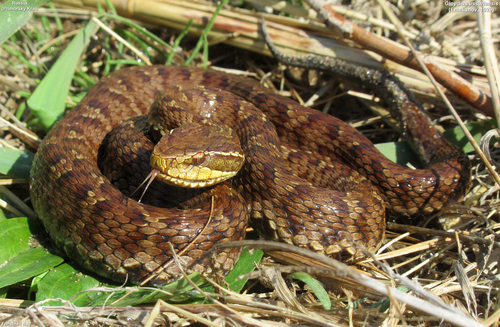 Ussuri MamushiGloydius ussuriensis
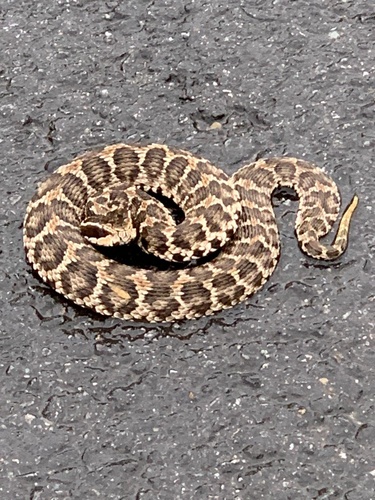 Short-tailed MamushiGloydius brevicaudus
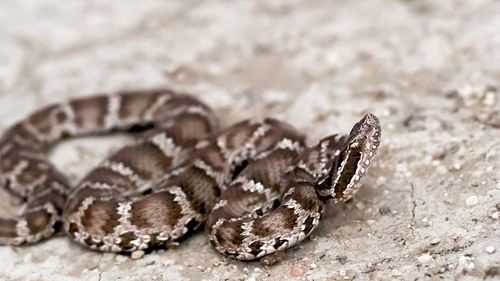 Halys Pit ViperGloydius halys
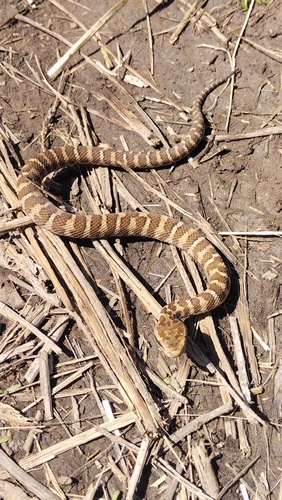 Central Asian PitviperGloydius intermedius
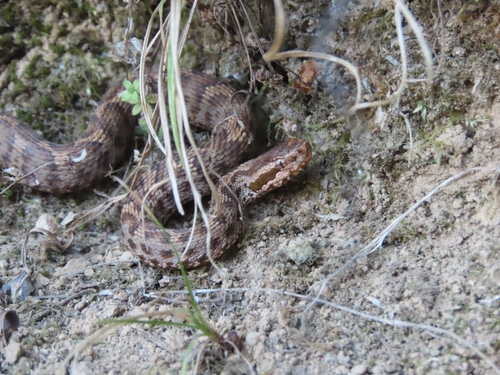 Himalayan PitviperGloydius himalayanus
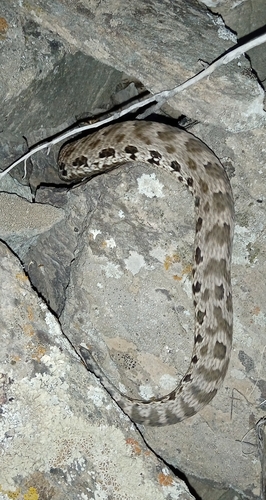 Karaganda pitviperGloydius caraganus
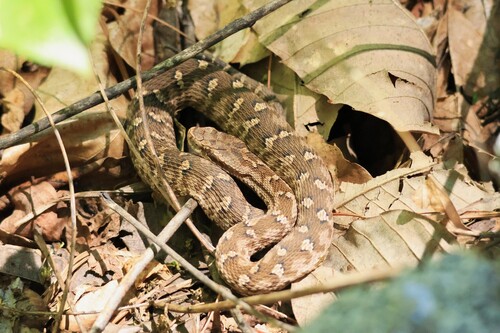 Gloydius changdaoensisGloydius changdaoensis
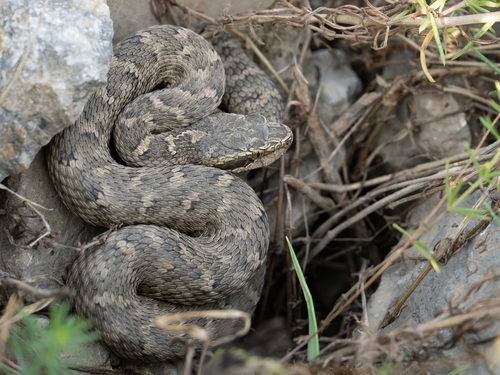 Caucasian pitviperGloydius caucasicus
Classification
How scientists group this snake, from the broadest category down to the exact species. Each step narrows to its closest relatives.
Keep learning
- Are Snakes Dangerous? The Real Risk, in PerspectiveMost snakes are harmless and avoid people. Here is the honest picture of snakebite risk worldwide and how to lower your own.
- Snakebite First Aid: What to Do (and What Never to Do)A clear, CDC-based guide to snakebite first aid: the steps that help, the popular myths that hurt, and how to tell a serious bite from a minor one.
- Venomous vs Nonvenomous: How to Tell the DifferenceThe folk rules for telling venomous snakes apart, where each one fails, and why location-based identification beats guessing by sight.
- What to Do If You Find a SnakeFound a snake at home or on a trail? Here is how to stay calm, give it space, identify it safely, and know when to call a professional.
Distribution from GBIF & iNaturalist. Venom status per CDC. Background: Wikipedia. Informational only. Never handle a snake to identify it.