
Colubridae
Red Mountain Ratsnake
HarmlessOreocryptophis porphyraceus
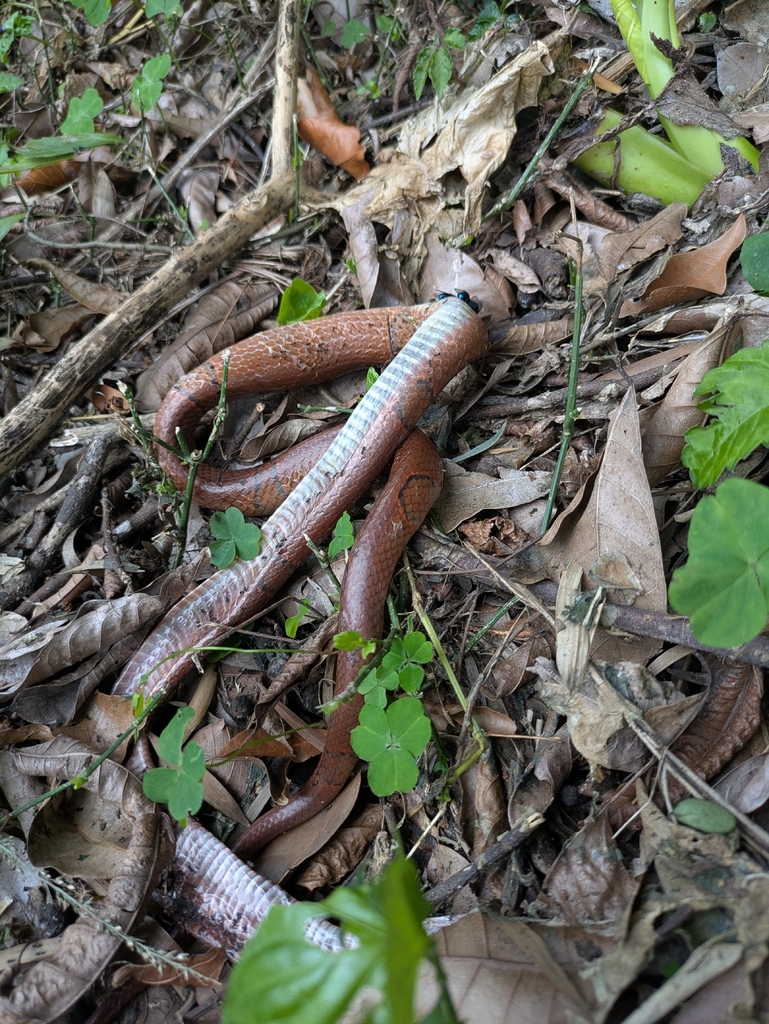
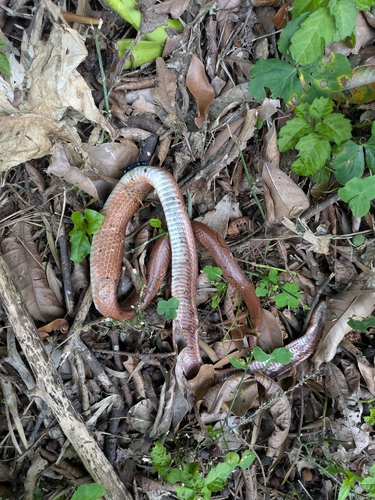
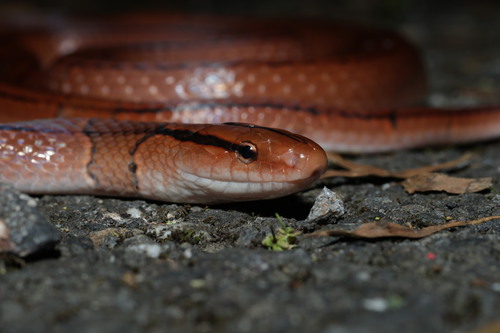
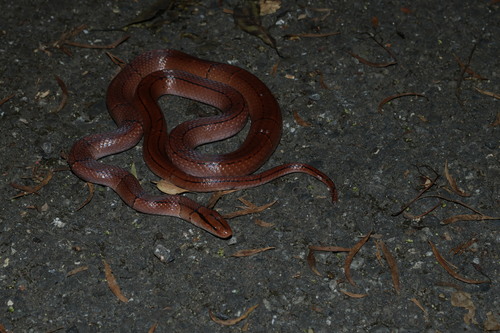
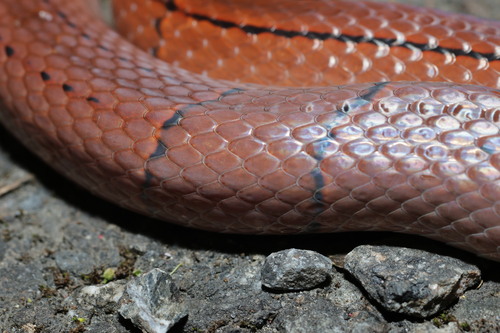
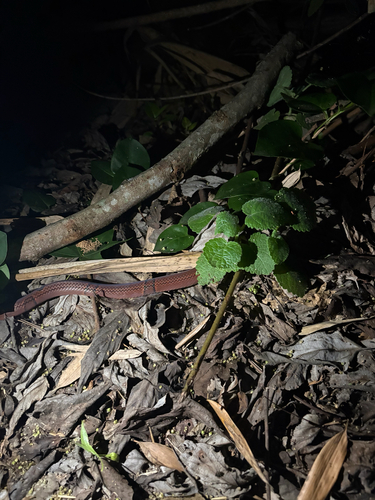
6 photographs of the Red Mountain Ratsnake. © Tzu-Neng Yuan.
The Red Mountain Ratsnake (Oreocryptophis porphyraceus) is a non-venomous snake in the Colubridae family, recorded in 17 countries.
- Family
- Colubridae
About the Red Mountain Ratsnake
Oreocryptophis porphyraceus is a rat snake species, commonly called the black-banded trinket snake, red bamboo snake, found in mid to upper-level elevations of forested hills in southeastern Asia, ranging from evergreen tropical to dry seasonal forests depending on the subspecies and locality. It is the only member of the genus Oreocryptophis, but it was formerly placed in Elaphe.
Description
The head is small, sharp and squarish, while the color pattern includes red or orange colors, along with black bands or stripes. A terrestrial species, it has a preference for cool climates that restricts its habitat to hills and mountain plateaus. It is known to be crepuscular, active during the late evenings till night and dawn till late mornings. In captivity, it is one of the most sought-after rat snake species.
Distribution
India (Darjeeling, Sikkim, Assam, Arunachal Pradesh (Miao, Namdapha - Changlang district, Itanagar - Papum Pare district), Myanmar, Bhutan, Thailand, Laos, Cambodia, Vietnam, Nepal, South China (Tibet, Sichuan, Yunnan, Hong Kong, Hainan, northward to Henan and Gansu; south to Wei He river), Taiwan, West Malaysia (Cameron Highlands, Pahang), Indonesia (Sumatra). The type locality given is "India: Assam, Mishmi [Mishmee] Hills." It is also reported from Lowachhara National Park of North-eastern Bangladesh
Habitat
These rat snakes thrive under cool and very humid conditions. On many occasions they are found at altitudes exceeding 800 meters in evergreen moist rainforest or monsoon forests, depending on the subspecies and locality. They spend most of the time hiding in leaf litter, under moss carpets, or under rocks and logs.
Diet
The diet consists primarily of rodents and other small mammals in the wild. Frogs are a possibility. In captivity, mice are accepted readily.
Subspecies
Adapted from Wikipedia, available under CC BY-SA.
Frequently asked: Red Mountain Ratsnake
- Is the Red Mountain Ratsnake venomous?
- No. The Red Mountain Ratsnake (Oreocryptophis porphyraceus) is non-venomous and is not considered dangerous to humans. Like most snakes, it will retreat rather than bite when given the chance.
- Is the Red Mountain Ratsnake poisonous?
- Snakes are venomous, not poisonous. "Poisonous" means harmful to eat or touch; "venomous" means injecting toxins through a bite. The Red Mountain Ratsnake is neither poisonous nor venomous.
- Is the Red Mountain Ratsnake dangerous?
- The Red Mountain Ratsnake is not dangerous to humans. It has no medically significant venom and bites only defensively if cornered or handled.
- Where does the Red Mountain Ratsnake live?
- The Red Mountain Ratsnake has verified records in 17 countries, including Chinese Taipei, China, Thailand. See the distribution section below for its full range.
- What does the Red Mountain Ratsnake eat?
- The diet consists primarily of rodents and other small mammals in the wild. Frogs are a possibility. In captivity, mice are accepted readily.
Where it is found
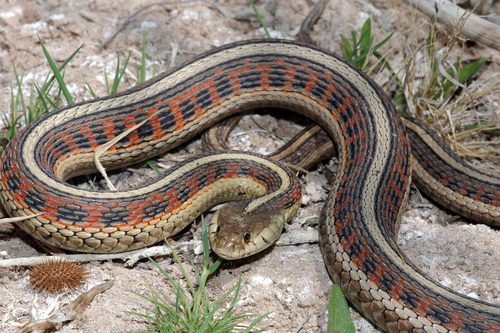
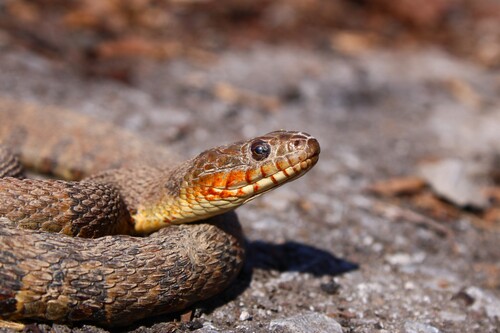
More Colubridae snakes
Classification
How scientists group this snake, from the broadest category down to the exact species. Each step narrows to its closest relatives.
- OrderThe broad group of scaled reptiles: all snakes and lizards
- Squamata
- FamilyA group of related snakes that share key traits
- Colubridae
- GenusA close-knit group of very similar species
- Oreocryptophis
- SpeciesThis exact snake, named in the two-part scientific name
- Oreocryptophis porphyraceus
Keep learning
- What to Do If You Find a SnakeFound a snake at home or on a trail? Here is how to stay calm, give it space, identify it safely, and know when to call a professional.
- Venomous vs Nonvenomous: How to Tell the DifferenceThe folk rules for telling venomous snakes apart, where each one fails, and why location-based identification beats guessing by sight.
- What Is a Snake? Anatomy and the BasicsA clear overview of what makes a snake a snake: limbless body plan, anatomy, evolution from lizards, species diversity, and why they are ectothermic.
- How to Keep Snakes Out of Your Yard and HomeA practical guide to keeping snakes out of your yard and home using habitat changes that work, plus what to skip and what to do if one shows up.
Distribution from GBIF & iNaturalist. Venom status per CDC. Background: Wikipedia. Informational only. Never handle a snake to identify it.