
Boidae
Emerald Tree Boa
HarmlessCorallus caninus
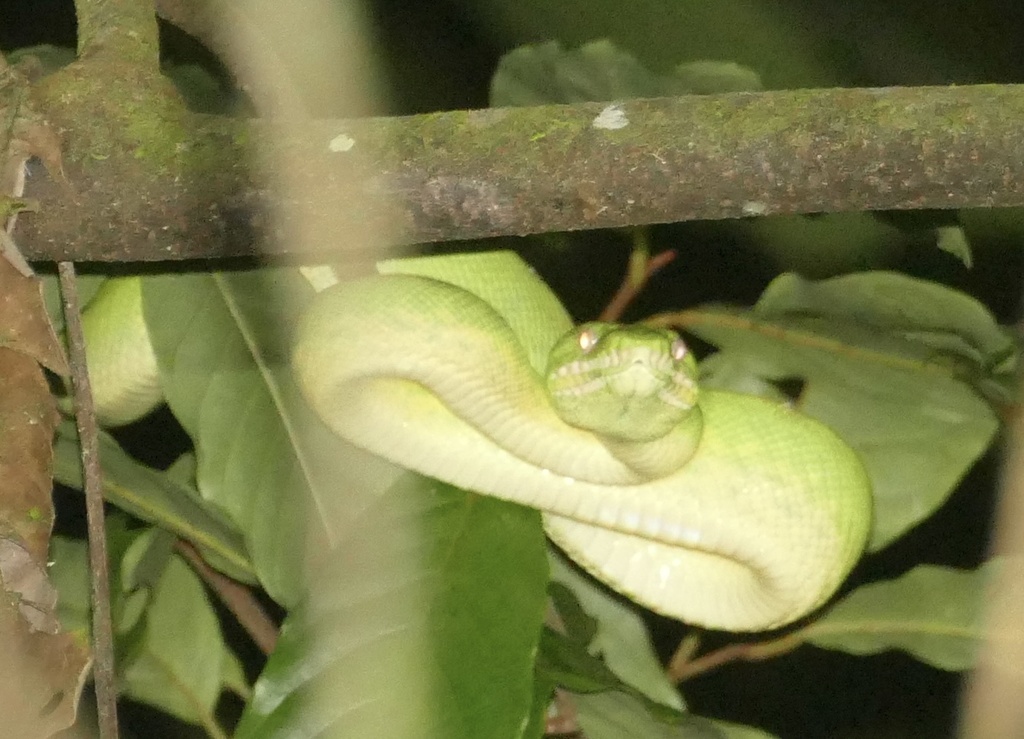
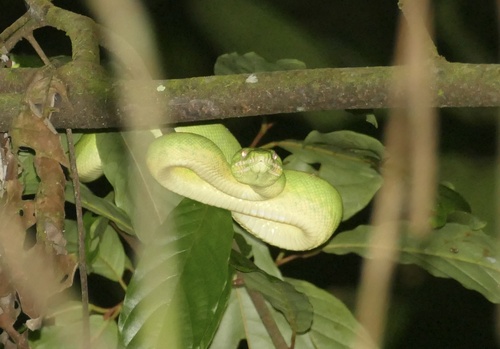
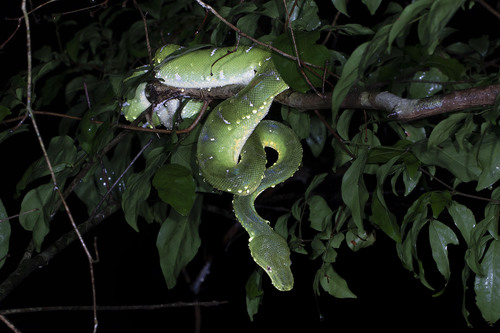
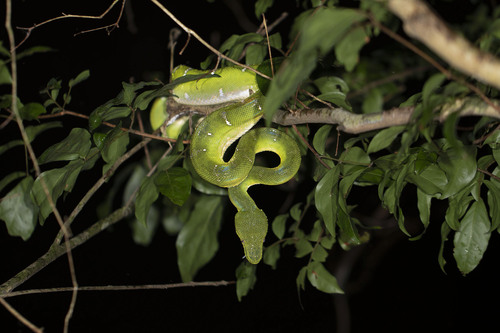
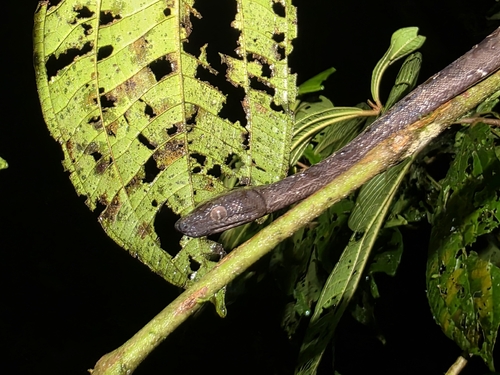
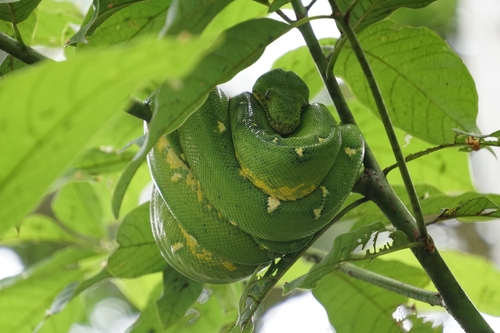
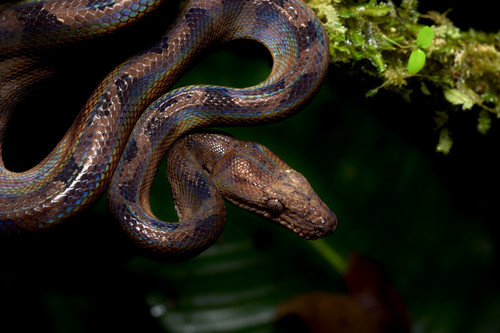
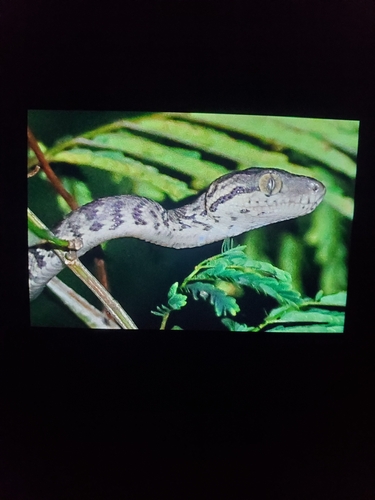
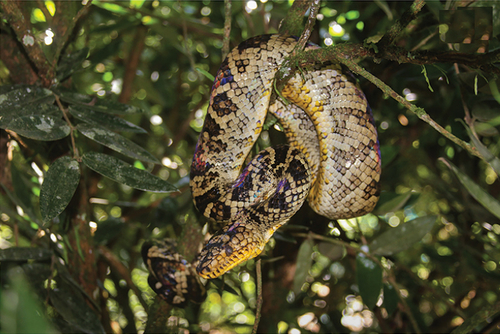
6 photographs of the Emerald Tree Boa. © Jean-Paul Boerekamps.
The Emerald Tree Boa (Corallus caninus) is a non-venomous snake in the Boidae family, recorded in 11 countries.
- Family
- Boidae
About the Emerald Tree Boa
The emerald tree boa (Corallus caninus) is a boa species found in the rainforests of South America. Since 2009, the species Corallus batesii has been distinguished from the emerald tree boa. Like all other boas, it is nonvenomous. Trade of the species is controlled internationally under CITES Appendix II.
Description
Adults grow to about 6 feet (1.8 m) in length. They have highly developed front teeth that are likely proportionately larger than those of any other non-venomous snake.
The color pattern typically consists of an emerald green ground color with a white irregular interrupted zigzag stripe or so-called 'lightning bolts' down the back and a yellow belly. The bright coloration and markings are very distinctive among South American snakes. Juveniles vary in color between various shades of light and dark orange or brick-red before ontogenetic coloration sets in and the animals turn emerald green (after 9–12 months of age). This also occurs in green tree python (Morelia viridis), a python species in which hatchlings and juveniles may also be canary yellow or brick-red. As opposed to popular belief, yellow juveniles (as in the green tree python) do not occur in the emerald tree boa.
Some herpetologists have considered whether they should be classified as a new species based on locality. The name recently suggested for this morphological variant, is Corallus batesii [Henderson]. Specimens from the Amazon River basin tend to grow the largest, are much more docile than their Northern relatives and attain lengths of 7–9 feet (2.1–2.7 m), while the overall average size is closer to 6 feet (1.8 m). Those from the southern end of their range in Peru tend to be darker in color. Amazon Basin specimens generally have an uninterrupted white dorsal line, whereas the white markings in specimens from Guyana and Surinam (known as "Guyana Shield" or "Northern" emerald tree boas) are quite variable. The snout scales in Amazon Basin specimens are also much smaller than in their Northern, Southern and Western counterparts found, for example, in Suriname, Venezuela, Bolivia, and French Guiana. Hybrid forms between the Northern Shield Corallus caninus and the Amazon Basin form are also known to exist.
The emerald tree boa appears very similar to the southern green tree python (Morelia viridis) from southeast Asia and Australia. This is an example of convergent evolution: the species are only very distantly related. Physical differences include the head scalation and the location of the heat pits around the mouth.
Geographic range
Found in South America in the northern region of Colombia, Brazil, and from Venezuela to Suriname and the Guianas within the so-called Guiana Shield. The type locality given is "Americae." The 'Basin' species, as the name suggests, is only found along the basin of the Amazon River, in southern Suriname, southern Guiana, southern Venezuela to Colombia, Peru and Brazil and in the surrounding jungles of the Amazon River.
Diet
Adapted from Wikipedia, available under CC BY-SA.
Frequently asked: Emerald Tree Boa
- Is the Emerald Tree Boa venomous?
- No. The Emerald Tree Boa (Corallus caninus) is non-venomous and is not considered dangerous to humans. Like most snakes, it will retreat rather than bite when given the chance.
- Is the Emerald Tree Boa poisonous?
- Snakes are venomous, not poisonous. "Poisonous" means harmful to eat or touch; "venomous" means injecting toxins through a bite. The Emerald Tree Boa is neither poisonous nor venomous.
- Is the Emerald Tree Boa dangerous?
- The Emerald Tree Boa is not dangerous to humans. It has no medically significant venom and bites only defensively if cornered or handled.
- Where does the Emerald Tree Boa live?
- The Emerald Tree Boa has verified records in 11 countries, including Brazil, Suriname, French Guiana. See the distribution section below for its full range.
- What does the Emerald Tree Boa eat?
- The diet consists primarily of small mammals, but they have been known to eat some smaller bird species as well as lizards and frogs. Due to the extremely slow metabolism of this species, it feeds much less often than ground dwelling species and meals may be several months apart. Previously, it had been thought that the primary diet consisted of birds. However, studies of the stomach contents of this species indicate that the majority of its diet consists of small mammals such as rodents and marsupials.
Where it is found
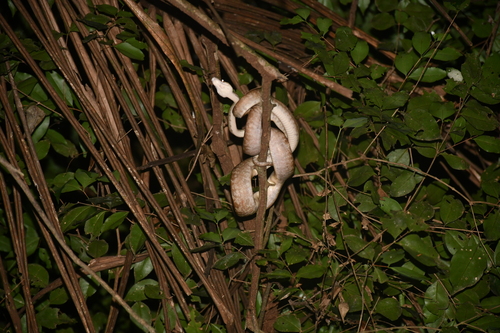
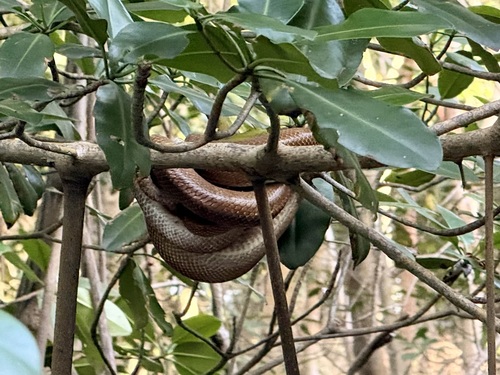
More Boidae snakes

Classification
How scientists group this snake, from the broadest category down to the exact species. Each step narrows to its closest relatives.
Keep learning
- What to Do If You Find a SnakeFound a snake at home or on a trail? Here is how to stay calm, give it space, identify it safely, and know when to call a professional.
- Venomous vs Nonvenomous: How to Tell the DifferenceThe folk rules for telling venomous snakes apart, where each one fails, and why location-based identification beats guessing by sight.
- What Is a Snake? Anatomy and the BasicsA clear overview of what makes a snake a snake: limbless body plan, anatomy, evolution from lizards, species diversity, and why they are ectothermic.
- How to Keep Snakes Out of Your Yard and HomeA practical guide to keeping snakes out of your yard and home using habitat changes that work, plus what to skip and what to do if one shows up.
Distribution from GBIF & iNaturalist. Venom status per CDC. Background: Wikipedia. Informational only. Never handle a snake to identify it.