
Boidae
Grenada Bank Boa
HarmlessCorallus grenadensis
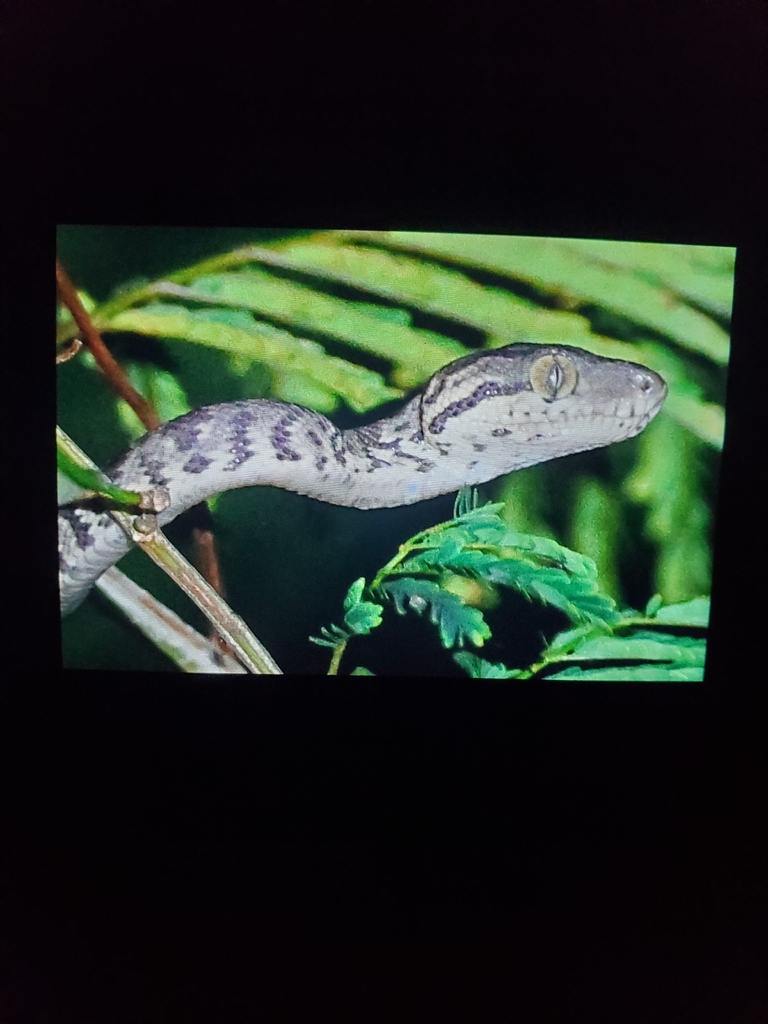
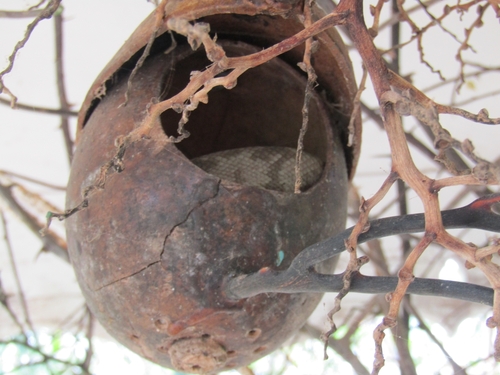
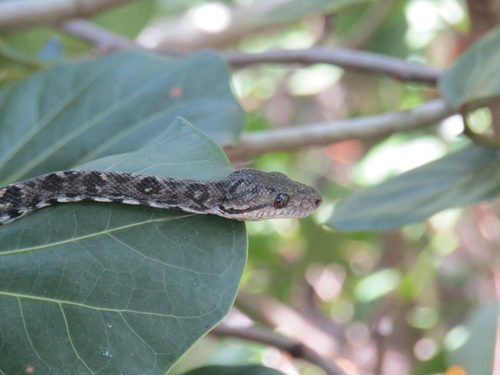
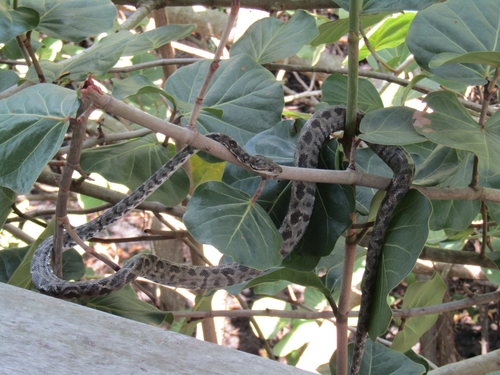
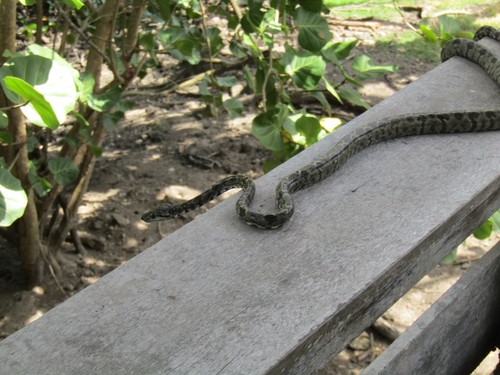
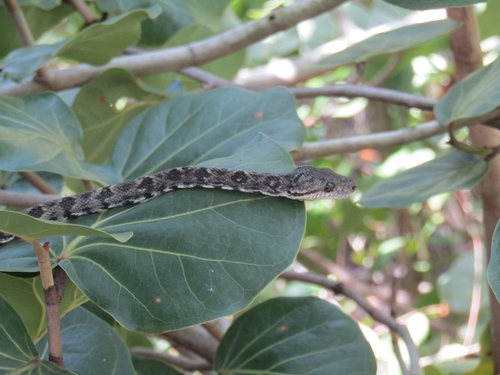
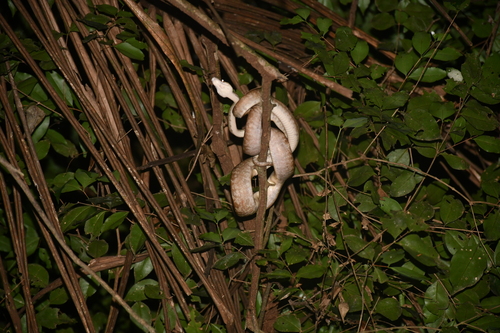
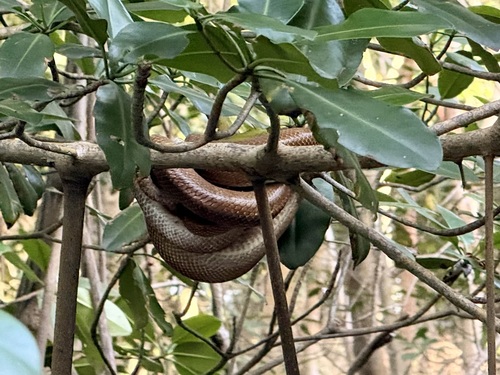
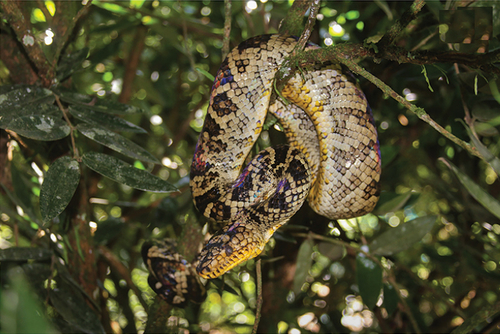
6 photographs of the Grenada Bank Boa. © Paul Dufour.
The Grenada Bank Boa (Corallus grenadensis) is a non-venomous snake in the Boidae family, recorded in 2 countries.
- Family
- Boidae
About the Grenada Bank Boa
Corallus grenadensis, known commonly as the Grenada tree boa or Grenada Bank tree boa, is a species of snake in the family Boidae. The species is endemic to the southern Windward Islands, being found only in Grenada and Saint Vincent and the Grenadines.
Taxonomy
The first description of Corallus grenadensis was published in 1914 by Thomas Barbour, who used the name Boa grenadensis for it. Barbour's usage of this name was a matter of placing the species into the genus Boa, but rather using the name as a synonym for Corallus, as he explicitly stated that his choice to use Boa instead of Corallus was per the 1901 example set by Leonhard Stejneger, who contended that Corallus was correctly referred to as Boa, while Boa should instead be known as Constrictor. Barbour and Arthur Loveridge recategorized grenadensis as a subspecies of Corallus cookii in 1929, under the name Boa cookii grenadensis. The nomenclature advocated for by Stejneger and adopted by Barbour did not end up as the one used by the wider community, with Constrictor considered being an objective junior synonym of Boa. Robert W. Henderson revived Barbour's Boa grenadensis as a species, but under the name Corallus grenadensis; The holotype of the species, a male was collected by G. M. Allen in August 1910, with the type locality being St. George's, the capital of Grenada.
Description
C. grenadensis has 37–46 dorsal scale rows, 251–278 ventral scales, 100–119 subcaudal scales, 3–9 supraocular scales and 0–4 infraloreal scales.
The dorsal ground colouration of C. grenadensis has a wide range. Most individuals have a taupe ground dorsal colour, and the next most common is a yellowish one, with grey, brown and orange being less common; however, local conditions are correlated to how common each colour is, leading to different localities having different predominant colours. The ventral ground colour is a dull yellow in most individuals, with some having one closer to white. Ventral patterning varies from nearly covering the venter in a dark brown colour to being completely absent.
Most individuals have a spade-shaped dorsal pattern, with sharp edges on the spades being about twice as common as rounded edges are. Patterns other than spades are somewhat more common on Grenada and its surrounding islands than in the Grenadines. An exception to the pattern prevalent on most of the body is found near the head of the snake, where its diamond-shaped instead.
Distribution
C. grenadensis is endemic to the Windward Islands. It is found on the island of Grenada, its surrounding islands and in the Grenadines. It is not found on Saint Vincent, which is inhabited by the endemic Corallus cookii, a close relative of C. grenadensis.
Habitat
Adapted from Wikipedia, available under CC BY-SA.
Frequently asked: Grenada Bank Boa
- Is the Grenada Bank Boa venomous?
- No. The Grenada Bank Boa (Corallus grenadensis) is non-venomous and is not considered dangerous to humans. Like most snakes, it will retreat rather than bite when given the chance.
- Is the Grenada Bank Boa poisonous?
- Snakes are venomous, not poisonous. "Poisonous" means harmful to eat or touch; "venomous" means injecting toxins through a bite. The Grenada Bank Boa is neither poisonous nor venomous.
- Is the Grenada Bank Boa dangerous?
- The Grenada Bank Boa is not dangerous to humans. It has no medically significant venom and bites only defensively if cornered or handled.
- Where does the Grenada Bank Boa live?
- The Grenada Bank Boa has verified records in 2 countries, including Saint Vincent and the Grenadines, Grenada. See the distribution section below for its full range.
Where it is found
More Boidae snakes

Classification
How scientists group this snake, from the broadest category down to the exact species. Each step narrows to its closest relatives.
Keep learning
- What to Do If You Find a SnakeFound a snake at home or on a trail? Here is how to stay calm, give it space, identify it safely, and know when to call a professional.
- Venomous vs Nonvenomous: How to Tell the DifferenceThe folk rules for telling venomous snakes apart, where each one fails, and why location-based identification beats guessing by sight.
- What Is a Snake? Anatomy and the BasicsA clear overview of what makes a snake a snake: limbless body plan, anatomy, evolution from lizards, species diversity, and why they are ectothermic.
- How to Keep Snakes Out of Your Yard and HomeA practical guide to keeping snakes out of your yard and home using habitat changes that work, plus what to skip and what to do if one shows up.
Distribution from GBIF & iNaturalist. Venom status per CDC. Background: Wikipedia. Informational only. Never handle a snake to identify it.