
Coral snake
Eastern Coralsnake
VenomousMicrurus fulvius
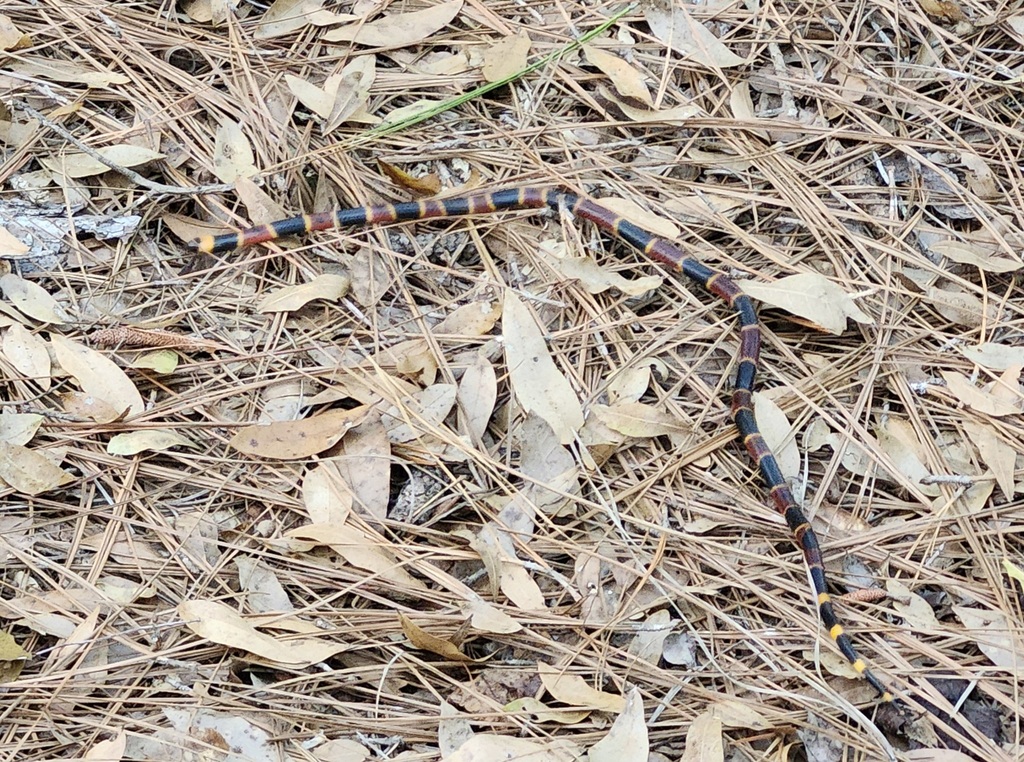
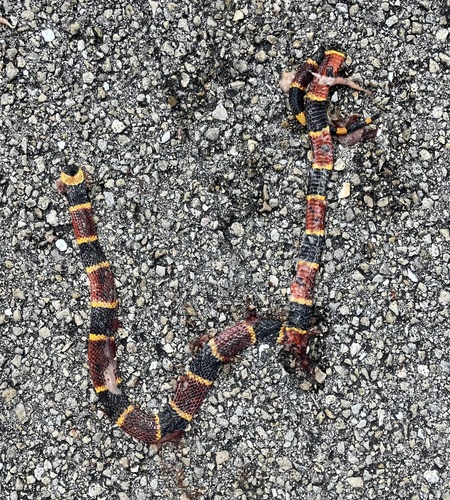
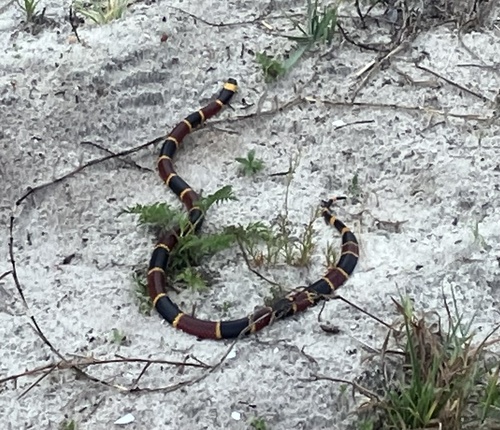
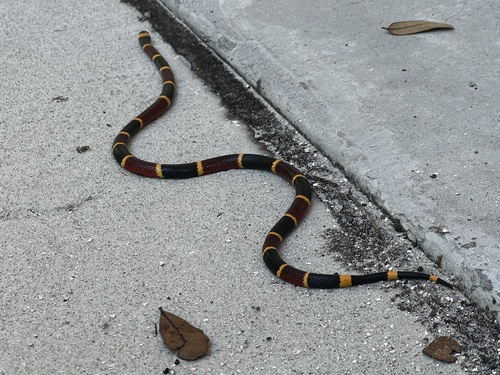
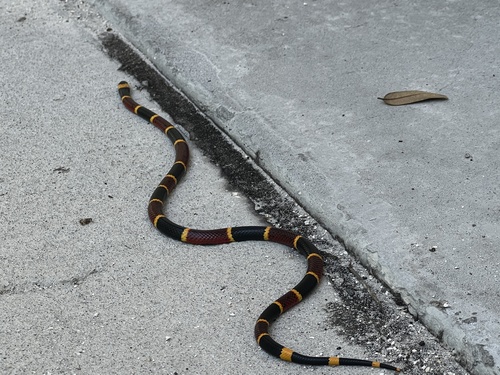
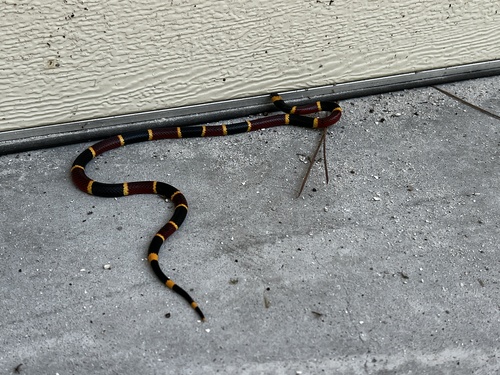
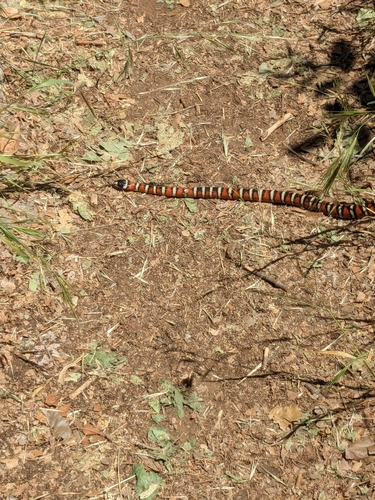
6 photographs of the Eastern Coralsnake. © Arturo Santos.
The Eastern Coralsnake (Micrurus fulvius) is a venomous snake in the Elapidae family, recorded in 13 countries.
If you are bitten
Coral snake venom is neurotoxic and symptoms can be delayed for many hours. Treat any suspected coral snake bite as a medical emergency and go to an emergency room even if you feel fine — antivenom may be needed. Keep calm and still. Call Poison Control at 1-800-222-1222 or 911 in the US, or your local emergency number. (Source: CDC.)
- Also called
- Coral snake
- Family
- Elapidae
- Size
- Slender, usually 1.5–3 ft.
- Habitat
- Pine and hardwood forests with sandy, well-drained soils.
- Behavior
- Secretive and semi-burrowing; reluctant to bite but venom is neurotoxic.
- Identify
- Rings of red, yellow, and black where red touches yellow; small rounded head and round pupils.
- Danger
- high (delayed)
About the Eastern Coralsnake
Micrurus fulvius, commonly known as the eastern coral snake, common coral snake, American cobra, and more, is a species of highly venomous coral snake in the family Elapidae. The species is endemic to the southeastern United States. The family also contains the cobras and sea snakes.
Its appearance is sometimes confused with that of the scarlet snake (Cemophora coccinea) or scarlet kingsnake (Lampropeltis elapsoides), which are nonvenomous mimics. No subspecies are recognized as being valid. Although the International Union for the Conservation of Nature (IUCN) listed M. fulvius as "Least Concern" in 2007 based on its total global population size (Hammerson, 2007), it is of significant conservation concern at the local level throughout most of its range; it is listed as Endangered in North Carolina (North Carolina Wildlife Resources Commission, 2014), Imperiled in South Carolina (South Carolina Department of Natural Resources, 2014), and of Highest Conservation Concern in Alabama (Outdoor Alabama, 2017).
Taxonomy
Micrurus tener used to be considered a subspecies of Micrurus fulvius. However, DNA analysis suggests that it may be its own species as the analysis of microsatellites loci seems to place M. tener as a distinct species from M. fulvius.
Common names
Among the many common names for Micrurus fulvius are eastern coral snake, American cobra, candy-stick snake, common coral snake, coral adder, Elaps harlequin snake, Florida coral snake, harlequin coral snake, North American coral snake, red bead snake, thunder-and-lightning snake, and, in Spanish, serpiente-coralillo arlequín (literally "harlequin coral snake").
Description
Micrurus fulvius is usually less than 80 cm (31 in) in total length (tail included). The maximum reported total lengths are 121.8 cm (48.0 in) for a specimen in Florida (Neill, 1958) and 129.5 cm (51.0 in) (Roze, 1996). Males have longer tails than females, but females reach a greater total length.
The dorsal scales are smooth, and are in 15 rows at midbody. The ventral scales number 197–217 in males and 219–233 in females. There are 40–47 subcaudals in males and 30–37 in females. The anal plate is divided.
Aposematic colour pattern
The color pattern of the eastern coral snake consists of a series of rings that encircle the body: wide red and black rings separated by narrow yellow rings. The head is black from the rostral scale to just behind the eyes. This snake commonly has a black snout as well as black eyes and then a yellow band on the back half of the head behind the eyes. The red rings are usually speckled with black.
The bright coloration is likely aposematic, meaning that it is associated with a danger to predators. Within its natural range, folk rhymes about the coloration of the eastern coral snake versus its mimics are common, including:
Adapted from Wikipedia, available under CC BY-SA.
Local and regional names
The Eastern Coralsnake is known by these names across the regions where it lives:
- Bulgarian
- арлекинова коралова змия
- Chinese
- 東部珊瑚蛇
- Czech
- korálovec žlutavý
- Danish
- Nordamerikansk Koralslange
- Dutch
- Harlekijnkoraalslang
- English
- Eastern Coral Snake, Harlequin Coralsnake, North American coral snake, Northern Coral Snake
- Finnish
- Harlekiinikorallikäärme
- German
- Harlekin-Korallennatter, Harlekin-Korallenotter, Korallenotter, Östliche Korallenotter
- Hungarian
- keleti korallkígyó
- Italian
- Serpente corallo comune, Serpente corallo orientale
- Polish
- Koralówka arlekin, Wąż koralowy arlekin
- Portuguese
- Coral-verdadeira
- Russian
- Арлекиновый коралловый аспид
- Serbian
- Обична корална змија
- Spanish
- Serpiente coralillo del noreste, Serpiente-coralillo arlequín
- Ukrainian
- Аспід арлекиновий
Frequently asked: Eastern Coralsnake
- Is the Eastern Coralsnake venomous?
- Yes. The Eastern Coralsnake (Micrurus fulvius) is venomous and belongs to the Elapidae family (coral snake). Its bite is considered high (delayed) risk to people. Treat any bite as a medical emergency.
- Is the Eastern Coralsnake poisonous?
- Snakes are venomous, not poisonous. "Poisonous" means harmful to eat or touch; "venomous" means injecting toxins through a bite. The Eastern Coralsnake is venomous, delivering venom through a bite.
- Is the Eastern Coralsnake dangerous?
- Coral snake venom is neurotoxic and symptoms can be delayed for many hours. Treat any suspected coral snake bite as a medical emergency and go to an emergency room even if you feel fine — antivenom may be needed. Keep calm and still. Call Poison Control at 1-800-222-1222 or 911 in the US, or your local emergency number. (Source: CDC.)
- Where does the Eastern Coralsnake live?
- The Eastern Coralsnake has verified records in 13 countries, including United States of America, Mexico, Honduras. See the distribution section below for its full range.
- How do I identify the Eastern Coralsnake?
- Rings of red, yellow, and black where red touches yellow; small rounded head and round pupils.
- How big does the Eastern Coralsnake get?
- Slender, usually 1.5–3 ft.
- What does the Eastern Coralsnake eat?
- Micrurus fulvius eats primarily other snakes and attenuate lizards, but it is also known to eat mammals, birds, frogs, fish, and insects. M. fulvius will attack the head of its prey first in order to envenomate it. M. fulvius holds on to the prey until it becomes paralyzed, then consumes it.
- Why is it called the Eastern Coralsnake?
- Among the many common names for Micrurus fulvius are eastern coral snake, American cobra, candy-stick snake, common coral snake, coral adder, Elaps harlequin snake, Florida coral snake, harlequin coral snake, North American coral snake, red bead snake, thunder-and-lightning snake, and, in Spanish, serpiente-coralillo arlequín (literally "harlequin coral snake").
If you are bitten by the Eastern Coralsnake
Do
- Get away from the snake and stay calm. Most bites worsen when people panic or try again to handle the snake.
- Call 911 or Poison Control (1-800-222-1222) right away. Antivenom works best when given early.
- Note the time of the bite and, from a safe distance, the snake's color and pattern, a phone photo is enough. Do not chase it.
- Keep the bitten limb still and at roughly heart level. Sit or lie down and limit movement.
- Remove rings, watches, and tight clothing near the bite before swelling starts.
- Gently wash the bite with soap and water and cover it with a clean, dry dressing.
Do not
- Do not cut the wound or try to suck out the venom.
- Do not apply a tourniquet or ice.
- Do not drink alcohol or caffeine.
- Do not take aspirin or ibuprofen, they can worsen bleeding. Acetaminophen is safer for pain.
- Do not try to catch or kill the snake. A dead snake can still bite by reflex.
First-aid guidance adapted from the U.S. Centers for Disease Control and Prevention (CDC NIOSH), Venomous Snakes. Educational only; always follow the instructions of emergency responders.
Where it is found
Snakes it is confused with
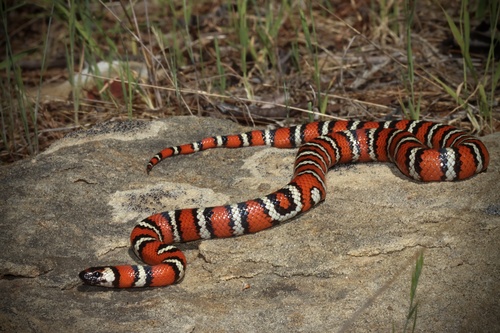
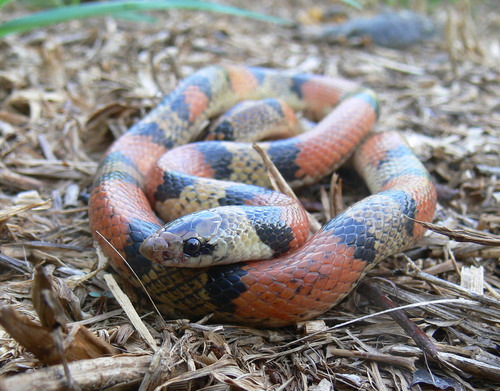
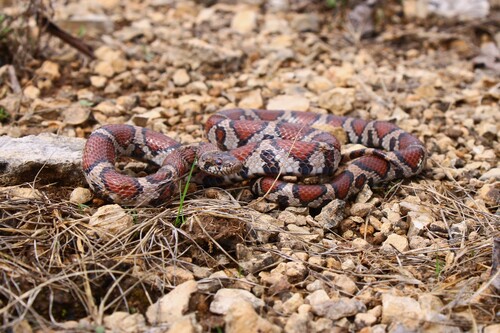 Eastern MilksnakeHarmless
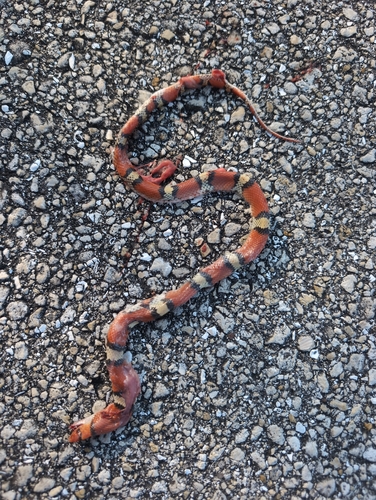
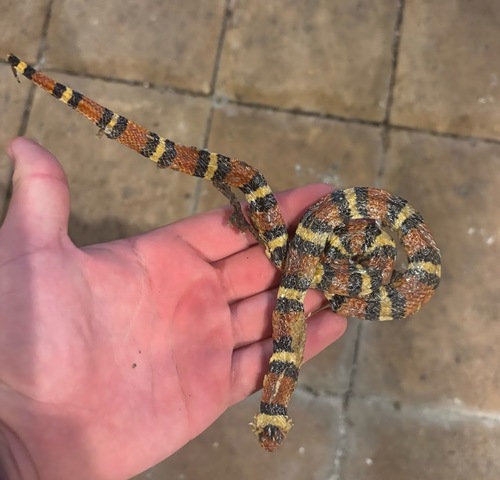
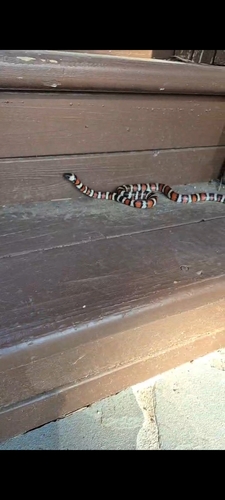
The venomous US coral snake has red bands touching yellow ('red touches yellow, kill a fellow') — but this rhyme works ONLY for coral snakes native to the United States, so never judge a coral snake by color outside the US.
Eastern Coralsnake vs Eastern Milksnake→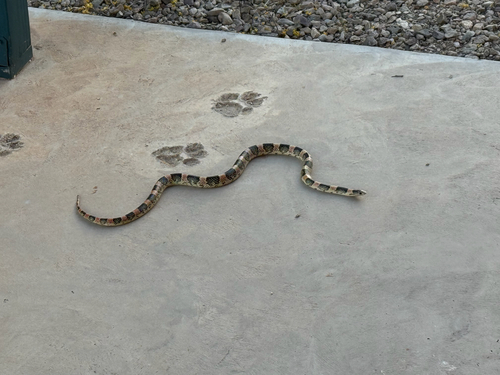
More Elapidae snakes
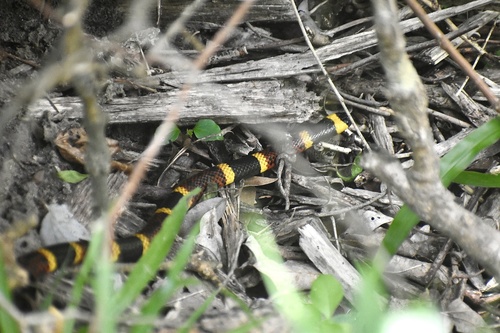 Texas CoralsnakeMicrurus tener
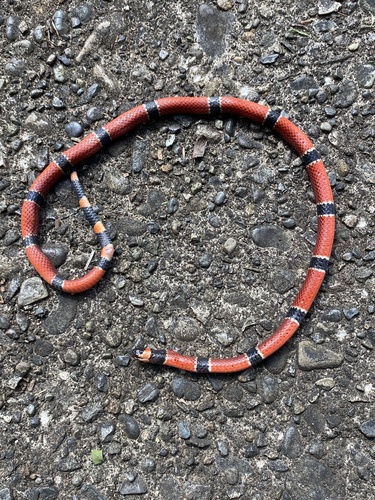 Central American CoralsnakeMicrurus nigrocinctus
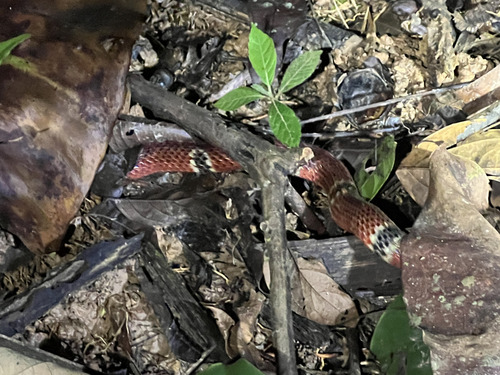 Variable CoralsnakeMicrurus diastema
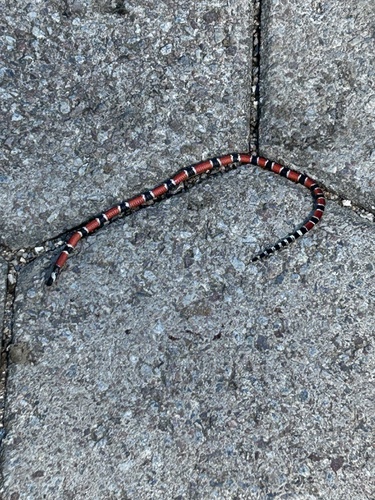 Painted CoralsnakeMicrurus corallinus
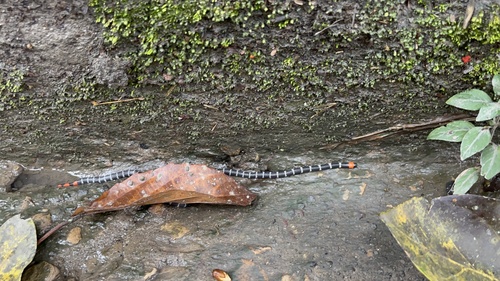 Redtail CoralsnakeMicrurus mipartitus
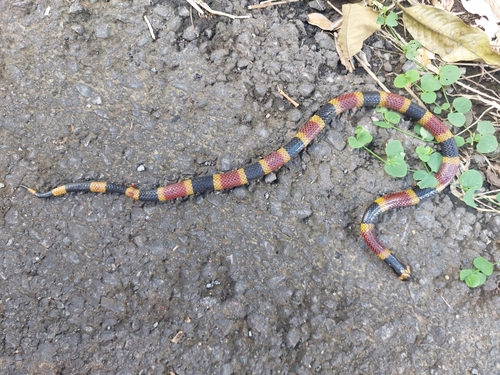 Costa Rican CoralsnakeMicrurus mosquitensis
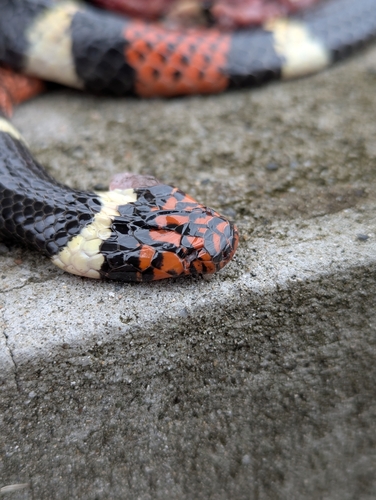 Aquatic CoralsnakeMicrurus surinamensis
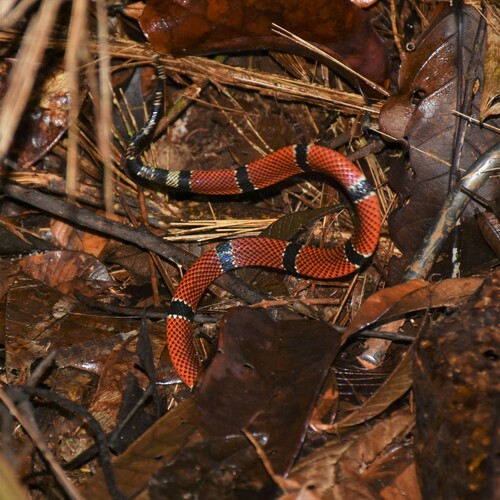 Transandean Capuchin CoralsnakeMicrurus dumerilii
Classification
How scientists group this snake, from the broadest category down to the exact species. Each step narrows to its closest relatives.
Keep learning
- Are Snakes Dangerous? The Real Risk, in PerspectiveMost snakes are harmless and avoid people. Here is the honest picture of snakebite risk worldwide and how to lower your own.
- Snakebite First Aid: What to Do (and What Never to Do)A clear, CDC-based guide to snakebite first aid: the steps that help, the popular myths that hurt, and how to tell a serious bite from a minor one.
- Venomous vs Nonvenomous: How to Tell the DifferenceThe folk rules for telling venomous snakes apart, where each one fails, and why location-based identification beats guessing by sight.
- What to Do If You Find a SnakeFound a snake at home or on a trail? Here is how to stay calm, give it space, identify it safely, and know when to call a professional.
Distribution from GBIF & iNaturalist. Venom status per CDC. Background: Wikipedia. Informational only. Never handle a snake to identify it.