
Colubridae
Long-nosed Snake
HarmlessRhinocheilus lecontei
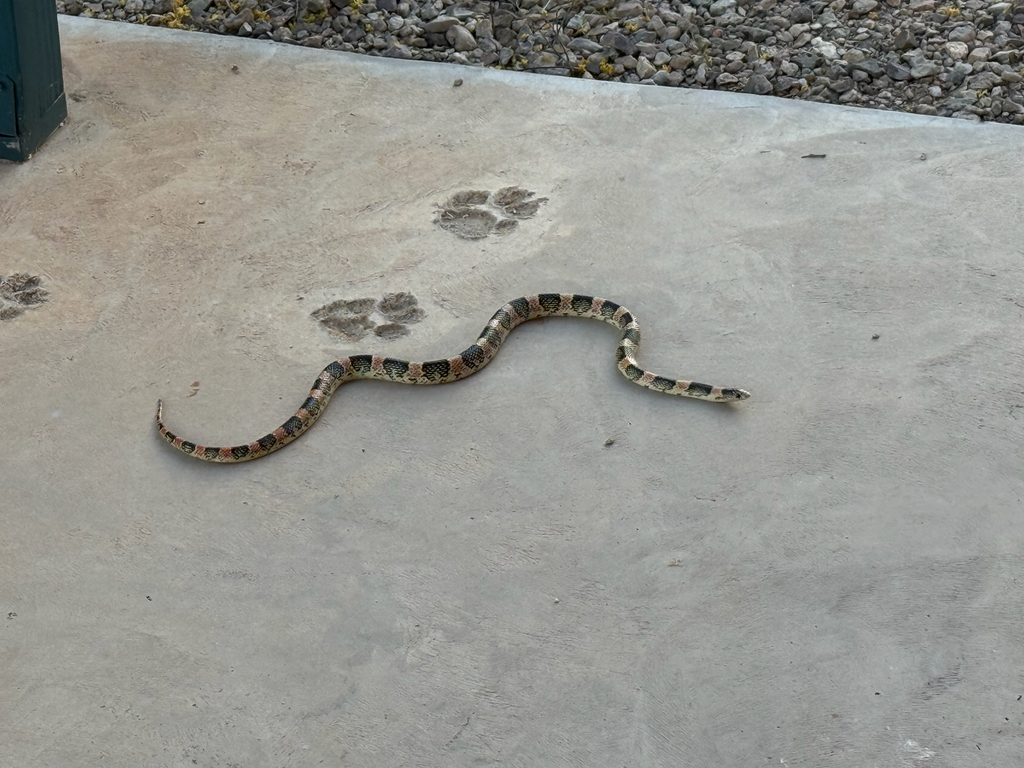
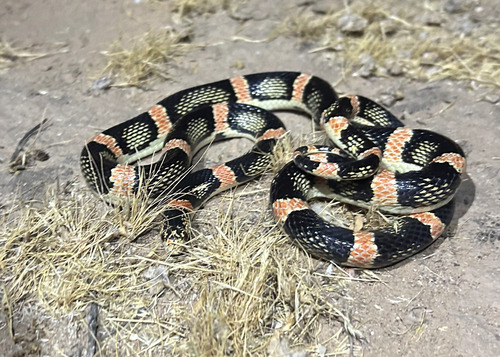
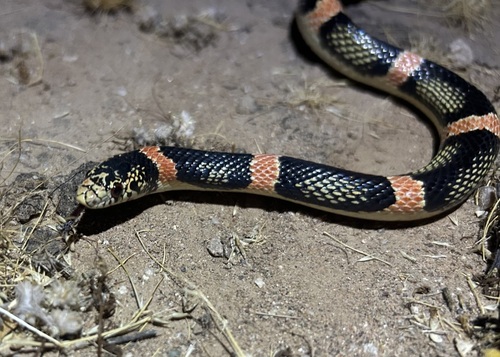
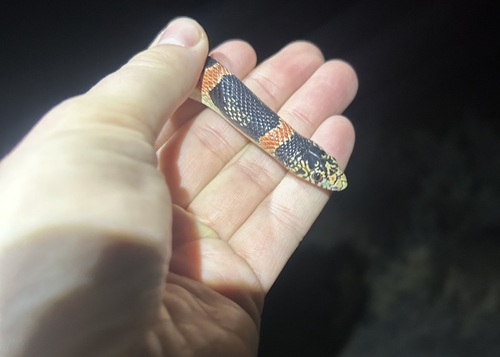
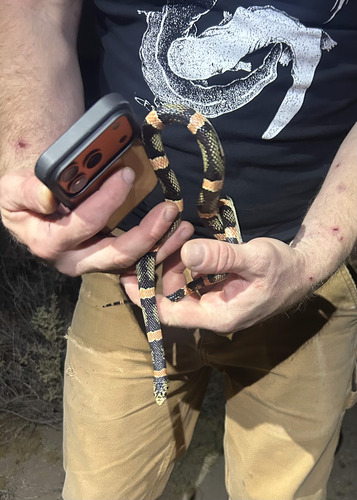
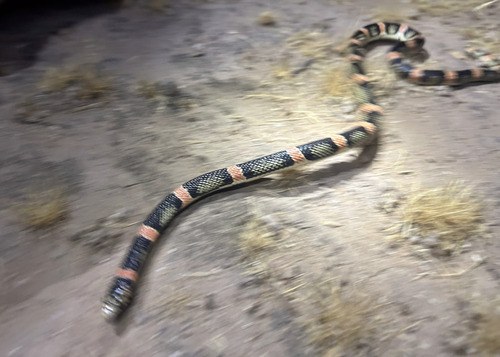
6 photographs of the Long-nosed Snake. © Emily Burns.
The Long-nosed Snake (Rhinocheilus lecontei) is a non-venomous snake in the Colubridae family, recorded in 2 countries.
- Family
- Colubridae
About the Long-nosed Snake
The long-nosed snake (Rhinocheilus lecontei) is a species of nonvenomous snake in the family Colubridae. The species is endemic to North America. It has two recognized subspecies. The other species in the genus were previously considered subspecies.
Etymology
The specific name, lecontei, commemorates American entomologist John Lawrence Le Conte (1825–1883).
Description
The long-nosed snake is distinguished by a long, slightly upturned snout, which is the origin of its common name. It is tricolor, vaguely resembling a coral snake, with black and red saddling on a yellow or cream-colored background. Cream-colored spots within the black saddles are a distinct characteristic of the long-nosed snake. It differs from all other harmless snakes in the United States by having undivided subcaudal scales. The total length (including tail) of adults is usually 22–32 in (56–81 cm), but the maximum record total length is 41 in (100 cm).
Behavior
R. lecontei is a shy, nocturnal burrowing snake. It spends most of its time buried underground.
Diet
The long-nosed snake feeds on lizards, amphibians, and sometimes smaller snakes and infrequently rodents.
Reproduction
R. lecontei is oviparous, laying clutches of 4-9 eggs in the early summer, which hatch in the late summer or early fall.
Defense
The long-nosed snake is not apt to bite, but will release a foul smelling musk and blood from the cloaca as a defense mechanism if harassed.
Habitat
The preferred natural habitats of the long-nosed snake are desert, grassland, shrubland, and savanna.
Geographic range
R. lecontei is found in northern Mexico from San Luis Potosí to Chihuahua, and into the southwestern United States, in California, Nevada, Utah, Idaho, Arizona, New Mexico, southeastern Colorado, southwestern Kansas, Oklahoma, and Texas.
Subspecies
Western long-nosed snake, Rhinocheilus lecontei lecontei Baird & Girard, 1853
Texas long-nosed snake, Rhinocheilus lecontei tessellatus Garman, 1883
In captivity
The long-nosed snake is not often found in the exotic pet trade as it frequently rejects rodent-based diets that are most readily available for captive snakes.
Adapted from Wikipedia, available under CC BY-SA.
Frequently asked: Long-nosed Snake
- Is the Long-nosed Snake venomous?
- No. The Long-nosed Snake (Rhinocheilus lecontei) is non-venomous and is not considered dangerous to humans. Like most snakes, it will retreat rather than bite when given the chance.
- Is the Long-nosed Snake poisonous?
- Snakes are venomous, not poisonous. "Poisonous" means harmful to eat or touch; "venomous" means injecting toxins through a bite. The Long-nosed Snake is neither poisonous nor venomous.
- Is the Long-nosed Snake dangerous?
- The Long-nosed Snake is not dangerous to humans. It has no medically significant venom and bites only defensively if cornered or handled.
- Where does the Long-nosed Snake live?
- The Long-nosed Snake has verified records in 2 countries, including United States of America, Mexico. See the distribution section below for its full range.
- What does the Long-nosed Snake eat?
- The long-nosed snake feeds on lizards, amphibians, and sometimes smaller snakes and infrequently rodents.
- Why is it called the Long-nosed Snake?
- The specific name, lecontei, commemorates American entomologist John Lawrence Le Conte (1825–1883).
Where it is found
Snakes it is confused with
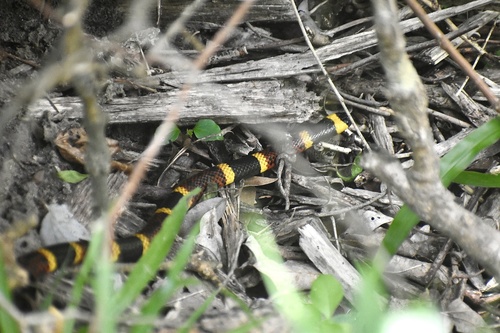 Texas CoralsnakeVenomous
A harmless mimic of the US coral snake. On US coral snakes red bands touch yellow; on these mimics red usually touches black. This color rule is reliable ONLY in the United States — it does not hold for coral snakes elsewhere.
Long-nosed Snake vs Texas Coralsnake→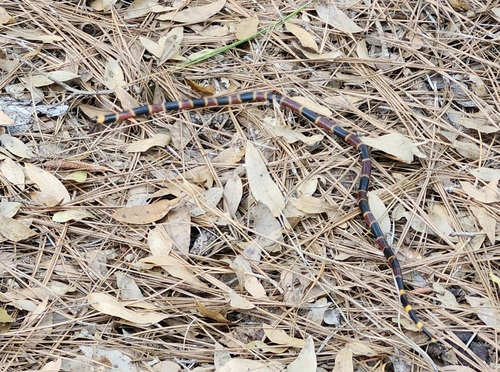
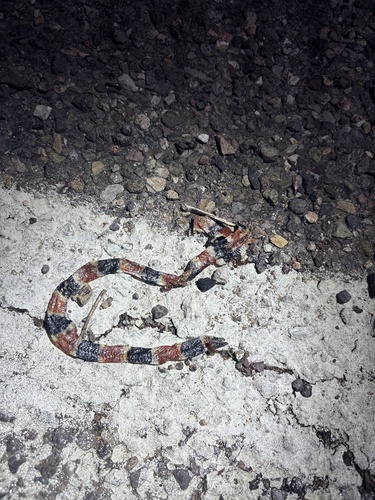
More Colubridae snakes
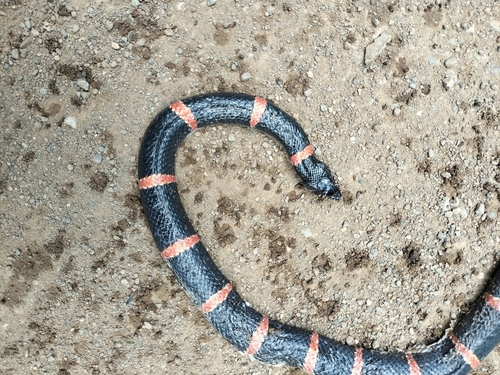 Mexican Long-nosed SnakeRhinocheilus antonii
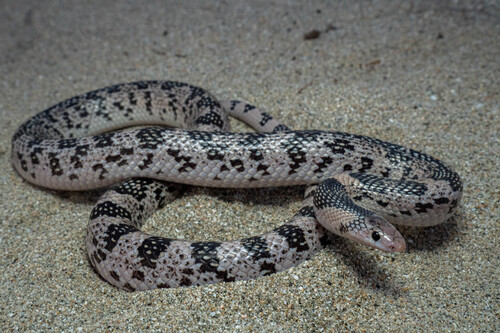 Isla Cerralvo Long-nosed SnakeRhinocheilus etheridgei
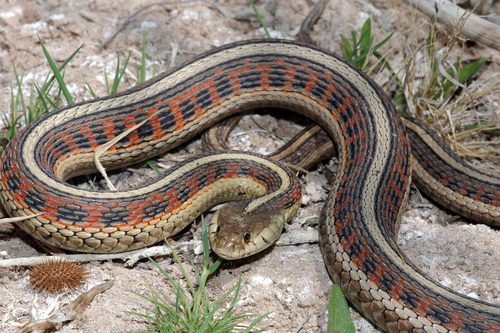 Common Garter SnakeThamnophis sirtalis
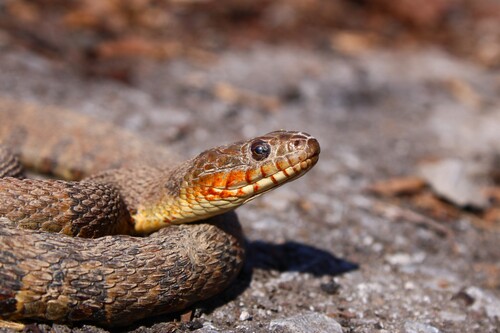 Common WatersnakeNerodia sipedon
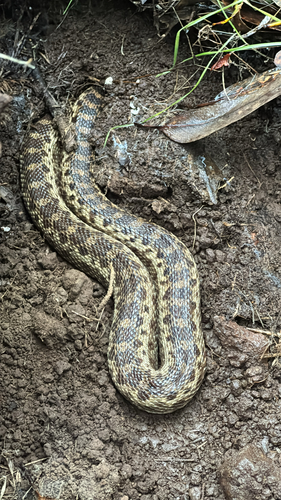 Gopher SnakePituophis catenifer
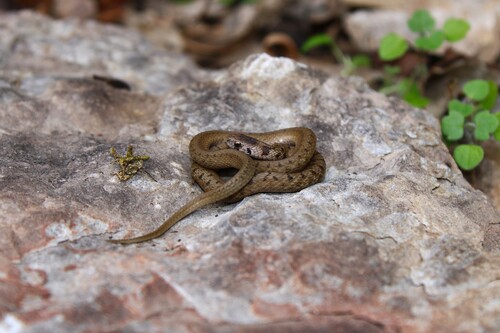 DeKay's BrownsnakeStoreria dekayi
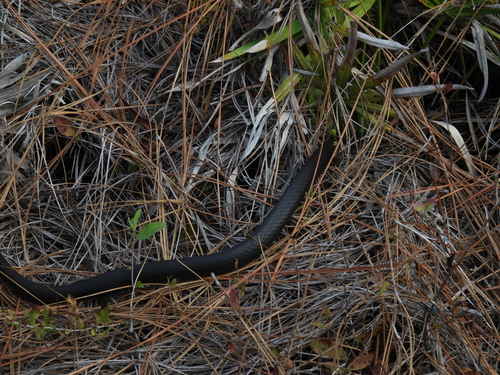 North American RacerColuber constrictor
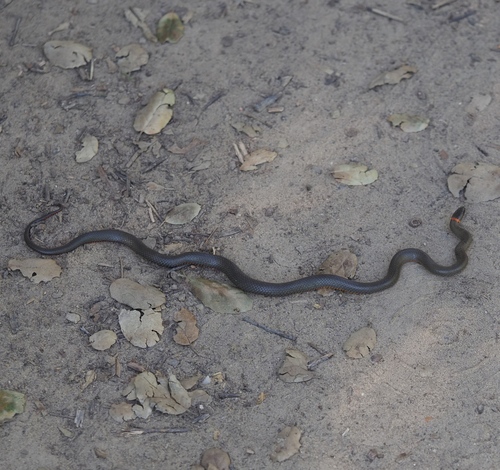 Ring-necked SnakeDiadophis punctatus
Classification
How scientists group this snake, from the broadest category down to the exact species. Each step narrows to its closest relatives.
- OrderThe broad group of scaled reptiles: all snakes and lizards
- Squamata
- FamilyA group of related snakes that share key traits
- Colubridae
- GenusA close-knit group of very similar species
- Rhinocheilus
- SpeciesThis exact snake, named in the two-part scientific name
- Rhinocheilus lecontei
Keep learning
- What to Do If You Find a SnakeFound a snake at home or on a trail? Here is how to stay calm, give it space, identify it safely, and know when to call a professional.
- Venomous vs Nonvenomous: How to Tell the DifferenceThe folk rules for telling venomous snakes apart, where each one fails, and why location-based identification beats guessing by sight.
- What Is a Snake? Anatomy and the BasicsA clear overview of what makes a snake a snake: limbless body plan, anatomy, evolution from lizards, species diversity, and why they are ectothermic.
- How to Keep Snakes Out of Your Yard and HomeA practical guide to keeping snakes out of your yard and home using habitat changes that work, plus what to skip and what to do if one shows up.
Distribution from GBIF & iNaturalist. Venom status per CDC. Background: Wikipedia. Informational only. Never handle a snake to identify it.