
Kingsnake / Milksnake
Scarlet Kingsnake
HarmlessLampropeltis elapsoides
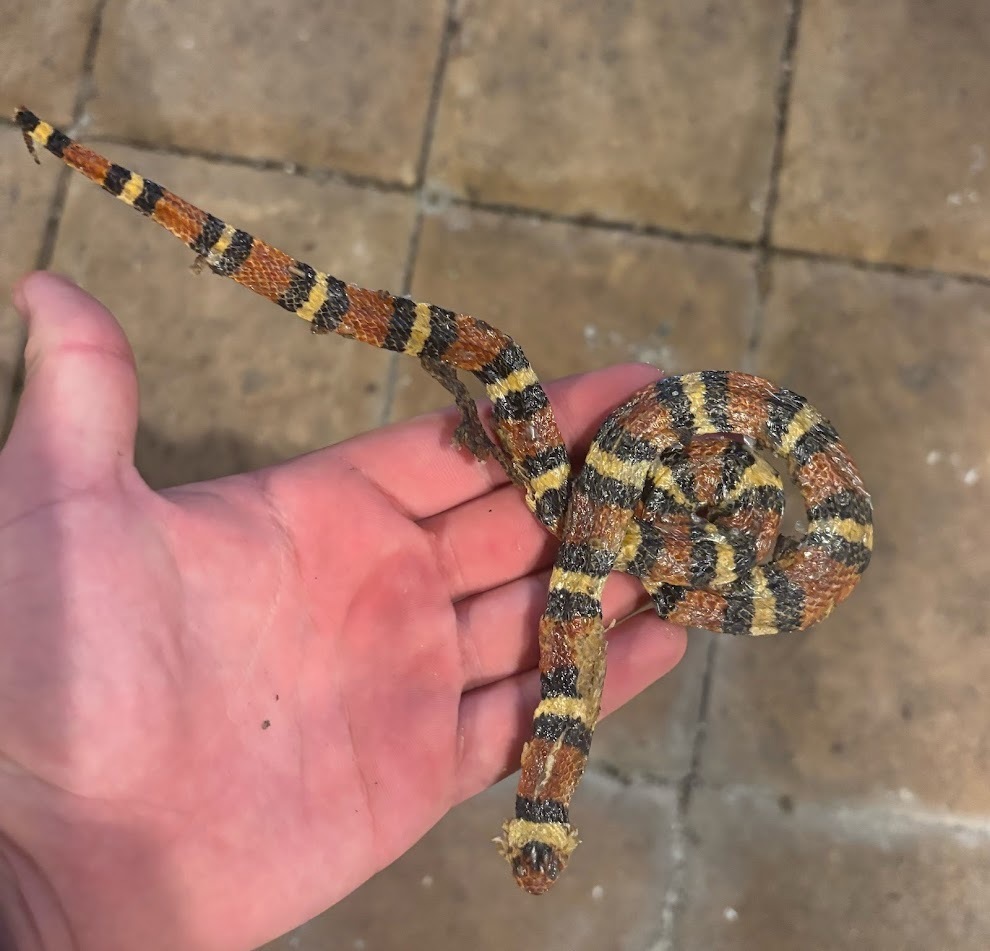
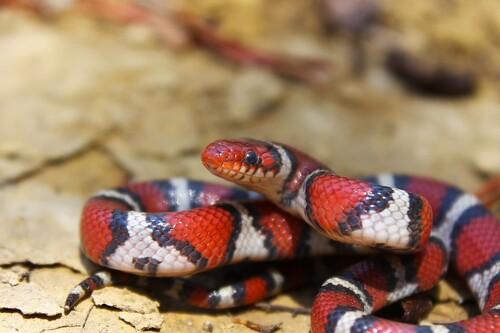
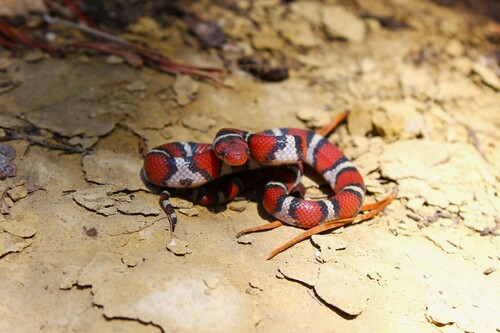
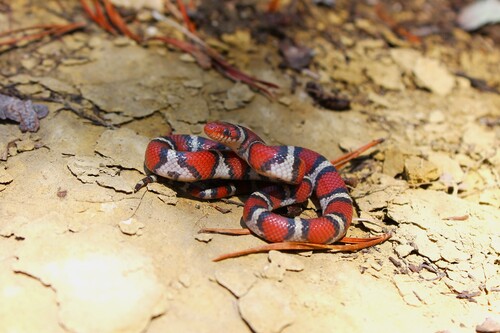
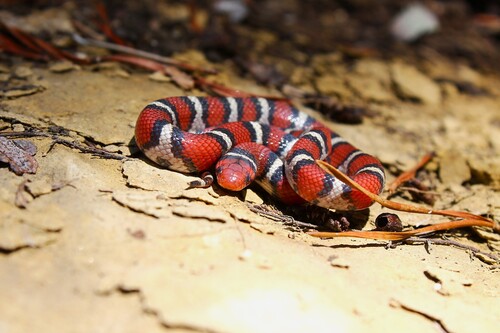
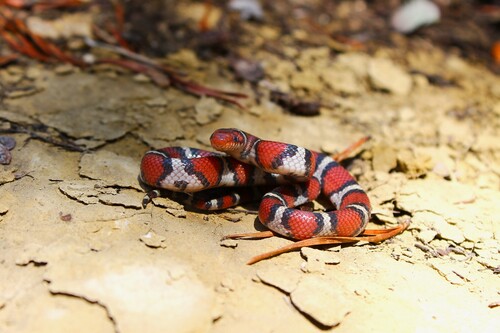
6 photographs of the Scarlet Kingsnake. © Josiah Londerée.
The Scarlet Kingsnake (Lampropeltis elapsoides) is a non-venomous snake in the Colubridae family, recorded in 4 countries.
- Also called
- Kingsnake / Milksnake
- Family
- Colubridae
- Size
- 2–5 ft.
- Habitat
- Forests, farmland, grasslands, and suburbs.
- Behavior
- Powerful constrictors that eat other snakes — including venomous ones; gentle but may musk or vibrate the tail.
- Identify
- Smooth, glossy scales with bold bands or chain-like patterns. Milksnakes mimic coral snakes, but red touches black.
About the Scarlet Kingsnake
The scarlet kingsnake (Lampropeltis elapsoides) is a species of kingsnake found in the southeastern and eastern portions of the United States. Like all kingsnakes, they are nonvenomous. They are found in pine flatwoods, hydric hammocks, pine savannas, mesic pine-oak forests, prairies, cultivated fields, and a variety of suburban habitats; not unusually, people find scarlet kingsnakes in their swimming pools, especially during the spring. Until recently, and for much of the 20th century, scarlet kingsnakes were considered a subspecies of the milk snake; however, Pyron and Bubrink demonstrated the phylogenetic distinction of this species and its closer relationship to the mountain kingsnakes of the southwestern United States. These largely fossorial snakes are the smallest of all the species within the genus Lampropeltis, usually ranging from 40 to 50 cm (16 to 20 in) at maturity. The maximum recorded length is in Jonesboro, AR 76.2 cm (30.0 in). Hatchlings range in size from 8 to 18 cm (3.1 to 7.1 in).
Taxonomy
The generic name, Lampropeltis, is derived from the Ancient Greek lamprós (λαμπρος) meaning "shiny" and peltas (πελτας) meaning "shield", after the sheen of their scales. Its specific name, elapsoides, is a Latinization of the Greek word éllops (ελλοπς) which refers to coral and was used to describe the 19th century genus, Elaps (the type genus of the family Elapidae), which included the eastern coral snake (Micrurus fulvius), a venomous species which the scarlet kingsnake resembles and with which the scarlet kingsnake is partly sympatric. The range of scarlet kingsnakes extends considerably further north and northeast than the eastern coral snake.
The scarlet kingsnake was once believed to have intergraded with the eastern milk snake, which produced a variation once named as a subspecies called the Coastal Plains milk snake (L. t. temporalis), but this is no longer recognized as a legitimate taxon.
Description
Scarlet kingsnakes have a tricolored pattern of black, red, white, and various shades of yellow bands that appear to mimic the venomous coral snake in a form of Batesian mimicry. This method relies on generalization by predators that do not recognize that the mimicry of a Coral snake that the Scarlet King Snake's pattern displays is imperfect. A method to help us differentiate between venomous and non-venomous tricolor snakes in North America is found in an enormous variety of popular phrases, which are usually some variation of "Red touches black, friend of jack, red touches yellow, kill a fellow", "red on yellow, kill a fellow; red on black, venom lack", or "if red touches yellow, you're a dead fellow; if red touches black, you're all right, Jack". For tri-colored snakes found east of the Mississippi River, all of these phrases can be replaced with the simple phrase, "Red face, I'm safe", in reference to the red snout of scarlet kingsnakes as opposed to the prominent black snout of the eastern coral snake (Micrurus fulvius).
Adapted from Wikipedia, available under CC BY-SA.
Frequently asked: Scarlet Kingsnake
- Is the Scarlet Kingsnake venomous?
- No. The Scarlet Kingsnake (Lampropeltis elapsoides) is non-venomous and is not considered dangerous to humans. Like most snakes, it will retreat rather than bite when given the chance.
- Is the Scarlet Kingsnake poisonous?
- Snakes are venomous, not poisonous. "Poisonous" means harmful to eat or touch; "venomous" means injecting toxins through a bite. The Scarlet Kingsnake is neither poisonous nor venomous.
- Is the Scarlet Kingsnake dangerous?
- The Scarlet Kingsnake is not dangerous to humans. It has no medically significant venom and bites only defensively if cornered or handled.
- Where does the Scarlet Kingsnake live?
- The Scarlet Kingsnake has verified records in 4 countries, including United States of America, Mexico, Guatemala. See the distribution section below for its full range.
- How do I identify the Scarlet Kingsnake?
- Smooth, glossy scales with bold bands or chain-like patterns. Milksnakes mimic coral snakes, but red touches black.
- How big does the Scarlet Kingsnake get?
- 2–5 ft.
- What does the Scarlet Kingsnake eat?
- Scarlet Kingsnakes are specialized predators with 82% being lizards and 89% skinks. This diet is the narrowest of all the Lampropeltis genus.
Where it is found
Snakes it is confused with
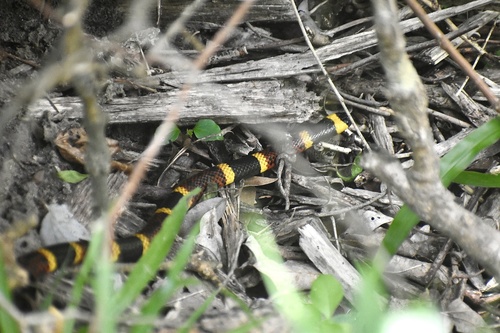 Texas CoralsnakeVenomous
A harmless mimic of the US coral snake. On US coral snakes red bands touch yellow; on these mimics red usually touches black. This color rule is reliable ONLY in the United States — it does not hold for coral snakes elsewhere.
Scarlet Kingsnake vs Texas Coralsnake→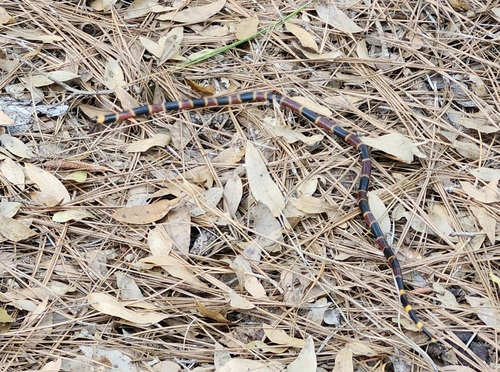
More Colubridae snakes
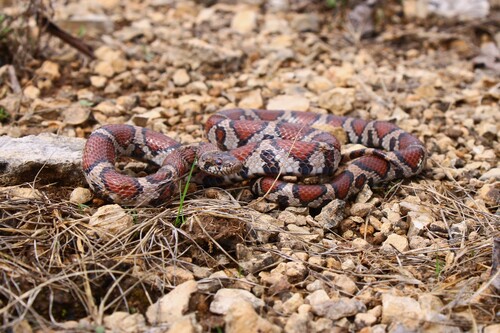 Eastern MilksnakeLampropeltis triangulum
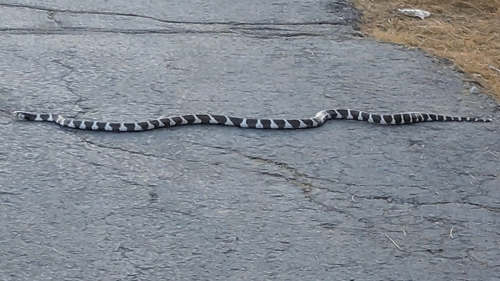 California King SnakeLampropeltis californiae
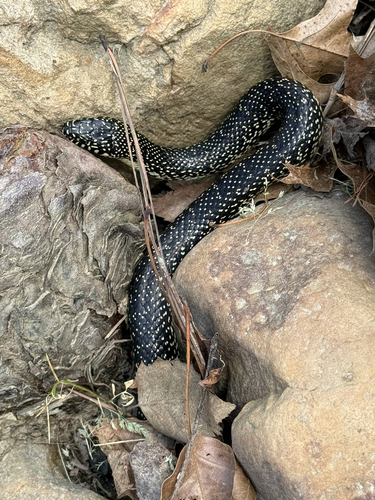 Speckled KingsnakeLampropeltis holbrooki
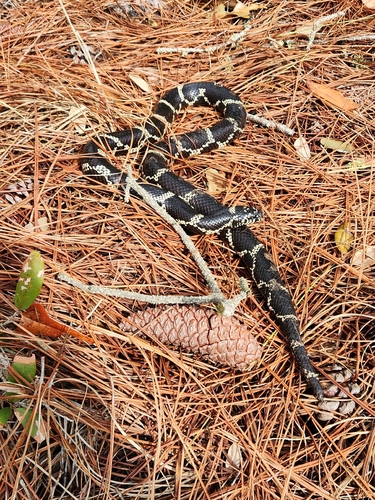 Eastern KingsnakeLampropeltis getula
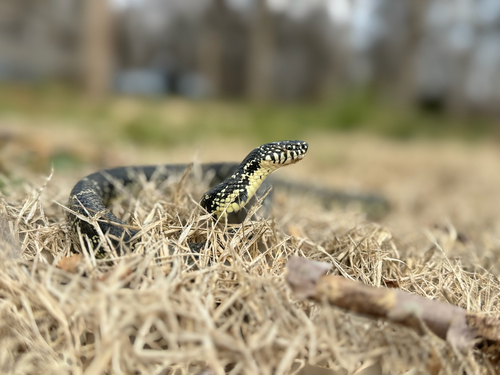 Black KingsnakeLampropeltis nigra
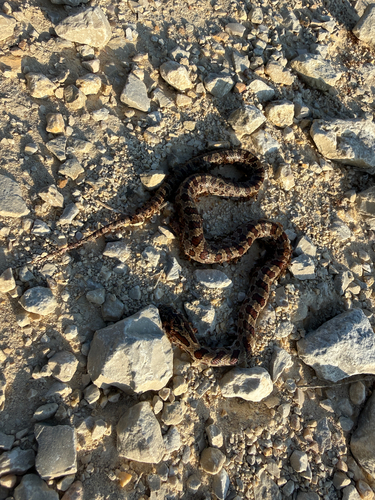 Prairie KingsnakeLampropeltis calligaster
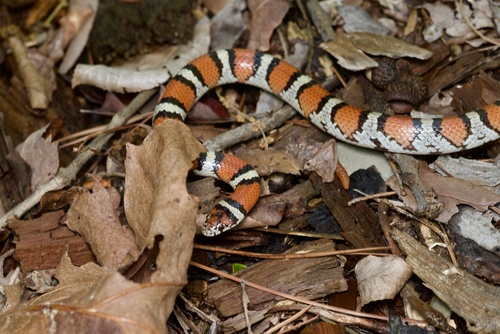 Western MilksnakeLampropeltis gentilis
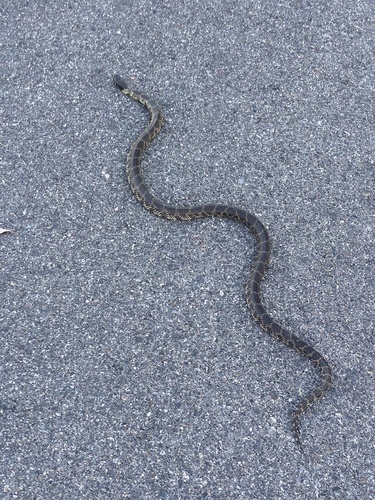 Desert KingsnakeLampropeltis splendida
Classification
How scientists group this snake, from the broadest category down to the exact species. Each step narrows to its closest relatives.
- OrderThe broad group of scaled reptiles: all snakes and lizards
- Squamata
- FamilyA group of related snakes that share key traits
- Colubridae
- GenusA close-knit group of very similar species
- Lampropeltis
- SpeciesThis exact snake, named in the two-part scientific name
- Lampropeltis elapsoides
Keep learning
- What to Do If You Find a SnakeFound a snake at home or on a trail? Here is how to stay calm, give it space, identify it safely, and know when to call a professional.
- Venomous vs Nonvenomous: How to Tell the DifferenceThe folk rules for telling venomous snakes apart, where each one fails, and why location-based identification beats guessing by sight.
- What Is a Snake? Anatomy and the BasicsA clear overview of what makes a snake a snake: limbless body plan, anatomy, evolution from lizards, species diversity, and why they are ectothermic.
- How to Keep Snakes Out of Your Yard and HomeA practical guide to keeping snakes out of your yard and home using habitat changes that work, plus what to skip and what to do if one shows up.
Distribution from GBIF & iNaturalist. Venom status per CDC. Background: Wikipedia. Informational only. Never handle a snake to identify it.