
Coral snake
Redtail Coralsnake
VenomousMicrurus mipartitus
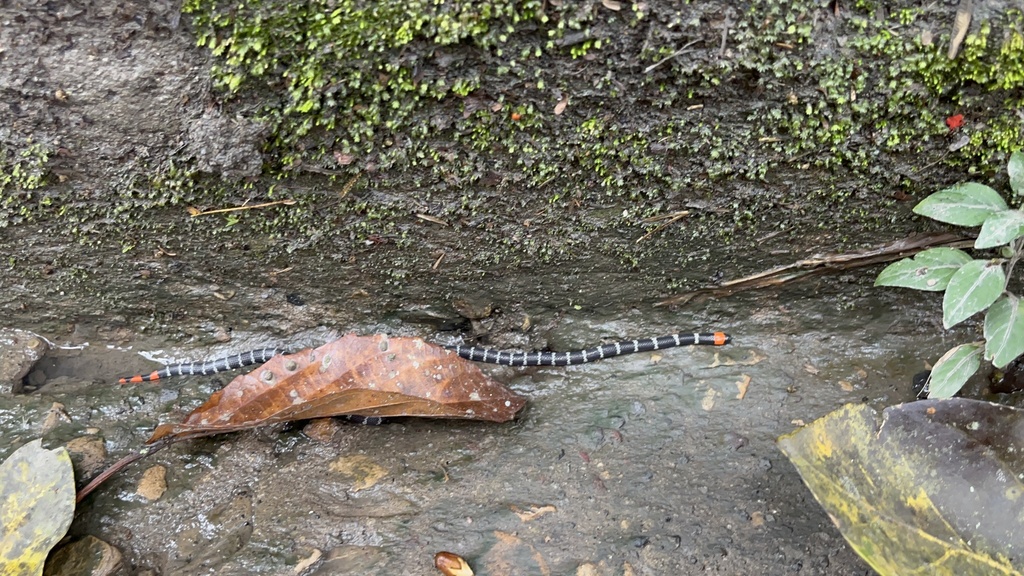
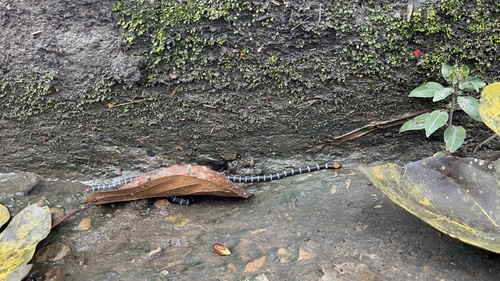
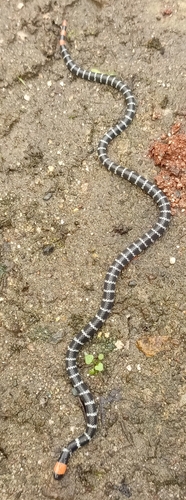
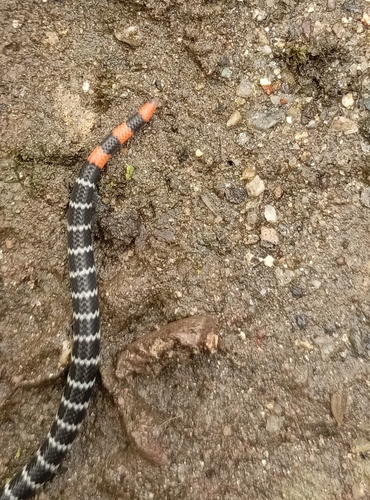
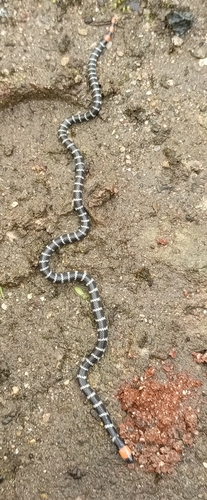
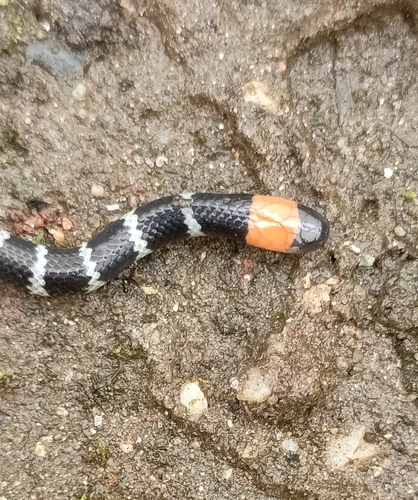
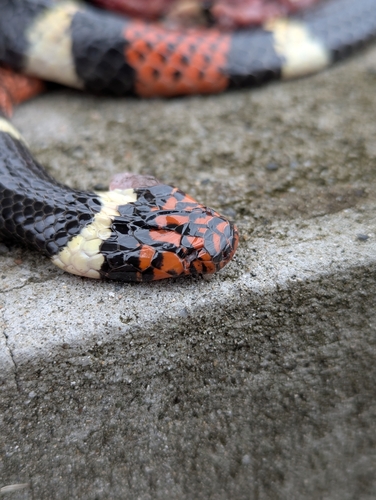
6 photographs of the Redtail Coralsnake. © Simón Ruiz-Triana.
The Redtail Coralsnake (Micrurus mipartitus) is a venomous snake in the Elapidae family, recorded in 8 countries.
If you are bitten
Coral snake venom is neurotoxic and symptoms can be delayed for many hours. Treat any suspected coral snake bite as a medical emergency and go to an emergency room even if you feel fine — antivenom may be needed. Keep calm and still. Call Poison Control at 1-800-222-1222 or 911 in the US, or your local emergency number. (Source: CDC.)
- Also called
- Coral snake
- Family
- Elapidae
- Size
- Slender, usually 1.5–3 ft.
- Habitat
- Pine and hardwood forests with sandy, well-drained soils.
- Behavior
- Secretive and semi-burrowing; reluctant to bite but venom is neurotoxic.
- Identify
- Rings of red, yellow, and black where red touches yellow; small rounded head and round pupils.
- Danger
- high (delayed)
About the Redtail Coralsnake
Micrurus mipartitus (red-tailed coral snake or many-banded coral snake) is a species of coral snake in the family Elapidae. The species is native to Central America and northern South America. The red-tailed coral snake is common in agricultural areas in Colombia. Its highly neurotoxic venom is known to cause seizures in its prey by activating nerve proteins responsible for seizures within it.
Subspecies
Five subspecies are recognized as being valid.M. m. mipartitus (A.M.C. Duméril, Bibron & A.H.A. Duméril, 1854) – Pacific red-tailed coral snake
M. m. anomalus (Boulenger, 1896) – Santa Marta red-tailed coral snake
M. m. decussatus (A.M.C. Duméril, Bibron & A.H.A. Duméril, 1854) – Andean red-tailed coral snake
M. m. popayanensis Ayerbe, M.A. Tidwell & M. Tidwell, 1990 – Popayan red-tailed coral snake
M. m. rozei Golay, Chiszar, H.M. Smith & Breukelen, 1999 – Roze's red-tailed coral snake
Nota bene: A trinomial authority in parentheses indicates that the subspecies was originally described in a genus other than Micrurus.
Phenotypic features
M. mipartitus has a cylindrical body that can reach a total length (including tail) of 140.6 cm (55.4 in). It has quite small eyes and a rounded head. The black body rings of this species can number from 34 to 84 and are separated by narrow yellow or white intermediary rings. The second ring on the head and 3 or 4 of the tail rings are red-colored in contrast to the white or yellow rings.
Natural history
M. mipartitus is a species of crepuscular and nocturnal habits. During periods of low rainfall, it may be located underground, several centimeters deep. In times of high rainfall, it is found on the soil surface or where leaf litter is abundant. This coral snake lives in forests, from tropical dry forests to foggy forests, and is also found in human settlements in rural areas used for agriculture.
The diet of M. mipartitus is mainly based on snakes (e.g., Atractus werneri, A. sanctamartae, Leptotyphlops spp.) as well as lizards (e.g., Lepidoblepharis sanctaemartae), amphisbaenids (e.g., Amphisbaena spp.), frogs, and caecilians (e.g., Caecilia guntheri).
It is oviparous; about eight white-colored eggs have been recorded, which are 2.9 cm (1.1 in) long, with an average weight of 3.1 g (0.11 oz). Incubation period lasts between 73–87 days, total length of each hatchling varies from 20–21.9 cm (7.9–8.6 in) and weight is around 3.3 g (0.12 oz).
Range
It occurs in Central America and South America. Limits of its range vary by source and may include Nicaragua and Costa Rica in the north, although older records from Nicaragua and Costa Rica likely refer to M. multifasciatus. The IUCN Redlist restricts its range to Panama, Colombia, Venezuela, and Ecuador, and possibly Peru. It has also been listed from Brazil (Rondônia).
Venom
Adapted from Wikipedia, available under CC BY-SA.
Local and regional names
The Redtail Coralsnake is known by these names across the regions where it lives:
- Chinese
- 紅尾珊瑚蛇
- English
- Andean red-tailed coral snake, Pacific Red-tailed coral snake, Popayan coral snake, Red-tailed coralsnake, Redtail Coral Snake, Santa Marta red-tailed coral snake, Venezuelan red-tailed coral snake
- German
- Rotschwanz-Korallenotter
- Italian
- Serpente corallo codarossa
- Portuguese
- Cobra-Coral, Cobra-Coral-de-Cauda-Vermelha, Cobra-coral-da-cauda-vermelha, Coral-Verdadeira
- Spanish
- Coral de cola roja, Rabo de ají
Frequently asked: Redtail Coralsnake
- Is the Redtail Coralsnake venomous?
- Yes. The Redtail Coralsnake (Micrurus mipartitus) is venomous and belongs to the Elapidae family (coral snake). Its bite is considered high (delayed) risk to people. Treat any bite as a medical emergency.
- Is the Redtail Coralsnake poisonous?
- Snakes are venomous, not poisonous. "Poisonous" means harmful to eat or touch; "venomous" means injecting toxins through a bite. The Redtail Coralsnake is venomous, delivering venom through a bite.
- Is the Redtail Coralsnake dangerous?
- Coral snake venom is neurotoxic and symptoms can be delayed for many hours. Treat any suspected coral snake bite as a medical emergency and go to an emergency room even if you feel fine — antivenom may be needed. Keep calm and still. Call Poison Control at 1-800-222-1222 or 911 in the US, or your local emergency number. (Source: CDC.)
- Where does the Redtail Coralsnake live?
- The Redtail Coralsnake has verified records in 8 countries, including Colombia, Ecuador, Venezuela (Bolivarian Republic of). See the distribution section below for its full range.
- How do I identify the Redtail Coralsnake?
- Rings of red, yellow, and black where red touches yellow; small rounded head and round pupils.
- How big does the Redtail Coralsnake get?
- Slender, usually 1.5–3 ft.
If you are bitten by the Redtail Coralsnake
Do
- Get away from the snake and stay calm. Most bites worsen when people panic or try again to handle the snake.
- Call 911 or Poison Control (1-800-222-1222) right away. Antivenom works best when given early.
- Note the time of the bite and, from a safe distance, the snake's color and pattern, a phone photo is enough. Do not chase it.
- Keep the bitten limb still and at roughly heart level. Sit or lie down and limit movement.
- Remove rings, watches, and tight clothing near the bite before swelling starts.
- Gently wash the bite with soap and water and cover it with a clean, dry dressing.
Do not
- Do not cut the wound or try to suck out the venom.
- Do not apply a tourniquet or ice.
- Do not drink alcohol or caffeine.
- Do not take aspirin or ibuprofen, they can worsen bleeding. Acetaminophen is safer for pain.
- Do not try to catch or kill the snake. A dead snake can still bite by reflex.
First-aid guidance adapted from the U.S. Centers for Disease Control and Prevention (CDC NIOSH), Venomous Snakes. Educational only; always follow the instructions of emergency responders.
Where it is found
More Elapidae snakes
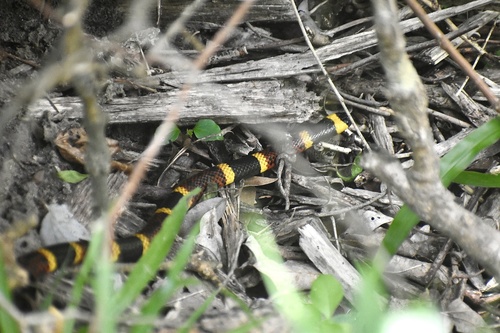 Texas CoralsnakeMicrurus tener
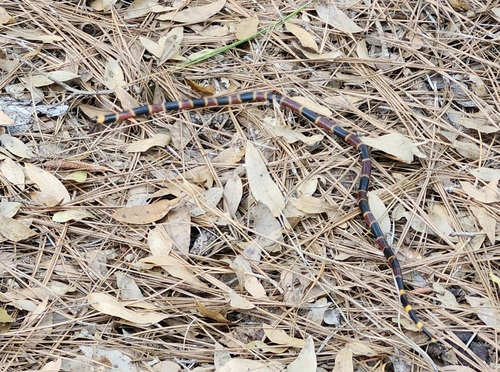 Eastern CoralsnakeMicrurus fulvius
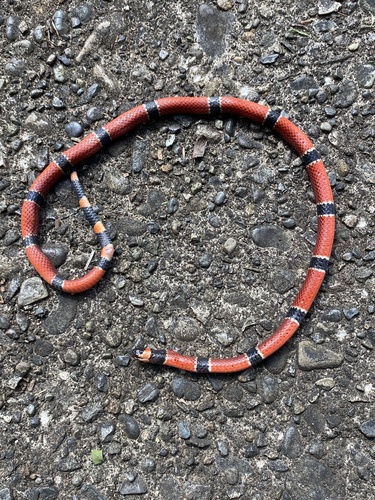 Central American CoralsnakeMicrurus nigrocinctus
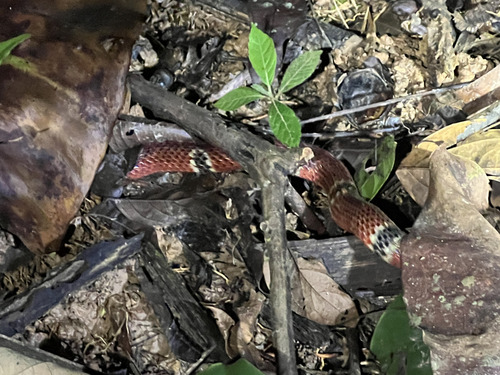 Variable CoralsnakeMicrurus diastema
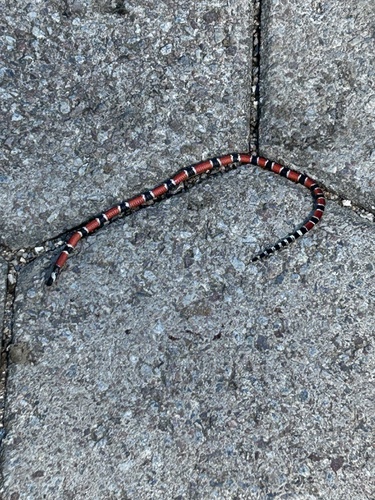 Painted CoralsnakeMicrurus corallinus
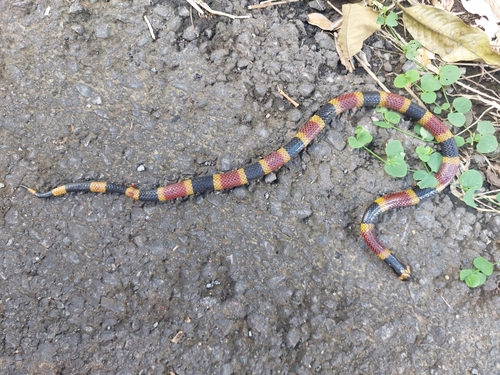 Costa Rican CoralsnakeMicrurus mosquitensis
 Aquatic CoralsnakeMicrurus surinamensis
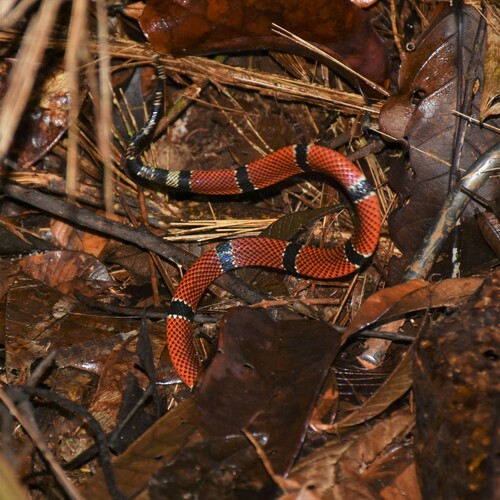 Transandean Capuchin CoralsnakeMicrurus dumerilii
Classification
How scientists group this snake, from the broadest category down to the exact species. Each step narrows to its closest relatives.
Keep learning
- Are Snakes Dangerous? The Real Risk, in PerspectiveMost snakes are harmless and avoid people. Here is the honest picture of snakebite risk worldwide and how to lower your own.
- Snakebite First Aid: What to Do (and What Never to Do)A clear, CDC-based guide to snakebite first aid: the steps that help, the popular myths that hurt, and how to tell a serious bite from a minor one.
- Venomous vs Nonvenomous: How to Tell the DifferenceThe folk rules for telling venomous snakes apart, where each one fails, and why location-based identification beats guessing by sight.
- What to Do If You Find a SnakeFound a snake at home or on a trail? Here is how to stay calm, give it space, identify it safely, and know when to call a professional.
Distribution from GBIF & iNaturalist. Venom status per CDC. Background: Wikipedia. Informational only. Never handle a snake to identify it.