
Boidae
Brown Rainbow Boa
HarmlessEpicrates maurus
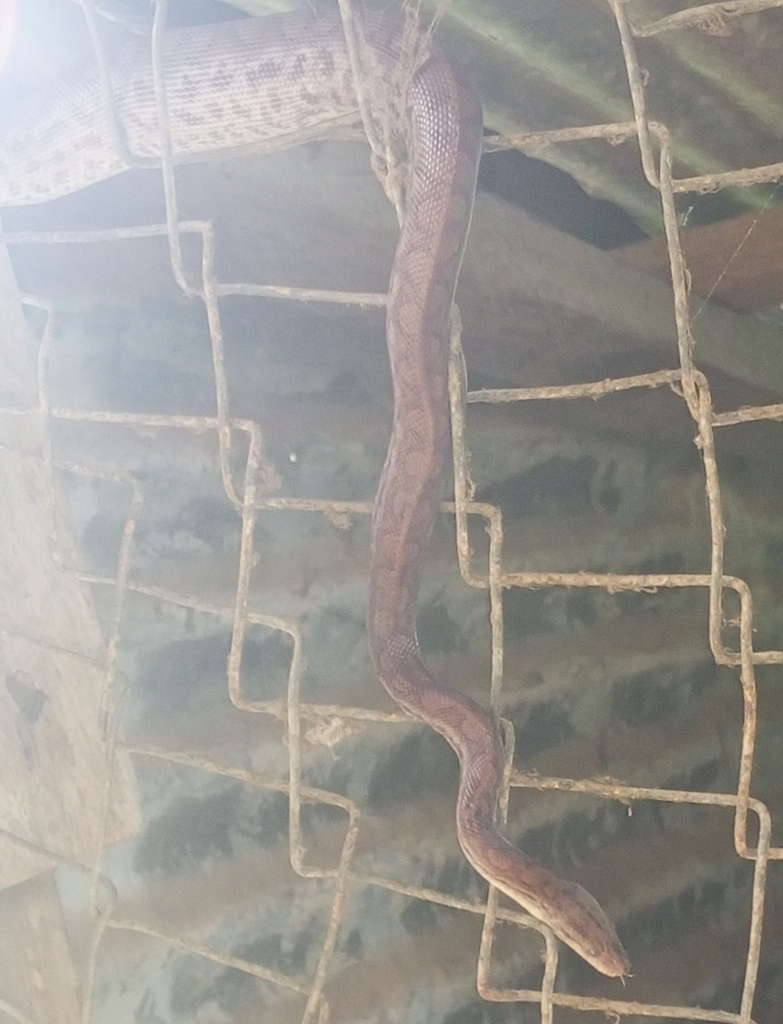
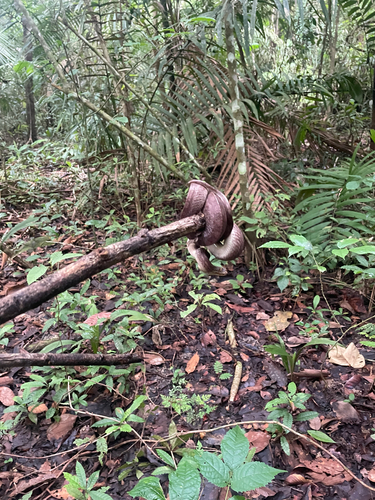
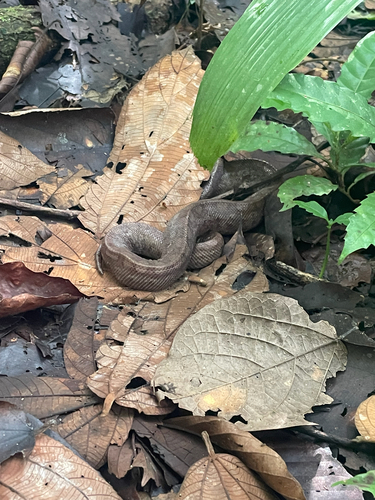
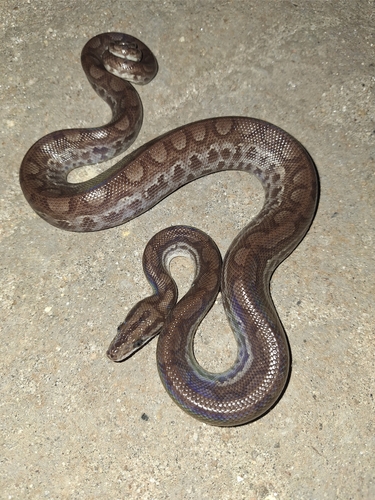
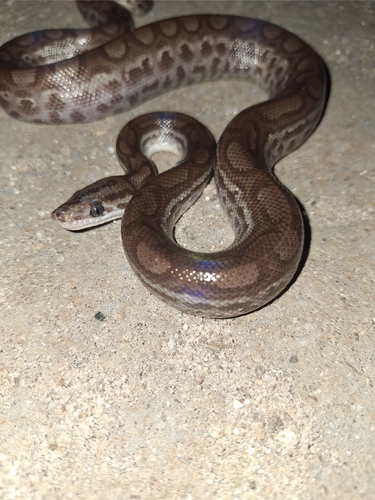
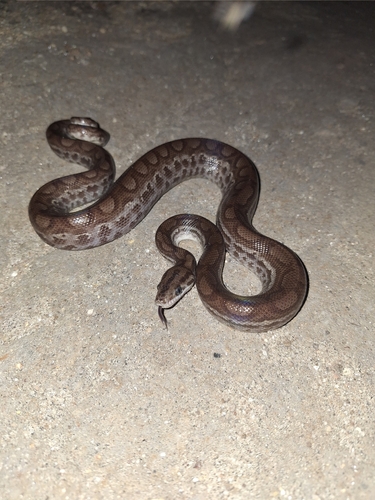
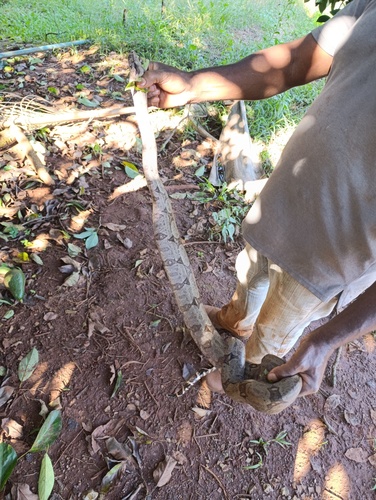
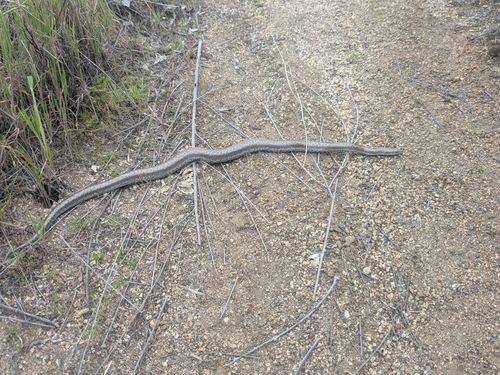
6 photographs of the Brown Rainbow Boa. © Vianeth Pineda.
The Brown Rainbow Boa (Epicrates maurus) is a non-venomous snake in the Boidae family, recorded in 14 countries.
- Family
- Boidae
About the Brown Rainbow Boa
Epicrates maurus is a species of non-venomous constrictor in the family Boidae, commonly found in the Amazon region of South America. The common name for this species is the brown rainbow boa. This species is semi-arboreal, spending time both on the ground and climbing trees and shrubs, although they are also known to swim. They are nocturnal and primarily active in the middle of the night. Rainbow boas are known for their attractive iridescent sheen on their scales in the sunlight.
Description
Size and weight:
Epicrates maurus is the smallest of the rainbow boas, reaching lengths of 3 to 5 feet on average, although length varies by subspecies. For example, the most common subspecies in captivity is the Colombian rainbow boa (E. m. colombianus) grows to 5–6 feet long and matures between 4–6 years old. There is a clear sexual dimorphism between male and female, with females being significantly larger in both length and girth.
Coloring:
Generally uniform brown in color with large dark edged vertebral rings and light centers forming saddles, there may also be a slightly off-center 'S' pattern. Through a process called metachrosis, rainbow boas exhibit a day-to-night color change. Primarily noticed in that their pattern will become lighter—almost silver—and have a molted silver sides and bottom. Although individuals of abnormal colors and patterns exist—for example those that exhibit pigmentation disorders such as albinism, they are very rare in the wild and are often found in captivity where these mutations are often bred.
These pictures provide a good example of the day-to-night color change;
both pictures are of the same snake. Pictures were taken 3.2 hours apart.
Distribution and habitat
This species, being the northernmost rainbow boa, is found in rainforests and drier coastal clearings in its range; southern Central America, Trinidad and Tobago, and northern South America. More semi-arboreal when young, Colombian rainbow boas may climb into trees and shrubs to forage and avoid land predators; however, they become mostly terrestrial with age.
Behavior
Colombian rainbow boas, like all boas in the family Boidae, are non-venomous snakes that subdue their prey with constriction. Like most boids, they have special heat-sensing pits on their faces that allow them to detect the body heat of their warm-blooded prey. While nocturnal, they may bask during the day when night-time temperatures are low. They are active at dawn and dusk and feed on small mammals (such as mice), birds and lizards using their heat-sensing abilities to hunt in the low light. Most Colombian rainbow boas will never need a prey item larger than a large rat; as with most snakes, they can expand their jaw to allow the consuming of items larger than the jaw would normally open (see snake skull). Wild Colombian rainbow boas may bite when they feel threatened as a defense. This bite can be painful, but is not dangerous. Care must still be taken against infection. Like all snakes, when in a shed cycle they will be more unpredictable and irritable due to the added stress of shedding and clouded sight.
Reproduction
Adapted from Wikipedia, available under CC BY-SA.
Frequently asked: Brown Rainbow Boa
- Is the Brown Rainbow Boa venomous?
- No. The Brown Rainbow Boa (Epicrates maurus) is non-venomous and is not considered dangerous to humans. Like most snakes, it will retreat rather than bite when given the chance.
- Is the Brown Rainbow Boa poisonous?
- Snakes are venomous, not poisonous. "Poisonous" means harmful to eat or touch; "venomous" means injecting toxins through a bite. The Brown Rainbow Boa is neither poisonous nor venomous.
- Is the Brown Rainbow Boa dangerous?
- The Brown Rainbow Boa is not dangerous to humans. It has no medically significant venom and bites only defensively if cornered or handled.
- Where does the Brown Rainbow Boa live?
- The Brown Rainbow Boa has verified records in 14 countries, including Colombia, Panama, Trinidad and Tobago. See the distribution section below for its full range.
Where it is found
More Boidae snakes
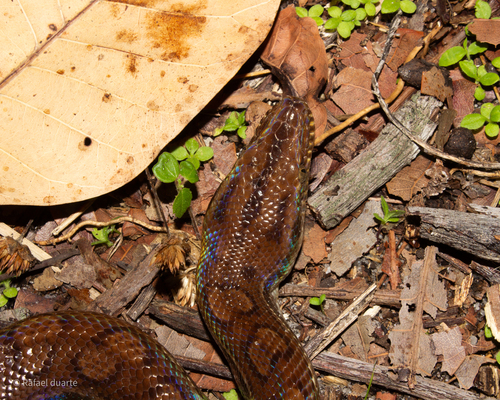
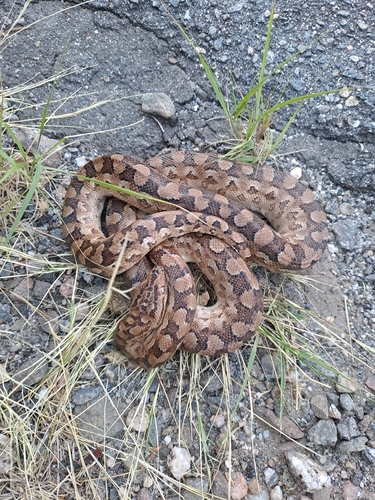
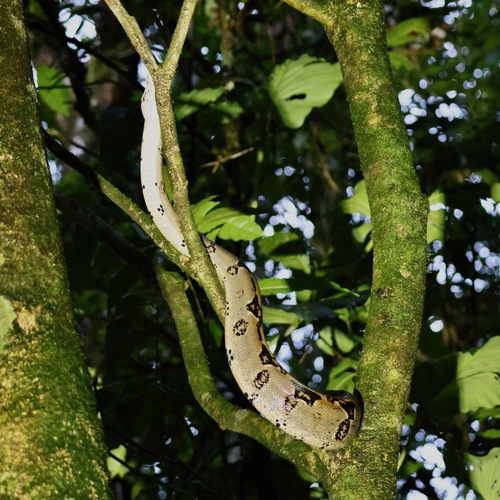
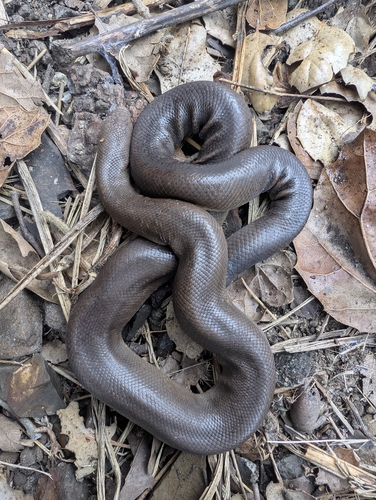
Classification
How scientists group this snake, from the broadest category down to the exact species. Each step narrows to its closest relatives.
Keep learning
- What to Do If You Find a SnakeFound a snake at home or on a trail? Here is how to stay calm, give it space, identify it safely, and know when to call a professional.
- Venomous vs Nonvenomous: How to Tell the DifferenceThe folk rules for telling venomous snakes apart, where each one fails, and why location-based identification beats guessing by sight.
- What Is a Snake? Anatomy and the BasicsA clear overview of what makes a snake a snake: limbless body plan, anatomy, evolution from lizards, species diversity, and why they are ectothermic.
- How to Keep Snakes Out of Your Yard and HomeA practical guide to keeping snakes out of your yard and home using habitat changes that work, plus what to skip and what to do if one shows up.
Distribution from GBIF & iNaturalist. Venom status per CDC. Background: Wikipedia. Informational only. Never handle a snake to identify it.