
Boidae
African Burrowing Python
HarmlessCalabaria reinhardtii
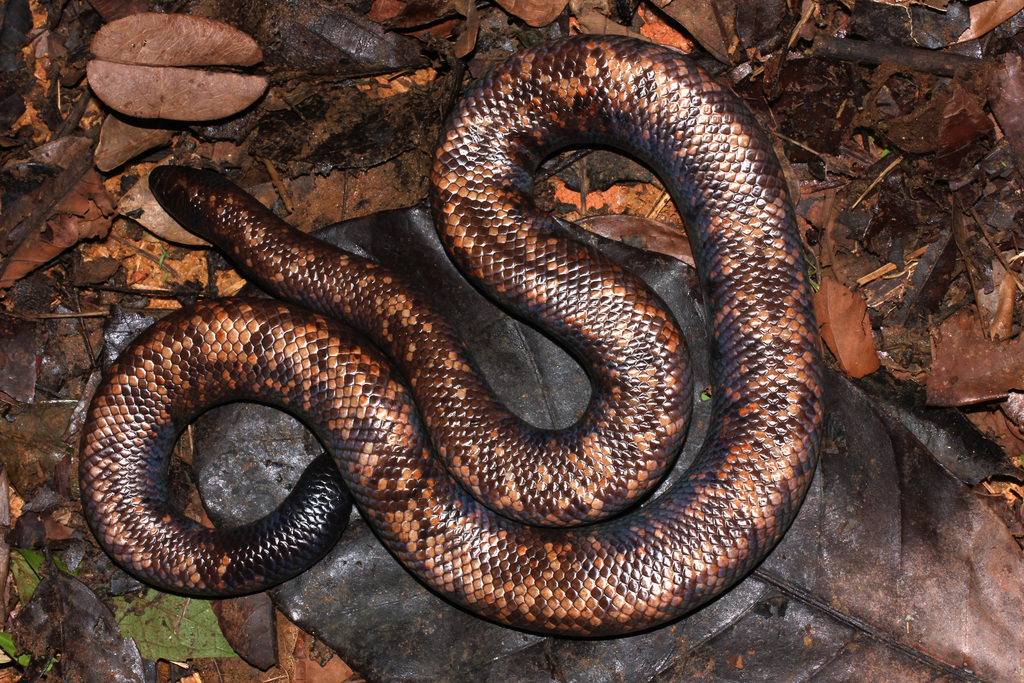
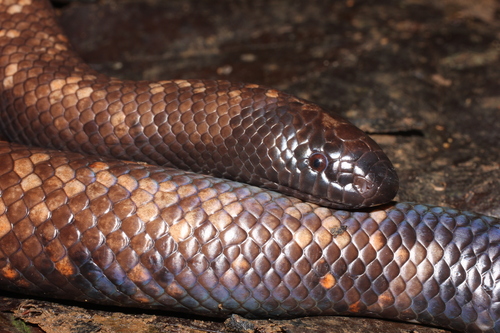
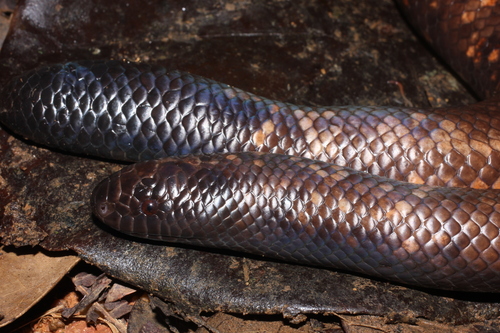
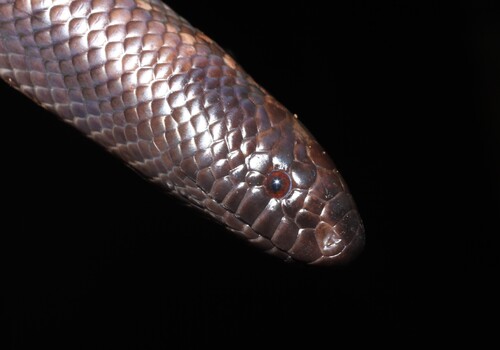
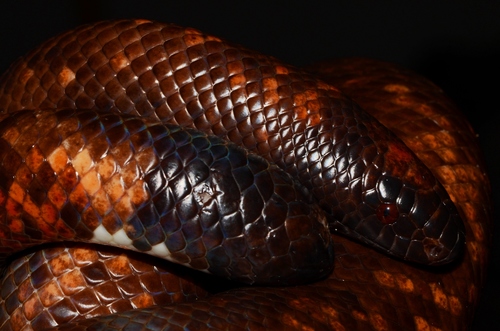
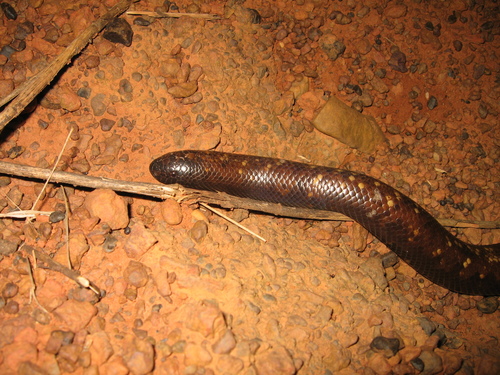
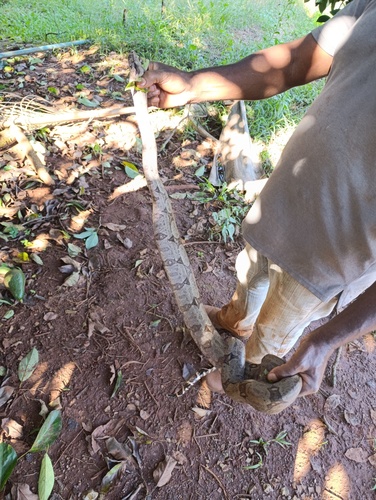
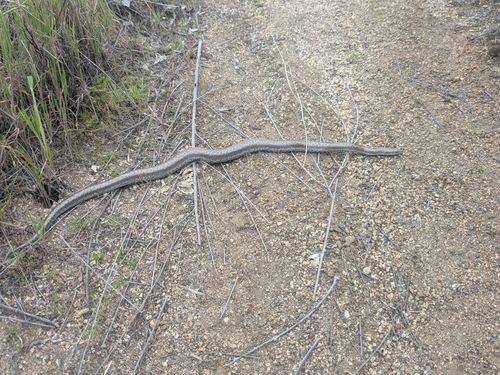
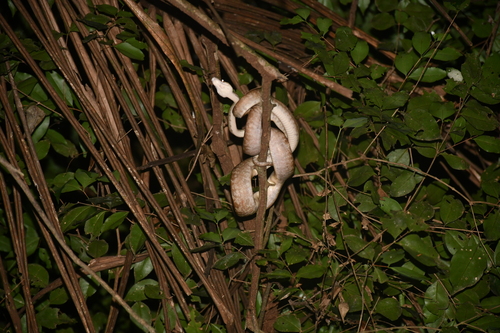
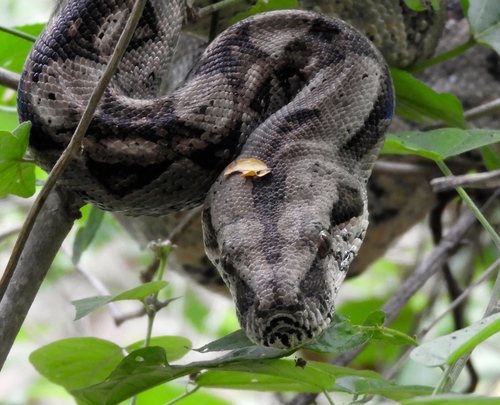
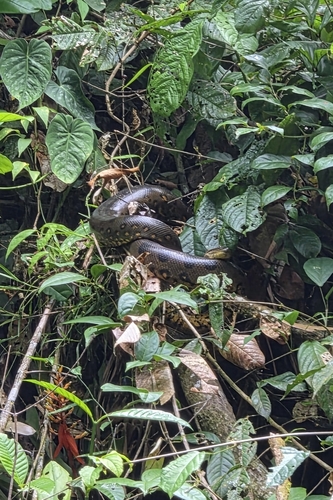
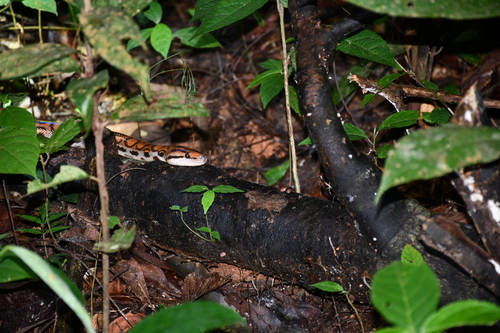
6 photographs of the African Burrowing Python. © Ryan van Huyssteen.
The African Burrowing Python (Calabaria reinhardtii) is a non-venomous snake in the Boidae family, recorded in 16 countries.
- Family
- Boidae
About the African Burrowing Python
The Calabar python (Calabaria reinhardtii) is a species of non-venomous snake in the family Boidae. The species is endemic to West and Central Africa. It is the only species in its genus.
Etymology
The specific name or epithet, reinhardtii, is dedicated to Danish herpetologist Johannes Theodor Reinhardt (1816–1882).
Taxonomy
Although Schlegel (1848) first assigned this taxon to the genus Eryx, most herpetologists have since regarded it as a python, which is still reflected in many of its common names. Kluge (1993) referred it to Charina (Erycinae) based on a phylogenetic analysis. Charina was used to group together C. bottae and C. trivirgata with C. reinhardtii to emphasize evidence for a historical connection between the New and Old Worlds, as well as for taxonomic efficiency. All recent analyses, however, place Calabaria reinhardtii at the base of a large clade within Boidae, which consists of the Boinae, the Erycinae, and an American clade made up of Charina (Lichanura included) and the Ungaliophiinae.
This species was long regarded as a member of the family Pythonidae, a fact still reflected in many of its common names. It was moved to Charina by Kluge (1993) based on a phylogenetic analysis; however, analyses based on DNA show that Calabaria is not closely related to Charina, and instead it appears to represent an ancient branch of the boid snakes with no close living relatives.
No subspecies are currently recognized.
Description
Calabaria reinhardtii grows to no more than 1 m (39 in) in total length (including tail), and the body is fairly uniform in its thickness from head to tail, with a pronounced cylindrical profile.
No palatal teeth are present and, unlike other boids, the compact skull includes a prefrontal bone. No thermoreceptive labial pits are present. Adapted to burrowing, the body is cylindrical with a blunt head and equally blunt tail. The head is covered with enlarged shields. The shape of the tail closely resembles that of the head which may be a defensive adaptation, meant to confuse an attacker. The body is muscular and strong. The eyes are relatively small and usually a dark reddish-brown color. The pupil is round.
The color pattern consists of a dark brown or black ground color speckled with red, yellow and/or grayish spots. The tail may be ringed or have a partial ring of bright white scales. This ring of scales is assumed to exist to confuse attackers and draw attention away from its head.
The smooth dorsal scales are arranged in 29 to 32 rows at midbody. The ventrals are 221–239. The anal plate is entire. The subcaudals are 20–28, also entire.
Geographic range
Calabaria reinhardtii is found in the equatorial rain forest regions of West and Central Africa, from Liberia and Sierra Leone to Cameroon (including Bioko Island), the Central African Republic, Gabon, the Republic of the Congo and the Democratic Republic of the Congo. In the DRC, it is found almost as far east as Lake Kivu. According to Stimson (1969), the type locality is the "Gold Coast". It also occurs in Gabon and the Cabinda enclave of Angola.
Behavior
Adapted from Wikipedia, available under CC BY-SA.
Frequently asked: African Burrowing Python
- Is the African Burrowing Python venomous?
- No. The African Burrowing Python (Calabaria reinhardtii) is non-venomous and is not considered dangerous to humans. Like most snakes, it will retreat rather than bite when given the chance.
- Is the African Burrowing Python poisonous?
- Snakes are venomous, not poisonous. "Poisonous" means harmful to eat or touch; "venomous" means injecting toxins through a bite. The African Burrowing Python is neither poisonous nor venomous.
- Is the African Burrowing Python dangerous?
- The African Burrowing Python is not dangerous to humans. It has no medically significant venom and bites only defensively if cornered or handled.
- Where does the African Burrowing Python live?
- The African Burrowing Python has verified records in 16 countries, including Benin, Cameroon, Congo, Democratic Republic of the. See the distribution section below for its full range.
- What does the African Burrowing Python eat?
- Calabaria reinhardtii preys on small rodents and shrews, often invading their burrows in search of them. It may wait for the adults to leave the nest, after which it will enter and eat whole litters at a time. Constriction is usually employed to kill its prey, but it may also use its body to press the young rodents against the walls of their nest. If there is enough room in a burrow, multiple prey may be constricted at a time.
- Why is it called the African Burrowing Python?
- The specific name or epithet, reinhardtii, is dedicated to Danish herpetologist Johannes Theodor Reinhardt (1816–1882).
Where it is found
More Boidae snakes
Classification
How scientists group this snake, from the broadest category down to the exact species. Each step narrows to its closest relatives.
Keep learning
- What to Do If You Find a SnakeFound a snake at home or on a trail? Here is how to stay calm, give it space, identify it safely, and know when to call a professional.
- Venomous vs Nonvenomous: How to Tell the DifferenceThe folk rules for telling venomous snakes apart, where each one fails, and why location-based identification beats guessing by sight.
- What Is a Snake? Anatomy and the BasicsA clear overview of what makes a snake a snake: limbless body plan, anatomy, evolution from lizards, species diversity, and why they are ectothermic.
- How to Keep Snakes Out of Your Yard and HomeA practical guide to keeping snakes out of your yard and home using habitat changes that work, plus what to skip and what to do if one shows up.
Distribution from GBIF & iNaturalist. Venom status per CDC. Background: Wikipedia. Informational only. Never handle a snake to identify it.