
Colubridae
South American Pond Snake
HarmlessPseudoeryx plicatilis
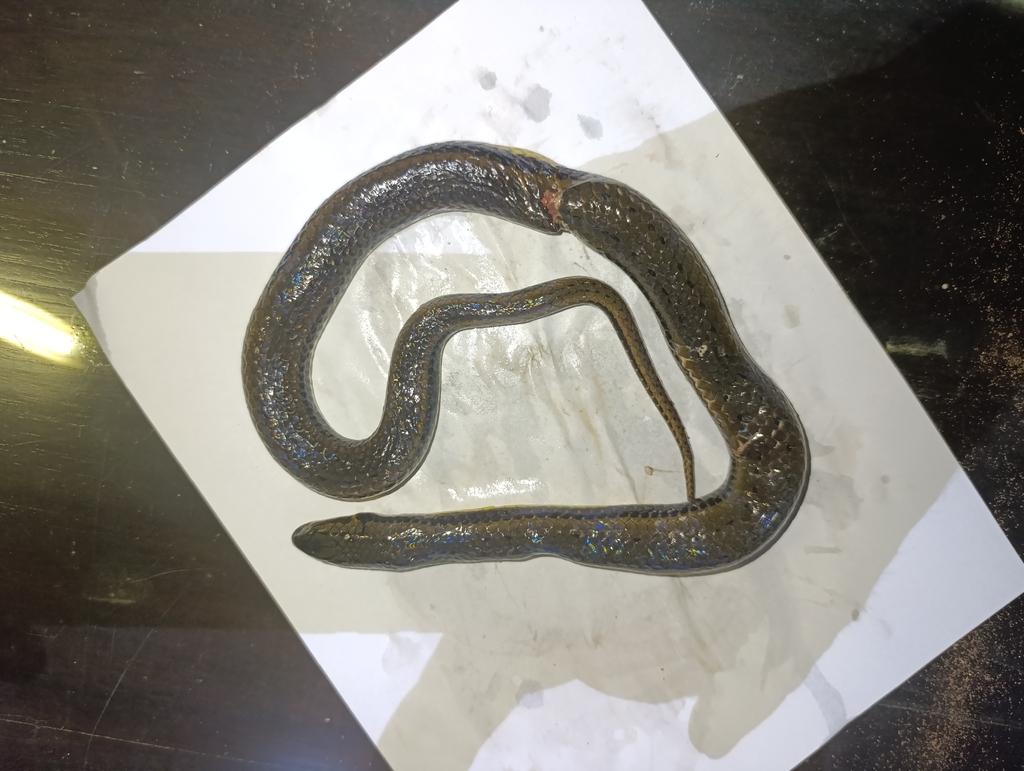
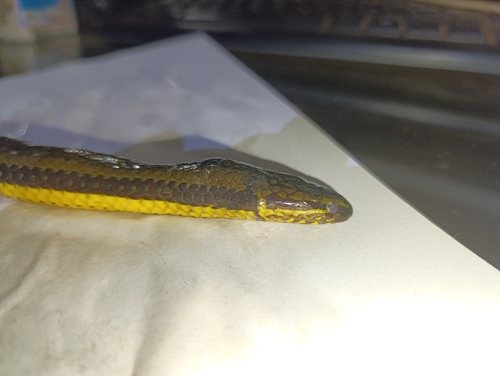
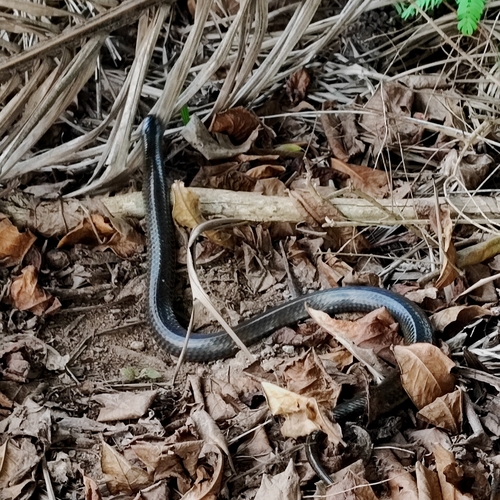
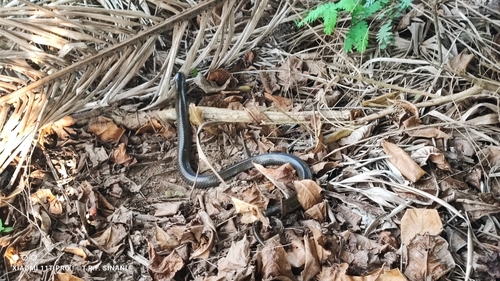
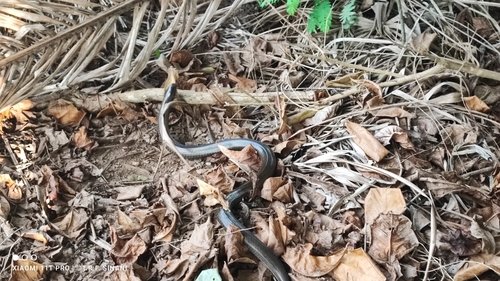
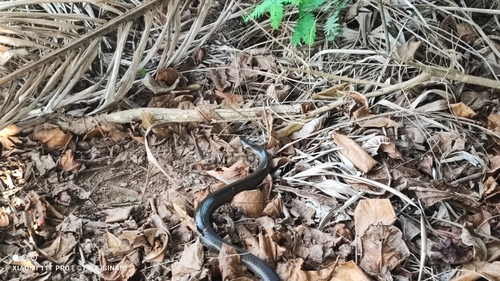
6 photographs of the South American Pond Snake. © Vincent A. Vos.
The South American Pond Snake (Pseudoeryx plicatilis) is a non-venomous snake in the Colubridae family, recorded in 12 countries.
- Family
- Colubridae
About the South American Pond Snake
Pseudoeryx plicatilis, the South American pond snake, is a species of snake of the family Colubridae. They can reach lengths averaging to 1.27 m (4.2 ft). The body of the snake is flattened more dorsally and has smooth scales. The head is compact and the snake is composed of primarily pale dorsal yellow lines with the scales being mostly olive brown. For adults the ventral side of the snake is yellow with rows of black dots. The juveniles have ventral sides that are bright orange or red with black doted rows.
Habitat and geographic distribution
Geographic range
The snake is found in Colombia, Venezuela, Ecuador, Peru, Guyana, Suriname, French Guiana, Bolivia, Paraguay, Argentina, and Brazil.
Habitat
The habitat of Pseudoeryx plicatilis consists of forest, savanna, and inland wetlands. They can be found in black-water rivers, lagoons, ponds, swamps, and oxbow lakes.
Behavior
These snakes are nocturnal and they perform different activities at different depths throughout the night. They have a tendency to forage or perform ambush behavior to attack prey. They are a relatively calm snake and perform many passive defensive behaviors.
Defense tactics
There remains to be limited knowledge about this species, however, observations of different defensive behaviors have been made. They have been seen hiding their heads and their tails, dorsally-ventrally flattening their full body, making knots out of themselves, turning their ventral region upwards, and moving in drastic erotic ways. Pseudoeryx plicatilis shares defensive traits with other species of water snake including hiding of the head, dorsally-ventrally flattening, and cloacal discharge. Each strategy has its own effect on the predator that is attempting to attack. Erratic movements demonstrate strength and protect the head, cloacal discharge is a deterrent towards the predator, and the tucking of the head and tail implies that predators attack both ends of the animal.
Biology
Reproduction
Pseudoeryx plicatilis is oviparous. They have a large clutch size ranging from 22 to 49 eggs. The females will protect and guard the eggs until hatching.
Diet
The diet of Pseudoeryx plicatilis primarily consists of aquatic organisms such as fishes and frogs. They have also been observed eating freshwater eels half the size of their own bodies.
Taxonomy
Etymology
The genus Pseudoeryx was coined by Fitzinger in 1826. The name Pseudoeryx stems from the Greek word pseudo-, which means false. -eryx is the generic name of the old world sand boas. The species name plicatilis means foldable, from Latin terms. The species is referred to as foldable because of the ventro-lateral fold.
The species was described as Coluber plicatilis by Linnaeus in his 1758 10th edition of Systema Naturae. A second species, Pseudoeryx relictualis, was described in 2007.
Adapted from Wikipedia, available under CC BY-SA.
Frequently asked: South American Pond Snake
- Is the South American Pond Snake venomous?
- No. The South American Pond Snake (Pseudoeryx plicatilis) is non-venomous and is not considered dangerous to humans. Like most snakes, it will retreat rather than bite when given the chance.
- Is the South American Pond Snake poisonous?
- Snakes are venomous, not poisonous. "Poisonous" means harmful to eat or touch; "venomous" means injecting toxins through a bite. The South American Pond Snake is neither poisonous nor venomous.
- Is the South American Pond Snake dangerous?
- The South American Pond Snake is not dangerous to humans. It has no medically significant venom and bites only defensively if cornered or handled.
- Where does the South American Pond Snake live?
- The South American Pond Snake has verified records in 12 countries, including Brazil, Colombia, Suriname. See the distribution section below for its full range.
- What does the South American Pond Snake eat?
- The diet of Pseudoeryx plicatilis primarily consists of aquatic organisms such as fishes and frogs. They have also been observed eating freshwater eels half the size of their own bodies.
- Why is it called the South American Pond Snake?
- The genus Pseudoeryx was coined by Fitzinger in 1826. The name Pseudoeryx stems from the Greek word pseudo-, which means false. -eryx is the generic name of the old world sand boas. The species name plicatilis means foldable, from Latin terms. The species is referred to as foldable because of the ventro-lateral fold. The species was described as Coluber plicatilis by Linnaeus in his 1758 10th edition of Systema Naturae. A second species, Pseudoeryx relictualis, was described in 2007.
Where it is found
More Colubridae snakes
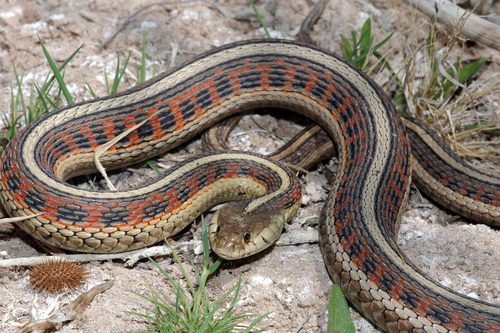 Common Garter SnakeThamnophis sirtalis
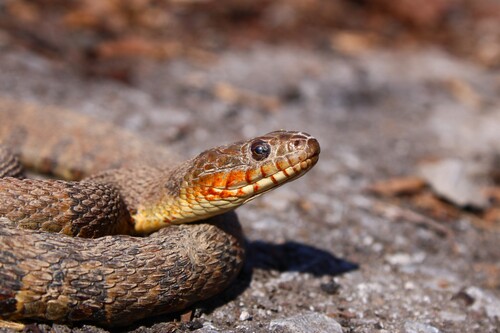 Common WatersnakeNerodia sipedon
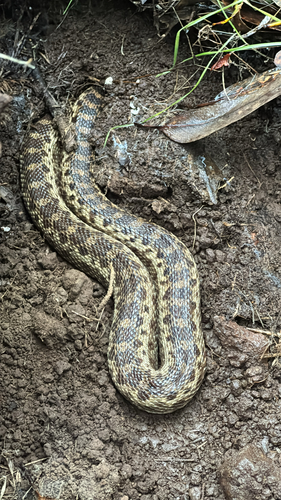 Gopher SnakePituophis catenifer
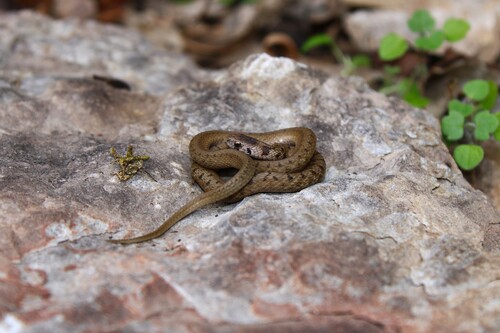 DeKay's BrownsnakeStoreria dekayi
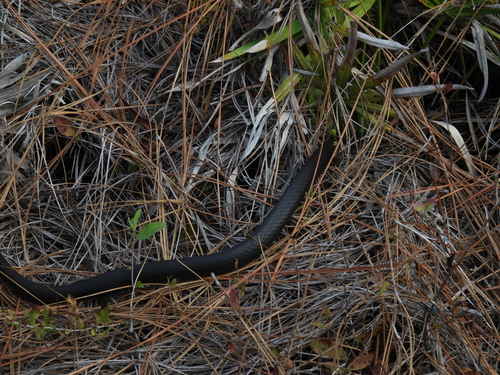 North American RacerColuber constrictor
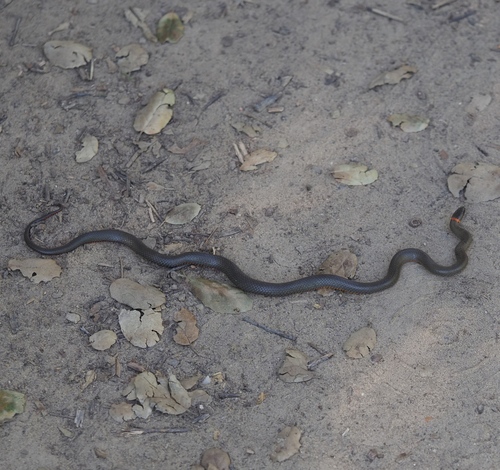 Ring-necked SnakeDiadophis punctatus
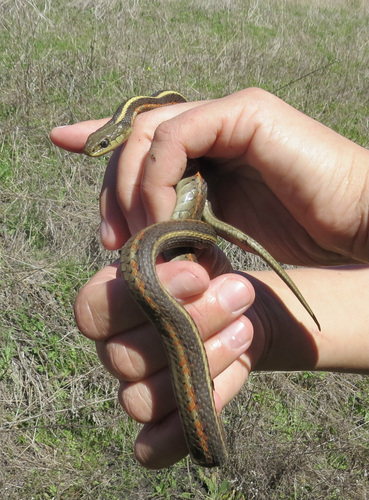 Western Terrestrial Garter SnakeThamnophis elegans
- No photoLake Maracaibo Pond SnakePseudoeryx relictualis
Classification
How scientists group this snake, from the broadest category down to the exact species. Each step narrows to its closest relatives.
- OrderThe broad group of scaled reptiles: all snakes and lizards
- Squamata
- FamilyA group of related snakes that share key traits
- Colubridae
- GenusA close-knit group of very similar species
- Pseudoeryx
- SpeciesThis exact snake, named in the two-part scientific name
- Pseudoeryx plicatilis
Keep learning
- What to Do If You Find a SnakeFound a snake at home or on a trail? Here is how to stay calm, give it space, identify it safely, and know when to call a professional.
- Venomous vs Nonvenomous: How to Tell the DifferenceThe folk rules for telling venomous snakes apart, where each one fails, and why location-based identification beats guessing by sight.
- What Is a Snake? Anatomy and the BasicsA clear overview of what makes a snake a snake: limbless body plan, anatomy, evolution from lizards, species diversity, and why they are ectothermic.
- How to Keep Snakes Out of Your Yard and HomeA practical guide to keeping snakes out of your yard and home using habitat changes that work, plus what to skip and what to do if one shows up.
Distribution from GBIF & iNaturalist. Venom status per CDC. Background: Wikipedia. Informational only. Never handle a snake to identify it.