
Genus · Colubridae
Types of pond snakes
2 species make up the genus Pseudoeryx, the snakes commonly called pond snakes. None are considered dangerous to humans.
About South American pond snakes
Aquatic colubrids of South America's lowland wetlands, built for hunting in still and slow-moving freshwater.
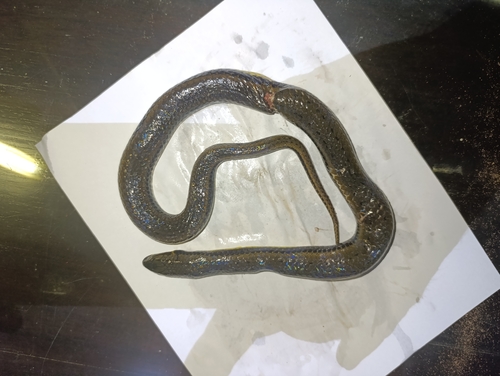
Pseudoeryx is a small genus of aquatic snakes in the large and diverse family Colubridae, the group that contains most of the world's nonvenomous and mildly venomous snakes. The genus holds only a couple of recognized species: the wide-ranging South American Pond Snake (Pseudoeryx plicatilis) and the more restricted Lake Maracaibo Pond Snake (Pseudoeryx relictualis) of northern Venezuela. Both live tied to water across the warm lowlands of South America, favoring ponds, marshes, flooded grasslands, oxbow lakes, and the quiet margins of slow rivers.
As aquatic colubrids, Pseudoeryx snakes show the typical adaptations of water-dwelling serpents: a fairly stout, cylindrical body, smooth scales, and eyes and nostrils set toward the top of the head so the animal can watch and breathe while mostly submerged. They are generally drab in color, brown to olive with darker markings that break up their outline against muddy water and vegetation. The name pond snake describes the habit better than any single field mark; if you find one, the setting (calm freshwater) is itself a strong clue. These are not the same as North American or Eurasian water snakes, but they fill a similar ecological role on their continent.
Pseudoeryx snakes are not front-fanged venomous snakes and pose no serious medical threat to people. Within Colubridae many species are harmless and some are rear-fanged with mild saliva useful only for subduing small prey, and the safe general rule is to leave any wild snake alone and not handle it. Their diet centers on aquatic animals such as fish and amphibians, and like most colubrids they reproduce by laying eggs rather than bearing live young. Because they are secretive and water-bound, they are seen far less often than their broad range would suggest. If anyone is ever bitten by an unidentified snake, do not try to treat it yourself; contact emergency services or, in the United States, Poison Control at 1-800-222-1222.
Pseudoeryx belongs to the Colubridae family (Colubrids). The largest snake family, and the one most snakes you meet belong to. Typically round pupils, a head only slightly wider than the neck, and no heat-sensing facial pit or rattle. Scales may be smooth and glossy or keeled and matte depending on the species.
Danger: Almost all colubrids are harmless. A small number are rear-fanged with medically significant venom, the boomslang and the twig (vine) snakes of Africa being the dangerous exceptions. Most colubrids will flee or bluff rather than bite.
All species (2)
Keep learning
- What Is a Snake? Anatomy and the BasicsA clear overview of what makes a snake a snake: limbless body plan, anatomy, evolution from lizards, species diversity, and why they are ectothermic.
- How Snakes Move, Hunt, and EatHow snakes move without legs, hunt as ambushers or active foragers, kill by constriction or venom, and swallow prey wider than their head.
- What Do Snakes Eat?All snakes are carnivores. Learn what snakes eat, how diet changes with size and age, how often they feed, and how they hunt and swallow prey.
- Venomous vs Nonvenomous: How to Tell the DifferenceThe folk rules for telling venomous snakes apart, where each one fails, and why location-based identification beats guessing by sight.