
Colubridae
Large-eyed Green Treesnake
HarmlessRhamnophis aethiopissa
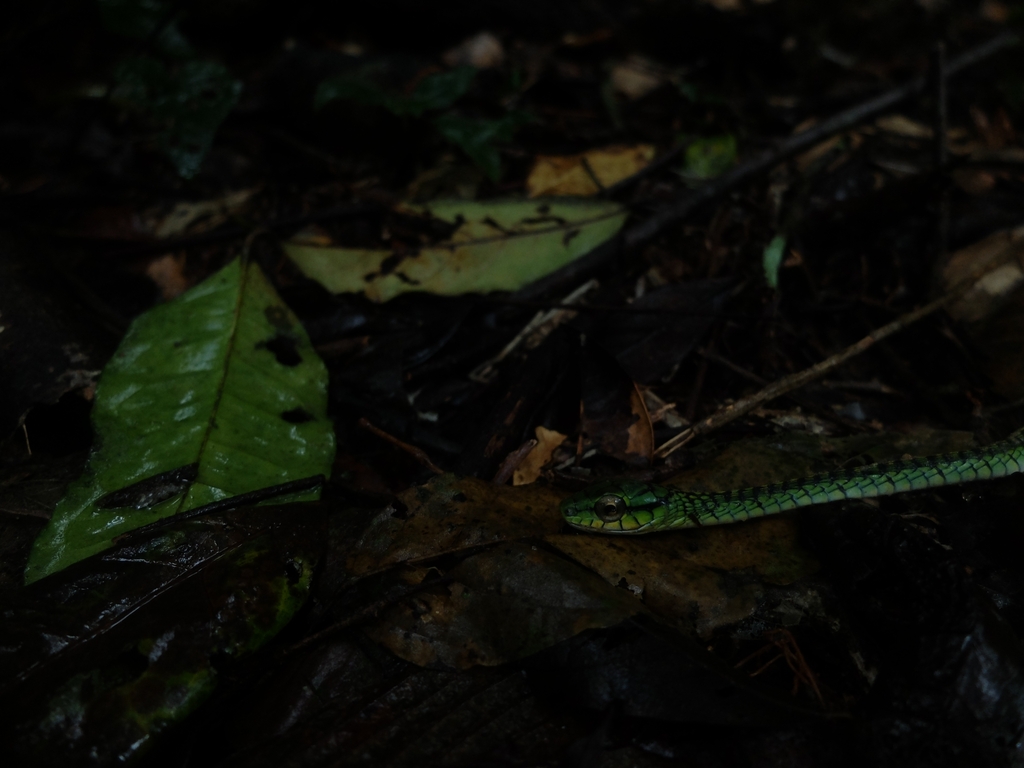
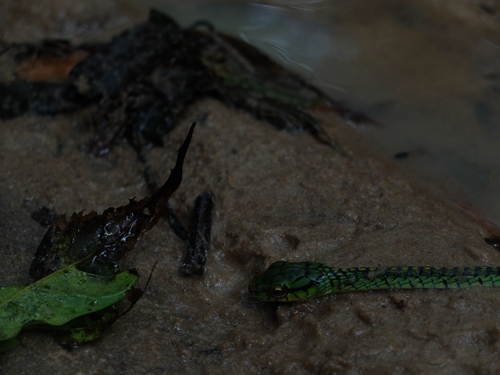
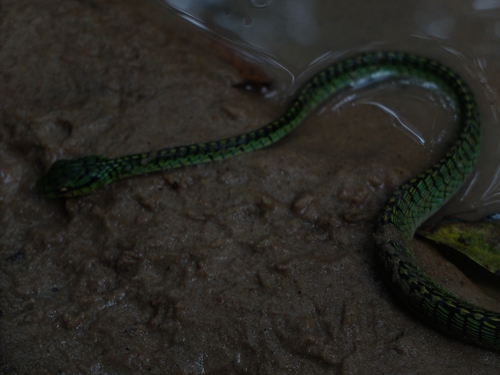
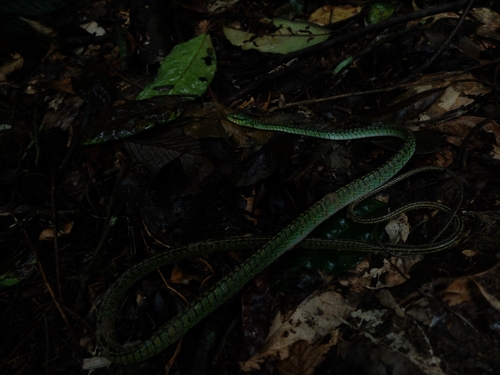
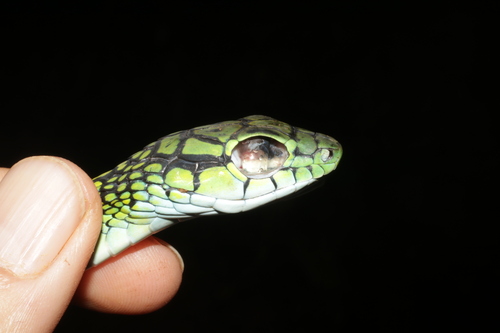
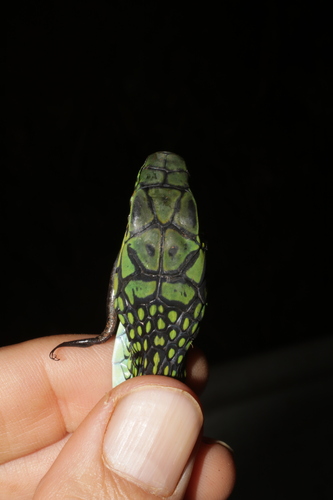
6 photographs of the Large-eyed Green Treesnake. © Erwann André.
The Large-eyed Green Treesnake (Rhamnophis aethiopissa) is a rear-fanged, mildly venomous snake in the Colubridae family, recorded in 17 countries.
- Family
- Colubridae
About the Large-eyed Green Treesnake
The large-eyed green tree snake (Rhamnophis aethiopissa), also known commonly as the splendid dagger-tooth tree snake, is a species of venomous snake in the subfamily Colubrinae of the family Colubridae. The species is endemic to Africa. There are three recognized subspecies.
Geographic range
R. aethiopissa is found in Angola, Cameroon, Central African Republic, Republic of the Congo, Democratic Republic of the Congo, Equatorial Guinea, Gabon, Ghana, Guinea, Ivory Coast, Kenya, Liberia, Senegal, Sierra Leone, South Sudan, Tanzania, Togo, Uganda, and Zambia.
Habitat
The preferred natural habitats of R. aethiopissa are forest and savanna, at altitudes from sea level to 1,040 m (3,410 ft).
Description
R. aethiopissa may attain a total length (including tail) of 1.5 m (4.9 ft). The dorsal scales, which are smooth, are arranged in 17 rows at midbody.
Behavior
R. aethiopissa is arboreal and diurnal.
Diet
R. aethiopissa preys upon frogs, lizards, birds, and small mammals.
Reproduction
R. aethiopissa is oviparous. Eggs are laid in leaf litter, and clutch size may be as many as 17 eggs.
Subspecies
The following three subspecies are recognized as being valid, including the nominotypical subspecies.
Rhamnophis aethiopissa aethiopissa Günther, 1862
Rhamnophis aethiopissa ituriensis Schmidt, 1923
Rhamnophis aethiopissa elgonensis Loveridge, 1929
Venom
Rhamnophis aethiopissa is a rear-fanged colubrid, i.e., it has venom, which it may be able to inoculate by biting. Because very little is known about this species and its venom, it is necessary to be very cautious when working with it. This species has an almost identical defence mechanism to the boomslang (Dispholidus typus) and twig snakes (genus Thelotornis) as it also inflates its throat to make itself look bigger. It is believed that the species of the genus Rhamnophis evolved between the boomslang and the species of the genus Thrasops in terms of their fangs and means of envenomation.
Adapted from Wikipedia, available under CC BY-SA.
Frequently asked: Large-eyed Green Treesnake
- Is the Large-eyed Green Treesnake venomous?
- The Large-eyed Green Treesnake (Rhamnophis aethiopissa) is rear-fanged and only mildly venomous. It is not considered dangerous to humans (its venom is weak and its fangs sit at the back of the mouth) but a bite can cause local swelling or irritation, so it should not be handled.
- Is the Large-eyed Green Treesnake poisonous?
- Snakes are venomous, not poisonous. "Poisonous" means harmful to eat or touch; "venomous" means injecting toxins through a bite. The Large-eyed Green Treesnake is neither poisonous nor venomous.
- Is the Large-eyed Green Treesnake dangerous?
- The Large-eyed Green Treesnake is not dangerous to humans. It has no medically significant venom and bites only defensively if cornered or handled.
- Where does the Large-eyed Green Treesnake live?
- The Large-eyed Green Treesnake has verified records in 17 countries, including Congo, Democratic Republic of the, Cameroon, Gabon. See the distribution section below for its full range.
- What does the Large-eyed Green Treesnake eat?
- R. aethiopissa preys upon frogs, lizards, birds, and small mammals.
Where it is found
More Colubridae snakes
 Spotted Dagger-tooth Tree SnakeRhamnophis batesii
 Common Garter SnakeThamnophis sirtalis
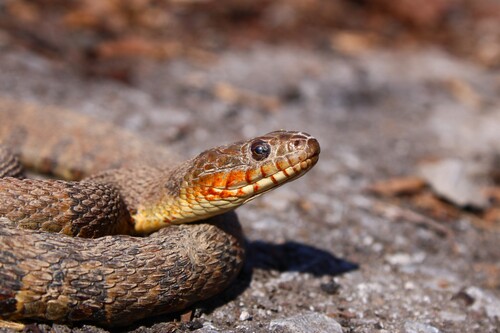 Common WatersnakeNerodia sipedon
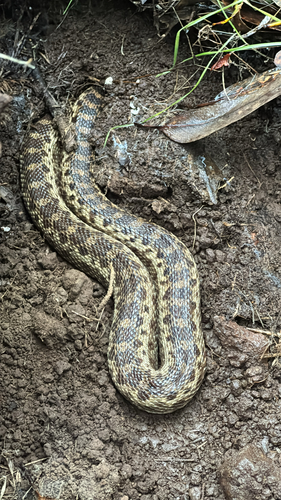 Gopher SnakePituophis catenifer
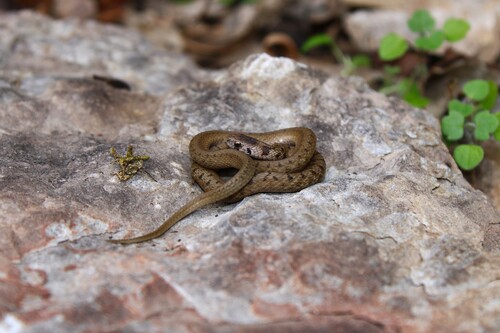 DeKay's BrownsnakeStoreria dekayi
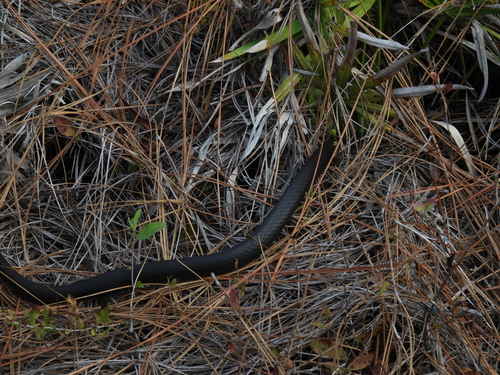 North American RacerColuber constrictor
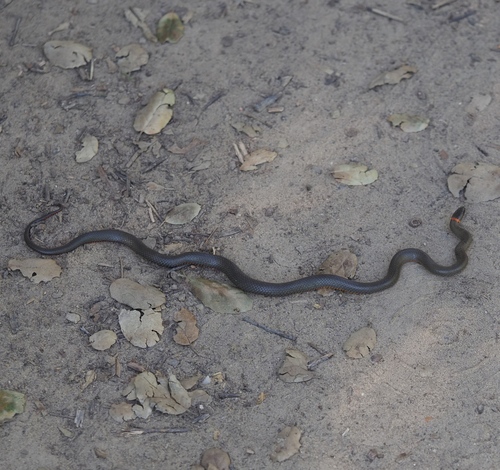 Ring-necked SnakeDiadophis punctatus
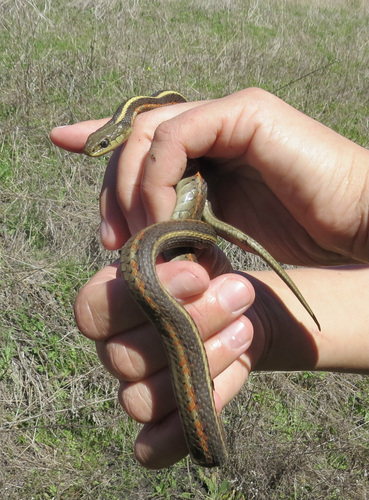 Western Terrestrial Garter SnakeThamnophis elegans
Classification
How scientists group this snake, from the broadest category down to the exact species. Each step narrows to its closest relatives.
- OrderThe broad group of scaled reptiles: all snakes and lizards
- Squamata
- FamilyA group of related snakes that share key traits
- Colubridae
- GenusA close-knit group of very similar species
- Rhamnophis
- SpeciesThis exact snake, named in the two-part scientific name
- Rhamnophis aethiopissa
Keep learning
- What to Do If You Find a SnakeFound a snake at home or on a trail? Here is how to stay calm, give it space, identify it safely, and know when to call a professional.
- Venomous vs Nonvenomous: How to Tell the DifferenceThe folk rules for telling venomous snakes apart, where each one fails, and why location-based identification beats guessing by sight.
- What Is a Snake? Anatomy and the BasicsA clear overview of what makes a snake a snake: limbless body plan, anatomy, evolution from lizards, species diversity, and why they are ectothermic.
- How to Keep Snakes Out of Your Yard and HomeA practical guide to keeping snakes out of your yard and home using habitat changes that work, plus what to skip and what to do if one shows up.
Distribution from GBIF & iNaturalist. Venom status per CDC. Background: Wikipedia. Informational only. Never handle a snake to identify it.