
Viperidae
Highland Eyelash-Pitviper
VenomousBothriechis schlegelii
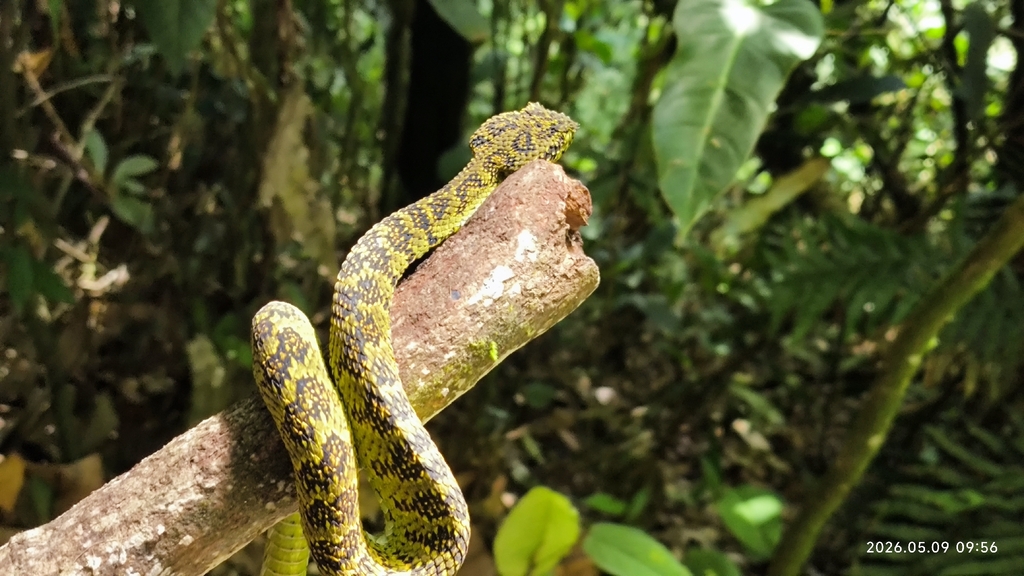
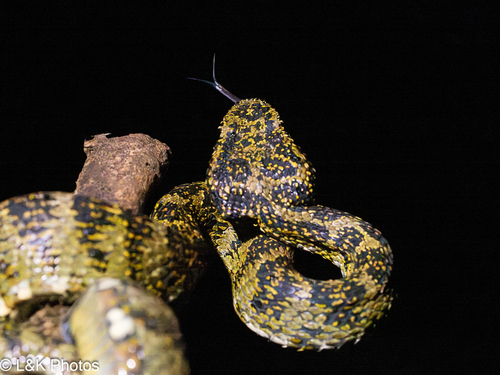
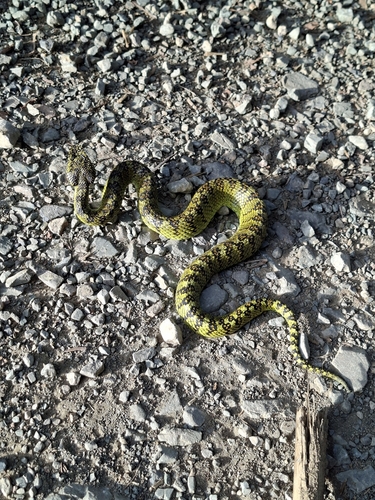
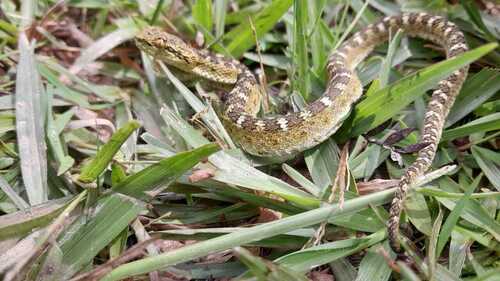
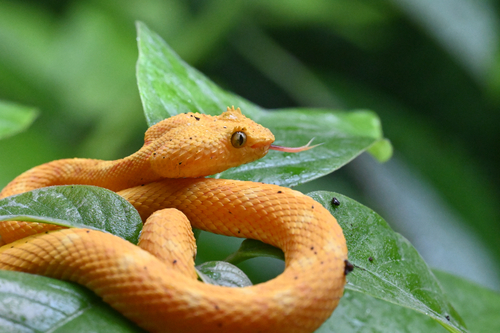
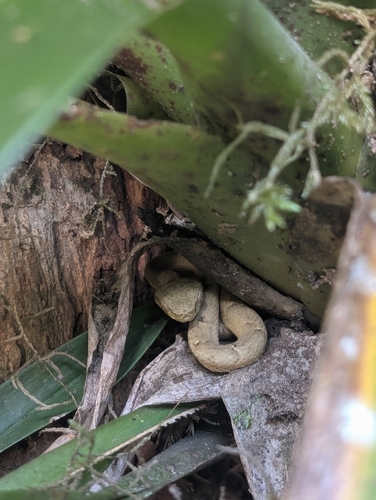
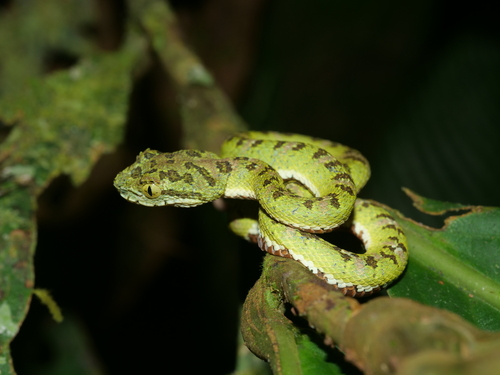
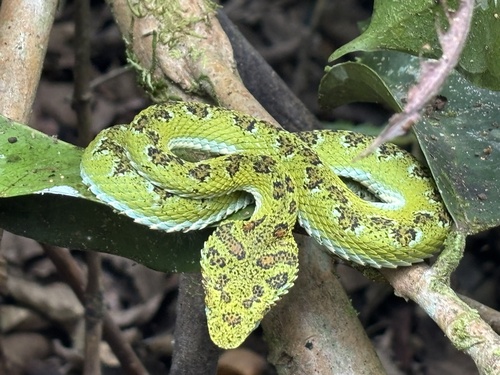
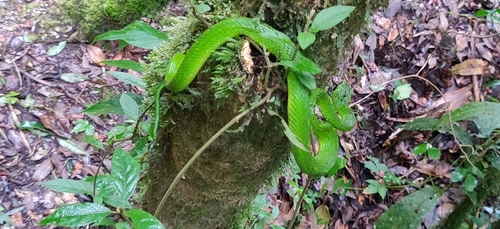
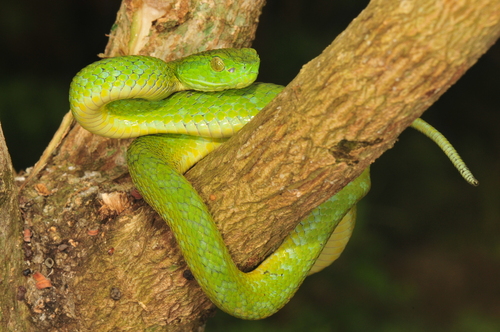
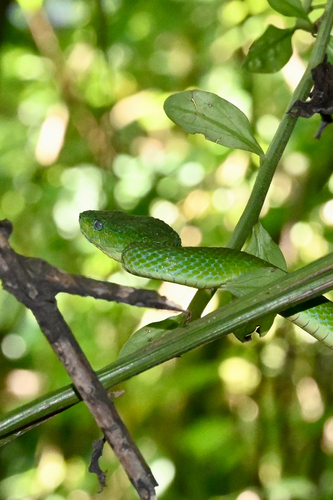
4 photographs of the Highland Eyelash-Pitviper. no rights reserved.
The Highland Eyelash-Pitviper (Bothriechis schlegelii) is a venomous snake in the Viperidae family, recorded in 14 countries.
If you are bitten
This is a venomous snake. Treat any bite as a medical emergency: stay calm, keep the bitten limb still and roughly level with the heart, remove rings and tight clothing, and get to emergency care immediately. Do not apply a tourniquet, cut the wound, apply ice, or try to suck out venom. Call your local emergency number or poison center.
- Family
- Viperidae
- Danger
- high
About the Highland Eyelash-Pitviper
Bothriechis schlegelii, known commonly as the highland eyelash-pitviper, Schlegel's eyelash-pitviper, eyelash viper or eyelash palm viper, is a species of pit viper in the family Viperidae, native to Colombia.
Somewhat small, arboreal snakes, B. schlegelii is perhaps best known for the namesake superciliary ("eyelash") scales above its eyes, and for having distinctly keeled or "raised" scales covering the bulk of its body. The species is also known for producing a veritable rainbow of color forms (morphs). It is the most common of the green palm-pitvipers (genus Bothriechis), and is often present in zoological exhibits, owing to its general hardiness. The specific name schlegelii honors Hermann Schlegel, who was a German ornithologist and herpetologist.
For other common names, see below. No subspecies are currently recognized as being valid.
Description
The eyelash viper is a relatively small species of pitviper, with adults ranging from 55–82 cm (22–32 in) long, and females being longer and more variable in size than males, which can grow to 69 cm (27 in) long. It has a wide, triangular-shaped head, and eyes with vertical pupils. Like all pit vipers, it is solenoglyphous, having large, hypodermic needle-like fangs in the front of the upper jaw that fold back when not in use, and has heat sensitive organs, or pits, located on either side of the head between the eye and nostril.
Its most distinguishing feature, and origin of its common name, is the set of modified scales above the eyes that look much like eyelashes. The eyelashes are thought to aid in camouflage, breaking up the snake's outline among the foliage where it hides. The eyelash viper occurs in a wide range of colors. No external features distinguish the two sexes.
Common names
Common names of B. schlegelii include the eyelash viper, eyelash pit viper, eyelash palm viper, eyelash palm-pitviper, Schlegel's viper, Schlegel's pit viper, Schlegel's palm viper, eyelash snake, eyelash lancehead, eyelash mountain viper, and horned palm viper. In Spanish, the primary language of countries comprising its distribution, common names include bocaracá, oropel (golden morph), víbora bocaracá, toboba pestañas, víbora de pestañas (eyelash viper), and serpiente loro (parrot snake).
Geographic range
Previously thought to range from southern Mexico to northwestern South America, a systematic revision of the species in 2024 caused many of the populations in its purported range to become their own separate species. Although these species are very closely related, this restricts the range of B. schlegelii sensu stricto to Colombia, in primarily highland regions.
Behavior
Like other Bothriechis species, B. schlegelii is adapted to a nearly completely arboreal lifestyle, possessing a strong, prehensile tail with which it secures itself around tree limbs, often coiled into a tight bundle during the day, as the species is primarily nocturnal. After dark, the eyelash viper awakens and awaits the presence of small, tree-dwelling animals that may cross its path, including mammals (rodents, bats, mouse opossums), amphibians (cloud forest landfrogs, fleshbelly frogs, tree frogs), birds (hummingbirds) or lizards (anoles, geckos, juvenile iguanas, whiptails), as well as occasionally fish.
Adapted from Wikipedia, available under CC BY-SA.
Local and regional names
The Highland Eyelash-Pitviper is known by these names across the regions where it lives:
- Czech
- křovinář ostnitý
- Danish
- Øjenvippe-grubeorm
- English
- Eyelash Lancehead, Eyelash Mountain Viper, Eyelash Palm Viper, Eyelash Palm-Pitviper, Eyelash Pit Viper, Eyelash Snake, Eyelash Viper, Horned Palm Viper, Schlegel's Palm Viper, Schlegel's Pit Viper, Schlegel's Viper
- French
- Vipère de Schlegel, Vipère à cils
- German
- Greifschwanz-Lanzenotter, Greifschwanz-Palmlanzenotter, Hochland-Lanzenotter, Schlegels Lanzenotter
- Hungarian
- Schlegel-lándzsakígyó
- Italian
- Crotalo delle palme cornuto, Vipera cornuta delle palme, Vipera dalle ciglia, Vipera delle palme cornuta, Vipera delle palme di Schlegel
- Japanese
- マツゲハブ
- Polish
- Żararaka rogata
- Russian
- Цепкохвостый ботропс Шлегеля
- Spanish
- Nauyaca de árbol pestañuda, Serpiente Loro, Toboba de pestaña, Víbora de Pestañas, Víbora de tierra fría, bocaracá, guaruma, víbora de pestañas de Schlegel
Frequently asked: Highland Eyelash-Pitviper
- Is the Highland Eyelash-Pitviper venomous?
- Yes. The Highland Eyelash-Pitviper (Bothriechis schlegelii) is venomous and belongs to the Viperidae family (viper). Its bite is considered high risk to people. Treat any bite as a medical emergency.
- Is the Highland Eyelash-Pitviper poisonous?
- Snakes are venomous, not poisonous. "Poisonous" means harmful to eat or touch; "venomous" means injecting toxins through a bite. The Highland Eyelash-Pitviper is venomous, delivering venom through a bite.
- Is the Highland Eyelash-Pitviper dangerous?
- This is a venomous snake. Treat any bite as a medical emergency: stay calm, keep the bitten limb still and roughly level with the heart, remove rings and tight clothing, and get to emergency care immediately. Do not apply a tourniquet, cut the wound, apply ice, or try to suck out venom. Call your local emergency number or poison center.
- Where does the Highland Eyelash-Pitviper live?
- The Highland Eyelash-Pitviper has verified records in 14 countries, including Costa Rica, Colombia, Ecuador. See the distribution section below for its full range.
- Why is it called the Highland Eyelash-Pitviper?
- Common names of B. schlegelii include the eyelash viper, eyelash pit viper, eyelash palm viper, eyelash palm-pitviper, Schlegel's viper, Schlegel's pit viper, Schlegel's palm viper, eyelash snake, eyelash lancehead, eyelash mountain viper, and horned palm viper. In Spanish, the primary language of countries comprising its distribution, common names include bocaracá, oropel (golden morph), víbora bocaracá, toboba pestañas, víbora de pestañas (eyelash viper), and serpiente loro (parrot snake).
If you are bitten by the Highland Eyelash-Pitviper
Do
- Get away from the snake and stay calm. Most bites worsen when people panic or try again to handle the snake.
- Call 911 or Poison Control (1-800-222-1222) right away. Antivenom works best when given early.
- Note the time of the bite and, from a safe distance, the snake's color and pattern, a phone photo is enough. Do not chase it.
- Keep the bitten limb still and at roughly heart level. Sit or lie down and limit movement.
- Remove rings, watches, and tight clothing near the bite before swelling starts.
- Gently wash the bite with soap and water and cover it with a clean, dry dressing.
Do not
- Do not cut the wound or try to suck out the venom.
- Do not apply a tourniquet or ice.
- Do not drink alcohol or caffeine.
- Do not take aspirin or ibuprofen, they can worsen bleeding. Acetaminophen is safer for pain.
- Do not try to catch or kill the snake. A dead snake can still bite by reflex.
First-aid guidance adapted from the U.S. Centers for Disease Control and Prevention (CDC NIOSH), Venomous Snakes. Educational only; always follow the instructions of emergency responders.
Where it is found
More Viperidae snakes
 Central American Eyelash-ViperBothriechis nigroadspersus
 Side-striped palm pit viperBothriechis lateralis
 Black-speckled Palm Pit ViperBothriechis nigroviridis
 Ecuadorian Eyelash-ViperBothriechis nitidus
 Blotched Palm-pitviperBothriechis supraciliaris
 Yellow-blotched Palm Pit ViperBothriechis aurifer
 March's Palm Pit ViperBothriechis marchi
 Guatemala Palm Pit ViperBothriechis bicolor
Classification
How scientists group this snake, from the broadest category down to the exact species. Each step narrows to its closest relatives.
- OrderThe broad group of scaled reptiles: all snakes and lizards
- Squamata
- FamilyA group of related snakes that share key traits
- Viperidae
- GenusA close-knit group of very similar species
- Bothriechis
- SpeciesThis exact snake, named in the two-part scientific name
- Bothriechis schlegelii
Keep learning
- Are Snakes Dangerous? The Real Risk, in PerspectiveMost snakes are harmless and avoid people. Here is the honest picture of snakebite risk worldwide and how to lower your own.
- Snakebite First Aid: What to Do (and What Never to Do)A clear, CDC-based guide to snakebite first aid: the steps that help, the popular myths that hurt, and how to tell a serious bite from a minor one.
- Venomous vs Nonvenomous: How to Tell the DifferenceThe folk rules for telling venomous snakes apart, where each one fails, and why location-based identification beats guessing by sight.
- What to Do If You Find a SnakeFound a snake at home or on a trail? Here is how to stay calm, give it space, identify it safely, and know when to call a professional.
Distribution from GBIF & iNaturalist. Venom status per CDC. Background: Wikipedia. Informational only. Never handle a snake to identify it.