
Genus · Viperidae
Types of eyelash-vipers
10+ species make up the genus Bothriechis, the snakes commonly called eyelash-vipers. All of them are venomous.
About palm pit vipers and eyelash vipers
Bothriechis are slender, tree-dwelling pit vipers of the Central and South American highlands, several of them famous for the spiny scales above the eyes.
Bothriechis is a genus of venomous snakes in the family Viperidae, the viper family, and within it the pit viper group. Like all pit vipers, its members carry a heat-sensing pit between each eye and nostril that detects warm-blooded prey, paired with long, hinged front fangs that fold against the roof of the mouth and swing forward to strike. What sets Bothriechis apart is its commitment to life in the trees. These are the arboreal palm pit vipers, built long and light with strongly prehensile tails for gripping branches and vines.
The genus is centered on Central America and the northern edge of South America, ranging roughly from southern Mexico through Guatemala, Honduras, Nicaragua, Costa Rica, and Panama into Colombia and parts of the Andes. Many species are tied to wet forest, especially cloud forest and mid to high elevation rainforest, where they spend their lives off the ground among foliage, palm fronds, and mossy limbs. Some are restricted to a single mountain range or isolated highland, which makes several species narrow in range and of conservation concern.
Recognizing a Bothriechis usually means spotting a thin viper coiled in vegetation rather than on the ground. The head is broad and triangular, the neck narrow, the body relatively slim, and the tail clearly grasping. Color is highly variable across and within species, running through greens, browns, yellows, and speckled patterns that blend into leaves and bark. The best known members, the eyelash vipers, add a giveaway feature: raised, bristle-like scales over each eye that look like eyelashes or small horns.
These snakes are venomous and should be treated as dangerous. Their venom acts mainly on tissue and blood, and a bite can cause serious local damage along with systemic effects. Bothriechis are not aggressive and generally rely on camouflage and stillness, but their arboreal habit puts them at face and hand height in forest and on plantations, so unintended encounters happen. Never handle a wild venomous snake and never assume one is harmless because it is calm. A bite from any pit viper is a medical emergency: keep the person still, get to professional care immediately, and in the US contact Poison Control at 1-800-222-1222 or call local emergency services.
Ecologically, Bothriechis are ambush predators that wait motionless among branches for prey to pass, taking lizards, frogs, small mammals, and birds depending on species and age, with younger snakes often using the tail tip as a lure. Like most pit vipers they are live-bearing, giving birth to fully formed young rather than laying eggs. They are largely nocturnal and slow-moving, conserving energy between meals and depending on concealment rather than flight, which is part of why they remain hidden in plain sight in the forests they call home.
Bothriechis belongs to the Viperidae family (Vipers & pit vipers). Heavy-bodied venomous snakes with long, hinged, hollow fangs. Broad, triangular head distinct from a narrow neck, heavy body, and (usually) vertical, cat-like pupils. Pit vipers also have a heat-sensing pit; true vipers do not.
Danger: Every viper is venomous, and the family includes some of the world's most medically important snakes. Venom is typically hemotoxic, causing pain, swelling, tissue damage, and bleeding. Treat any viper bite as a medical emergency.
All species (19)
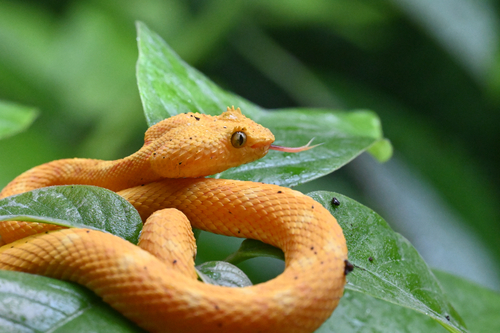 Central American Eyelash-ViperBothriechis nigroadspersusVenomous
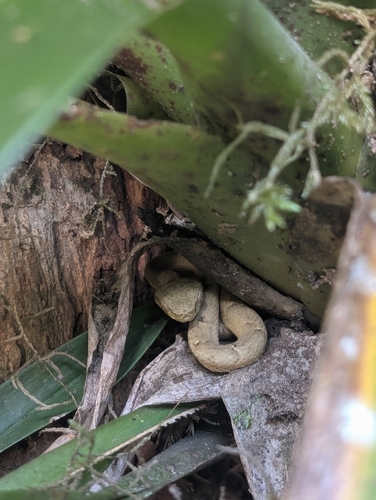 Side-striped palm pit viperBothriechis lateralisVenomous
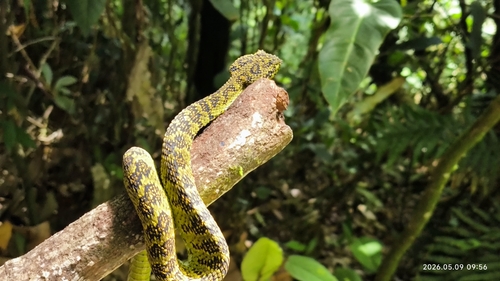 Highland Eyelash-PitviperBothriechis schlegeliiVenomous
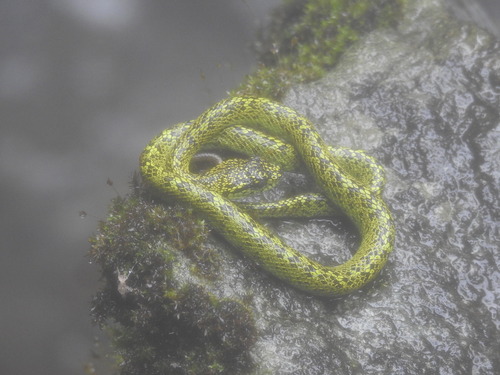 Black-speckled Palm Pit ViperBothriechis nigroviridisVenomous
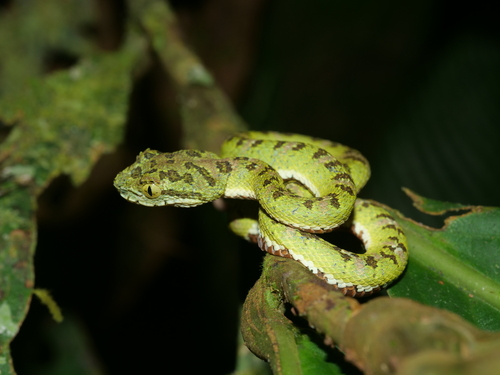 Ecuadorian Eyelash-ViperBothriechis nitidusVenomous
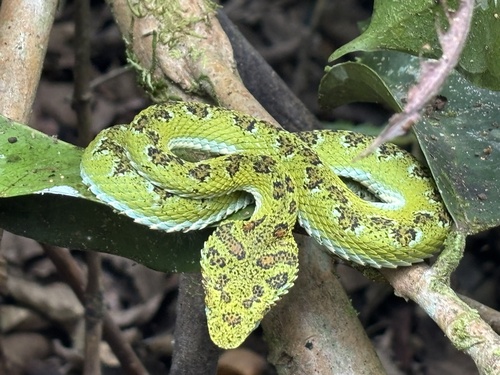 Blotched Palm-pitviperBothriechis supraciliarisVenomous
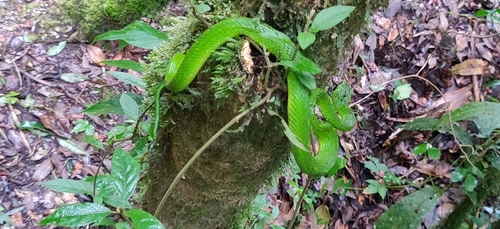 Yellow-blotched Palm Pit ViperBothriechis auriferVenomous
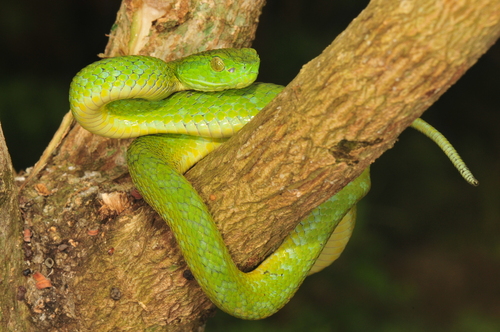 March's Palm Pit ViperBothriechis marchiVenomous
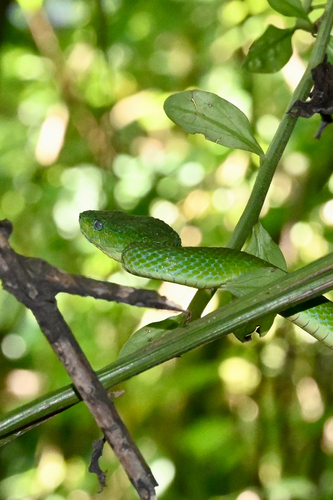 Guatemala Palm Pit ViperBothriechis bicolorVenomous
 Merendon Palm-pitviperBothriechis thalassinusVenomous
 Hussain's Eyelash-ViperBothriechis hussainiVenomous
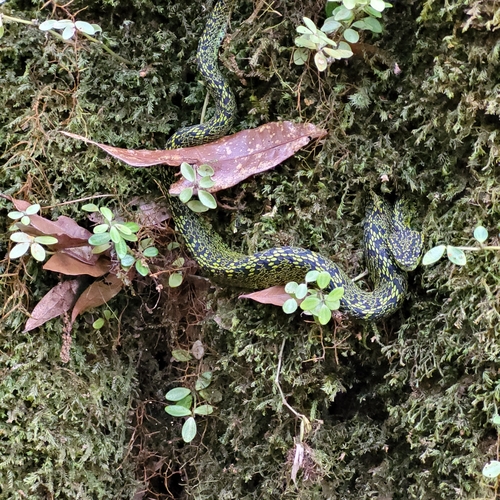 Talamancan Palm Pit ViperBothriechis nubestrisVenomous
 Guifarro's Palm PitviperBothriechis guifarroiVenomous
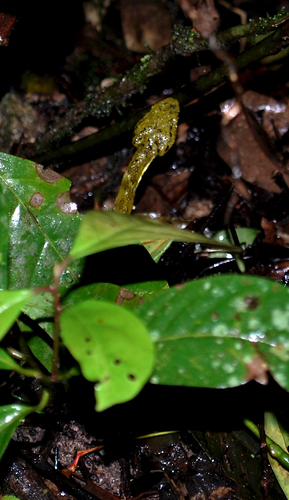 Shah's Eyelash-ViperBothriechis rasikusumorumVenomous
 Khwarg's Eyelash-ViperBothriechis khwargiVenomous
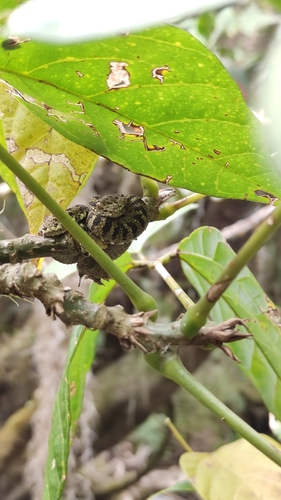 Klebba's Eyelash-ViperBothriechis klebbaiVenomous
 Birri Eyelash-ViperBothriechis torvusVenomous
 Rowley's Palm Pit ViperBothriechis rowleyiVenomous
 Rahim's Eyelash-ViperBothriechis rahimiVenomous
Keep learning
- Venomous vs Nonvenomous: How to Tell the DifferenceThe folk rules for telling venomous snakes apart, where each one fails, and why location-based identification beats guessing by sight.
- Are Snakes Dangerous? The Real Risk, in PerspectiveMost snakes are harmless and avoid people. Here is the honest picture of snakebite risk worldwide and how to lower your own.
- Snake Venom Explained: How It Works and WhyWhat snake venom actually is, why it evolved, the main venom types, fang delivery, how antivenom works, and why ranking the most venomous snake is hard.
- How Snakes Move, Hunt, and EatHow snakes move without legs, hunt as ambushers or active foragers, kill by constriction or venom, and swallow prey wider than their head.