
Viperidae
Blotched Palm-pitviper
VenomousBothriechis supraciliaris
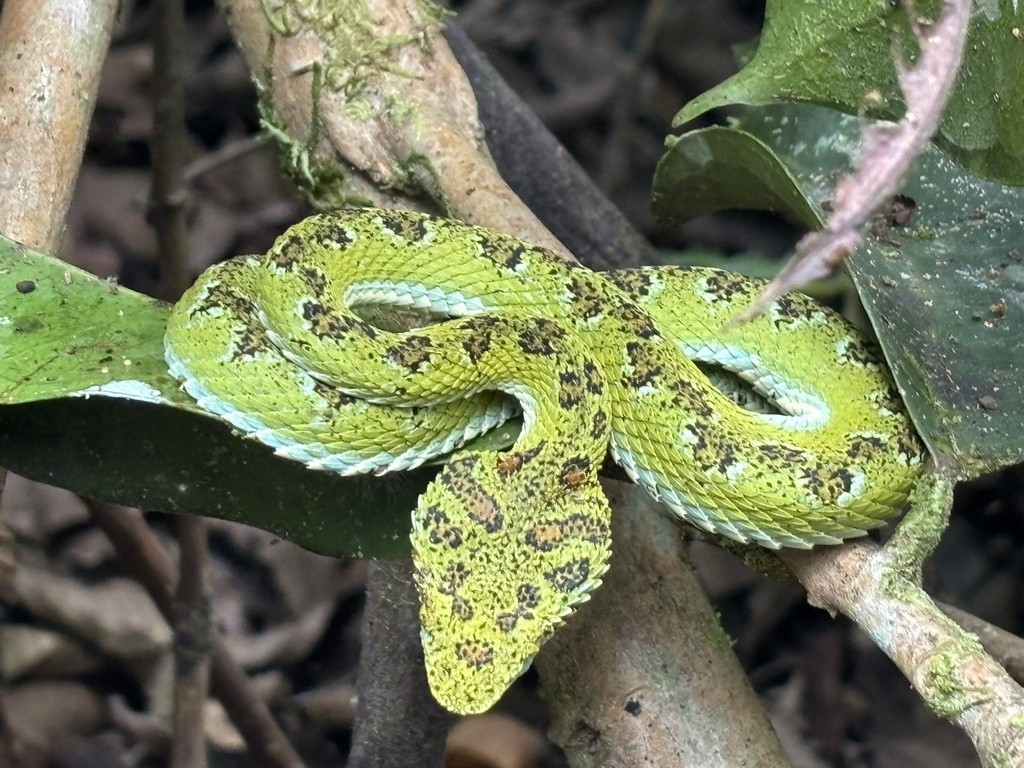
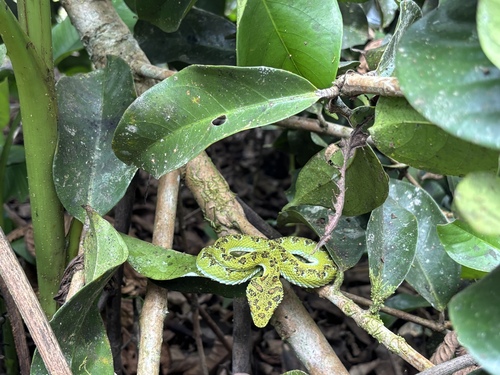
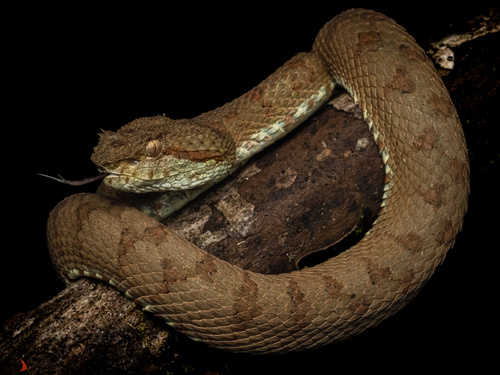
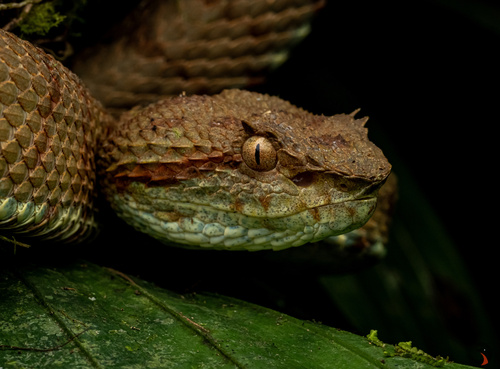
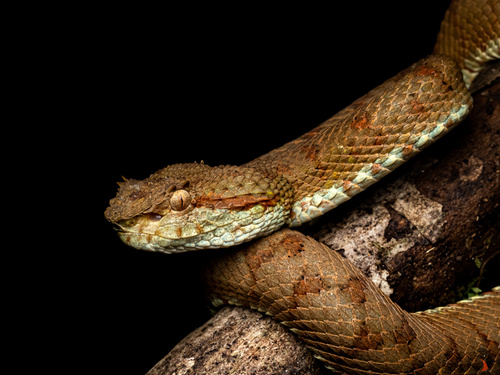
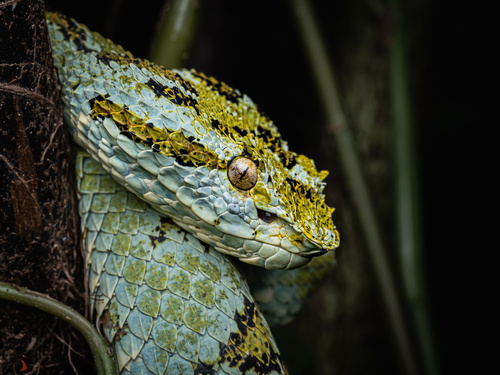
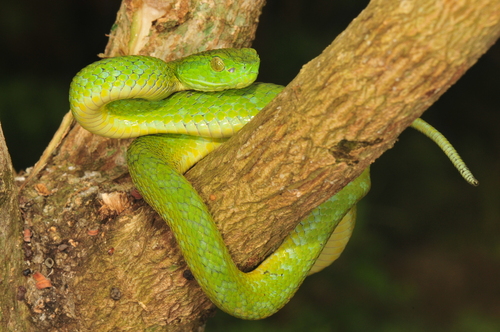
6 photographs of the Blotched Palm-pitviper. © David A. Rodríguez Arias.
The Blotched Palm-pitviper (Bothriechis supraciliaris) is a venomous snake in the Viperidae family.
If you are bitten
This is a venomous snake. Treat any bite as a medical emergency: stay calm, keep the bitten limb still and roughly level with the heart, remove rings and tight clothing, and get to emergency care immediately. Do not apply a tourniquet, cut the wound, apply ice, or try to suck out venom. Call your local emergency number or poison center.
- Family
- Viperidae
- Danger
- high
About the Blotched Palm-pitviper
Bothriechis supraciliaris, commonly known as the blotched eyelash-pitviper, is a species of venomous snake in the subfamily Crotalinae of the family Viperidae. The species is endemic to southern Pacific parts of Talamanca Mountain Range in Costa Rica and western Panama.
Description
Bothriechis supraciliaris is usually 50–60 cm (20–24 in) in total length (including tail), but can reach 80 cm (31 in).
Its body colour varies. It can be either bluish-green, reddish-brown, or reddish-maroon, but usually it is bright-green or moss-green. The body is circular, ovoid and rhomboid in cross-section, with irregular dorsal blotches, that sometimes form crossbands. The belly is light. There are 21–23 dorsal scales rows at midbody. The head carries dark stripes and prominent scales that are located above the eyes.
The only sexual dimorphism noted is that females of the species tend to be longer and thicker than males.
Geographic range
The geographic range of B. supraciliaris is limited to southern Costa Rica (between San Isidro and San Vito) and western Panama. All of its range overlaps with that of the closely related species B. nigroadspersus.
Taxonomy
Bothriechis supraciliaris was formerly considered a subspecies of B. schlegelii, the eyelash palm-pitviper. No subspecies are recognized.
Biology
B. supraciliaris is an arboreal species inhabiting evergreen lower-montane forests, cloud forests, clearings with coffee and banana plantations, edges of farm fields, and rural gardens. The species is crepuscular or nocturnal, and are more terrestrial than other Bothriechis species. During the day, individuals may rest on the ground or at the base of trees and shrubs.
The species preys on frogs (including Fitzinger's robber frog), and small forest-floor rodents.
Venom
This species' venom has a potent hemorrhagic action and moderate myotoxicity (muscle death), and some very weak procoagulant activity. Its LD50 is estimated to be 6.04 mg/kg. Equine polyvalent (Viperidae) antivenom from Instituto Clodomiro Picado has been reported to neutralize the lethality of B. supraciliaris venom. This antivenom was produced from the blood plasma of horses immunized with a mixture of venoms from Bothrops asper, Crotalus simus, and Lachesis stenophry.
Adapted from Wikipedia, available under CC BY-SA.
Local and regional names
The Blotched Palm-pitviper is known by these names across the regions where it lives:
- Danish
- Broget Palmelanseslange
- English
- Blotched Eyelash Pitviper, Blotched Eyelash-Pitviper, Highland Eyelash Viper
- German
- Bunte Palmenlanzenotter, Gefleckte Lanzenotter, Talamanca-Greifschwanz-Lanzenotter
- Italian
- Crotalo delle palme chiazzato, Vipera delle palme chiazzata
- Russian
- Реснитчатый ботропс
- Spanish
- Bocaracá manchada
Frequently asked: Blotched Palm-pitviper
- Is the Blotched Palm-pitviper venomous?
- Yes. The Blotched Palm-pitviper (Bothriechis supraciliaris) is venomous and belongs to the Viperidae family (viper). Its bite is considered high risk to people. Treat any bite as a medical emergency.
- Is the Blotched Palm-pitviper poisonous?
- Snakes are venomous, not poisonous. "Poisonous" means harmful to eat or touch; "venomous" means injecting toxins through a bite. The Blotched Palm-pitviper is venomous, delivering venom through a bite.
- Is the Blotched Palm-pitviper dangerous?
- This is a venomous snake. Treat any bite as a medical emergency: stay calm, keep the bitten limb still and roughly level with the heart, remove rings and tight clothing, and get to emergency care immediately. Do not apply a tourniquet, cut the wound, apply ice, or try to suck out venom. Call your local emergency number or poison center.
If you are bitten by the Blotched Palm-pitviper
Do
- Get away from the snake and stay calm. Most bites worsen when people panic or try again to handle the snake.
- Call 911 or Poison Control (1-800-222-1222) right away. Antivenom works best when given early.
- Note the time of the bite and, from a safe distance, the snake's color and pattern, a phone photo is enough. Do not chase it.
- Keep the bitten limb still and at roughly heart level. Sit or lie down and limit movement.
- Remove rings, watches, and tight clothing near the bite before swelling starts.
- Gently wash the bite with soap and water and cover it with a clean, dry dressing.
Do not
- Do not cut the wound or try to suck out the venom.
- Do not apply a tourniquet or ice.
- Do not drink alcohol or caffeine.
- Do not take aspirin or ibuprofen, they can worsen bleeding. Acetaminophen is safer for pain.
- Do not try to catch or kill the snake. A dead snake can still bite by reflex.
First-aid guidance adapted from the U.S. Centers for Disease Control and Prevention (CDC NIOSH), Venomous Snakes. Educational only; always follow the instructions of emergency responders.
More Viperidae snakes
 Central American Eyelash-ViperBothriechis nigroadspersus
 Side-striped palm pit viperBothriechis lateralis
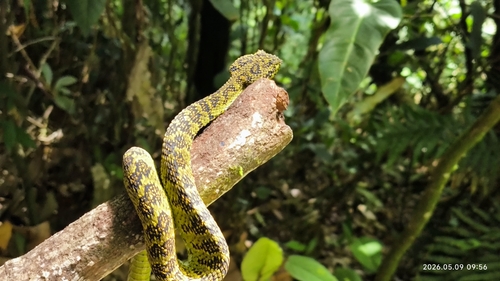 Highland Eyelash-PitviperBothriechis schlegelii
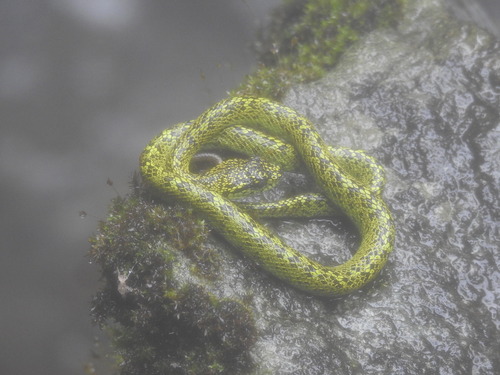 Black-speckled Palm Pit ViperBothriechis nigroviridis
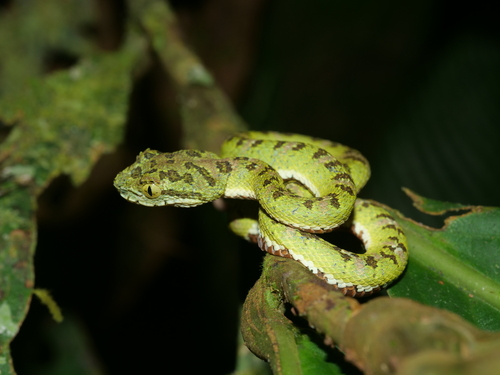 Ecuadorian Eyelash-ViperBothriechis nitidus
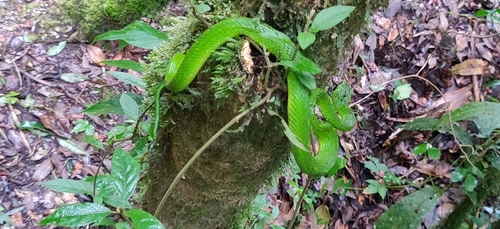 Yellow-blotched Palm Pit ViperBothriechis aurifer
 March's Palm Pit ViperBothriechis marchi
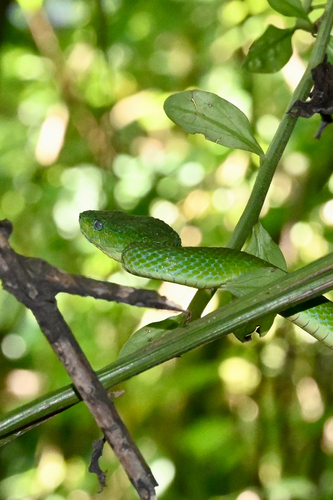 Guatemala Palm Pit ViperBothriechis bicolor
Classification
How scientists group this snake, from the broadest category down to the exact species. Each step narrows to its closest relatives.
- OrderThe broad group of scaled reptiles: all snakes and lizards
- Squamata
- FamilyA group of related snakes that share key traits
- Viperidae
- GenusA close-knit group of very similar species
- Bothriechis
- SpeciesThis exact snake, named in the two-part scientific name
- Bothriechis supraciliaris
Keep learning
- Are Snakes Dangerous? The Real Risk, in PerspectiveMost snakes are harmless and avoid people. Here is the honest picture of snakebite risk worldwide and how to lower your own.
- Snakebite First Aid: What to Do (and What Never to Do)A clear, CDC-based guide to snakebite first aid: the steps that help, the popular myths that hurt, and how to tell a serious bite from a minor one.
- Venomous vs Nonvenomous: How to Tell the DifferenceThe folk rules for telling venomous snakes apart, where each one fails, and why location-based identification beats guessing by sight.
- What to Do If You Find a SnakeFound a snake at home or on a trail? Here is how to stay calm, give it space, identify it safely, and know when to call a professional.
Distribution from GBIF & iNaturalist. Venom status per CDC. Background: Wikipedia. Informational only. Never handle a snake to identify it.