
Colubridae
Central African Egg-eating Snake
HarmlessDasypeltis fasciata
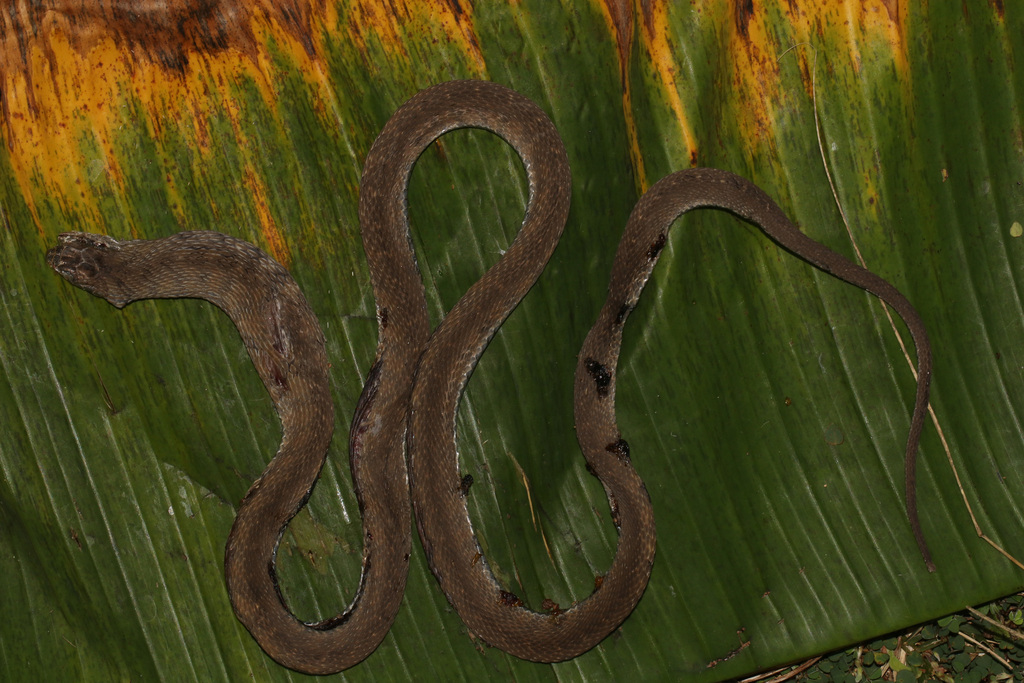
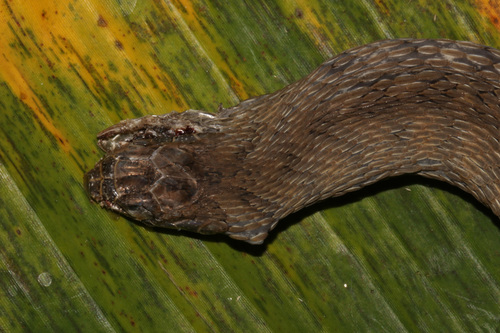
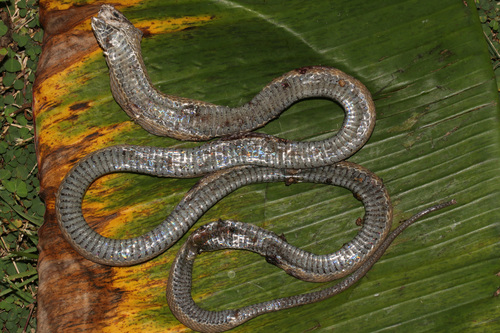
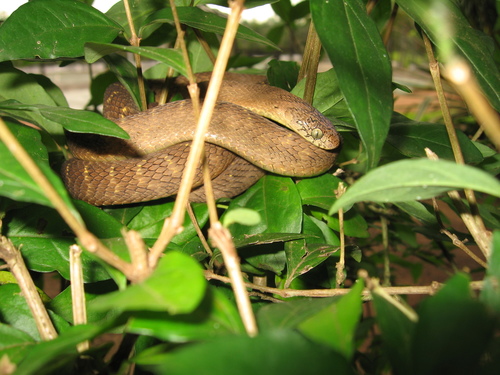
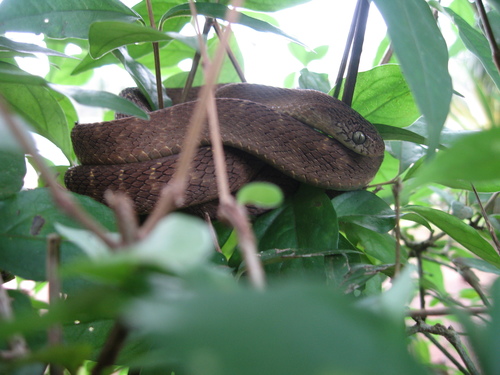
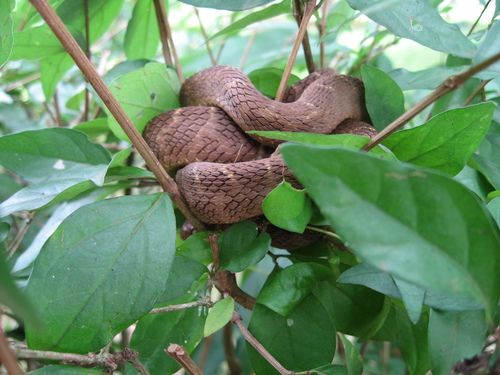
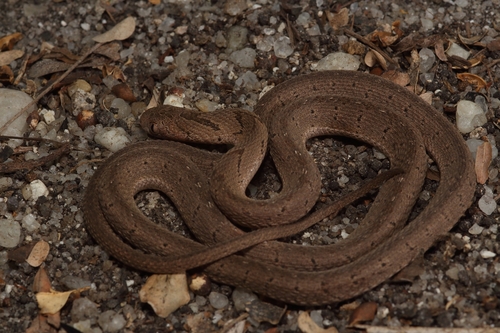
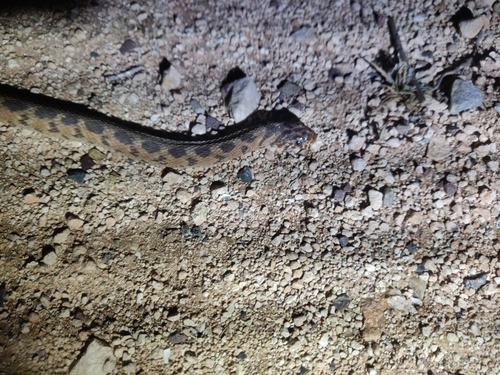
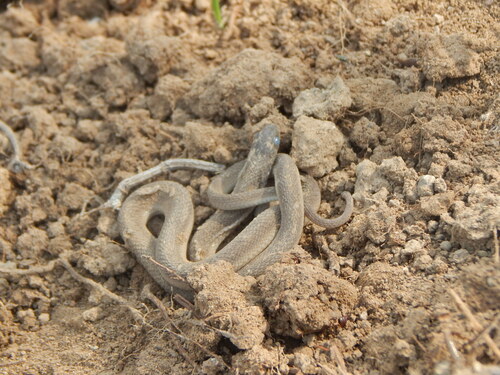
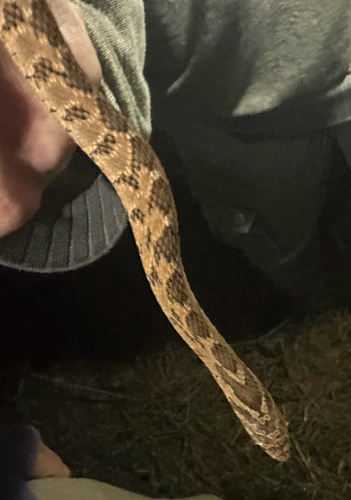
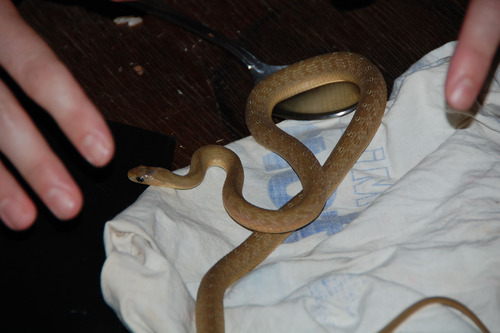
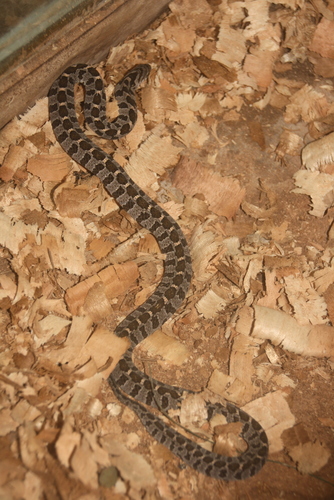
6 photographs of the Central African Egg-eating Snake. © Ryan van Huyssteen.
The Central African Egg-eating Snake (Dasypeltis fasciata) is a non-venomous snake in the Colubridae family, recorded in 21 countries.
- Family
- Colubridae
About the Central African Egg-eating Snake
Dasypeltis fasciata, commonly known as the Central African egg-eating snake or the western forest eggeater, is a species of snake in the family Colubridae. The species is endemic to Africa. It is one of 18 species in the genus Dasypeltis, and is occasionally kept in captivity as an exotic pet along with other members of its genus, particularly D. scabra and D. medici.
Geographic range
D. fasciata is found in western and central Africa including the Central African Republic, Gambia, Nigeria, and Uganda.
Habitat
The preferred habitat of D. fasciata is lowland forest at altitudes of approximately 1,000–1,150 m (3,280–3,770 ft).
Reproduction
D. fasciata is oviparous.
Anatomy and behaviour
Owing to their nature as obligate ovivores, all members of the genus Dasypeltis are arboreal, preferring to remain in the trees where they can locate bird-nests, and tend to be nocturnal as this is when the diurnal bird species they prey upon are asleep and most likely to leave their eggs unguarded. Their diet also affects their biology, and has resulted in an evolutionary adaptation that has removed their teeth and substantially increased the capacity of their necks. This facilitates the consumption of whole eggs. Once inside the neck, three bony projections from the cervical vertebrae are extended and the egg is crushed against them, puncturing and cracking it. The eggs are then squeezed to extract the liquids inside, and the shell is regurgitated. This adaptation allows them to exploit a food source that is almost completely uncontested in their natural habitat. During feeding, they have an extensible, highly flattened trachea that can push around the egg and allow them to continue breathing whilst swallowing an egg several times wider than their own body.
In captivity
In captivity, it is recommended that D. fasciata be provided with extensive climbing materials in order to provide environmental enrichment. As is typical in snakes, males tend to be smaller than females. Baby egg-eating snakes and adult males are generally able to eat finch eggs, although some males can grow large enough to eat button quail eggs. Female adults are often large enough to eat full size quail eggs or even chicken eggs. However, in the wild they will only eat eggs that are at a very early stage of development, and cannot digest a foetal bird chick.
Defence
African egg-eating snakes lack teeth, and as such they often have difficulty with defending themselves. This is necessary for their diet, as teeth would reduce the capacity of their necks; however, it presents issues with predation. It is believed that their primary defence stems from Batesian mimicry, as most species in the genus Dasypeltis strongly resemble other, venomous snake species such as black mambas or vipers, providing them with a deterrent against predators. However, this lack of teeth also makes it almost impossible for the snake to harm other specimens in captivity, making it one of the few species of snakes that can be housed communally.
Adapted from Wikipedia, available under CC BY-SA.
Frequently asked: Central African Egg-eating Snake
- Is the Central African Egg-eating Snake venomous?
- No. The Central African Egg-eating Snake (Dasypeltis fasciata) is non-venomous and is not considered dangerous to humans. Like most snakes, it will retreat rather than bite when given the chance.
- Is the Central African Egg-eating Snake poisonous?
- Snakes are venomous, not poisonous. "Poisonous" means harmful to eat or touch; "venomous" means injecting toxins through a bite. The Central African Egg-eating Snake is neither poisonous nor venomous.
- Is the Central African Egg-eating Snake dangerous?
- The Central African Egg-eating Snake is not dangerous to humans. It has no medically significant venom and bites only defensively if cornered or handled.
- Where does the Central African Egg-eating Snake live?
- The Central African Egg-eating Snake has verified records in 21 countries, including Cameroon, Benin, Congo, Democratic Republic of the. See the distribution section below for its full range.
Where it is found
More Colubridae snakes
Classification
How scientists group this snake, from the broadest category down to the exact species. Each step narrows to its closest relatives.
- OrderThe broad group of scaled reptiles: all snakes and lizards
- Squamata
- FamilyA group of related snakes that share key traits
- Colubridae
- GenusA close-knit group of very similar species
- Dasypeltis
- SpeciesThis exact snake, named in the two-part scientific name
- Dasypeltis fasciata
Keep learning
- What to Do If You Find a SnakeFound a snake at home or on a trail? Here is how to stay calm, give it space, identify it safely, and know when to call a professional.
- Venomous vs Nonvenomous: How to Tell the DifferenceThe folk rules for telling venomous snakes apart, where each one fails, and why location-based identification beats guessing by sight.
- What Is a Snake? Anatomy and the BasicsA clear overview of what makes a snake a snake: limbless body plan, anatomy, evolution from lizards, species diversity, and why they are ectothermic.
- How to Keep Snakes Out of Your Yard and HomeA practical guide to keeping snakes out of your yard and home using habitat changes that work, plus what to skip and what to do if one shows up.
Distribution from GBIF & iNaturalist. Venom status per CDC. Background: Wikipedia. Informational only. Never handle a snake to identify it.