
Genus · Colubridae
Types of eaters
11 species make up the genus Dasypeltis, the snakes commonly called eaters. None are considered dangerous to humans.
About African egg-eating snakes
Harmless African colubrids that swallow whole bird eggs and crack them open inside the body.
Dasypeltis is a genus of non-venomous snakes in the family Colubridae, the largest snake family. Its members are known collectively as African egg-eating snakes, and the genus contains roughly a dozen recognized species, eleven of which appear in our database. They are among the most specialized feeders of any snake group, eating almost nothing but the eggs of birds.
The genus is found across sub-Saharan Africa, with one species reaching into the Arabian Peninsula. They occupy a wide range of habitats including savanna, dry scrub, woodland, rocky areas, and the edges of human settlements, anywhere that nesting birds are common. Many species are good climbers and forage in trees and shrubs to reach nests. They are mostly nocturnal and are encountered far less often than their range would suggest.
Egg-eaters are slender, small to medium snakes, generally under a meter long, with a narrow head barely distinct from the neck and large eyes with vertical pupils. Color and pattern vary by species, with many showing dark blotches or saddles on a brown or grey background, a look that can resemble certain vipers. When threatened they often bluff, coiling, rubbing their keeled scales together to make a rasping sound, and striking with the mouth open, but they have almost no functional teeth and cannot deliver a meaningful bite.
These snakes are harmless to people. They are not venomous and lack the enlarged fangs or venom glands of dangerous species. Their defensive viper mimicry can cause them to be killed on sight by mistake, but they pose no medical threat. As with any wild snake, the responsible approach is to leave it alone rather than handle it. If a person is ever bitten by a snake they cannot confidently identify and symptoms develop, contact emergency services or US Poison Control at 1-800-222-1222.
The defining feature of Dasypeltis is its feeding biology. Lacking strong teeth, an egg-eater swallows a whole egg using its highly flexible jaws and skin, then uses bony projections on its spine to pierce and crush the shell as the egg passes down the throat. The snake swallows the liquid contents and regurgitates the collapsed shell. Females lay eggs, and the snakes time their breeding to seasons when bird eggs are abundant. Because they depend on egg supply, their activity and feeding follow the local nesting calendar.
Dasypeltis belongs to the Colubridae family (Colubrids). The largest snake family, and the one most snakes you meet belong to. Typically round pupils, a head only slightly wider than the neck, and no heat-sensing facial pit or rattle. Scales may be smooth and glossy or keeled and matte depending on the species.
Danger: Almost all colubrids are harmless. A small number are rear-fanged with medically significant venom, the boomslang and the twig (vine) snakes of Africa being the dangerous exceptions. Most colubrids will flee or bluff rather than bite.
All species (11)
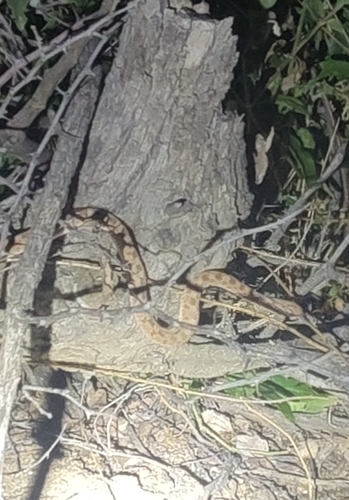 Egg-eating SnakeDasypeltis scabraHarmless
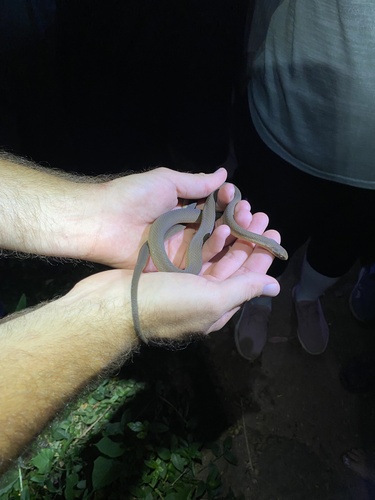 Southern Brown Egg EaterDasypeltis inornataHarmless
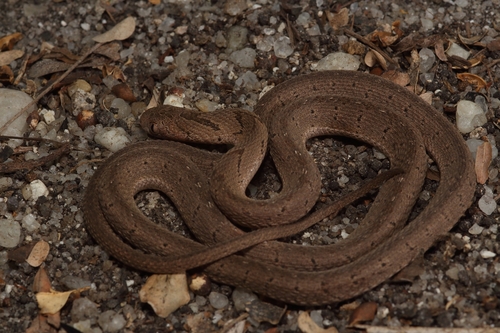 East African Egg EaterDasypeltis mediciHarmless
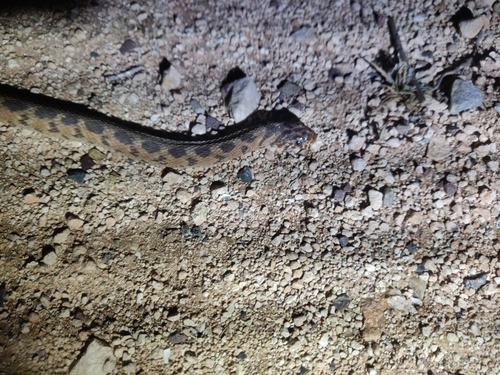 Sahel Egg EaterDasypeltis sahelensisHarmless
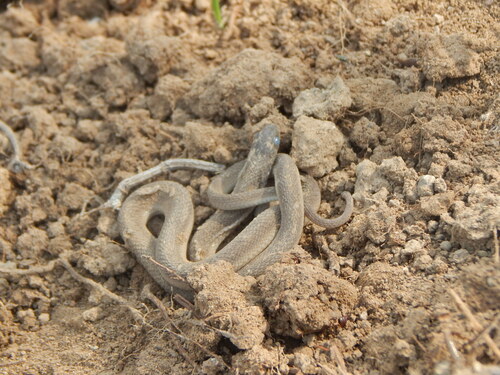 Montane Egg-eaterDasypeltis atraHarmless
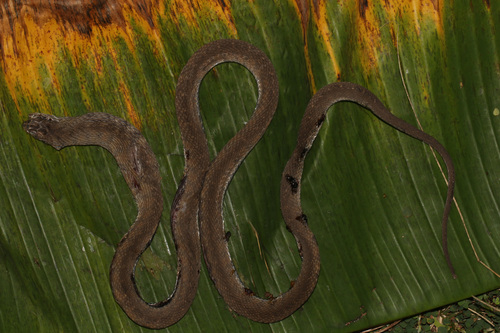 Central African Egg-eating SnakeDasypeltis fasciataHarmless
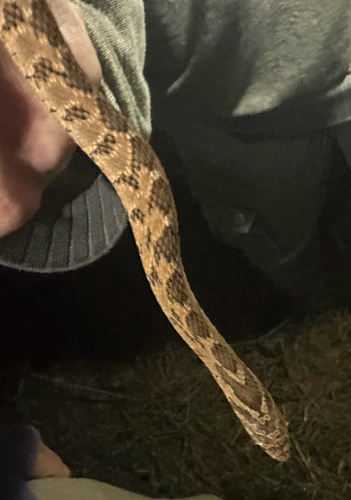 Confusing Egg EaterDasypeltis confusaHarmless
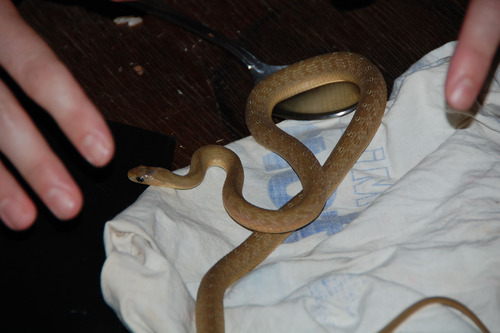 Gans’ Egg EaterDasypeltis gansiHarmless
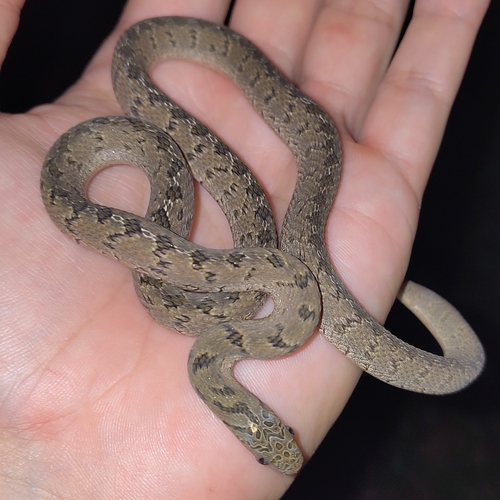 Dasypeltis congolensisHarmless
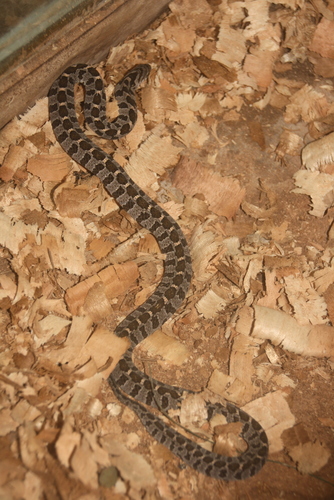 Dasypeltis parascabraHarmless
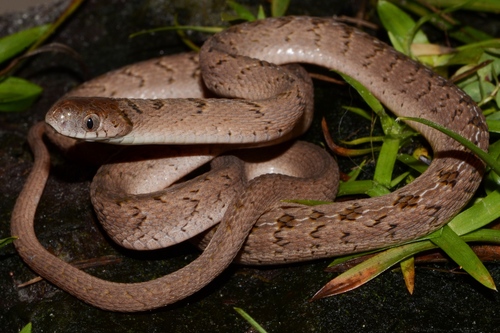 Dasypeltis palmarumHarmless
Keep learning
- What Is a Snake? Anatomy and the BasicsA clear overview of what makes a snake a snake: limbless body plan, anatomy, evolution from lizards, species diversity, and why they are ectothermic.
- How Snakes Move, Hunt, and EatHow snakes move without legs, hunt as ambushers or active foragers, kill by constriction or venom, and swallow prey wider than their head.
- What Do Snakes Eat?All snakes are carnivores. Learn what snakes eat, how diet changes with size and age, how often they feed, and how they hunt and swallow prey.
- Venomous vs Nonvenomous: How to Tell the DifferenceThe folk rules for telling venomous snakes apart, where each one fails, and why location-based identification beats guessing by sight.