
Colubridae
Northern Cat-eyed Snake
HarmlessLeptodeira septentrionalis
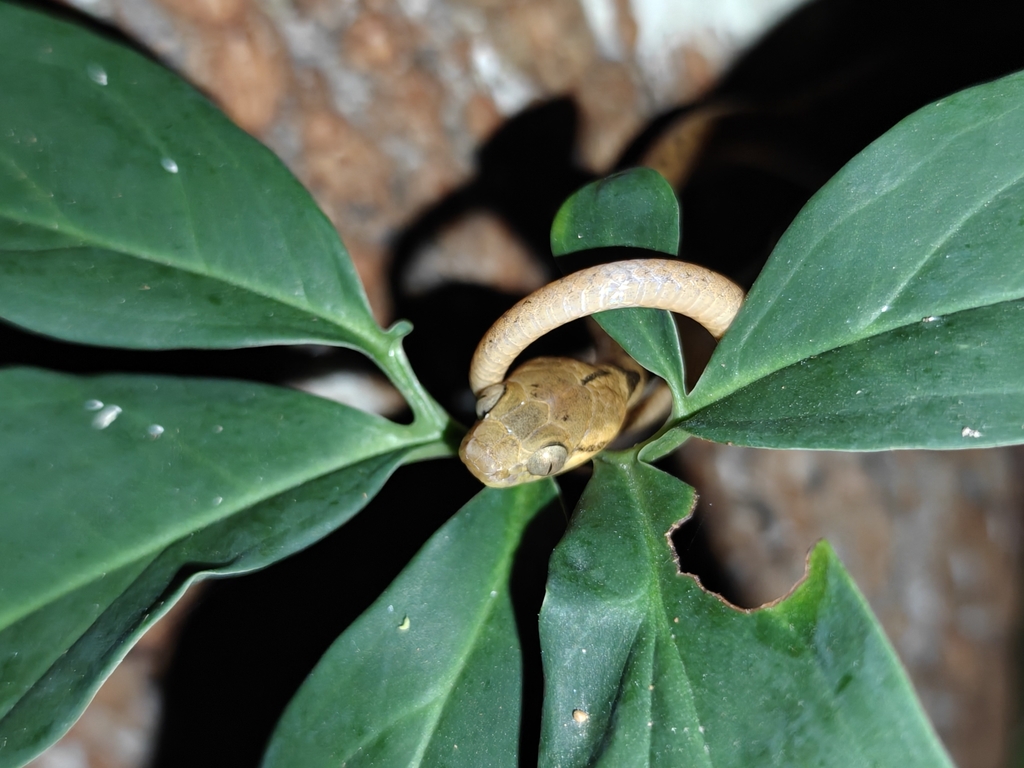
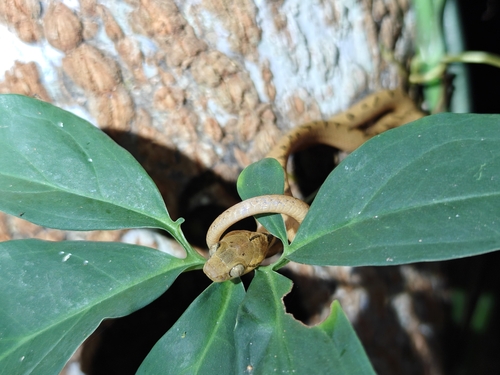
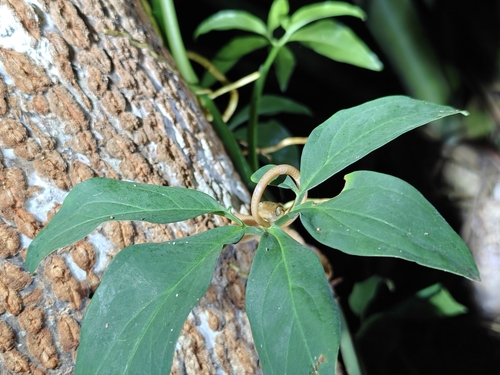
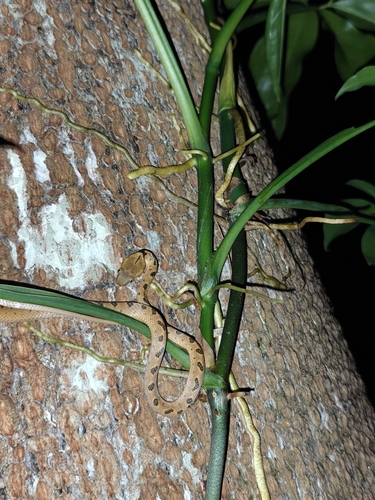
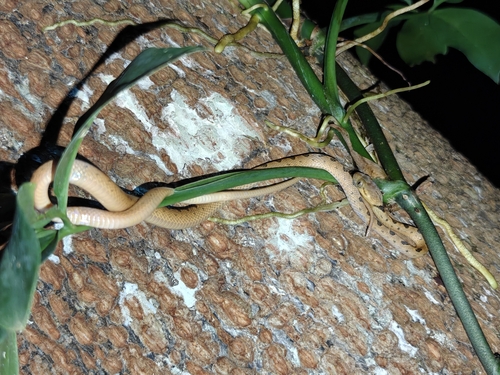
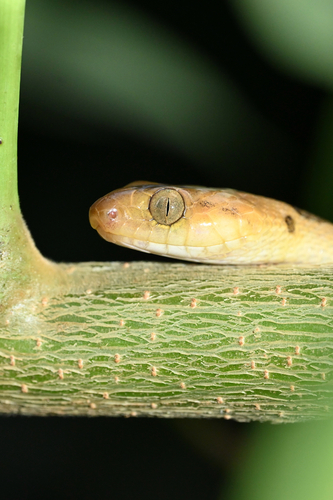
6 photographs of the Northern Cat-eyed Snake. © Ansil B.R..
The Northern Cat-eyed Snake (Leptodeira septentrionalis) is a rear-fanged, mildly venomous snake in the Colubridae family, recorded in 18 countries.
- Family
- Colubridae
About the Northern Cat-eyed Snake
Leptodeira septentrionalis, the northern cat-eyed snake, is a species of medium-sized, slightly venomous snake, found from southern Texas to Costa Rica.
Appearance
The northern cat eye is medium size (up to 1 m [3.3 ft]). In general females are slightly longer than males. They have smooth scales, with a dark brown line or spot beside the eye and dark brown blotches (which can fuse to form a zigzag) running down their backs. These spots may vary in pattern geographically. Its head is distinctly wider than its neck and it has large bulging eyes with reddish irises and light brown elliptical pupils.
Behaviour
The northern cat eye is primarily arboreal and entirely nocturnal. At night, it hunts for frogs and their eggs and tadpoles; it is particularly known for feeding on those of the red-eyed tree frog. It swallows eggs, tadpoles, and small frogs alive but kills larger frogs with mild venom from its enlarged, grooved rear fangs. It will also consume lizards, toads, salamanders, small fish, and mice. When threatened it is able to flatten its head and spread its jaws although it rarely bites people.
Reproduction and development
The Northern cat eye is oviparous and produces clutches of 6–13 eggs. As in other snake species delayed egg fertilisation can occur (fertile eggs can be laid up to several years after copulation). Developing snakes are nourished by a yolk sac for 79 to 90 days at which time they break through the outer shell using an egg tooth. The egg tooth is lost after hatching. Young northern cat-eyed snakes appear identical to adults but feature much fresher coloration. The snakes will continue to grow throughout their entire lives.
Distribution
The northern cat eye is found in North America: US (S Texas), Mexico (Chiapas, Nuevo León, Quéretaro, Oaxaca, Puebla, Coahuila, Jalisco, Campeche, Yucatán, Quintana Roo, Nayarit), Guatemala, Honduras, Belize, El Salvador, Nicaragua, and Costa Rica. It is found at elevations of 0–1,940 m (0–6,365 ft) above sea level.
Within Costa Rica it is found on both Caribbean and Pacific coasts, including in Golfo Dulce, up to 1,200 m (3,900 ft) above sea level in a wide variety of habitats but most common at edges of ponds where amphibians breed.
Adapted from Wikipedia, available under CC BY-SA.
Frequently asked: Northern Cat-eyed Snake
- Is the Northern Cat-eyed Snake venomous?
- The Northern Cat-eyed Snake (Leptodeira septentrionalis) is rear-fanged and only mildly venomous. It is not considered dangerous to humans (its venom is weak and its fangs sit at the back of the mouth) but a bite can cause local swelling or irritation, so it should not be handled.
- Is the Northern Cat-eyed Snake poisonous?
- Snakes are venomous, not poisonous. "Poisonous" means harmful to eat or touch; "venomous" means injecting toxins through a bite. The Northern Cat-eyed Snake is neither poisonous nor venomous.
- Is the Northern Cat-eyed Snake dangerous?
- The Northern Cat-eyed Snake is not dangerous to humans. It has no medically significant venom and bites only defensively if cornered or handled.
- Where does the Northern Cat-eyed Snake live?
- The Northern Cat-eyed Snake has verified records in 18 countries, including Mexico, Colombia, Guatemala. See the distribution section below for its full range.
Where it is found
By U.S. state
More Colubridae snakes
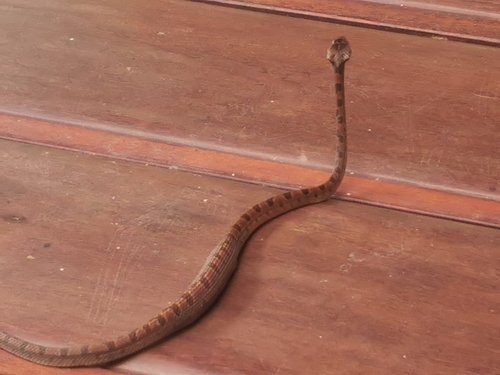 Ornate Cat-eyed SnakeLeptodeira ornata
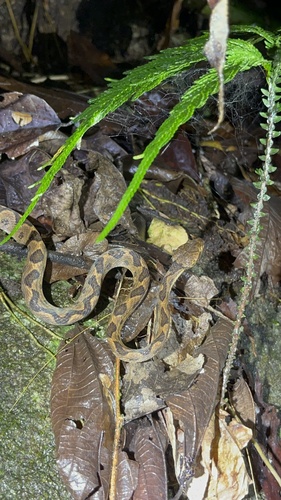 Rhombic Cat-eyed SnakeLeptodeira rhombifera
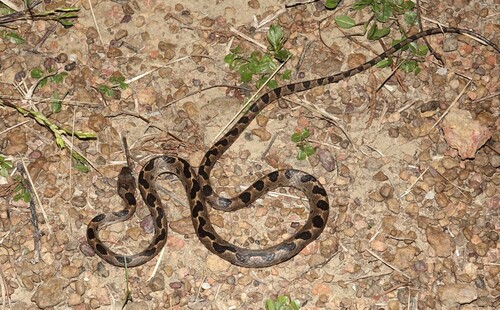 Venezuelan Cat-eyed SnakeLeptodeira ashmeadii
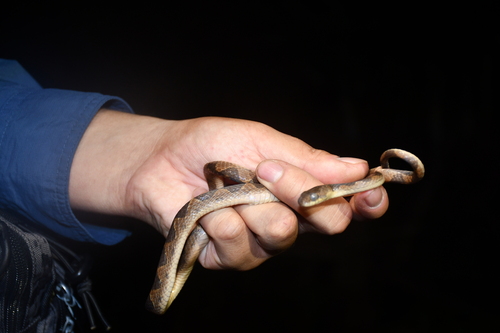 South American Banded Cat-eyed SnakeLeptodeira annulata
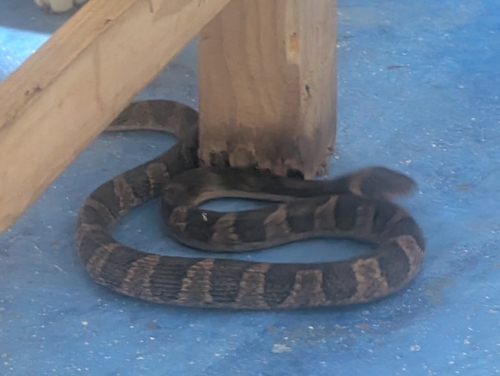 Southwestern Cat-eyed SnakeLeptodeira maculata
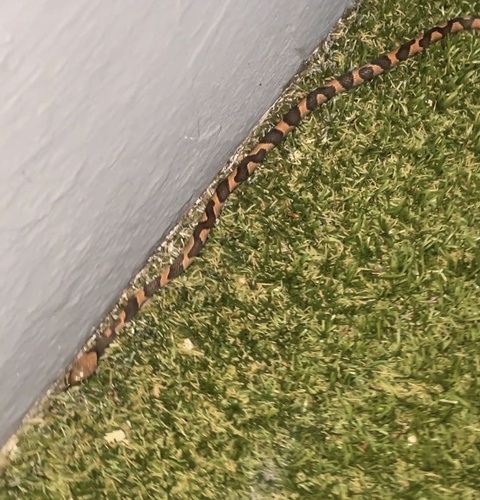 Rainforest Cat-eyed SnakeLeptodeira frenata
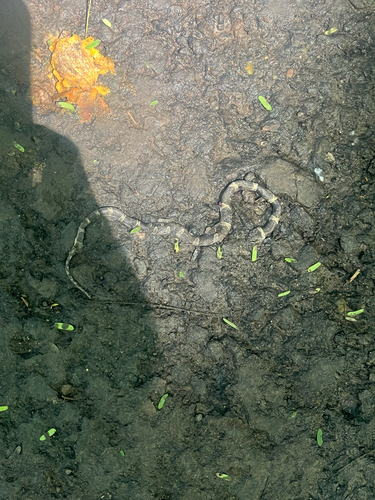 Black-banded Cat-eyed SnakeLeptodeira nigrofasciata
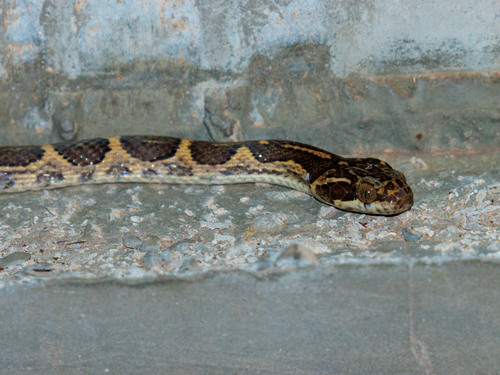 Paraiba Cat-eyed SnakeLeptodeira tarairiu
Classification
How scientists group this snake, from the broadest category down to the exact species. Each step narrows to its closest relatives.
- OrderThe broad group of scaled reptiles: all snakes and lizards
- Squamata
- FamilyA group of related snakes that share key traits
- Colubridae
- GenusA close-knit group of very similar species
- Leptodeira
- SpeciesThis exact snake, named in the two-part scientific name
- Leptodeira septentrionalis
Keep learning
- What to Do If You Find a SnakeFound a snake at home or on a trail? Here is how to stay calm, give it space, identify it safely, and know when to call a professional.
- Venomous vs Nonvenomous: How to Tell the DifferenceThe folk rules for telling venomous snakes apart, where each one fails, and why location-based identification beats guessing by sight.
- What Is a Snake? Anatomy and the BasicsA clear overview of what makes a snake a snake: limbless body plan, anatomy, evolution from lizards, species diversity, and why they are ectothermic.
- How to Keep Snakes Out of Your Yard and HomeA practical guide to keeping snakes out of your yard and home using habitat changes that work, plus what to skip and what to do if one shows up.
Distribution from GBIF & iNaturalist. Venom status per CDC. Background: Wikipedia. Informational only. Never handle a snake to identify it.