
Genus · Colubridae
Types of cat-eyed snakes
10+ species make up the genus Leptodeira, the snakes commonly called cat-eyed snakes. None are considered dangerous to humans.
About cat-eyed snakes
Slender, big-eyed nocturnal colubrids of the American tropics, named for the vertical, slit-shaped pupil that gives them a cat-like stare.
Leptodeira is a genus of small to medium snakes in the family Colubridae, the largest and most diverse snake family. Like most colubrids, they have a slim build, smooth scales, a distinct head, and large eyes. Their defining feature is the eye itself: a vertically elliptical pupil that contracts to a narrow slit in bright light, an adaptation seen in many night-active snakes. This is the trait behind the group's common name, cat-eyed snakes.
The genus ranges across the warm parts of the Americas, from the extreme southern United States in Texas through Mexico and Central America and into much of South America. Its members favor lowland and mid-elevation habitats with standing or slow water, including rainforest edges, wetlands, ponds, and humid scrub. They are strongly nocturnal and are often found at night near water or moving through low vegetation.
In general terms, you can recognize a Leptodeira by the combination of a moderately slender body, a head clearly wider than the neck, very large eyes with a vertical cat-like pupil, and a patterned back. Many species carry a series of dark blotches, rhombus shapes, or saddles along a lighter ground color, which is the source of names such as the Rhombic Cat-eyed Snake and the Ornate Cat-eyed Snake. Adults are typically modest in length rather than large.
Leptodeira are rear-fanged, meaning they have enlarged grooved teeth set toward the back of the upper jaw and a mild venom delivered through chewing rather than a fast frontal strike. This venom is adapted for subduing their small cold-blooded prey and is not considered medically dangerous to people; bites are uncommon and usually cause only minor local effects. Even so, no wild snake should be handled. If a bite occurs and any unusual or worsening symptoms appear, contact US Poison Control at 1-800-222-1222 or local emergency services rather than waiting it out.
Ecologically these are specialized predators with a strong preference for amphibians. They feed heavily on frogs, toads, tadpoles, and frog eggs, and some will also take small lizards. Their nocturnal hunting near water matches this diet. Like most colubrids in the genus, they are egg-laying, with females depositing small clutches that develop without parental care. By day they shelter in vegetation, leaf litter, or crevices, emerging after dark to hunt.
Leptodeira belongs to the Colubridae family (Colubrids). The largest snake family, and the one most snakes you meet belong to. Typically round pupils, a head only slightly wider than the neck, and no heat-sensing facial pit or rattle. Scales may be smooth and glossy or keeled and matte depending on the species.
Danger: Almost all colubrids are harmless. A small number are rear-fanged with medically significant venom, the boomslang and the twig (vine) snakes of Africa being the dangerous exceptions. Most colubrids will flee or bluff rather than bite.
All species (17)
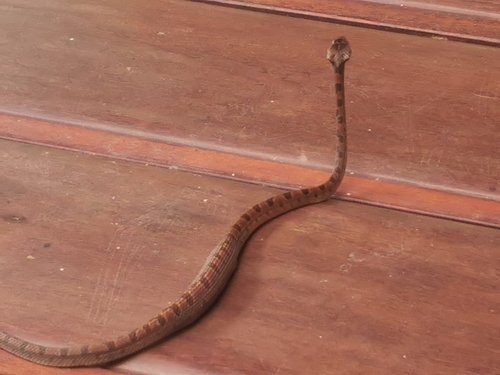 Ornate Cat-eyed SnakeLeptodeira ornataHarmless
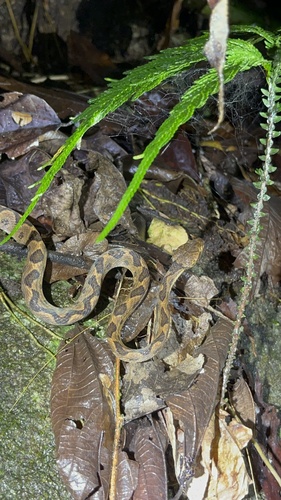 Rhombic Cat-eyed SnakeLeptodeira rhombiferaHarmless
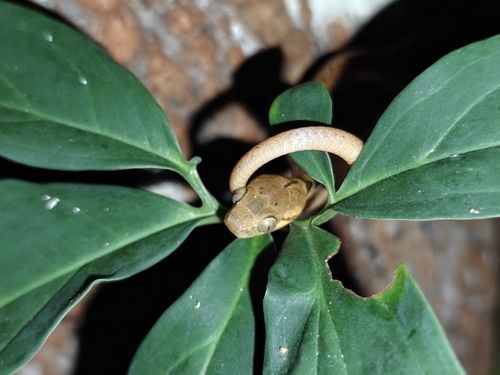 Northern Cat-eyed SnakeLeptodeira septentrionalisHarmless
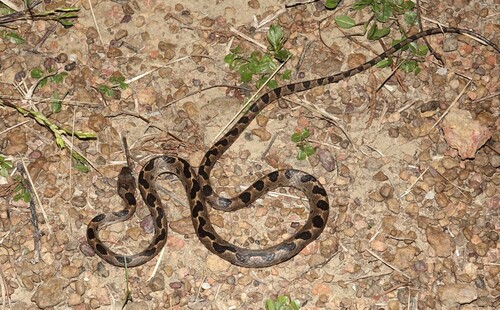 Venezuelan Cat-eyed SnakeLeptodeira ashmeadiiHarmless
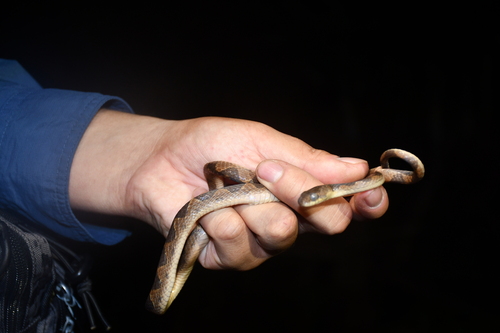 South American Banded Cat-eyed SnakeLeptodeira annulataHarmless
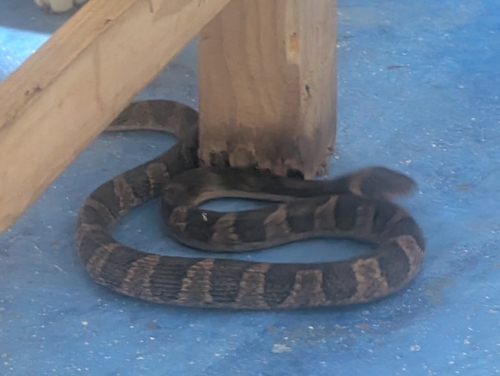 Southwestern Cat-eyed SnakeLeptodeira maculataHarmless
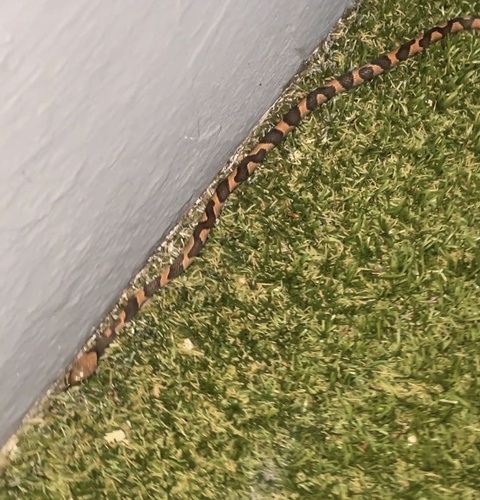 Rainforest Cat-eyed SnakeLeptodeira frenataHarmless
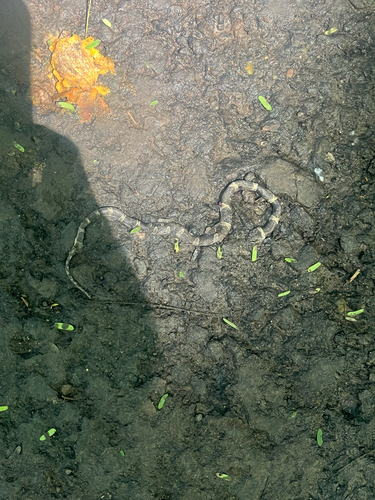 Black-banded Cat-eyed SnakeLeptodeira nigrofasciataHarmless
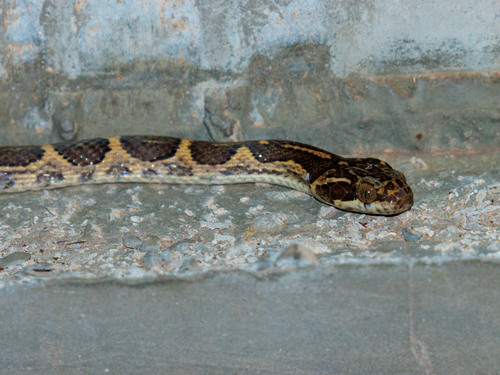 Paraiba Cat-eyed SnakeLeptodeira tarairiuHarmless
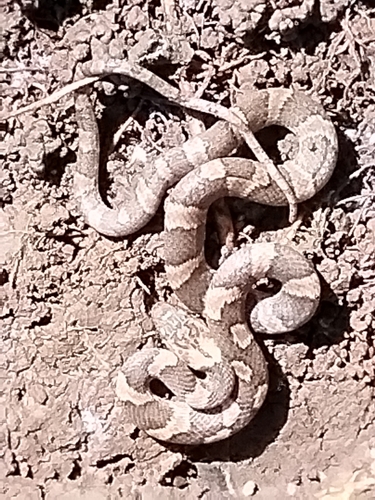 Splendid Cat-eyed SnakeLeptodeira splendidaHarmless
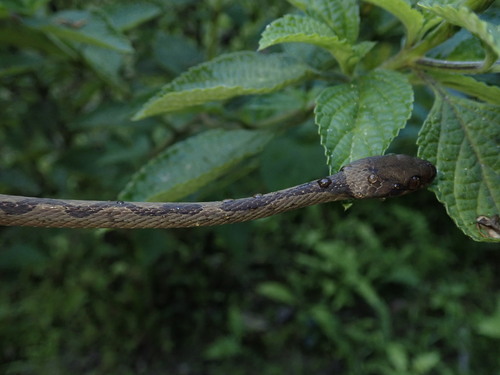 Chayahuitas Banded Cat-eyed SnakeLeptodeira approximansHarmless
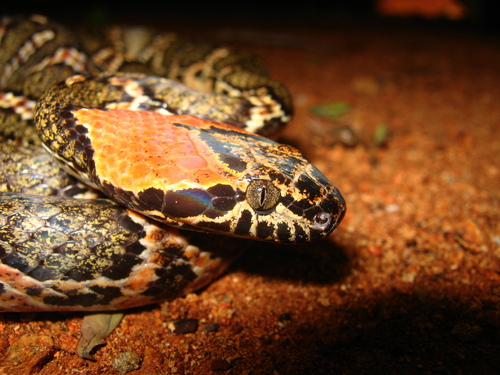 Uribe's Cat-eyed SnakeLeptodeira uribeiHarmless
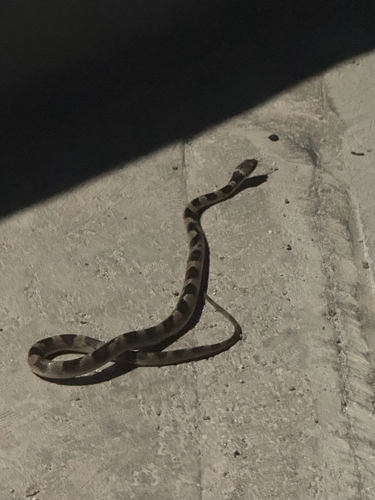 Baker's Cat-eyed SnakeLeptodeira bakeriHarmless
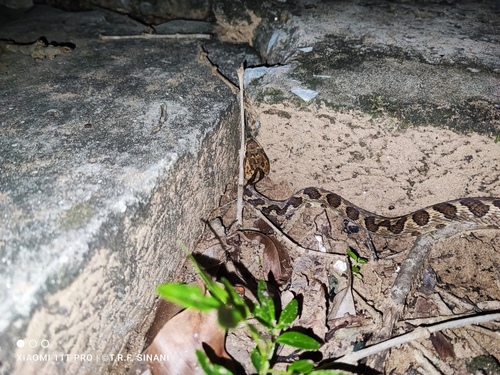 Bodoquena Banded Cat-eyed SnakeLeptodeira pulchricepsHarmless
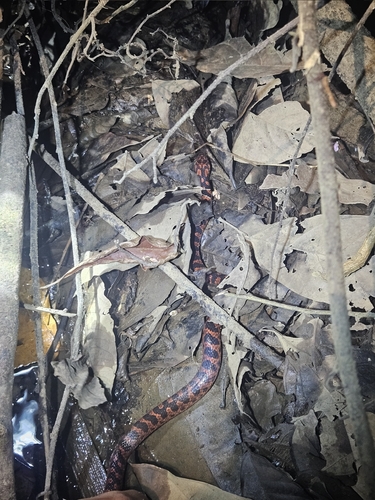 Mangrove Cat-eyed SnakeLeptodeira rubricataHarmless
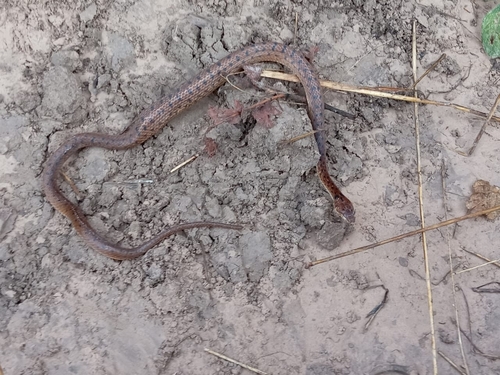 Western Cat-eyed SnakeLeptodeira punctataHarmless
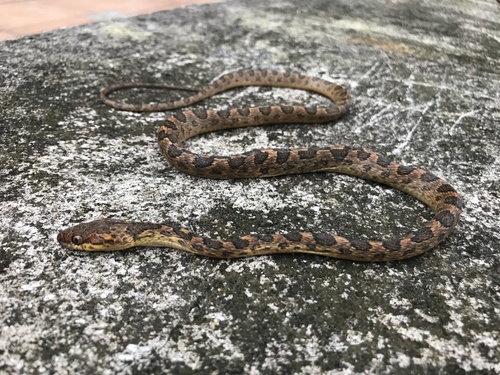 Peruvian Cat-eyed SnakeLeptodeira larcorumHarmless
Keep learning
- What Is a Snake? Anatomy and the BasicsA clear overview of what makes a snake a snake: limbless body plan, anatomy, evolution from lizards, species diversity, and why they are ectothermic.
- How Snakes Move, Hunt, and EatHow snakes move without legs, hunt as ambushers or active foragers, kill by constriction or venom, and swallow prey wider than their head.
- What Do Snakes Eat?All snakes are carnivores. Learn what snakes eat, how diet changes with size and age, how often they feed, and how they hunt and swallow prey.
- Venomous vs Nonvenomous: How to Tell the DifferenceThe folk rules for telling venomous snakes apart, where each one fails, and why location-based identification beats guessing by sight.