
Acrochordidae
Little File Snake
HarmlessAcrochordus granulatus
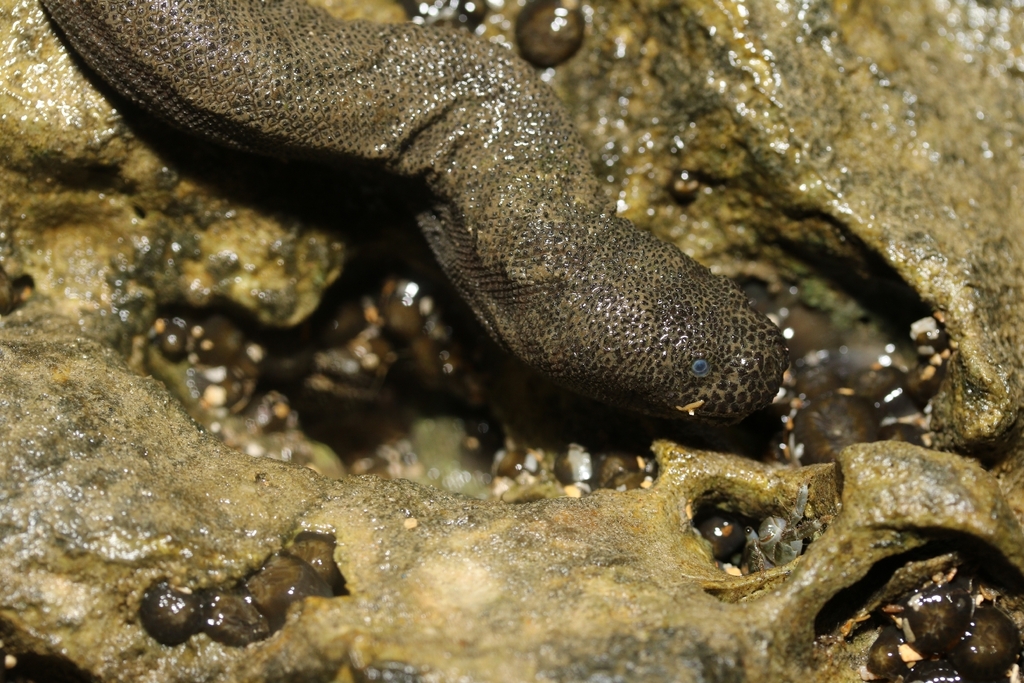
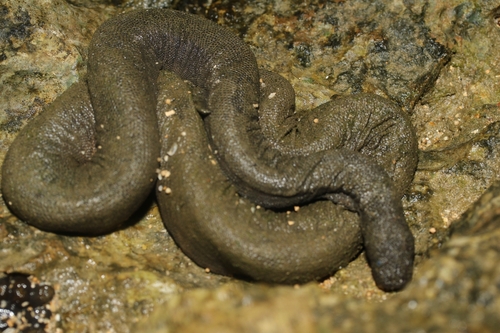
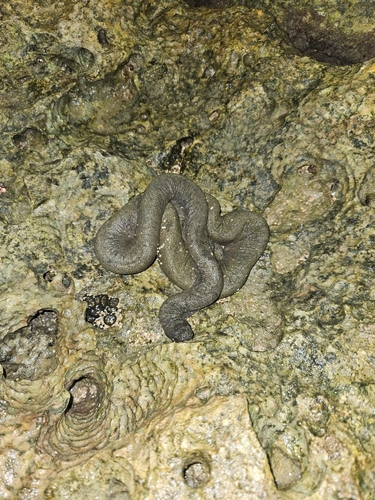
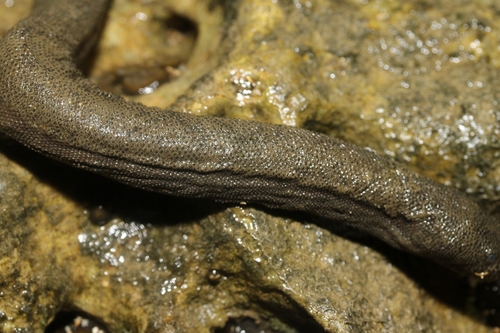
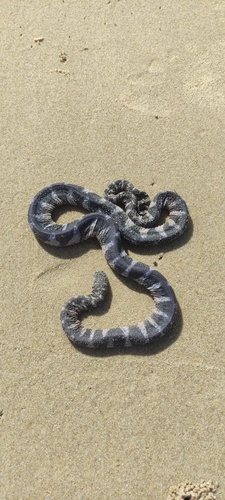
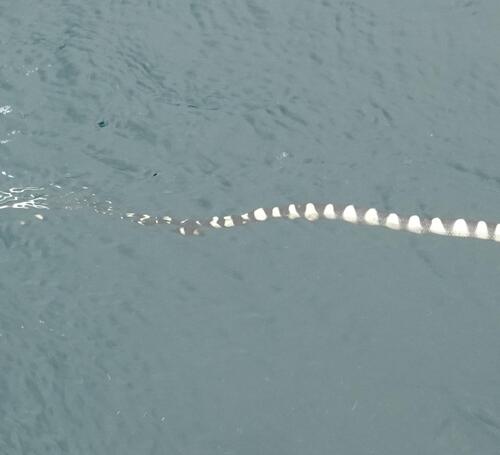
6 photographs of the Little File Snake. © Julia Palmer.
The Little File Snake (Acrochordus granulatus) is a non-venomous snake in the Acrochordidae family, recorded in 17 countries.
- Family
- Acrochordidae
About the Little File Snake
Acrochordus granulatus is a snake species found from India through Southeast Asia to the Solomon Islands. It is known as the little file snake, marine file snake, and little wart snake. It is completely aquatic and almost helpless on land. No subspecies are currently recognized.
Description
Acrochordus granulatus is the smallest of the three members of the family Acrochordidae, and is commonly called the "little file snake". Acrochordus granulatus is also the only Acrochord that permanently inhabits estuaries as well as coastal seas--hence its other common name, the "marine file snake". All members of Acrochordus are completely aquatic and nearly helpless on land, with the exception of A. granulatus. The file snake has hygroscopic skin that retards desiccation, allowing it to travel out of water.
As with the other members of the genus, Acrochordus granulatus has uniquely spinose scales with an almost rough texture. Members of Acrochordus also possess specialized tubercles with nerve endings on the skin between their scales which provide an extra sensory organ used to feel water movements of prey. Acrochordus granulatus also have laterally compressed tails, and they can flatten dorsoventrally to assist in swimming. Acrochordus granulatus are the most marine of the Acrochordidae and have specialized sublingual salt glands similar to those found in the true sea snake subfamily Hydrophiinae. Despite this, they are still susceptible to dehydration at sea and rely on freshwater lenses built up on the surface of marine water for freshwater. Members of the true sea snake subfamily Hydrophiinae have been shown to exhibit this same behavior. Acrochordus granulatus are sexually divergent, with females being slightly larger than males.
Geographic range
Found from both coasts of peninsular India though Southeast Asia, the Indo-Australian Archipelago and northern Australia to the Solomon Islands. This includes Bangladesh, Myanmar, Sri Lanka, the Andaman and Nicobar Islands, Thailand, Cambodia, Vietnam, China (Hainan), the Philippines (Luzon, Cebu and Batayan), Malaysia, Indonesia (Sumatra, Java, Borneo, Flores, Timor, Sulawesi, Ternate, Ambon, and coastal Irian Jaya), Papua New Guinea, the Solomon Islands the coast along northern Australia (Northern Territory and eastern Queensland). No type locality was given with the original description, although Smith (1943) gives "India" and Saint-Girons (1972) gives "Inde."
Feeding
Harold Voris reports field studies revealing a diet of Gobiodei, Eleotridae, Trypauchenidae, small crustaceans and snails in the straits of Malacca. Due to the species' extensive range, the diet likely varies regionally. In captivity they have been known fairly non-preferential to take a variety of fish.
Adapted from Wikipedia, available under CC BY-SA.
Frequently asked: Little File Snake
- Is the Little File Snake venomous?
- No. The Little File Snake (Acrochordus granulatus) is non-venomous and is not considered dangerous to humans. Like most snakes, it will retreat rather than bite when given the chance.
- Is the Little File Snake poisonous?
- Snakes are venomous, not poisonous. "Poisonous" means harmful to eat or touch; "venomous" means injecting toxins through a bite. The Little File Snake is neither poisonous nor venomous.
- Is the Little File Snake dangerous?
- The Little File Snake is not dangerous to humans. It has no medically significant venom and bites only defensively if cornered or handled.
- Where does the Little File Snake live?
- The Little File Snake has verified records in 17 countries, including Philippines, Malaysia, Singapore. See the distribution section below for its full range.
- What does the Little File Snake eat?
- Harold Voris reports field studies revealing a diet of Gobiodei, Eleotridae, Trypauchenidae, small crustaceans and snails in the straits of Malacca. Due to the species' extensive range, the diet likely varies regionally. In captivity they have been known fairly non-preferential to take a variety of fish.
Where it is found
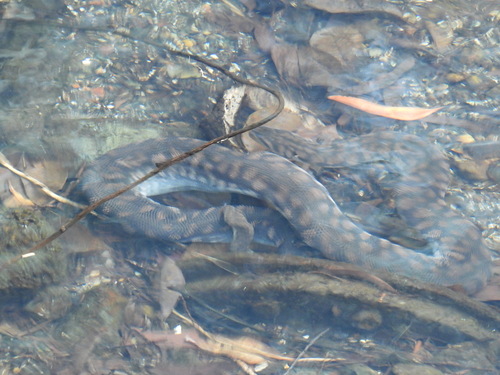
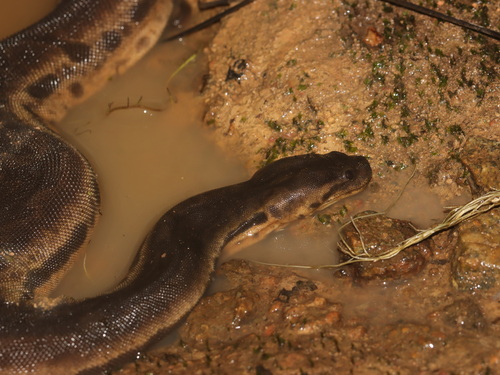
More Acrochordidae snakes
Classification
How scientists group this snake, from the broadest category down to the exact species. Each step narrows to its closest relatives.
- OrderThe broad group of scaled reptiles: all snakes and lizards
- Squamata
- FamilyA group of related snakes that share key traits
- Acrochordidae
- GenusA close-knit group of very similar species
- Acrochordus
- SpeciesThis exact snake, named in the two-part scientific name
- Acrochordus granulatus
Keep learning
- What to Do If You Find a SnakeFound a snake at home or on a trail? Here is how to stay calm, give it space, identify it safely, and know when to call a professional.
- Venomous vs Nonvenomous: How to Tell the DifferenceThe folk rules for telling venomous snakes apart, where each one fails, and why location-based identification beats guessing by sight.
- What Is a Snake? Anatomy and the BasicsA clear overview of what makes a snake a snake: limbless body plan, anatomy, evolution from lizards, species diversity, and why they are ectothermic.
- How to Keep Snakes Out of Your Yard and HomeA practical guide to keeping snakes out of your yard and home using habitat changes that work, plus what to skip and what to do if one shows up.
Distribution from GBIF & iNaturalist. Venom status per CDC. Background: Wikipedia. Informational only. Never handle a snake to identify it.