
Colubridae
False Water Cobra
HarmlessHydrodynastes gigas
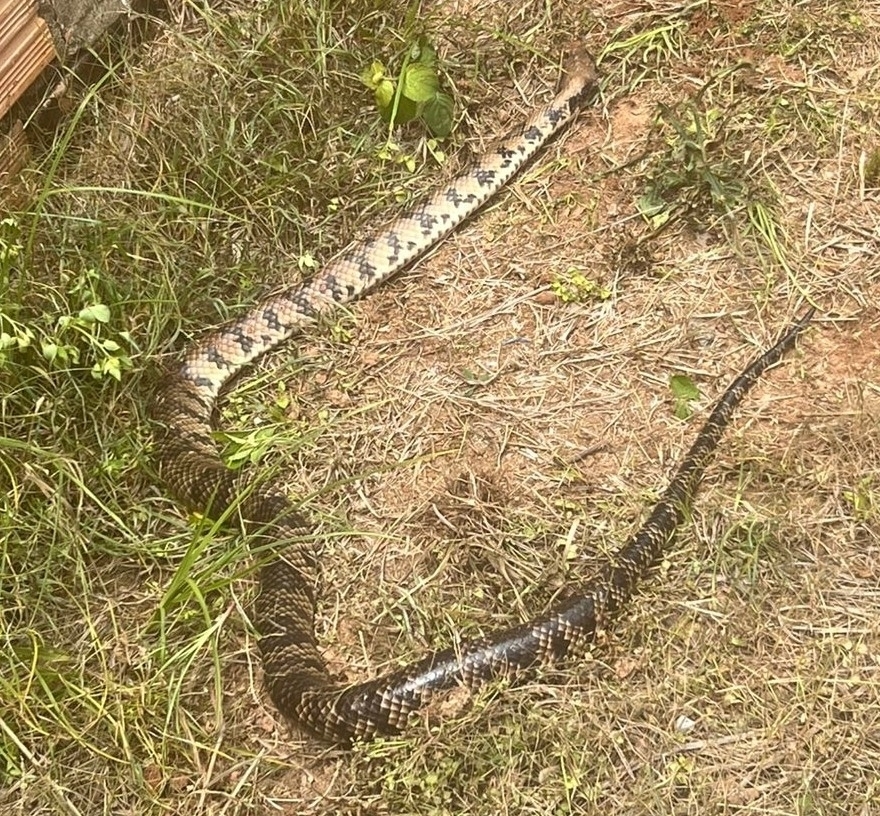
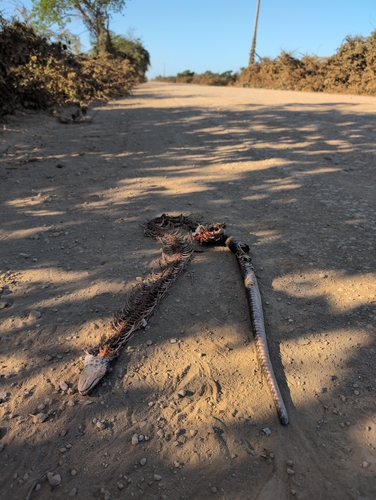
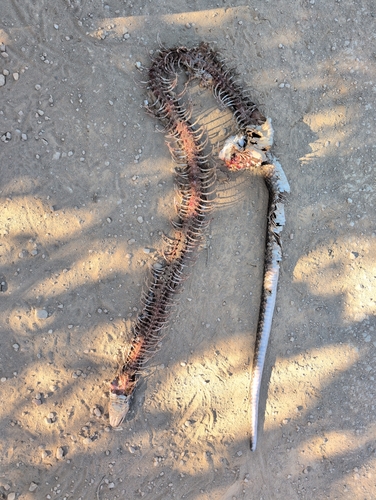
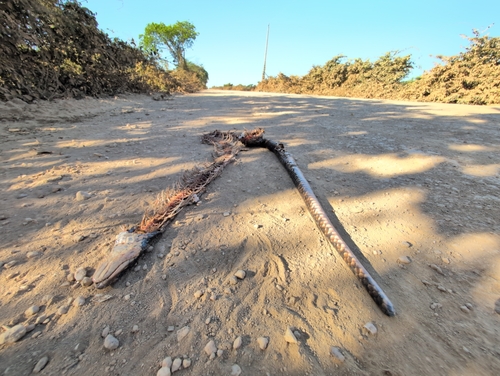
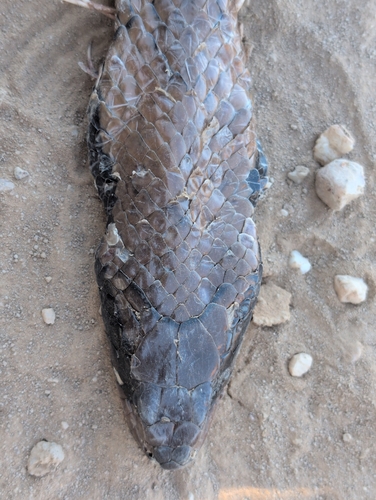
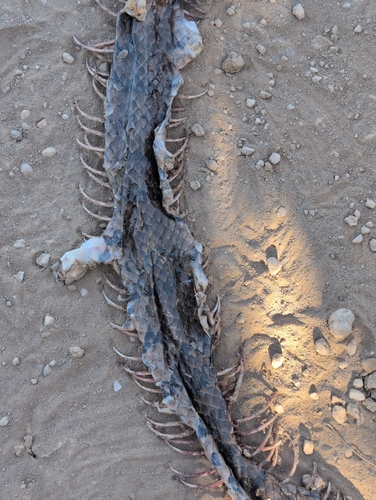
6 photographs of the False Water Cobra. © Márcia Martins.
The False Water Cobra (Hydrodynastes gigas) is a rear-fanged, mildly venomous snake in the Colubridae family, recorded in 11 countries.
- Family
- Colubridae
About the False Water Cobra
Hydrodynastes gigas is a New World species of large dipsadine snake endemic to South America. Aglyphous snake with enlarged posterior maxillary teeth, not grooved, associated with Duvernoy's gland secretions. endemic to South America. Common names include false cobra, false water cobra, South American water cobra, and Brazilian smooth snake. It is also sometimes referred to as boipevaçu, ñacaniná or yacaniná, from the Guarani ñakanina ('alert head'), mboi-peba, surucucu-do-pantanal, and víbora ladradora ('barking snake').
A mildly venomous species, the false water cobra is so named because when it is threatened, it "hoods" as a true cobra (genus Naja) does. Unlike a true cobra, however, it does not rear up, but instead remains horizontal. No valid subspecies are currently recognized.
Description
H. gigas is a large dipsadine snake that may exceed 3 m (10 ft) in length, with most adult specimens reaching about 2 m (7 ft) in length. The average weight is around 1.6 kg (3.5 lb), but some mature specimens can weigh up to 4.5 kg (9.9 lb). This species exhibits sexual dimorphism, with males being much smaller than females. The common name false water cobra is an allusion to its ability to flatten its neck, similar to a cobra, as a defensive reaction to make it look larger and more intimidating. Unlike the true cobra, though, the false water cobra stays in a horizontal position when it hoods, rather than rearing into a vertical position. H. gigas can flatten not only its neck, but also lower down its body, which is not possible for a true cobra.
Additionally, the pattern and coloration of this Hydrodynastes species superficially resemble those of true water cobras (Boulengerina). The false water cobra has large eyes with circular pupils, allowing good daytime vision. The tongue is black.
The background colour of a mature specimen is an olive green or brown, with dark spots and bands covering much of its body. The background coloring and banding generally become darker towards the tail. This colouring gives the false water cobra effective camouflage in its natural rainforest environment. The ventral scales are yellow or brown, spotted with dark flecks that make three dotted lines that appear to merge as they approach the tail. Females are brown ventrally, whilst males are yellow. Females are suggested to have lighter bands and markings on their bodies. This is not an effective way of judging the sex of H. gigas, as coloring differs slightly among all individuals. Hatchlings and juveniles are much darker in coloration and do not have the typical dark eyes of the adults. They more resemble a garter or water snake than their mature counterparts. In captivity, hypomelanistic animals have been produced. These animals vary in coloration, from some having only slightly lighter colored saddles to those that are almost patternless. A melanistic population found in Tocantins in central Brazil was originally described as a new species of Hydrodynastes (H. melanogigas), but genetic evidence indicates that this population is simply a melanistic variant of H. gigas.
Geographic range
Adapted from Wikipedia, available under CC BY-SA.
Frequently asked: False Water Cobra
- Is the False Water Cobra venomous?
- The False Water Cobra (Hydrodynastes gigas) is rear-fanged and only mildly venomous. It is not considered dangerous to humans (its venom is weak and its fangs sit at the back of the mouth) but a bite can cause local swelling or irritation, so it should not be handled.
- Is the False Water Cobra poisonous?
- Snakes are venomous, not poisonous. "Poisonous" means harmful to eat or touch; "venomous" means injecting toxins through a bite. The False Water Cobra is neither poisonous nor venomous.
- Is the False Water Cobra dangerous?
- The False Water Cobra is not dangerous to humans. It has no medically significant venom and bites only defensively if cornered or handled.
- Where does the False Water Cobra live?
- The False Water Cobra has verified records in 11 countries, including Brazil, Argentina, Paraguay. See the distribution section below for its full range.
- What does the False Water Cobra eat?
- In the wild, H. gigas primarily feeds on fish and amphibians, but will also eat small mammals, birds, and reptiles. In captivity, they can be introduced to other types of food, as well.
Where it is found
More Colubridae snakes
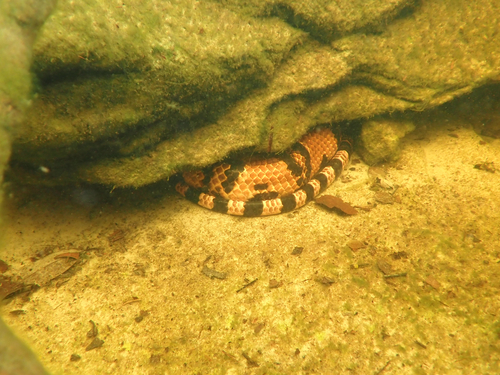 Herrmann's Water SnakeHydrodynastes bicinctus
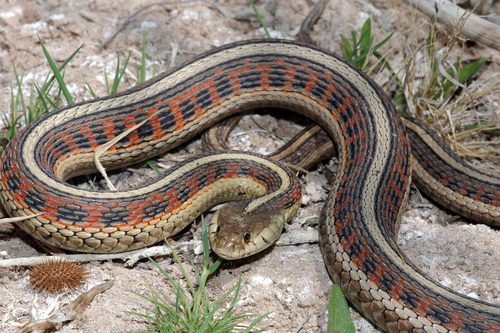 Common Garter SnakeThamnophis sirtalis
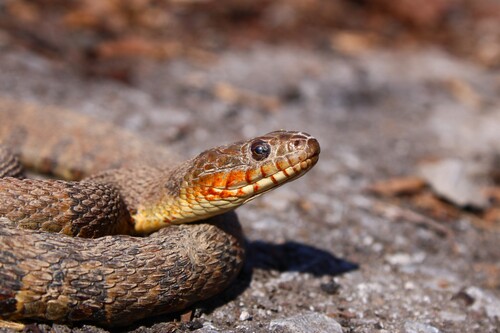 Common WatersnakeNerodia sipedon
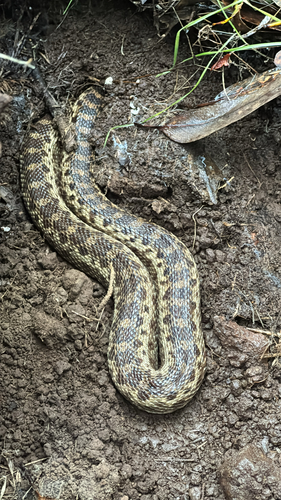 Gopher SnakePituophis catenifer
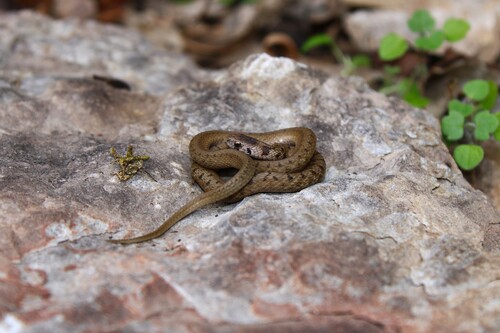 DeKay's BrownsnakeStoreria dekayi
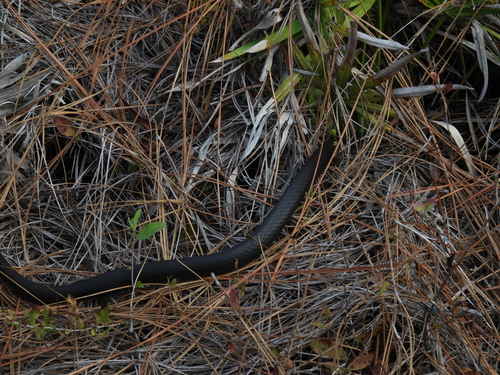 North American RacerColuber constrictor
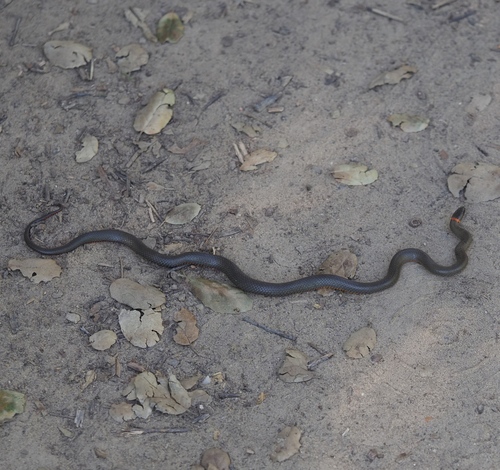 Ring-necked SnakeDiadophis punctatus
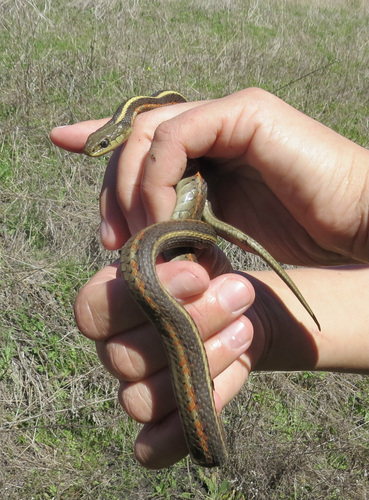 Western Terrestrial Garter SnakeThamnophis elegans
Classification
How scientists group this snake, from the broadest category down to the exact species. Each step narrows to its closest relatives.
- OrderThe broad group of scaled reptiles: all snakes and lizards
- Squamata
- FamilyA group of related snakes that share key traits
- Colubridae
- GenusA close-knit group of very similar species
- Hydrodynastes
- SpeciesThis exact snake, named in the two-part scientific name
- Hydrodynastes gigas
Keep learning
- What to Do If You Find a SnakeFound a snake at home or on a trail? Here is how to stay calm, give it space, identify it safely, and know when to call a professional.
- Venomous vs Nonvenomous: How to Tell the DifferenceThe folk rules for telling venomous snakes apart, where each one fails, and why location-based identification beats guessing by sight.
- What Is a Snake? Anatomy and the BasicsA clear overview of what makes a snake a snake: limbless body plan, anatomy, evolution from lizards, species diversity, and why they are ectothermic.
- How to Keep Snakes Out of Your Yard and HomeA practical guide to keeping snakes out of your yard and home using habitat changes that work, plus what to skip and what to do if one shows up.
Distribution from GBIF & iNaturalist. Venom status per CDC. Background: Wikipedia. Informational only. Never handle a snake to identify it.