
Genus · Colubridae
Types of cobras
2 species make up the genus Hydrodynastes, the snakes commonly called cobras. None are considered dangerous to humans.
About false water cobras
Large, semiaquatic South American colubrids that flare a cobra-like hood but are not true cobras.
Hydrodynastes is a small genus in the family Colubridae, the largest and most diverse snake family in the world. It contains just two species: the false water cobra (Hydrodynastes gigas) and Herrmann's water snake (Hydrodynastes bicinctus). Both are heavy-bodied, semiaquatic snakes of South America, found across river systems, marshes, flooded grasslands, and wetland margins from the Amazon and Pantanal regions into surrounding lowlands. Within Colubridae they sit among the rear-fanged, diurnal water-associated colubrids rather than the front-fanged elapids that include real cobras.
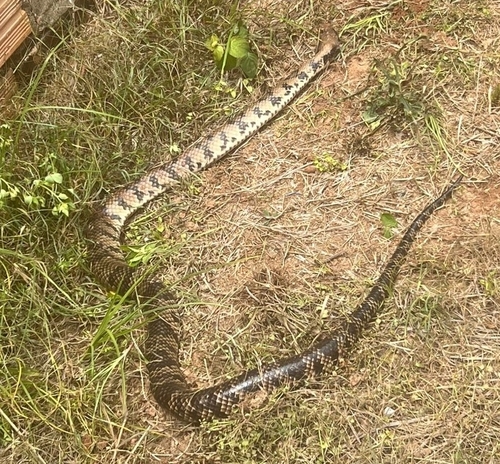
In general terms you recognize a member of this genus by its large size, robust build, and strongly aquatic habits. The false water cobra is one of the larger New World colubrids, commonly reaching well over a meter and a half, with keeled scales, an alert head, and the signature defensive display: when threatened it can flatten and spread the front of its body, raising a broad horizontal hood that mimics a cobra. The coloration is typically olive to brown with darker bars or blotches. These are active hunters, foraging by day in and near water for fish, amphibians, lizards, small mammals, and other prey, and they reproduce by laying eggs.
These snakes are rear-fanged and mildly venomous, with enlarged grooved teeth at the back of the upper jaw and a venom delivery adapted for subduing prey, not for defense against large animals. Bites to people are uncommon and the venom is not considered life-threatening in the way that a true cobra's is, but a sustained, chewing bite can cause local swelling, pain, and reactions, and individual sensitivity varies. Do not treat any wild snake as safe to pick up. If a bite occurs, stay calm, keep the limb still, remove rings or tight items, and seek medical care; in the US contact Poison Control at 1-800-222-1222 or call local emergency services.
Hydrodynastes belongs to the Colubridae family (Colubrids). The largest snake family, and the one most snakes you meet belong to. Typically round pupils, a head only slightly wider than the neck, and no heat-sensing facial pit or rattle. Scales may be smooth and glossy or keeled and matte depending on the species.
Danger: Almost all colubrids are harmless. A small number are rear-fanged with medically significant venom, the boomslang and the twig (vine) snakes of Africa being the dangerous exceptions. Most colubrids will flee or bluff rather than bite.
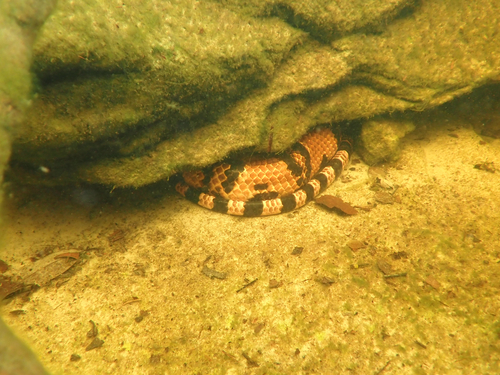
All species (2)
Keep learning
- What Is a Snake? Anatomy and the BasicsA clear overview of what makes a snake a snake: limbless body plan, anatomy, evolution from lizards, species diversity, and why they are ectothermic.
- How Snakes Move, Hunt, and EatHow snakes move without legs, hunt as ambushers or active foragers, kill by constriction or venom, and swallow prey wider than their head.
- What Do Snakes Eat?All snakes are carnivores. Learn what snakes eat, how diet changes with size and age, how often they feed, and how they hunt and swallow prey.
- Venomous vs Nonvenomous: How to Tell the DifferenceThe folk rules for telling venomous snakes apart, where each one fails, and why location-based identification beats guessing by sight.