
Colubridae
Chequered Keelback
HarmlessFowlea piscator
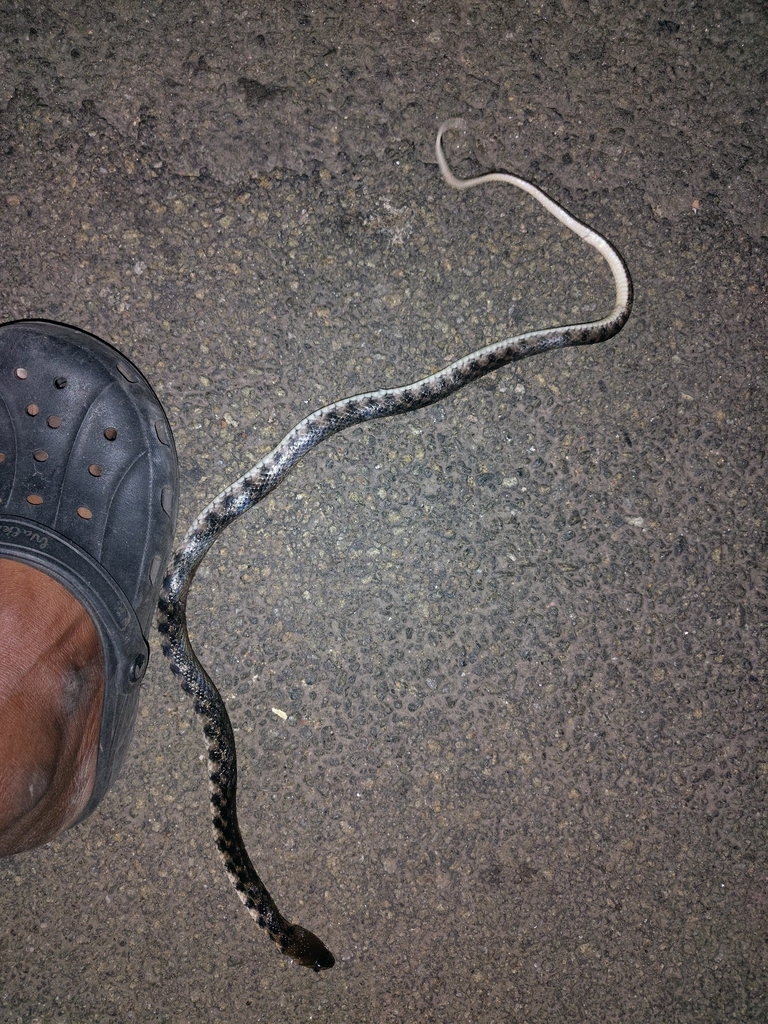
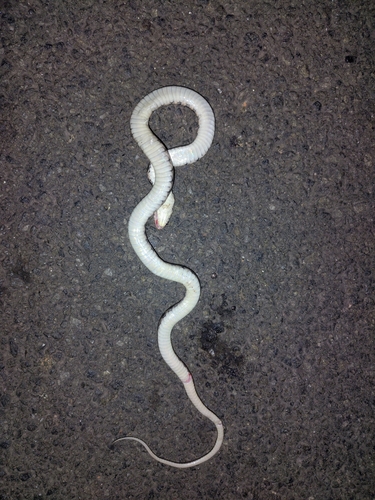
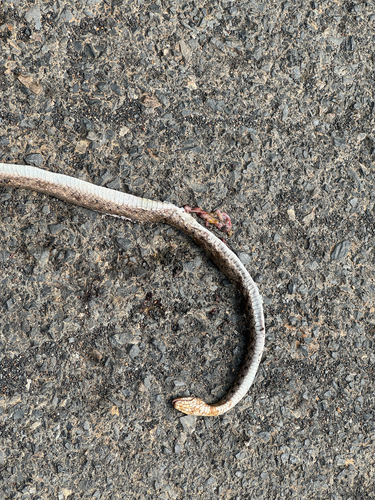
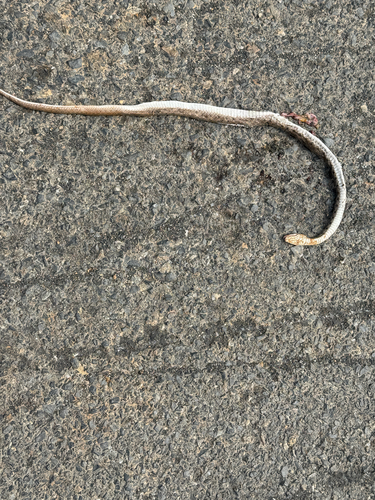
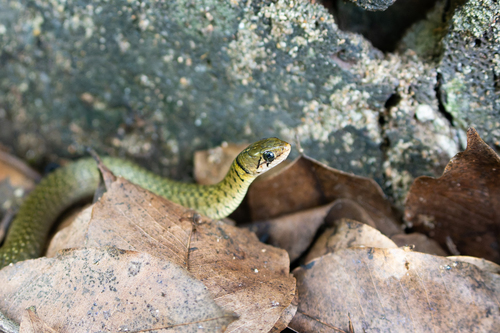
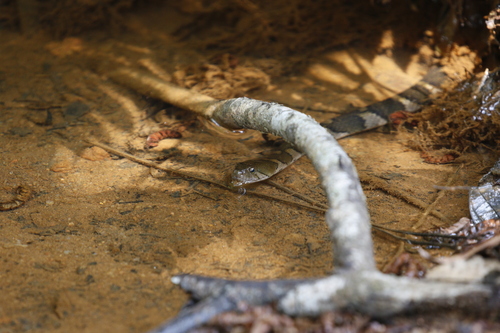
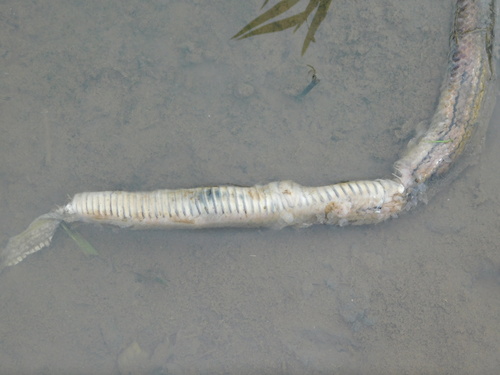
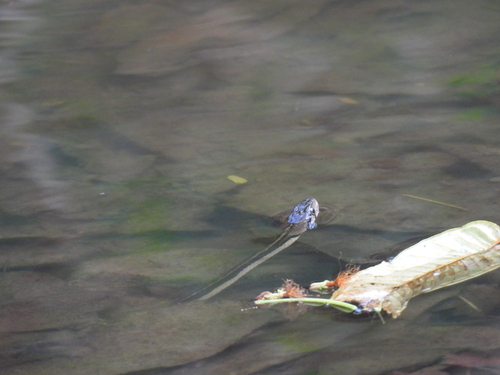
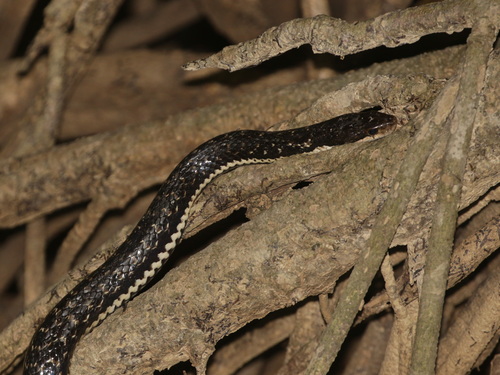
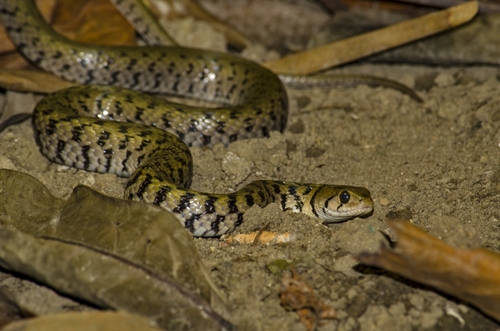
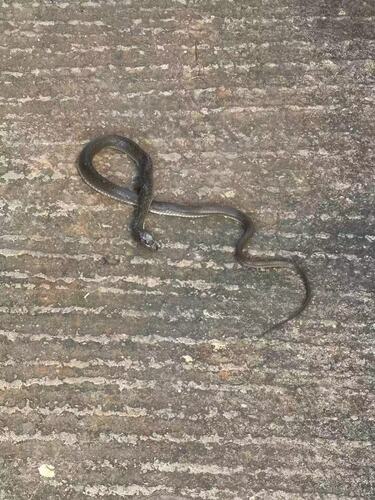
4 photographs of the Chequered Keelback. © renjus box.
The Chequered Keelback (Fowlea piscator) is a non-venomous snake in the Colubridae family, recorded in 18 countries.
- Family
- Colubridae
About the Chequered Keelback
The checkered keelback (Fowlea piscator), also known commonly as the Asiatic water snake, is a common species in the subfamily Natricinae of the family Colubridae. The species is endemic to Asia. It is non-venomous.
Description
The eye of F. piscator is rather small and shorter than its distance from the nostril in the adult. Its rostral scale is visible from above. The internasal scales are much narrowed anteriorly and subtriangular, with the anterior angle truncated and as long as the prefrontal scales. The frontal scale is longer than its distance from the end of the snout, and as long as the parietals or a little shorter. The loreal is nearly as long as it is deep. There are one preocular and three (rarely four) post-oculars. Its temporals are 2+2 or 2+3. There are normally nine upper labials, with the fourth and fifth entering the eye; and five lower labials in contact with the anterior chin-shields, which are shorter than the posterior. The dorsal scales are arranged in 19 rows, strongly keeled, with outer rows smooth. The ventrals number 125–158, the anal is divided, and the subcaudals number 64–90. Coloration is very variable, consisting of dark spots arranged quincuncially and often separated by a whitish network, or of black longitudinal bands on a pale ground, or of dark crossbands, with or without whitish spots. Two oblique black streaks, one below and the other behind the eye, are nearly constant. The lower parts are white, with or without black margins to the shields.
The checkered keelback is a medium-sized snake, but may grow to be large. Adults may attain a snout-to-vent length (SVL) of 1.75 m (5.7 ft).
Defensive behavior
Aggressive when threatened or cornered. Most of the time this snake tries to raise its head as much as possible and expand its neck skin mimicking a cobra hood and intimidate the threat. Though it is non-venomous to humans, it can deliver a painful bite which is inflammatory.
F. piscator may lose its tail as an escape mechanism. A rare case of such autotomy is reported from Vietnam.
Habitat
Active by day and night. The preferred habitat of F. piscator is in or near freshwater bodies and paddy fields.
Diet
F. piscator feeds mainly on fish, amphibians and arthropods, occasionally on rodents and amphibian eggs, and rarely on birds and juvenile Indian peacock softshell turtles.
Reproduction
F. piscator is oviparous. Clutch size is usually 30-70 eggs, but may be as few as 4 or as many as 100. Egg size is also variable. Each egg may be 1.5–4.0 cm (0.59–1.57 in) long. The female guards the eggs until they hatch in 60–70 days. Each hatchling is about 11 cm (4.3 in) long.
Geographic range
F. piscator is found in Afghanistan, Bangladesh, Pakistan, Sri Lanka, India, Myanmar, Nepal, Thailand, Laos, Cambodia, Vietnam, West Malaysia, China (Zhejiang, Jiangxi, Fujian, Guangdong, Hainan, Guangxi, Yunnan), Taiwan, and Indonesia (Sumatra, Java, Borneo, Celebes = Sulawesi).
Adapted from Wikipedia, available under CC BY-SA.
Frequently asked: Chequered Keelback
- Is the Chequered Keelback venomous?
- No. The Chequered Keelback (Fowlea piscator) is non-venomous and is not considered dangerous to humans. Like most snakes, it will retreat rather than bite when given the chance.
- Is the Chequered Keelback poisonous?
- Snakes are venomous, not poisonous. "Poisonous" means harmful to eat or touch; "venomous" means injecting toxins through a bite. The Chequered Keelback is neither poisonous nor venomous.
- Is the Chequered Keelback dangerous?
- The Chequered Keelback is not dangerous to humans. It has no medically significant venom and bites only defensively if cornered or handled.
- Where does the Chequered Keelback live?
- The Chequered Keelback has verified records in 18 countries, including India, Thailand, Bangladesh. See the distribution section below for its full range.
- What does the Chequered Keelback eat?
- F. piscator feeds mainly on fish, amphibians and arthropods, occasionally on rodents and amphibian eggs, and rarely on birds and juvenile Indian peacock softshell turtles.
Where it is found
More Colubridae snakes
Classification
How scientists group this snake, from the broadest category down to the exact species. Each step narrows to its closest relatives.
- OrderThe broad group of scaled reptiles: all snakes and lizards
- Squamata
- FamilyA group of related snakes that share key traits
- Colubridae
- GenusA close-knit group of very similar species
- Fowlea
- SpeciesThis exact snake, named in the two-part scientific name
- Fowlea piscator
Keep learning
- What to Do If You Find a SnakeFound a snake at home or on a trail? Here is how to stay calm, give it space, identify it safely, and know when to call a professional.
- Venomous vs Nonvenomous: How to Tell the DifferenceThe folk rules for telling venomous snakes apart, where each one fails, and why location-based identification beats guessing by sight.
- What Is a Snake? Anatomy and the BasicsA clear overview of what makes a snake a snake: limbless body plan, anatomy, evolution from lizards, species diversity, and why they are ectothermic.
- How to Keep Snakes Out of Your Yard and HomeA practical guide to keeping snakes out of your yard and home using habitat changes that work, plus what to skip and what to do if one shows up.
Distribution from GBIF & iNaturalist. Venom status per CDC. Background: Wikipedia. Informational only. Never handle a snake to identify it.