
Colubridae
Boulenger's Keelback
HarmlessFowlea asperrima
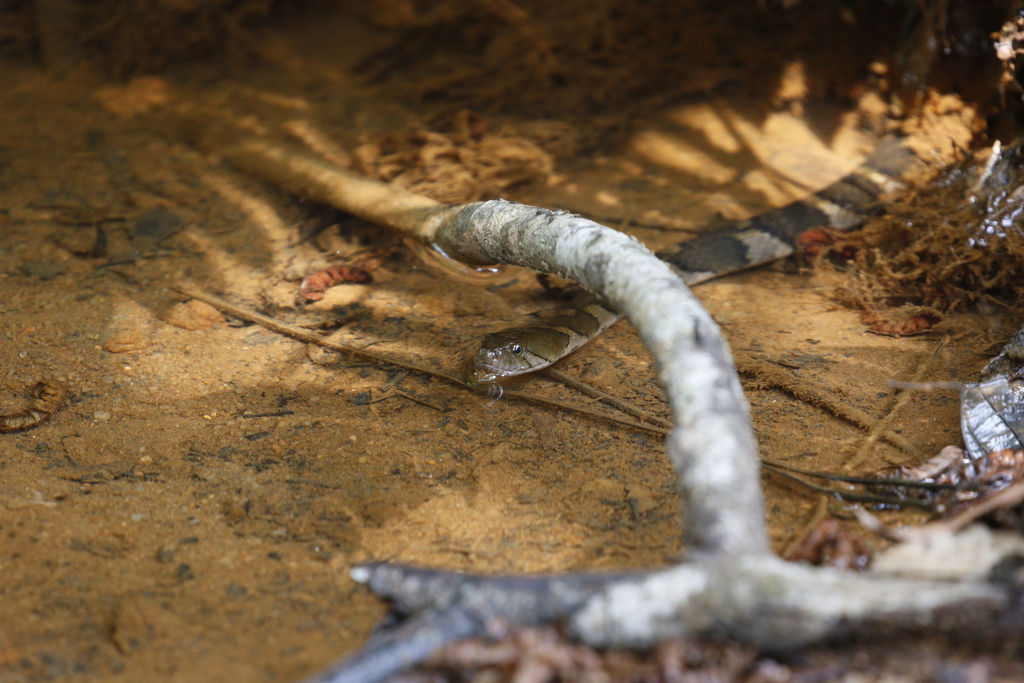
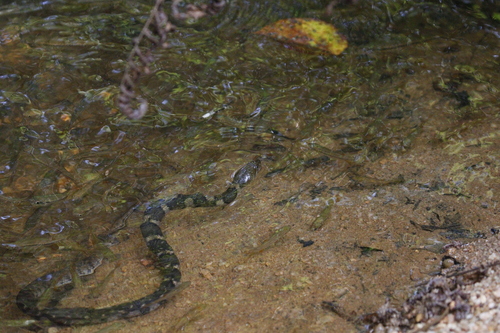
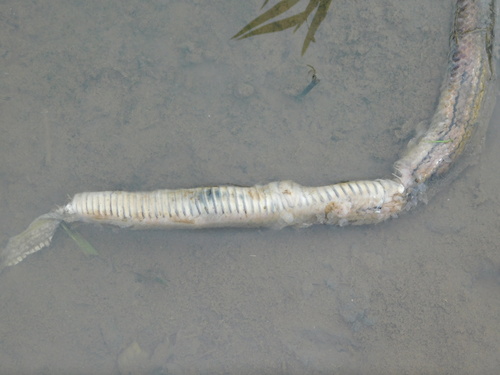
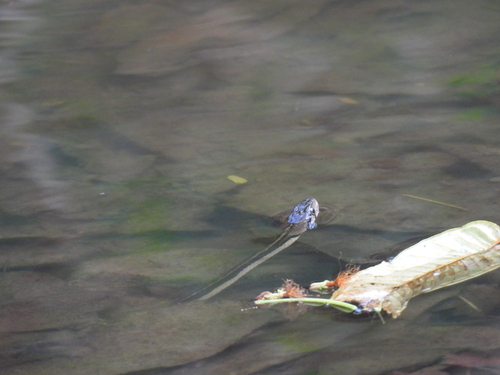
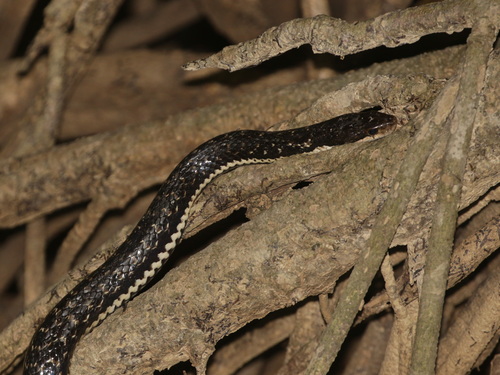
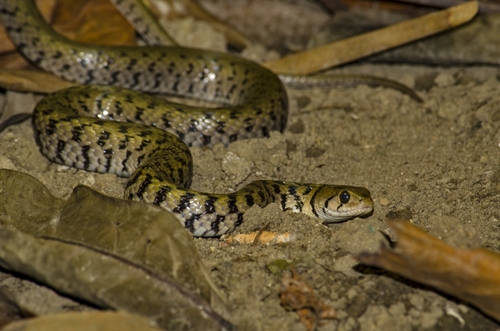
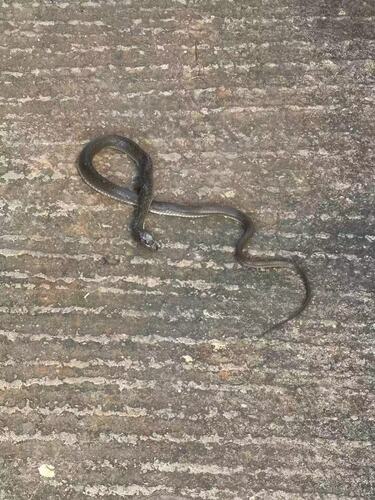
2 photographs of the Boulenger's Keelback. © Mickey Wu.
The Boulenger's Keelback (Fowlea asperrima) is a non-venomous snake in the Colubridae family, recorded in 3 countries.
- Family
- Colubridae
About the Boulenger's Keelback
Boulenger's keelback (Fowlea asperrima), also known commonly as the Sri Lankan keelback, is a species of water snake in the family Colubridae. The species is endemic to Sri Lanka.
Etymology
The common name "Boulenger's keelback" is in honour of Belgian-born British herpetologist George Albert Boulenger.
Habitat
F. asperrima is found in Sri Lanka, in both dry and wet climatic zones up to 1,000 m (3,300 ft) above mean sea level. It is abundant in waterways, such as flooded rice fields, ponds, lakes, marshes, rivers and streams.
Characteristics
The body of F. asperrima is short and cylindrical, and has a clear neck and slightly pointed head. The eyes have rounded pupils, and the nostrils are narrow, directed slightly upwards. The tail is long. At hatching, it is 10 cm (3.9 in) long and grows to an adult length of 40–70 cm (16–28 in). The female is longer.
Scalation
F. asperrima has one pair of internasals; the posterior parts are narrow. One loreal, preocular, postocular and three temporals are found. Of the 9 supralabials, 4 and 6 connect with the eye. Ventrals number 131–146, and the undivided subcaudals are 73–93 in count. At midbody there are 19 rows of dorsal scales, which are strongly keeled and rough.
Colour
The dorsal body colour of F. asperrima is olive brown. The anterior half of the body has 20–32 distinct large black spots or cross bars. The posterior body may lack them or may be in light-colored irregular shapes. The head is dark in color. Two black lines run diagonally from behind the eyes to the corners of the mouth. Ventrally, the body is white. F. asperrimus can be easily identified by dark spots or bars on the first half of the body and two dark lines behind the eyes.
Behaviour
F. asperrima is oviparous, diurnal and nocturnal. In dry conditions during the summer, it undergoes aestivation. It is active in water bodies in search of its prey, which consist mainly of fishes and frogs. It is known to be very aggressive. When threatened, it attempts to bite, by flattening its head and neck as does the cobra. The bite may cause wounds. Also, it may release a noxious odor.
Breeding
The gestation period of F. asperrima is 55–67 days. Females do not guard the clutches of eggs, but they stay close to the nest. They lay clutches of four to 30 eggs between September and October.
Common names
English: Boulenger's keelback or Sri Lankan keelback
Sinhalese: දිය බරියා/දිය නයා
Adapted from Wikipedia, available under CC BY-SA.
Frequently asked: Boulenger's Keelback
- Is the Boulenger's Keelback venomous?
- No. The Boulenger's Keelback (Fowlea asperrima) is non-venomous and is not considered dangerous to humans. Like most snakes, it will retreat rather than bite when given the chance.
- Is the Boulenger's Keelback poisonous?
- Snakes are venomous, not poisonous. "Poisonous" means harmful to eat or touch; "venomous" means injecting toxins through a bite. The Boulenger's Keelback is neither poisonous nor venomous.
- Is the Boulenger's Keelback dangerous?
- The Boulenger's Keelback is not dangerous to humans. It has no medically significant venom and bites only defensively if cornered or handled.
- Where does the Boulenger's Keelback live?
- The Boulenger's Keelback has verified records in 3 countries, including Sri Lanka, Philippines, India. See the distribution section below for its full range.
- Why is it called the Boulenger's Keelback?
- The common name "Boulenger's keelback" is in honour of Belgian-born British herpetologist George Albert Boulenger.
Where it is found
More Colubridae snakes
Classification
How scientists group this snake, from the broadest category down to the exact species. Each step narrows to its closest relatives.
- OrderThe broad group of scaled reptiles: all snakes and lizards
- Squamata
- FamilyA group of related snakes that share key traits
- Colubridae
- GenusA close-knit group of very similar species
- Fowlea
- SpeciesThis exact snake, named in the two-part scientific name
- Fowlea asperrima
Keep learning
- What to Do If You Find a SnakeFound a snake at home or on a trail? Here is how to stay calm, give it space, identify it safely, and know when to call a professional.
- Venomous vs Nonvenomous: How to Tell the DifferenceThe folk rules for telling venomous snakes apart, where each one fails, and why location-based identification beats guessing by sight.
- What Is a Snake? Anatomy and the BasicsA clear overview of what makes a snake a snake: limbless body plan, anatomy, evolution from lizards, species diversity, and why they are ectothermic.
- How to Keep Snakes Out of Your Yard and HomeA practical guide to keeping snakes out of your yard and home using habitat changes that work, plus what to skip and what to do if one shows up.
Distribution from GBIF & iNaturalist. Venom status per CDC. Background: Wikipedia. Informational only. Never handle a snake to identify it.