
Colubridae
Bar-necked Keelback
HarmlessFowlea schnurrenbergeri
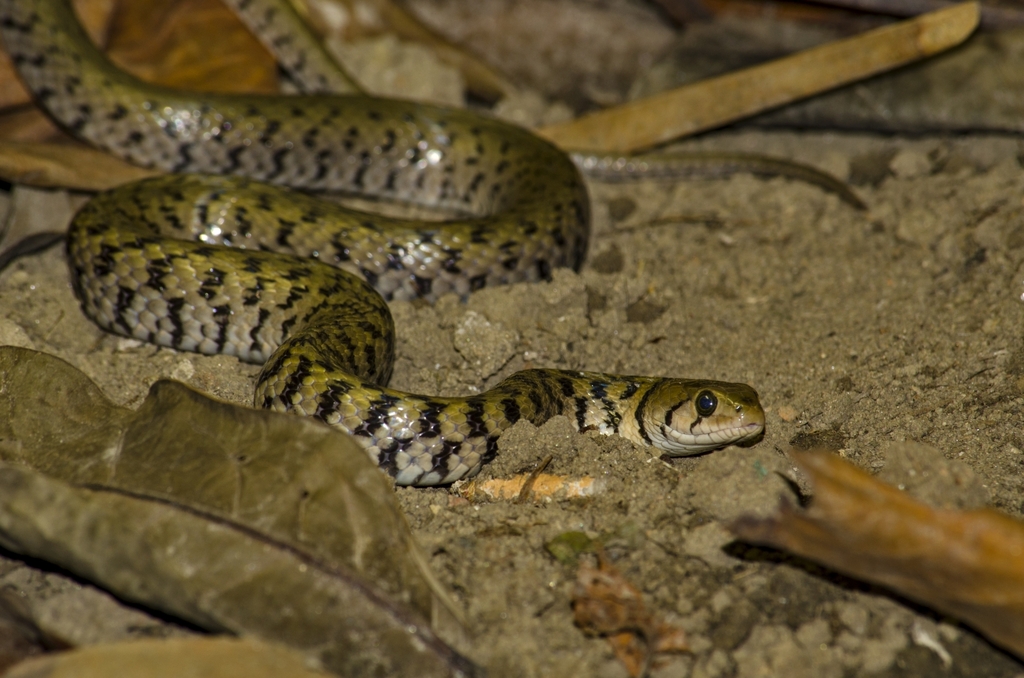
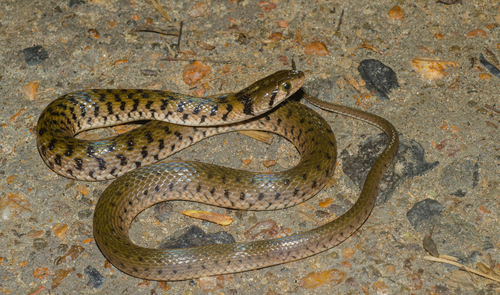
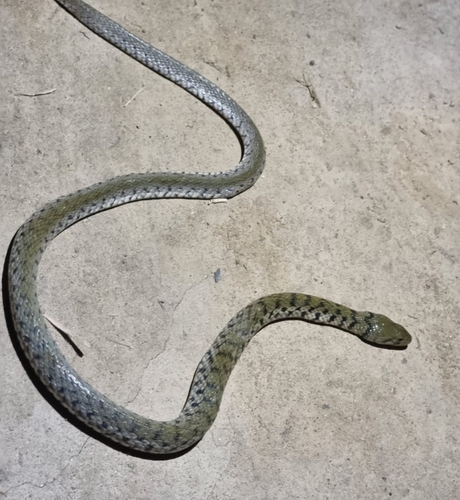
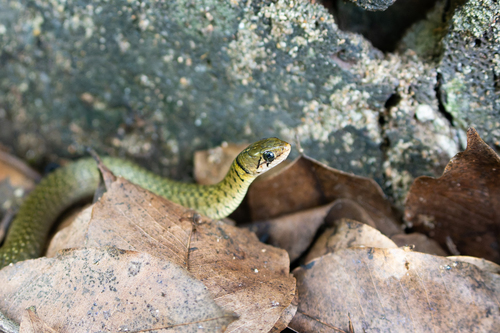
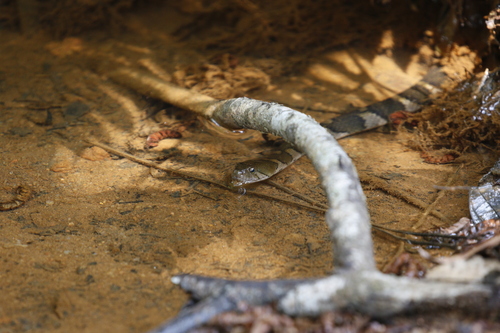
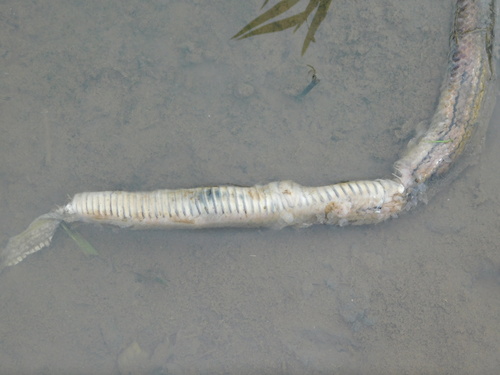
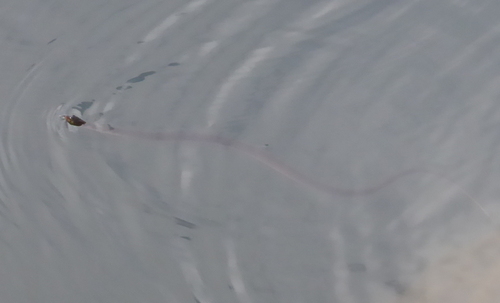
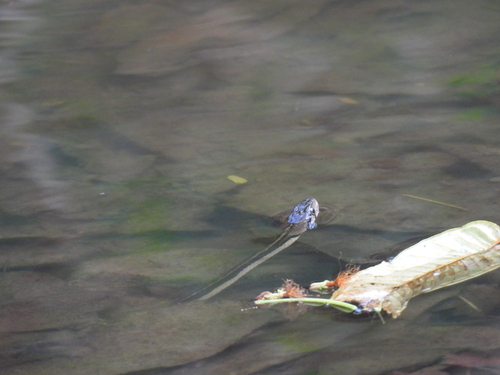
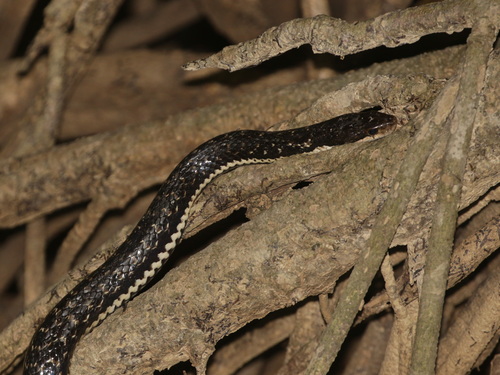
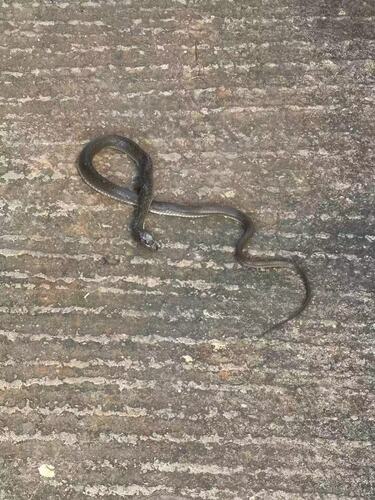
3 photographs of the Bar-necked Keelback. (c) arpitadutta, some rights reserved (CC BY-NC).
The Bar-necked Keelback (Fowlea schnurrenbergeri) is a non-venomous snake in the Colubridae family, recorded in 3 countries.
- Family
- Colubridae
About the Bar-necked Keelback
Fowlea schnurrenbergeri or Xenochrophis schnurrenbergeri (Bar-necked keelback, Kramer's keelback) is a species of Non venomous snake in the family Colubridae. It is found in Nepal, Pakistan, India and Bangladesh.
Description
Bar-necked Keelback is a species which is very close to Checkered Keelback in external morphology. Unlike Checkered Keelback (F. piscator) it is narrowly distributed and found around Himalayan regions also in South Bengal and Odisha. Can be identified by checking 1) Checks on dorsal surface and 2) Cross-bar on neck which is replaced by inverted V in its closest species Checkered Keelback (F. piscator).
Dorsal body-
Body stout with keeled scales on top and smoother on side rows. Dorsal color olive brown with 6 rows of boxes or bars which gradually become faint of posterior body. These bars start from nape in the form of connected or disconnected straight bar.
Ventral body-
Belly usually yellowish-white or white with black edge on the side of each ventral scale. Subcaudal scales paired in a zig-zag manner, their color is similar to ventral scales but sometimes can be darker than ventrals.
Head-
Head triangular with smooth and shiny scales; broader than neck. Color olive brown with two black subocular streaks; anterior below and posterior reaches to last few supralabials. Eyes have rounded pupil.
Tail-
Tail also covered with highly keeled scales. Normal as typical range and ends with pointed tip. Color almost same like rest of the dorsal body but usually without any dark markings.
Diagnostic Keys
Head:
Intranasals distinctly narrowed anteriorly; supralabial 9-10; usually 4th & 5th in contact with eyes; preocular 1; single well defined loreal; postocular 2-3; sometimes a single subocular; temporal 2+2 or 2+3.
Dorsal:
Keeled scales in 19:19:17 rows.
Ventral:
132-139 (Male), 141-152 (Female); anal divided.
Sub Caudal:
71-80 (Male), 61-70 (Female); paired.
Preocular: 1; Postocular: 2-3; Supralabials: 9-10 (4th and 5th touches eye); Infralabials: 8-10; Anterior temporals: 2; Posterior temporals: 2-3; Dorsal scale row formula: 19:19:17. Ventrals: 136-147; Subcaudals: 64-79 (paired). Dorsum olive brown with 5-6 rows of black box like pattern. A straight dark crossbar present on nape. Venter white.
Habitat
Fowlea schnurrenbergeri is much more aquatic in its habit than X. piscator and are found from within or near water hyacinth. The live Fowlea schnurrenbergeri is rather timid. Found in fresh waterbodies of low to moderate elevations of Indian subcontinent. Hides in aquatic vegetation. Xenochrophis schnurrenbergeri mostly found amongst aquatic vegetation.
Behavior
Bar-necked Keelback is a species capable in showing activity anytime. However prone activity is seen during early morning and evening. Its affinity towards aquatic environment is more than X. piscator. Behavior alert, comparatively timid than its sister species Checkered keelback (X. piscatos) and usually try to escape. To show alertness and aggression it inflates much of fore body to show false hood. On threatening always try to escape first by creeping in jumpy manner.
Distribution
Adapted from Wikipedia, available under CC BY-SA.
Frequently asked: Bar-necked Keelback
- Is the Bar-necked Keelback venomous?
- No. The Bar-necked Keelback (Fowlea schnurrenbergeri) is non-venomous and is not considered dangerous to humans. Like most snakes, it will retreat rather than bite when given the chance.
- Is the Bar-necked Keelback poisonous?
- Snakes are venomous, not poisonous. "Poisonous" means harmful to eat or touch; "venomous" means injecting toxins through a bite. The Bar-necked Keelback is neither poisonous nor venomous.
- Is the Bar-necked Keelback dangerous?
- The Bar-necked Keelback is not dangerous to humans. It has no medically significant venom and bites only defensively if cornered or handled.
- Where does the Bar-necked Keelback live?
- The Bar-necked Keelback has verified records in 3 countries, including Nepal, India, Pakistan. See the distribution section below for its full range.
Where it is found
More Colubridae snakes
Classification
How scientists group this snake, from the broadest category down to the exact species. Each step narrows to its closest relatives.
- OrderThe broad group of scaled reptiles: all snakes and lizards
- Squamata
- FamilyA group of related snakes that share key traits
- Colubridae
- GenusA close-knit group of very similar species
- Fowlea
- SpeciesThis exact snake, named in the two-part scientific name
- Fowlea schnurrenbergeri
Keep learning
- What to Do If You Find a SnakeFound a snake at home or on a trail? Here is how to stay calm, give it space, identify it safely, and know when to call a professional.
- Venomous vs Nonvenomous: How to Tell the DifferenceThe folk rules for telling venomous snakes apart, where each one fails, and why location-based identification beats guessing by sight.
- What Is a Snake? Anatomy and the BasicsA clear overview of what makes a snake a snake: limbless body plan, anatomy, evolution from lizards, species diversity, and why they are ectothermic.
- How to Keep Snakes Out of Your Yard and HomeA practical guide to keeping snakes out of your yard and home using habitat changes that work, plus what to skip and what to do if one shows up.
Distribution from GBIF & iNaturalist. Venom status per CDC. Background: Wikipedia. Informational only. Never handle a snake to identify it.