
Elapidae
Andaman Krait
VenomousBungarus andamanensis
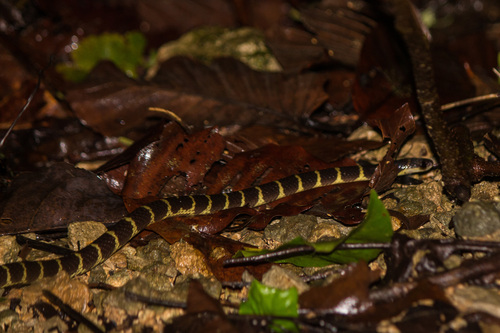
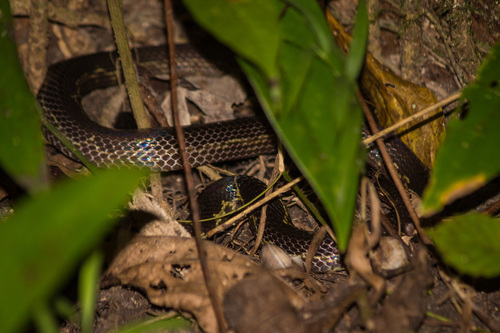
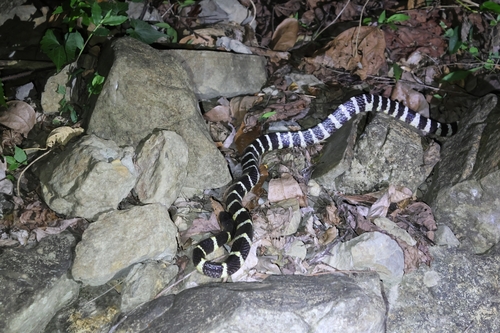
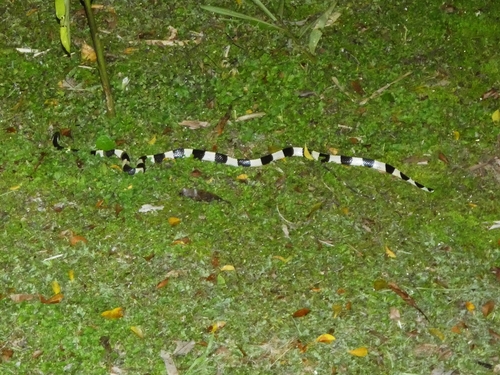
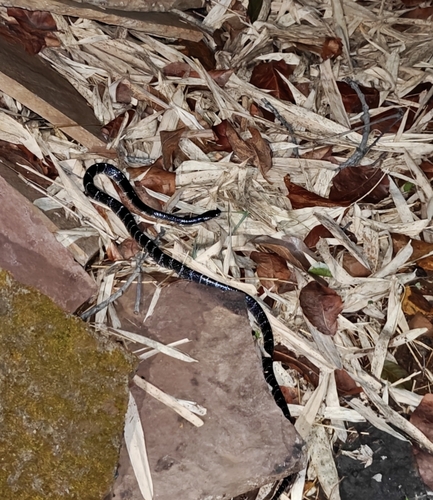
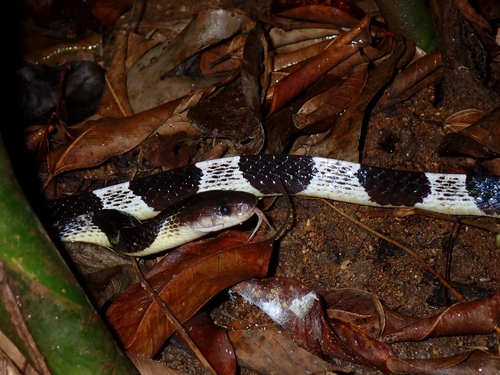
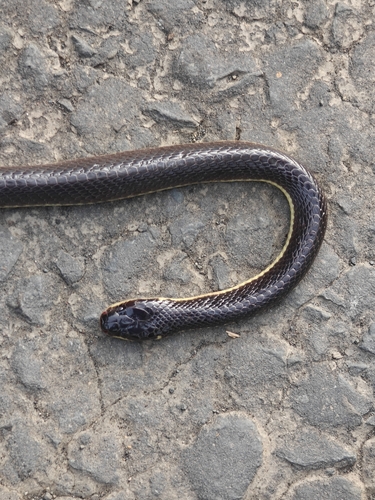
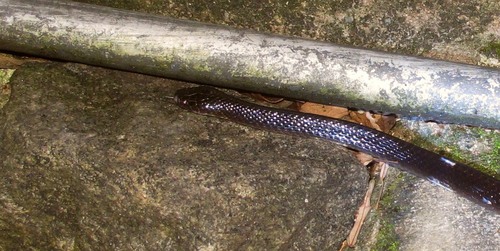
3 photographs of the Andaman Krait. (c) saraptor, some rights reserved (CC BY-NC).
The Andaman Krait (Bungarus andamanensis) is a venomous snake in the Elapidae family, recorded in 1 country.
If you are bitten
This is a venomous snake. Treat any bite as a medical emergency: stay calm, keep the bitten limb still and roughly level with the heart, remove rings and tight clothing, and get to emergency care immediately. Do not apply a tourniquet, cut the wound, apply ice, or try to suck out venom. Call your local emergency number or poison center.
- Family
- Elapidae
- Danger
- high
About the Andaman Krait
Bungarus andamanensis, the South Andaman krait, is a species of krait, a venomous elapid snake, which is found in the Andaman Islands of India. It was first described by Biswas and Sanyal in 1978.
Description
The Andaman krait is a medium-sized snake, growing up to 1.3 metres (4 ft 3 in) in length. Its body is cylindrical, and the head is slightly broader than the neck. The eyes are small and entirely black with round pupils.
Scalation
Dorsal scales: Smooth, arranged in 15:15:15 rows, with vertebral scales strongly enlarged.
Head scales: Internasals shorter than prefrontal scales. No loreal scale; the preocular scale contacts the posterior nasal. Two postocular scales, with temporal scales arranged in 1+2 configuration.
Labial scales: 7 supralabials (the 3rd and 4th touch the eye; the 6th is the largest) and 7 infralabials (the first 3 contact the genials).
Ventrals and subcaudals: 192–200 ventral scales and 40–47 entire subcaudal scales. The tail ends with a thick blunt point, and the anal plate is entire.
Coloration
The body is glossy black or brownish, often with blue iridescence. It features 39–47 narrow yellow or white equidistant cross-bars on the body and 9–13 on the tail, with the bands widening toward the belly. The underside is yellowish-cream with irregular black or brown spots, and the tail often has distinct brownish spots. The lips are yellowish. Juveniles display vibrant yellow cross-bars and a distinct "^"-shaped marking near the head.
Distribution and habitat
The Andaman krait is endemic to the Andaman Islands and Little Andaman Islands in India. It inhabits a variety of environments, including:
Paddy fields
Low bushes on mountains and coastal areas
Mangroves
Freshwater streams
The species is frequently observed on roads after rains and has also been seen near termite mounds. It is extremely common in Little Andaman.
Ecology
Behavior
The Andaman krait is nocturnal and primarily active during and after rains. When alarmed, it slightly flattens its body, coils loosely while hiding its head, and may produce a squeaking sound. Juveniles are most often seen in June, suggesting a seasonal breeding pattern.
Diet
The species mainly preys on other snakes, including water snakes, and occasionally on fish. Adult specimens are rare and are typically found near freshwater streams.
Reproduction
Little is known about the breeding biology of this species, but the presence of juveniles in June indicates potential seasonal reproduction.
Adapted from Wikipedia, available under CC BY-SA.
Local and regional names
The Andaman Krait is known by these names across the regions where it lives:
- Bengali
- আন্দামানি শঙ্খিনী
- Chinese
- 安達曼環蛇
- Danish
- Andamansk Krait
- English
- Andaman's Krait, South Andaman Krait
- German
- Andamanischer Krait
- Italian
- Bungaro delle Andamane, Bungaro delle Andamane del sud, Bungaro delle Andamane meridionali, Krait delle Andamane, Krait delle Andamane del sud, Krait delle Andamane meridionali
- Russian
- Андаманский крайт
- Spanish
- Krait de Andaman del Sur
Frequently asked: Andaman Krait
- Is the Andaman Krait venomous?
- Yes. The Andaman Krait (Bungarus andamanensis) is venomous and belongs to the Elapidae family (cobra, mamba, coral or sea snake). Its bite is considered high risk to people. Treat any bite as a medical emergency.
- Is the Andaman Krait poisonous?
- Snakes are venomous, not poisonous. "Poisonous" means harmful to eat or touch; "venomous" means injecting toxins through a bite. The Andaman Krait is venomous, delivering venom through a bite.
- Is the Andaman Krait dangerous?
- This is a venomous snake. Treat any bite as a medical emergency: stay calm, keep the bitten limb still and roughly level with the heart, remove rings and tight clothing, and get to emergency care immediately. Do not apply a tourniquet, cut the wound, apply ice, or try to suck out venom. Call your local emergency number or poison center.
- Where does the Andaman Krait live?
- The Andaman Krait has verified records in 1 country, including India. See the distribution section below for its full range.
- What does the Andaman Krait eat?
- The species mainly preys on other snakes, including water snakes, and occasionally on fish. Adult specimens are rare and are typically found near freshwater streams.
If you are bitten by the Andaman Krait
Do
- Get away from the snake and stay calm. Most bites worsen when people panic or try again to handle the snake.
- Call 911 or Poison Control (1-800-222-1222) right away. Antivenom works best when given early.
- Note the time of the bite and, from a safe distance, the snake's color and pattern, a phone photo is enough. Do not chase it.
- Keep the bitten limb still and at roughly heart level. Sit or lie down and limit movement.
- Remove rings, watches, and tight clothing near the bite before swelling starts.
- Gently wash the bite with soap and water and cover it with a clean, dry dressing.
Do not
- Do not cut the wound or try to suck out the venom.
- Do not apply a tourniquet or ice.
- Do not drink alcohol or caffeine.
- Do not take aspirin or ibuprofen, they can worsen bleeding. Acetaminophen is safer for pain.
- Do not try to catch or kill the snake. A dead snake can still bite by reflex.
First-aid guidance adapted from the U.S. Centers for Disease Control and Prevention (CDC NIOSH), Venomous Snakes. Educational only; always follow the instructions of emergency responders.
Where it is found
More Elapidae snakes

Classification
How scientists group this snake, from the broadest category down to the exact species. Each step narrows to its closest relatives.
Keep learning
- Are Snakes Dangerous? The Real Risk, in PerspectiveMost snakes are harmless and avoid people. Here is the honest picture of snakebite risk worldwide and how to lower your own.
- Snakebite First Aid: What to Do (and What Never to Do)A clear, CDC-based guide to snakebite first aid: the steps that help, the popular myths that hurt, and how to tell a serious bite from a minor one.
- Venomous vs Nonvenomous: How to Tell the DifferenceThe folk rules for telling venomous snakes apart, where each one fails, and why location-based identification beats guessing by sight.
- What to Do If You Find a SnakeFound a snake at home or on a trail? Here is how to stay calm, give it space, identify it safely, and know when to call a professional.
Distribution from GBIF & iNaturalist. Venom status per CDC. Background: Wikipedia. Informational only. Never handle a snake to identify it.