
Elapidae
Red-headed Krait
VenomousBungarus flaviceps
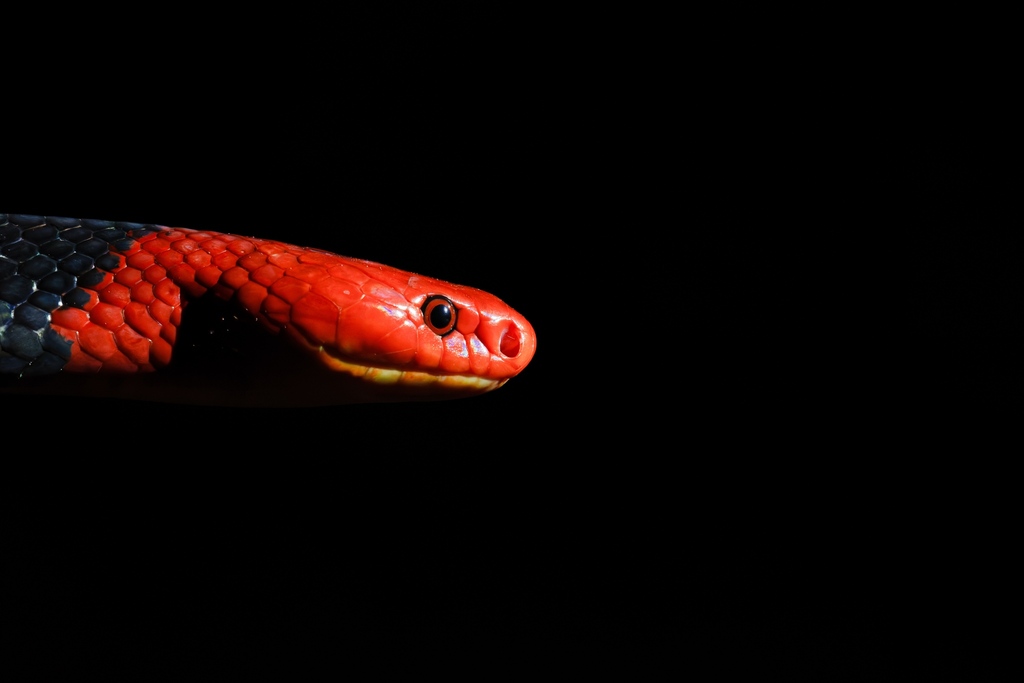
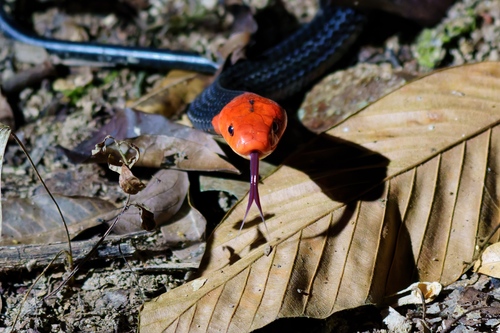
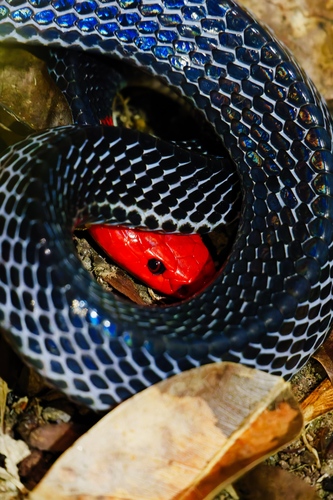
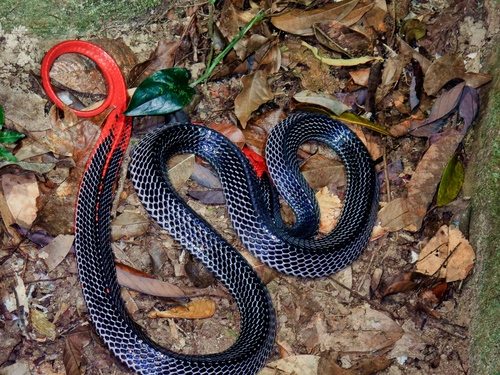
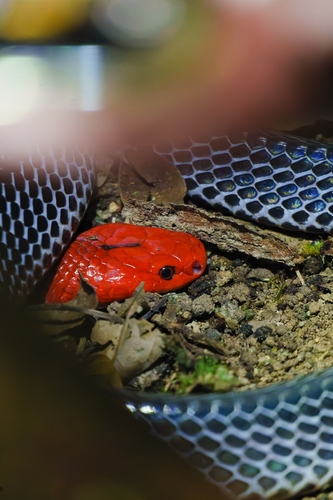
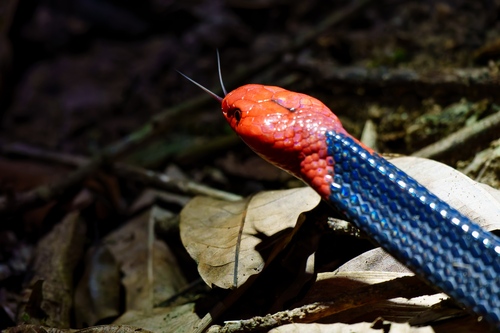
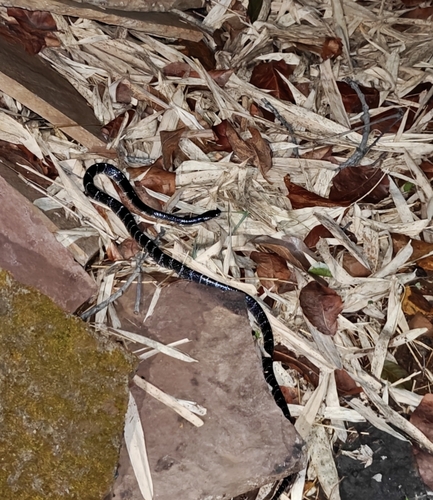
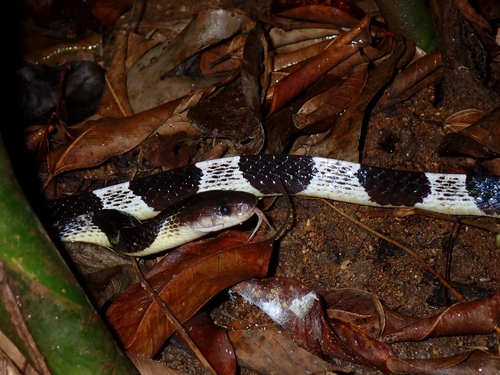
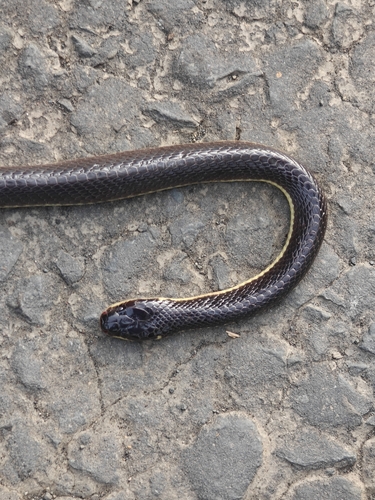
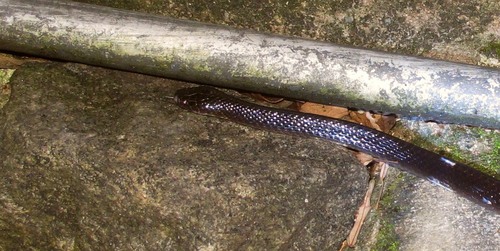
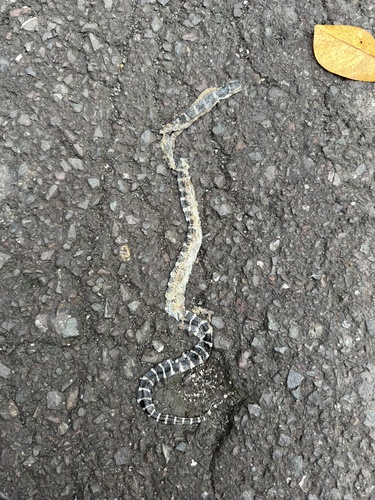
6 photographs of the Red-headed Krait. © Jay Paroline.
The Red-headed Krait (Bungarus flaviceps) is a venomous snake in the Elapidae family, recorded in 4 countries.
If you are bitten
This is a venomous snake. Treat any bite as a medical emergency: stay calm, keep the bitten limb still and roughly level with the heart, remove rings and tight clothing, and get to emergency care immediately. Do not apply a tourniquet, cut the wound, apply ice, or try to suck out venom. Call your local emergency number or poison center.
- Family
- Elapidae
- Danger
- high
About the Red-headed Krait
The red-headed krait (Bungarus flaviceps) is a large and highly venomous elapid snake with dramatic coloration. The red-headed krait can grow to a length of up to 2.1 metres (7 ft). It lives in lowland rain forest, including those on islands, but it is considered uncommon. It feeds primarily on specific snakes, probably semiaquatic and fossorial snakes. In Southeast Asia, the red-headed krait occurs in Malaysia, Singapore, Thailand and Indonesia (Sumatra), with a subspecies in Borneo. The venom potency is little-studied, as bites from this species are extremely rare.
Description
The species presents a very striking and distinctive coloration – namely a bright red head and tail with a black body that includes a low-lateral narrow bluish white stripe. Having large, smooth scales, the general appearance of the red-headed krait is glossy and attractive. Captives will generally refuse to strike until they have been subjected to prolonged teasing. The average length of a red-headed krait is 4 to 5 feet (1.2 to 1.5 m), with a maximum of 7 feet (2.1 m). They have short, hollow fangs on their maxillary bones, with inlets at the bases and outlets near their tips. The venom is ducted to the inlet and forced through the hole at the tip of the fang. They are similar to another venomous snake, the blue Malayan coral snake (Calliophis bivirgata) and the nonvenomous red-headed reed snake (Calamaria schlegeli).
Distribution and habitat
The red-headed krait occurs in southern Myanmar and Thailand, Cambodia, Vietnam, Peninsular Malaysia, Borneo, Singapore, and a number of Malaysian (Pulau Tioman) and Indonesian islands (Bangka, Sumatra, Java, and Belitung (Billiton)). The subspecies B. f. baluensis, sometimes called the "Kinabalu krait", is found in Sabah (Borneo).
Red-headed kraits inhabit the rain forests in mountainous and hilly regions. They are hardly ever to be found in proximity to human habitations.
Behaviour
They are nocturnal and partially aquatic. Once thought to feed primarily on other snakes, they are known to include skinks, lizards, frogs, caecilians, small mammals, and snake eggs in their diets. Despite their intrinsic deadliness, they are not usually considered of high risk to humans in the daytime. Variously described as sluggish, lethargic, and extremely inoffensive, they often remain hidden during the day and, when disturbed, press their heads into the ground or hide them in the flattened or rolled coils of their bodies. During the night, they are active and extremely dangerous.
Venom
The red-headed krait is an extremely venomous snake, although bites are reported rarely. Krait venom appears to function primarily as a neurotoxin, preventing communication across neuromuscular synapses, causing paralysis and death by asphyxiation because the victims can no longer breathe on their own. When the venom from the red-headed krait takes effect, the most highly innervated muscles are the first to suffer: the muscle that elevates the upper eyelid and the ocular and ciliary muscles controlling the lens. Between 20 minutes and several hours after being bitten, the victim may struggle to keep their eyelids open. This medical condition is known as bilateral ptosis and it is a classic, tell-tale sign of severe envenomation. Other common symptoms include diplopia, dysphagia, vomiting, headache, and hypersalivation. Sometime later the symptoms of paralysis tend to worsen, with progressive involvement of various muscles, including those of the jaws, in some cases, become locked. Respiratory distress may occur as a result of paralysis of the diaphragm, the main muscle controlling breathing. Its venom also contains a novel postsynaptic neurotoxin, termed κ-flavitoxin, which is a potent inhibitor of nicotinic transmission in autonomic ganglia. Neurotoxic symptoms may resolve naturally, or more rapidly through administration of antivenin or drugs that inactivate acetylcholinesterase, an enzyme which naturally destroys the chemical messenger carrying signals from nerves to muscles at the neuromuscular synapse.
Adapted from Wikipedia, available under CC BY-SA.
Local and regional names
The Red-headed Krait is known by these names across the regions where it lives:
- Chinese
- 紅頭環蛇
- Czech
- bungar duhový
- French
- Bongare à tête rouge
- German
- Rotkopf-Krait
- Italian
- Bungaro testa rossa, Krait testa rossa
- Khmer
- ពស់ក្រាយក្បាលក្រហម
- Polish
- Niemrawiec żółtogłowy
- Russian
- Желтоголовый крайт
- Thai
- งูสามเหลี่ยมหัวแดง
Frequently asked: Red-headed Krait
- Is the Red-headed Krait venomous?
- Yes. The Red-headed Krait (Bungarus flaviceps) is venomous and belongs to the Elapidae family (cobra, mamba, coral or sea snake). Its bite is considered high risk to people. Treat any bite as a medical emergency.
- Is the Red-headed Krait poisonous?
- Snakes are venomous, not poisonous. "Poisonous" means harmful to eat or touch; "venomous" means injecting toxins through a bite. The Red-headed Krait is venomous, delivering venom through a bite.
- Is the Red-headed Krait dangerous?
- This is a venomous snake. Treat any bite as a medical emergency: stay calm, keep the bitten limb still and roughly level with the heart, remove rings and tight clothing, and get to emergency care immediately. Do not apply a tourniquet, cut the wound, apply ice, or try to suck out venom. Call your local emergency number or poison center.
- Where does the Red-headed Krait live?
- The Red-headed Krait has verified records in 4 countries, including Malaysia, Indonesia, Thailand. See the distribution section below for its full range.
If you are bitten by the Red-headed Krait
Do
- Get away from the snake and stay calm. Most bites worsen when people panic or try again to handle the snake.
- Call 911 or Poison Control (1-800-222-1222) right away. Antivenom works best when given early.
- Note the time of the bite and, from a safe distance, the snake's color and pattern, a phone photo is enough. Do not chase it.
- Keep the bitten limb still and at roughly heart level. Sit or lie down and limit movement.
- Remove rings, watches, and tight clothing near the bite before swelling starts.
- Gently wash the bite with soap and water and cover it with a clean, dry dressing.
Do not
- Do not cut the wound or try to suck out the venom.
- Do not apply a tourniquet or ice.
- Do not drink alcohol or caffeine.
- Do not take aspirin or ibuprofen, they can worsen bleeding. Acetaminophen is safer for pain.
- Do not try to catch or kill the snake. A dead snake can still bite by reflex.
First-aid guidance adapted from the U.S. Centers for Disease Control and Prevention (CDC NIOSH), Venomous Snakes. Educational only; always follow the instructions of emergency responders.
Where it is found
More Elapidae snakes

Classification
How scientists group this snake, from the broadest category down to the exact species. Each step narrows to its closest relatives.
Keep learning
- Are Snakes Dangerous? The Real Risk, in PerspectiveMost snakes are harmless and avoid people. Here is the honest picture of snakebite risk worldwide and how to lower your own.
- Snakebite First Aid: What to Do (and What Never to Do)A clear, CDC-based guide to snakebite first aid: the steps that help, the popular myths that hurt, and how to tell a serious bite from a minor one.
- Venomous vs Nonvenomous: How to Tell the DifferenceThe folk rules for telling venomous snakes apart, where each one fails, and why location-based identification beats guessing by sight.
- What to Do If You Find a SnakeFound a snake at home or on a trail? Here is how to stay calm, give it space, identify it safely, and know when to call a professional.
Distribution from GBIF & iNaturalist. Venom status per CDC. Background: Wikipedia. Informational only. Never handle a snake to identify it.