
Colubridae
Lichtenstein's Green Racer
HarmlessPhilodryas olfersii
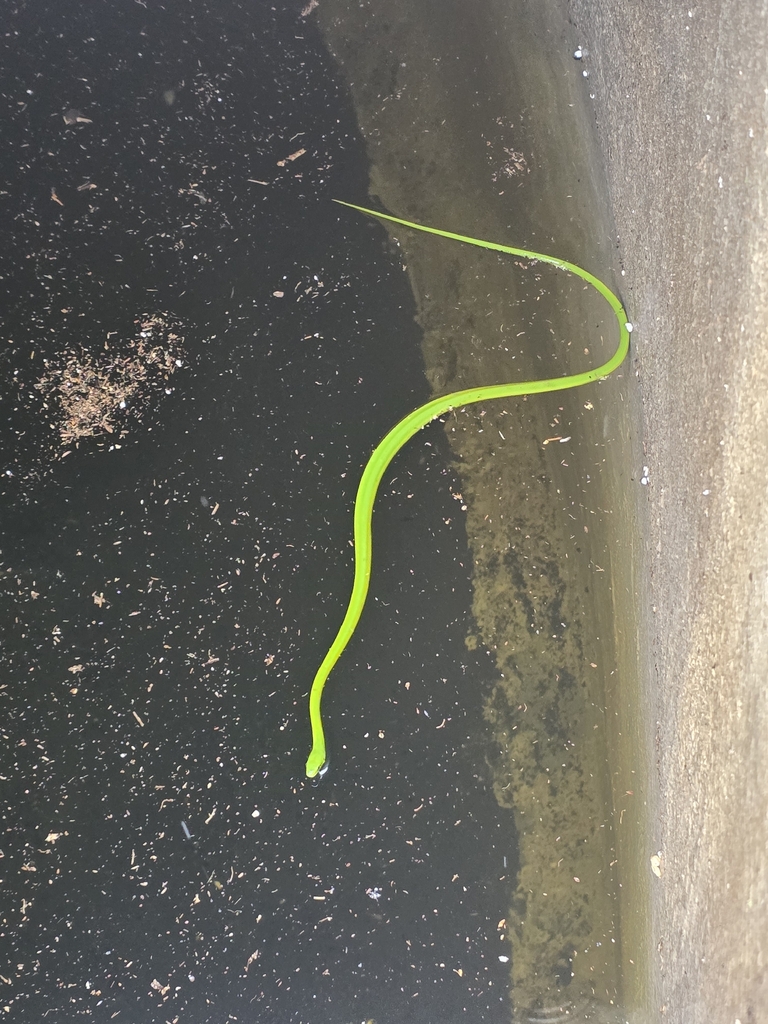
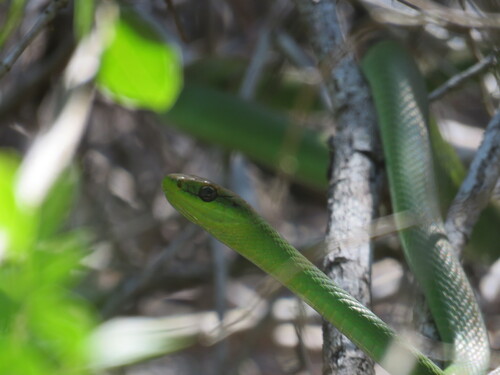
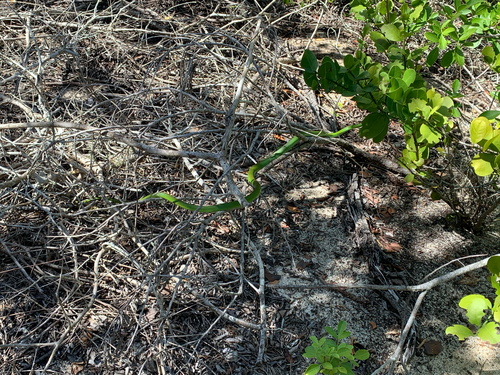
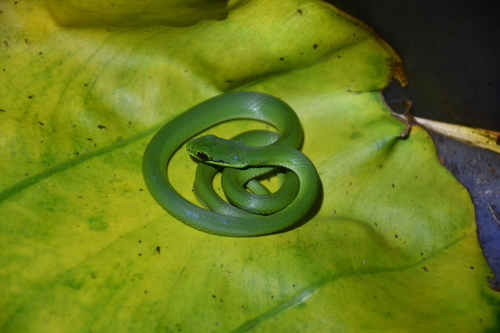
4 photographs of the Lichtenstein's Green Racer. (c) Marcello Mastroianni Albuquerque Araújo, some rights reserved (CC BY).
The Lichtenstein's Green Racer (Philodryas olfersii) is a rear-fanged, mildly venomous snake in the Colubridae family, recorded in 14 countries.
- Family
- Colubridae
About the Lichtenstein's Green Racer
Philodryas olfersii is a species of venomous snake in the subfamily Dipsadinae of the family Colubridae. The species is endemic to South America.
Common names
Common names for Philodryas olfersii include Lichtenstein's green racer, South American green racer, and eastern green whiptail,
Etymology
The specific name, olfersii, is in honor of German naturalist Ignaz von Olfers.
Geographic range
Philodryas olfersii is native to southern South America, including northern Argentina, Brazil, Bolivia, and northwestern Paraguay.
Description
Philodryas olfersii reaches 1 to 1.5 meters (about 40 to 60 inches) in maximum total length (including tail).
Dorsally, it is green in color; ventrally, it is yellowish.
The dorsal scales are smooth, without apical pits, and are arranged in 19 rows at midbody.
Habitat
Philodryas olfersii can be found in many habitat types, including the Cerrado, Caatinga, forest, forest transition, and restinga. It has been found at altitudes from sea level to 1,700 m (5,600 ft).
Behavior
The species Philodryas olfersii is often arboreal, but it also forages on the ground. It is diurnal, though it has been observed mating late in the evening.
Diet
Prey items of Philodryas olfersii include small rodents, lizards, amphibians, and birds, especially nestlings. They will also eat other snakes, including ones almost as large as themselves.
Reproduction
Philodryas olfersii is oviparous. Each egg measures about 5 centimeters (about 2 inches). Clutch size is 4 to 11 eggs, with larger females producing more eggs than smaller females.
Venom
Philodryas olfersii is a venomous snake, and there have been reports of serious bites causing local and systemic effects requiring medical treatment. The venom of P. olfersii is highly hemorrhagic, fibrinogenolytic, edematic, and has proteolytic activity 208% higher than Bothrops jararaca, in addition to containing neurotoxic properties. In mice, doses such as 5.6 μg / 20g resulted in neurotoxic effects, which included dyspnea, equilibrium alterations, posterior limbs paralysis, flaccid paralysis, and relaxation of the urinary sphincter. In laboratory mice, the venom of this species has an LD50 of 2.79 ± 0.58 mg / kg (intraperitoneal), equivalent to the lethality of Bothrops asper. However, due to the anatomy of their inoculating teeth located in the posterior region of the maxilla, these snakes have difficulty in inoculating venom, sometimes giving a "dry" bite. The most common symptoms are pain, swelling, erythema, and ecchymosis. There may be a pulsing sensation or numbness at the bite site. Some pus can develop and nearby lymph nodes may enlarge. Bruising or other discoloration can appear quite a distance from the wound site, sometimes occurring far up the arm after a hand wound, even progressing to the neck, chest, and abdomen. Stiffness may affect the entire limb. Patients complaining of snakebite may be given an antivenom for Bothrops snake venom, which is inappropriate for the treatment of Philodryas bites. Philodryas does not cause the coagulopathy that Bothrops does. Only one fatality has been reported, and that in a child.
Adapted from Wikipedia, available under CC BY-SA.
Frequently asked: Lichtenstein's Green Racer
- Is the Lichtenstein's Green Racer venomous?
- The Lichtenstein's Green Racer (Philodryas olfersii) is rear-fanged and only mildly venomous. It is not considered dangerous to humans (its venom is weak and its fangs sit at the back of the mouth) but a bite can cause local swelling or irritation, so it should not be handled.
- Is the Lichtenstein's Green Racer poisonous?
- Snakes are venomous, not poisonous. "Poisonous" means harmful to eat or touch; "venomous" means injecting toxins through a bite. The Lichtenstein's Green Racer is neither poisonous nor venomous.
- Is the Lichtenstein's Green Racer dangerous?
- The Lichtenstein's Green Racer is not dangerous to humans. It has no medically significant venom and bites only defensively if cornered or handled.
- Where does the Lichtenstein's Green Racer live?
- The Lichtenstein's Green Racer has verified records in 14 countries, including Brazil, Argentina, Bolivia (Plurinational State of). See the distribution section below for its full range.
- What does the Lichtenstein's Green Racer eat?
- Prey items of Philodryas olfersii include small rodents, lizards, amphibians, and birds, especially nestlings. They will also eat other snakes, including ones almost as large as themselves.
- Why is it called the Lichtenstein's Green Racer?
- Common names for Philodryas olfersii include Lichtenstein's green racer, South American green racer, and eastern green whiptail,
Where it is found
More Colubridae snakes
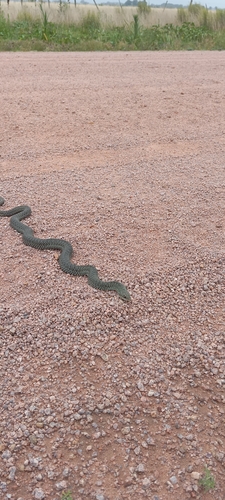 Patagonian RacerPhilodryas patagoniensis
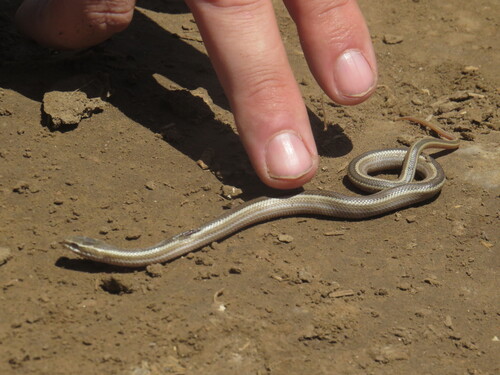 Chilean Green RacerPhilodryas chamissonis
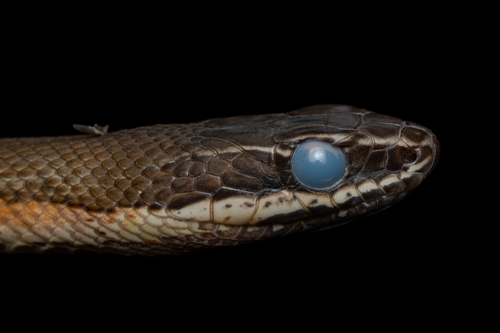 Paraguay Green RacerPhilodryas nattereri
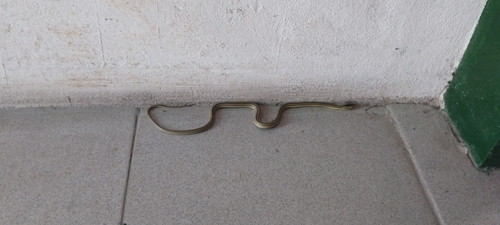 Mousehole SnakePhilodryas trilineata
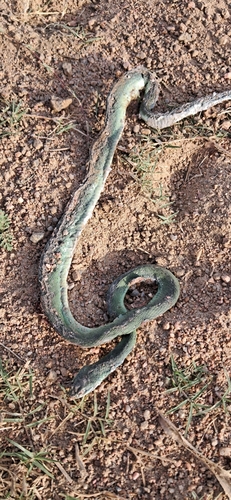 Brazilian Green RacerPhilodryas aestiva
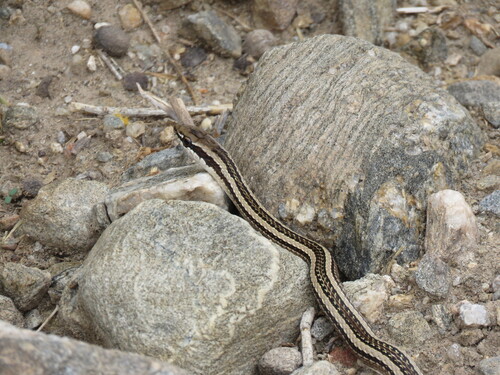 Günther's Green RacerPhilodryas psammophidea
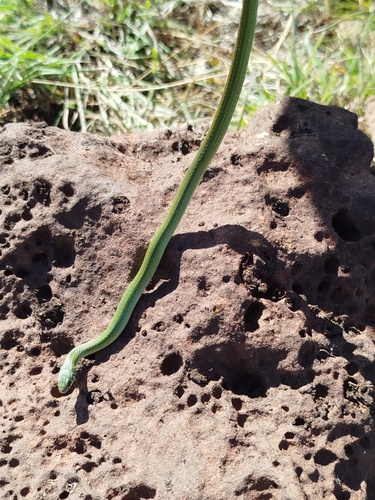 Scorpion SnakePhilodryas agassizii
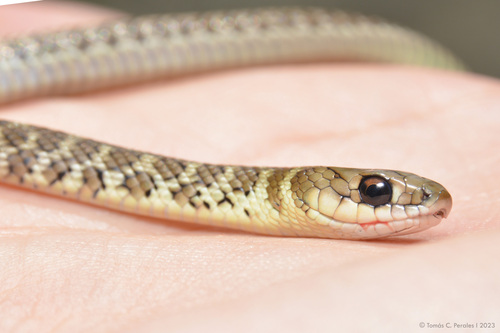 Jan's Green RacerPhilodryas varia
Classification
How scientists group this snake, from the broadest category down to the exact species. Each step narrows to its closest relatives.
- OrderThe broad group of scaled reptiles: all snakes and lizards
- Squamata
- FamilyA group of related snakes that share key traits
- Colubridae
- GenusA close-knit group of very similar species
- Philodryas
- SpeciesThis exact snake, named in the two-part scientific name
- Philodryas olfersii
Keep learning
- What to Do If You Find a SnakeFound a snake at home or on a trail? Here is how to stay calm, give it space, identify it safely, and know when to call a professional.
- Venomous vs Nonvenomous: How to Tell the DifferenceThe folk rules for telling venomous snakes apart, where each one fails, and why location-based identification beats guessing by sight.
- What Is a Snake? Anatomy and the BasicsA clear overview of what makes a snake a snake: limbless body plan, anatomy, evolution from lizards, species diversity, and why they are ectothermic.
- How to Keep Snakes Out of Your Yard and HomeA practical guide to keeping snakes out of your yard and home using habitat changes that work, plus what to skip and what to do if one shows up.
Distribution from GBIF & iNaturalist. Venom status per CDC. Background: Wikipedia. Informational only. Never handle a snake to identify it.