
Colubridae
Brazilian Green Racer
HarmlessPhilodryas aestiva
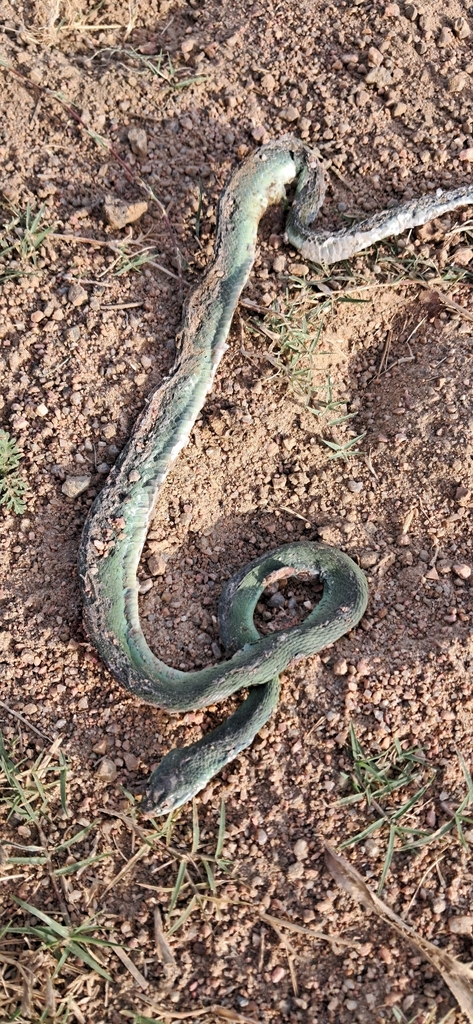
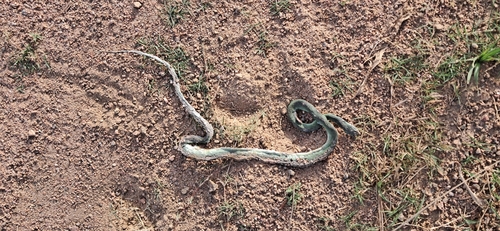
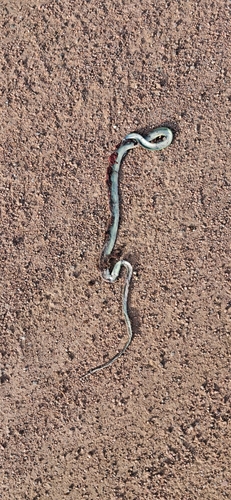
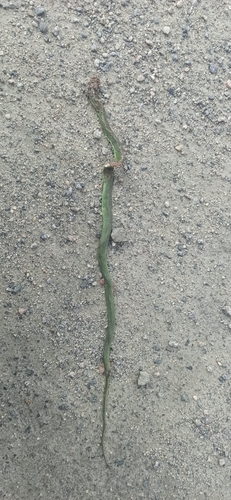
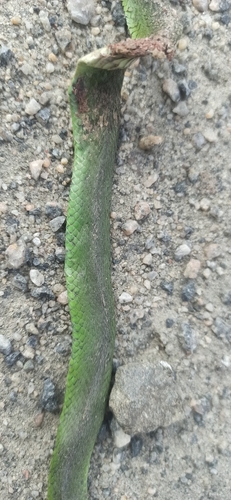
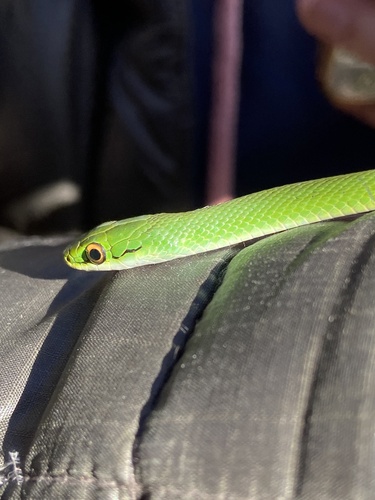
6 photographs of the Brazilian Green Racer. © Agustina Medina.
The Brazilian Green Racer (Philodryas aestiva) is a rear-fanged, mildly venomous snake in the Colubridae family, recorded in 6 countries.
- Family
- Colubridae
About the Brazilian Green Racer
Philodryas aestiva is a species of snake of the family Colubridae. It is commonly known as the Brazilian green racer and the common green racer.
Etymology
The genus Philodryas, Philo which is Greek means "loving" or "fond of" and dryas also Greek means "tree" or "oak," also used for "tree nymph" in mythology. Philodryas can be interpreted as "tree-loving" or "fond of trees." The species name aestiva comes from the Latin aestīvus and means "of the summer" or "summery" which could refer to its active season or its green coloration. If you put the name together, Philodryas aestiva roughly means "summer-loving tree snake" or "summery tree-dweller", hinting at its habitat and activity patterns.
Geographic range
Philodryas aestiva inhabits a wide range of environments in southwestern Brazil, northern Argentina, Paraguay, Bolivia, and Uruguay. They prefer open forests and savannahs (such as the Cerrado biome in Brazil) but are sometimes found in semi-urban or rural areas.
Biology
Behavior
Philodryas aestiva is a highly agile snake. Its slender body and large eyes contribute not only to its swift movement but also to its climbing ability. It is diurnal meaning it actively forages during the day. It is primarily terrestrial.
Diet
P. aestiva uses active foraging taking advantage of its speed and agility. This species primarily feeds on frogs and small mammals, and occasionally on lizards, birds, and arthropods.
Venom
P. aestiva produces mild venom from its Duvernoy’s glands (gland found in some groups of colubrid snakes, it is distinguished from the venom gland of viperids or elapids) which helps subdue small prey. While not dangerous to humans, the venom contains compounds such as snake venom metalloproteinases that contribute to prey immobilization and digestion through hemorrhagic and inflammatory effects.
Reproduction
This species is oviparous (egg-laying). P. aestiva females are gravid in both the warmer and colder seasons of the year. The eggs were restricted to a period from middle-winter to early summer, which indicates that the reproductive cycle may follow a seasonal pattern.
Sexual dimorphism
While P. aestiva do not exhibit extreme visual differences between sexes, there are subtle distinctions. Males are generally smaller and more slender, while females tend to be larger and more robust, especially during the breeding season. Males have longer tails relative to their body length, whereas females have shorter tails. Additionally, the cloacal distance (from vent to tail tip) is greater in males and shorter in females. These features are most noticeable when comparing individuals side by side. In the field, determining sex typically requires gentle probing or visual inspection by trained herpetologists.
Conservation status
Adapted from Wikipedia, available under CC BY-SA.
Frequently asked: Brazilian Green Racer
- Is the Brazilian Green Racer venomous?
- The Brazilian Green Racer (Philodryas aestiva) is rear-fanged and only mildly venomous. It is not considered dangerous to humans (its venom is weak and its fangs sit at the back of the mouth) but a bite can cause local swelling or irritation, so it should not be handled.
- Is the Brazilian Green Racer poisonous?
- Snakes are venomous, not poisonous. "Poisonous" means harmful to eat or touch; "venomous" means injecting toxins through a bite. The Brazilian Green Racer is neither poisonous nor venomous.
- Is the Brazilian Green Racer dangerous?
- The Brazilian Green Racer is not dangerous to humans. It has no medically significant venom and bites only defensively if cornered or handled.
- Where does the Brazilian Green Racer live?
- The Brazilian Green Racer has verified records in 6 countries, including Brazil, Argentina, Uruguay. See the distribution section below for its full range.
- What does the Brazilian Green Racer eat?
- P. aestiva uses active foraging taking advantage of its speed and agility. This species primarily feeds on frogs and small mammals, and occasionally on lizards, birds, and arthropods.
- Why is it called the Brazilian Green Racer?
- The genus Philodryas, Philo which is Greek means "loving" or "fond of" and dryas also Greek means "tree" or "oak," also used for "tree nymph" in mythology. Philodryas can be interpreted as "tree-loving" or "fond of trees." The species name aestiva comes from the Latin aestīvus and means "of the summer" or "summery" which could refer to its active season or its green coloration. If you put the name together, Philodryas aestiva roughly means "summer-loving tree snake" or "summery tree-dweller", hinting at its habitat and activity patterns.
Where it is found
More Colubridae snakes
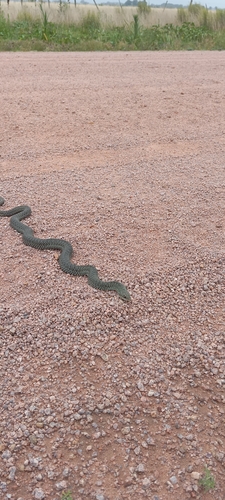 Patagonian RacerPhilodryas patagoniensis
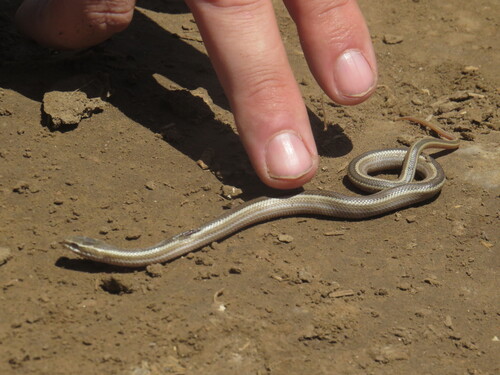 Chilean Green RacerPhilodryas chamissonis
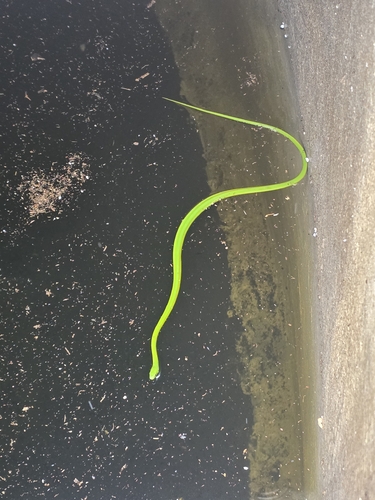 Lichtenstein's Green RacerPhilodryas olfersii
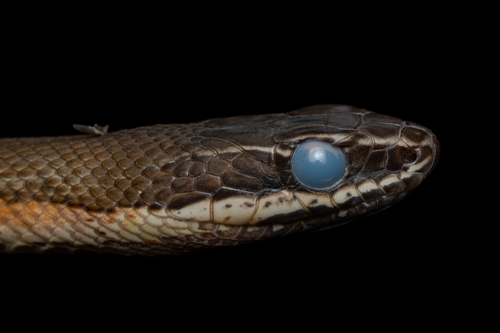 Paraguay Green RacerPhilodryas nattereri
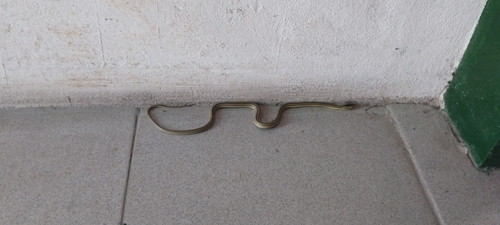 Mousehole SnakePhilodryas trilineata
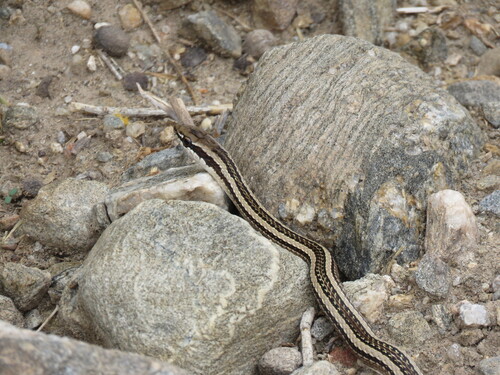 Günther's Green RacerPhilodryas psammophidea
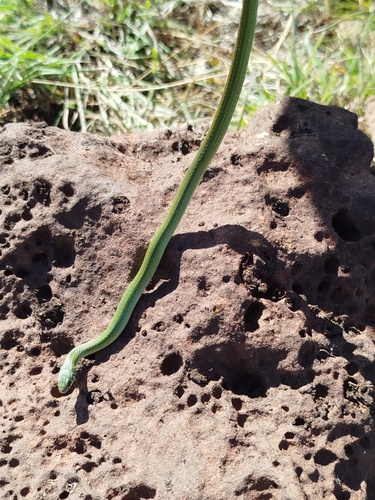 Scorpion SnakePhilodryas agassizii
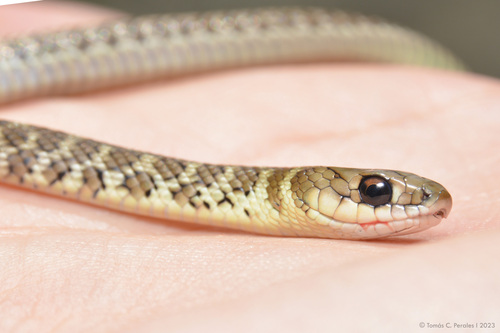 Jan's Green RacerPhilodryas varia
Classification
How scientists group this snake, from the broadest category down to the exact species. Each step narrows to its closest relatives.
- OrderThe broad group of scaled reptiles: all snakes and lizards
- Squamata
- FamilyA group of related snakes that share key traits
- Colubridae
- GenusA close-knit group of very similar species
- Philodryas
- SpeciesThis exact snake, named in the two-part scientific name
- Philodryas aestiva
Keep learning
- What to Do If You Find a SnakeFound a snake at home or on a trail? Here is how to stay calm, give it space, identify it safely, and know when to call a professional.
- Venomous vs Nonvenomous: How to Tell the DifferenceThe folk rules for telling venomous snakes apart, where each one fails, and why location-based identification beats guessing by sight.
- What Is a Snake? Anatomy and the BasicsA clear overview of what makes a snake a snake: limbless body plan, anatomy, evolution from lizards, species diversity, and why they are ectothermic.
- How to Keep Snakes Out of Your Yard and HomeA practical guide to keeping snakes out of your yard and home using habitat changes that work, plus what to skip and what to do if one shows up.
Distribution from GBIF & iNaturalist. Venom status per CDC. Background: Wikipedia. Informational only. Never handle a snake to identify it.