
Genus · Colubridae
Types of racers
10+ species make up the genus Philodryas, the snakes commonly called racers. None are considered dangerous to humans.
About South American green and brown racers
Fast, slender, day-active colubrids of South America that are mildly venomous and rear-fanged, not the harmless snakes they were long assumed to be.
Philodryas is a genus of New World snakes in the family Colubridae, the largest snake family and a catch-all group of mostly slender, agile, egg-laying species. Within Colubridae, Philodryas belongs to the subfamily Dipsadinae (the South American radiation often treated as the dipsadine or xenodontine snakes). The genus is sometimes called the green racers, sapo racers, or simply South American racers, and includes around 15 to 23 currently recognized species. Our database holds 10+ of them.
These snakes are spread across most of South America, from Colombia and the Guianas south through Brazil, Bolivia, Paraguay, and Argentina down to Patagonia and central Chile. They occupy a wide range of habitats, including humid forest, savanna and cerrado, scrubland, grassland, and arid Patagonian steppe. Some species are strongly arboreal and live in shrubs and low trees, while others are mainly terrestrial and hunt across open ground, which is why both green tree-dwellers and brown ground-runners carry the genus name.
In general terms, a Philodryas is a long, thin, fast-moving snake with a clearly defined head, large eyes, and a round pupil, built for active daytime hunting rather than ambush. Coloration varies widely by species, from the bright leaf-green of the green racers to the streaked tan, gray, and brown patterns of the more terrestrial species, often with longitudinal stripes or a dark eye line. Body shape and behavior, slender and alert with a tendency to flee quickly, are usually more reliable cues than color alone. Examples in our database include the Patagonian Racer, the Chilean Green Racer, Lichtenstein's Green Racer, and the Paraguay Green Racer.
Philodryas is rear-fanged and mildly venomous. Members have enlarged, grooved teeth toward the back of the upper jaw and a Duvernoy's gland that produces a venom used mainly to subdue prey. They are not front-fanged vipers or elapids, and they are not in the same danger class as those snakes, but they are not harmless either. Bites to people, most often from Philodryas patagoniensis or Philodryas olfersii, can cause local pain, swelling, redness, and occasionally bleeding or bruising at the site, and some cases have been mistaken for pit viper bites. The risk to humans is generally low, but a wild Philodryas should not be handled, and any bite that causes spreading symptoms warrants medical evaluation. In the United States contact Poison Control at 1-800-222-1222, and elsewhere contact local emergency services.
Ecologically these are generalist predators. Their diet typically includes lizards, frogs, small mammals, birds and bird eggs, and sometimes other snakes, with the mix depending on whether a given species hunts in trees or on the ground. Philodryas are oviparous, laying clutches of eggs rather than giving live birth. Behaviorally they are alert and quick to flee, but a cornered individual may flatten its neck, gape, and strike, which combined with the mild venom is why they are best observed from a distance rather than caught.
Philodryas belongs to the Colubridae family (Colubrids). The largest snake family, and the one most snakes you meet belong to. Typically round pupils, a head only slightly wider than the neck, and no heat-sensing facial pit or rattle. Scales may be smooth and glossy or keeled and matte depending on the species.
Danger: Almost all colubrids are harmless. A small number are rear-fanged with medically significant venom, the boomslang and the twig (vine) snakes of Africa being the dangerous exceptions. Most colubrids will flee or bluff rather than bite.
All species (15)
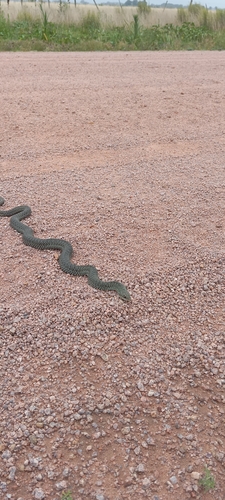 Patagonian RacerPhilodryas patagoniensisHarmless
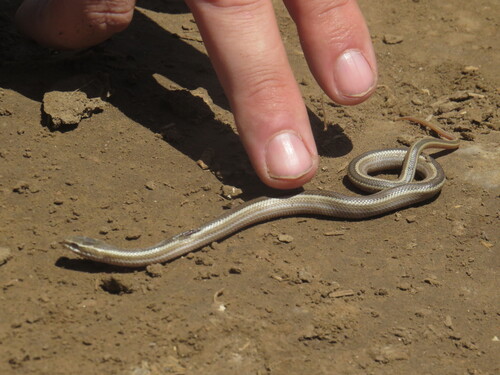 Chilean Green RacerPhilodryas chamissonisHarmless
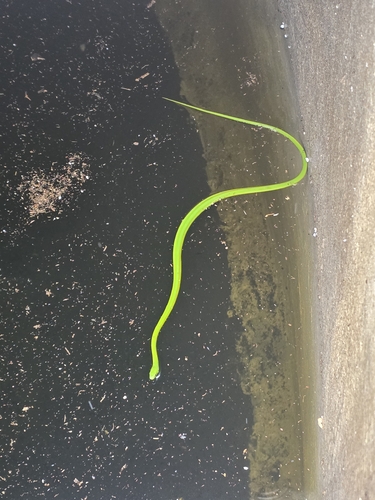 Lichtenstein's Green RacerPhilodryas olfersiiHarmless
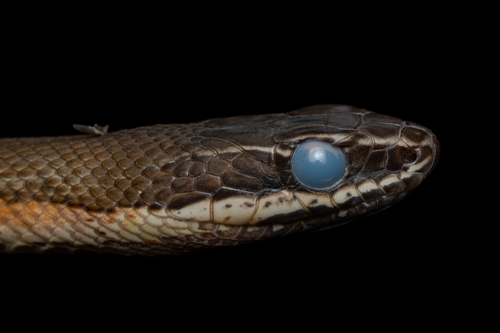 Paraguay Green RacerPhilodryas nattereriHarmless
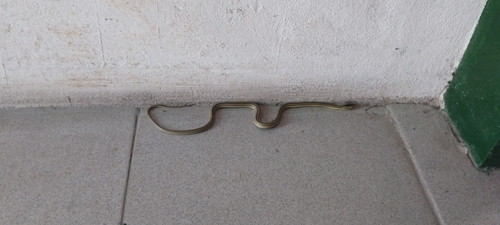 Mousehole SnakePhilodryas trilineataHarmless
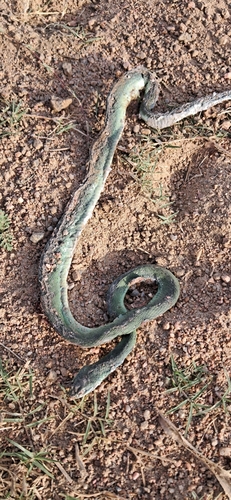 Brazilian Green RacerPhilodryas aestivaHarmless
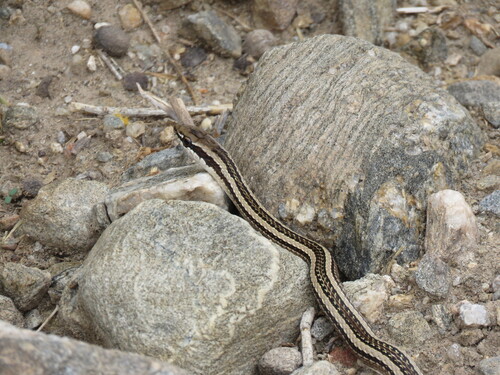 Günther's Green RacerPhilodryas psammophideaHarmless
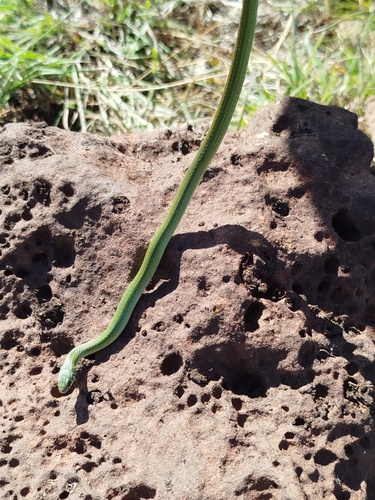 Scorpion SnakePhilodryas agassiziiHarmless
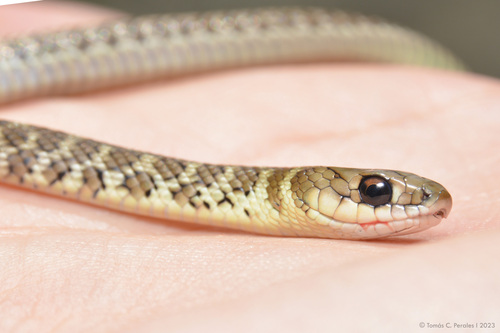 Jan's Green RacerPhilodryas variaHarmless
 Baron's Green RacerPhilodryas baroniHarmless
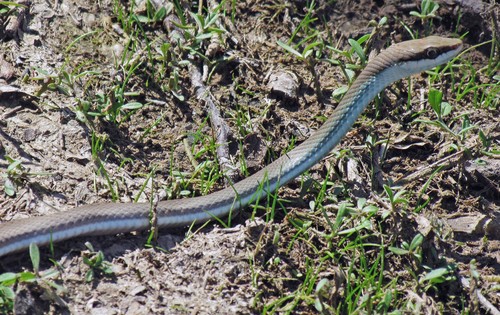 Philodryas erlandiHarmless
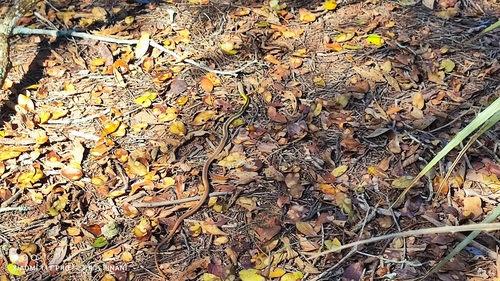 Miranda Green RacerPhilodryas mattogrossensisHarmless
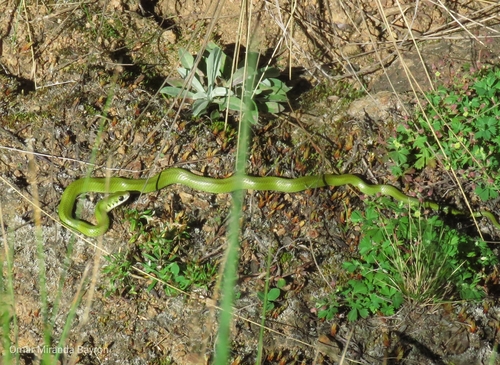 Bolivian RacerPhilodryas bolivianaHarmless
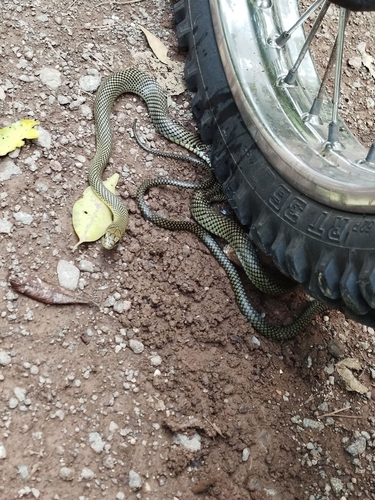 Arnaldo's Green RacerPhilodryas arnaldoiHarmless
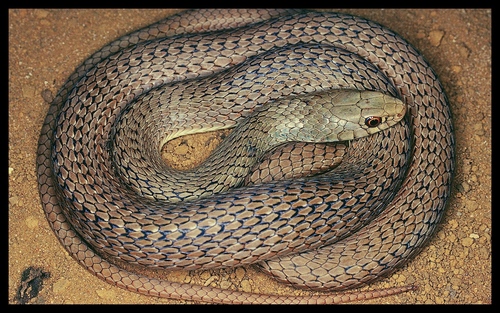 Cerrado RacerPhilodryas lividaHarmless
Keep learning
- What Is a Snake? Anatomy and the BasicsA clear overview of what makes a snake a snake: limbless body plan, anatomy, evolution from lizards, species diversity, and why they are ectothermic.
- How Snakes Move, Hunt, and EatHow snakes move without legs, hunt as ambushers or active foragers, kill by constriction or venom, and swallow prey wider than their head.
- What Do Snakes Eat?All snakes are carnivores. Learn what snakes eat, how diet changes with size and age, how often they feed, and how they hunt and swallow prey.
- Venomous vs Nonvenomous: How to Tell the DifferenceThe folk rules for telling venomous snakes apart, where each one fails, and why location-based identification beats guessing by sight.