
Colubridae
Patagonian Racer
HarmlessPhilodryas patagoniensis
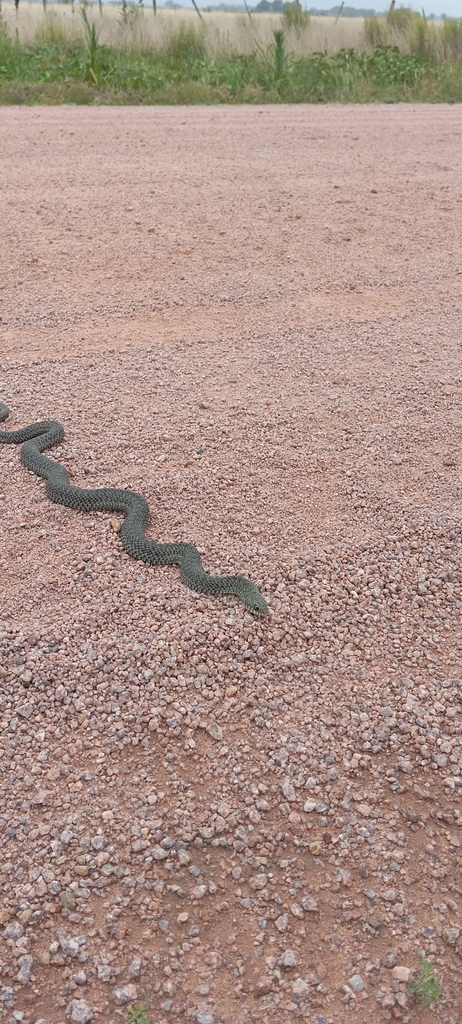
The Patagonian Racer (Philodryas patagoniensis) is a rear-fanged, mildly venomous snake in the Colubridae family, recorded in 6 countries.
- Family
- Colubridae
About the Patagonian Racer
Philodryas patagoniensis, also known as the Patagonia green racer, is a species of rear-fanged (opisthoglyphous) venomous snake in the family Colubridae. The species is endemic to cis-Andean South America from northern Argentina to northeastern Brazil; despite its name, most of its range is outside Patagonia.
Description
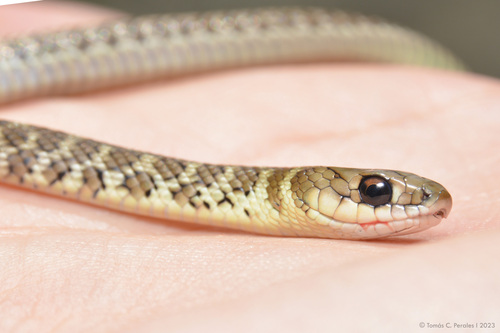
P. patagoniensis is a medium-sized, cylindrical and robust snake, with a moderately long tail. It can grow to a maximum total length (including tail) of 150 cm (59 in). The snout is rounded. The eye is medium-sized with a round pupil. The dorsal scales are smooth with unique apical scores.
Behavior
P. patagoniensis is terrestrial, fundamentally arboreal when foraging, and has daytime habits. It has a brownish color that helps in its camouflage.
Sexual dimorphism and reproduction
P. patagoniensis has sexual dimorphism in adult specimens. Females have a longer body, with greater corpulence, while males have a longer tail. Females are born with a greater rostro-cloacal length and reach sexual maturity later than males, about 2-years-old. Males can reach sexual maturity at 1-year-old. Reproduction is seasonal, with the vitellogenic season occurring between the months of July and October.
Diet
P. patagoniensis preys upon snakes including its own species. Juveniles feed on ectothermic animals, while adults feed on endothermic animals.
Predators
P. patagoniensis is preyed upon by birds such as Cariama cristata and Tyto furcata, as well as other snakes such as Boiruna maculata.
Geographic range
P. patagoniensis is found in Argentina, Bolivia, Brazil, Paraguay, and Uruguay.
Habitat
P. patagoniensis occurs in a range of open habitats including Patagonian steppe, Cerrado, Chaco, and Caatinga, and also open areas of the Atlantic forest.
Common names
Common names for P. patagoniensis include corre campo, parelheira, parelheira comum, papa pinto, culebra del alfa, culebra de los pastos, ratonera, and mboi hovy.
Venom
P. patagoniensis produces toxic saliva through the Duvernoy's gland. Its toxin is constituted by 90% protein, mainly metalloproteinases. The biological activity of the toxins is very similar to that of Bothrops, with edematogenic, hemorrhagic, nociceptive, and necrosis activity of this compound. This species has an LD50 of 58.58 μg (mouse), a value close to Bothrops jararacussu with 58.8 μg (mouse). Its toxicity is between that of Bothrops alternatus with 67.5 μg (mouse) and Bothrops jararaca with 24.7 μg (mouse). However, P. patagoniensis has opisthoglyphous dentition and has difficulty injecting venom. Its venom also contains neurotoxic and myotoxic components, which result in neuromuscular block and myonecrosis.
Adapted from Wikipedia, available under CC BY-SA.
Frequently asked: Patagonian Racer
- Is the Patagonian Racer venomous?
- The Patagonian Racer (Philodryas patagoniensis) is rear-fanged and only mildly venomous. It is not considered dangerous to humans (its venom is weak and its fangs sit at the back of the mouth) but a bite can cause local swelling or irritation, so it should not be handled.
- Is the Patagonian Racer poisonous?
- Snakes are venomous, not poisonous. "Poisonous" means harmful to eat or touch; "venomous" means injecting toxins through a bite. The Patagonian Racer is neither poisonous nor venomous.
- Is the Patagonian Racer dangerous?
- The Patagonian Racer is not dangerous to humans. It has no medically significant venom and bites only defensively if cornered or handled.
- Where does the Patagonian Racer live?
- The Patagonian Racer has verified records in 6 countries, including Brazil, Argentina, Uruguay. See the distribution section below for its full range.
- What does the Patagonian Racer eat?
- P. patagoniensis preys upon snakes including its own species. Juveniles feed on ectothermic animals, while adults feed on endothermic animals.
- Why is it called the Patagonian Racer?
- Common names for P. patagoniensis include corre campo, parelheira, parelheira comum, papa pinto, culebra del alfa, culebra de los pastos, ratonera, and mboi hovy.
Where it is found
More Colubridae snakes
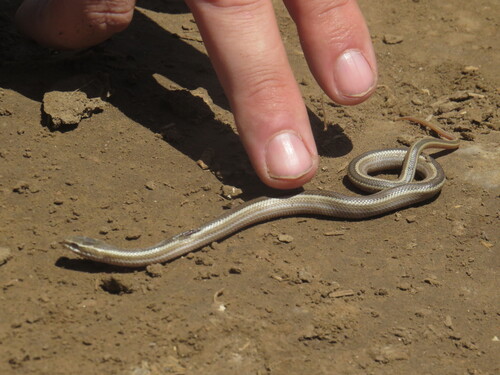 Chilean Green RacerPhilodryas chamissonis
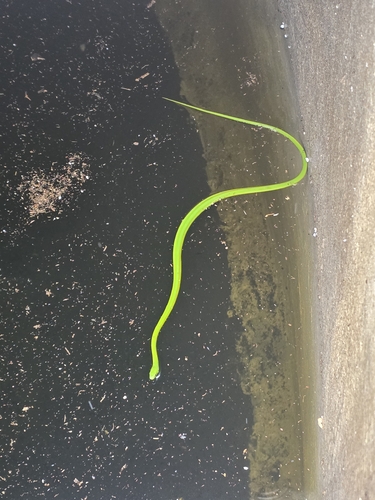 Lichtenstein's Green RacerPhilodryas olfersii
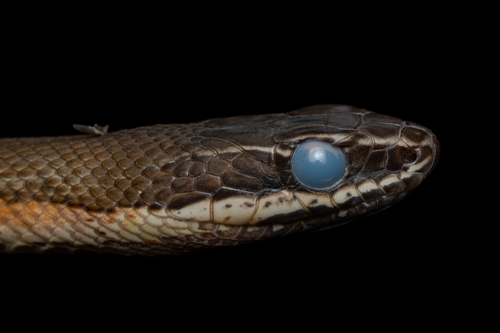 Paraguay Green RacerPhilodryas nattereri
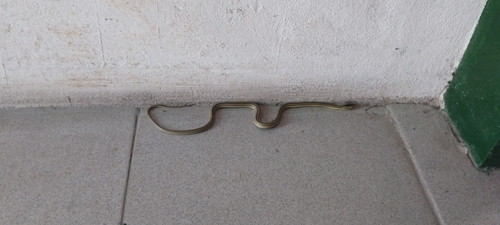 Mousehole SnakePhilodryas trilineata
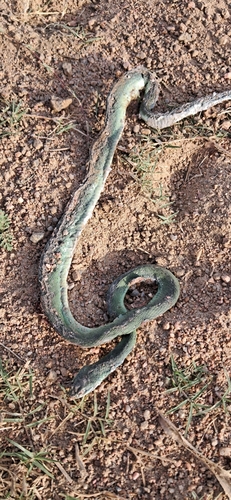 Brazilian Green RacerPhilodryas aestiva
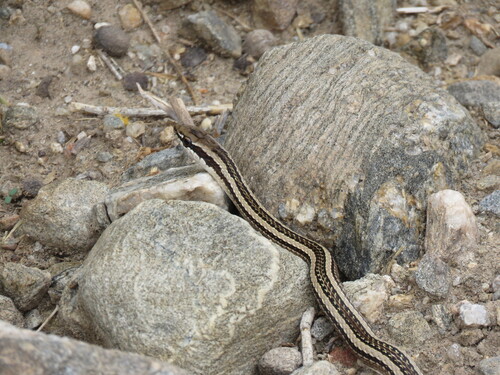 Günther's Green RacerPhilodryas psammophidea
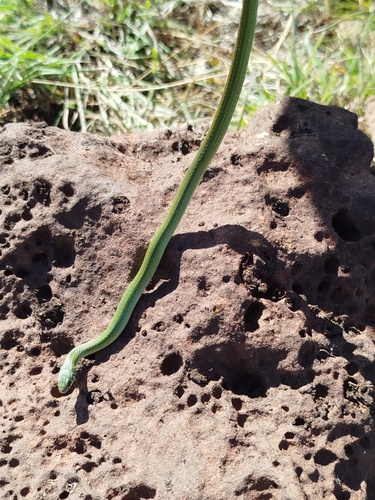 Scorpion SnakePhilodryas agassizii
 Jan's Green RacerPhilodryas varia
Classification
How scientists group this snake, from the broadest category down to the exact species. Each step narrows to its closest relatives.
- OrderThe broad group of scaled reptiles: all snakes and lizards
- Squamata
- FamilyA group of related snakes that share key traits
- Colubridae
- GenusA close-knit group of very similar species
- Philodryas
- SpeciesThis exact snake, named in the two-part scientific name
- Philodryas patagoniensis
Keep learning
- What to Do If You Find a SnakeFound a snake at home or on a trail? Here is how to stay calm, give it space, identify it safely, and know when to call a professional.
- Venomous vs Nonvenomous: How to Tell the DifferenceThe folk rules for telling venomous snakes apart, where each one fails, and why location-based identification beats guessing by sight.
- What Is a Snake? Anatomy and the BasicsA clear overview of what makes a snake a snake: limbless body plan, anatomy, evolution from lizards, species diversity, and why they are ectothermic.
- How to Keep Snakes Out of Your Yard and HomeA practical guide to keeping snakes out of your yard and home using habitat changes that work, plus what to skip and what to do if one shows up.
Distribution from GBIF & iNaturalist. Venom status per CDC. Background: Wikipedia. Informational only. Never handle a snake to identify it.