
Colubridae
Glossy-bellied Racer
HarmlessPlatyceps ventromaculatus
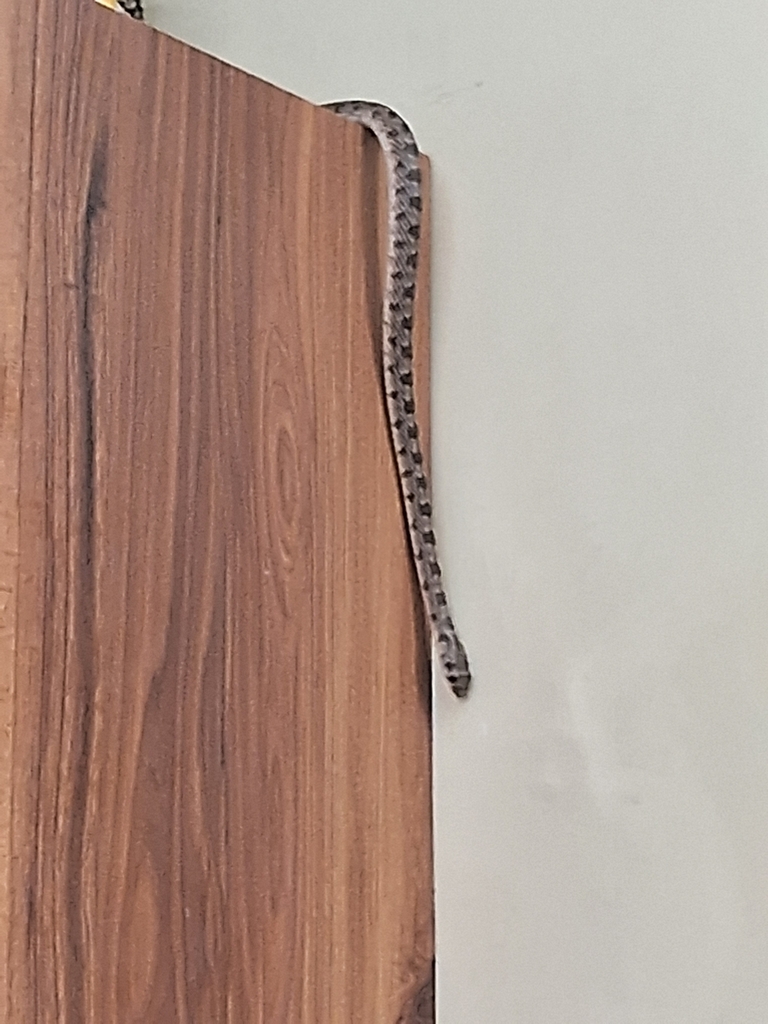
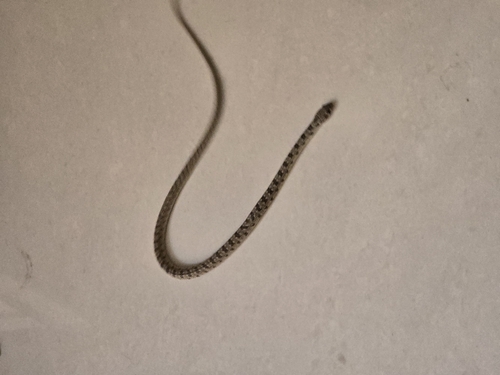
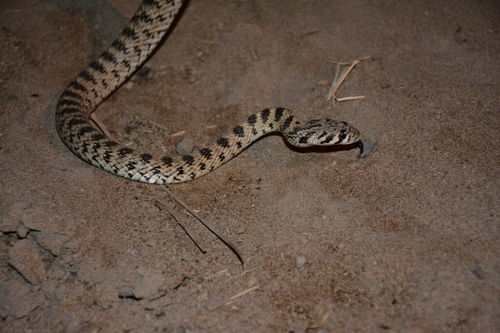
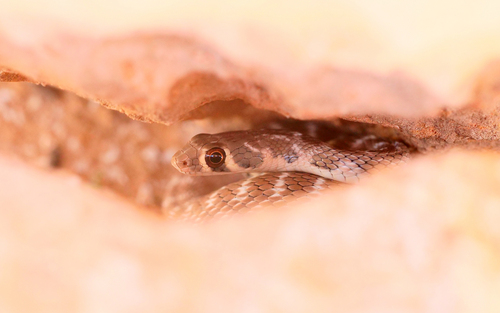
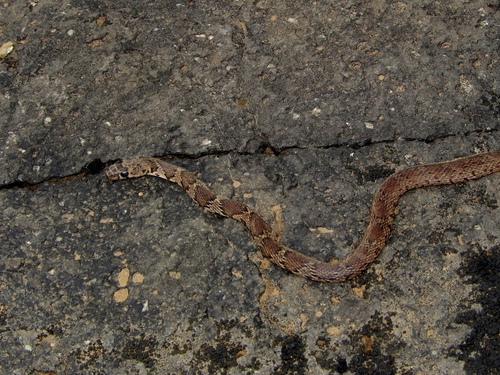
2 photographs of the Glossy-bellied Racer. © Abhinav Thakur.
The Glossy-bellied Racer (Platyceps ventromaculatus) is a non-venomous snake in the Colubridae family, recorded in 17 countries.
- Family
- Colubridae
About the Glossy-bellied Racer
Hardwicke's rat snake (Platyceps ventromaculatus), also known commonly as the glossy-bellied racer, Gray's rat snake, and the spotted bellied snake, is a species of snake in the family Colubridae. The species is native to Asia. There are three recognized subspecies.
Geographic range
P. ventromaculatus is found in southern and southwestern Asia from northern India through Pakistan, southern Iran, and Iraq to Kuwait, Bahrain, and Saudi Arabia along the Persian Gulf. Its presence in Afghanistan, Uzbekistan, Syria, and Turkey requires confirmation.
Status
P. ventromaculatus is not uncommon.
Description
P. ventromaculatus is a graceful snake with a smooth, round, elongate, gradually tapering body, and a tail more than one-fourth the total length. It has a moderately narrow head. It varies in colour and can be grey, olive-brown, olive-green, or dirty yellow. It has a series of black rhomboidal cross-bars running down the middle of the back. The scales forming the cross-bars normally have colour on the edges only. The sides of the body have similar smaller spots alternating with interspaces which may be broader or narrower than them. The belly is yellow to white with glossy scales.
The head is of the body-colour with or without symmetrical darkish markings. These may consist of:
A blackish spot between the lores.
A black streak obliquely placed below the eye.
A black stripe from the temporal area to the gape.
A cross-bar and two stripes on the nape.
Size
Adults are usually 90 to 120 cm (35 to 47 in) in total length (including tail), and have been recorded to grow up to 1.28 m (4.2 ft) .
Identifying characteristics
Dorsal scales in 19:19:15 or 13 rows.
Anal divided.
Supralabials (upper lip scales).
The 4th, 5th and 6th touch the eye. The 4th and 9th are divided.
In some rare cases, the 3rd and 8th may be divided in some case, with the 3rd, 4th and 5th touching the eye.
The nostril occupies two-thirds of the suture between the nostrils.
The tail is more than one-fourth the total length.
Subspecies
The following three subspecies are recognized as being valid, including the nominotypical subspecies.
Platyceps ventromaculatus bengalensis (M.S. Khan & A.Q. Khan, 2000) – India; Type locality: Bengal, description from Plate 80, figure 1 of Gray 1830–35; holotype destroyed.
Platyceps ventromaculatus indusai (M.S. Khan & A.Q. Khan, 2000) – Pakistan; Type locality: Upper and lower Indus Valley.
Platyceps ventromaculatus ventromaculatus (Gray, 1834)
Nota bene: A trinomial authority in parentheses indicates that the subspecies was originally described in a genus other than Platyceps.
Habitat
P. ventromaculatus inhabits mainly stony hillsides, open or cultivated land, and sometimes congested urban areas. It has been recorded in Pokaran district in the Thar Desert also.
Habits
Adapted from Wikipedia, available under CC BY-SA.
Frequently asked: Glossy-bellied Racer
- Is the Glossy-bellied Racer venomous?
- No. The Glossy-bellied Racer (Platyceps ventromaculatus) is non-venomous and is not considered dangerous to humans. Like most snakes, it will retreat rather than bite when given the chance.
- Is the Glossy-bellied Racer poisonous?
- Snakes are venomous, not poisonous. "Poisonous" means harmful to eat or touch; "venomous" means injecting toxins through a bite. The Glossy-bellied Racer is neither poisonous nor venomous.
- Is the Glossy-bellied Racer dangerous?
- The Glossy-bellied Racer is not dangerous to humans. It has no medically significant venom and bites only defensively if cornered or handled.
- Where does the Glossy-bellied Racer live?
- The Glossy-bellied Racer has verified records in 17 countries, including Pakistan, Iraq, India. See the distribution section below for its full range.
- What does the Glossy-bellied Racer eat?
- P. ventromaculatus largely preys upon geckos and other lizards.
- Why is it called the Glossy-bellied Racer?
- Arabic – Dawaid-al-khail. Urdu – Sagi.
Where it is found
More Colubridae snakes
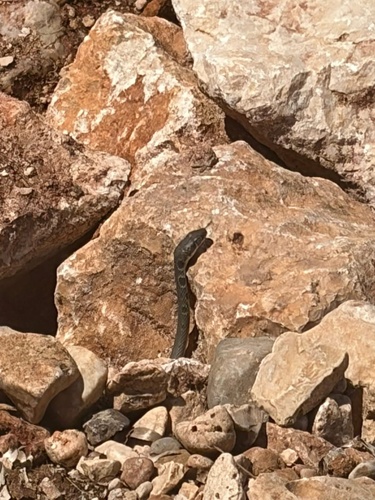
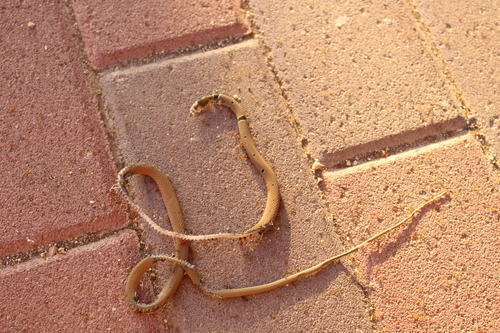
Classification
How scientists group this snake, from the broadest category down to the exact species. Each step narrows to its closest relatives.
- OrderThe broad group of scaled reptiles: all snakes and lizards
- Squamata
- FamilyA group of related snakes that share key traits
- Colubridae
- GenusA close-knit group of very similar species
- Platyceps
- SpeciesThis exact snake, named in the two-part scientific name
- Platyceps ventromaculatus
Keep learning
- What to Do If You Find a SnakeFound a snake at home or on a trail? Here is how to stay calm, give it space, identify it safely, and know when to call a professional.
- Venomous vs Nonvenomous: How to Tell the DifferenceThe folk rules for telling venomous snakes apart, where each one fails, and why location-based identification beats guessing by sight.
- What Is a Snake? Anatomy and the BasicsA clear overview of what makes a snake a snake: limbless body plan, anatomy, evolution from lizards, species diversity, and why they are ectothermic.
- How to Keep Snakes Out of Your Yard and HomeA practical guide to keeping snakes out of your yard and home using habitat changes that work, plus what to skip and what to do if one shows up.
Distribution from GBIF & iNaturalist. Venom status per CDC. Background: Wikipedia. Informational only. Never handle a snake to identify it.