
Genus · Colubridae
Types of racers
20+ species make up the genus Platyceps, the snakes commonly called racers. None are considered dangerous to humans.
About Whip snakes and racers
Platyceps are fast, slender Old World colubrids built for chasing prey across open, rocky country.
Platyceps is a genus of nonvenomous to mildly venomous colubrid snakes, the large family Colubridae that contains most of the world's snakes. The genus holds roughly two dozen species commonly called whip snakes and racers, including Dahl's Whip Snake, the Red Whip Snake, Jan's Cliff Racer, and the Banded Racer. Many of these species were once lumped into the genus Coluber, and the names whip snake and racer still echo that history. They are classic 'typical snakes' in body plan, with smooth scales, round pupils, and no specialized fangs at the front of the mouth.
These snakes range across North Africa, the Middle East, the Caucasus, Central Asia, and into parts of South Asia. They favor warm, dry, open terrain: rocky hillsides, scrubland, semi-desert, dry grassland, cliff faces, and the edges of cultivated land. As their common names suggest, they are animals of sun and stone rather than dense forest, and several species are strong climbers that move easily over boulders and walls.
Recognizing a Platyceps in general terms means looking for a long, thin, fast-moving snake with a relatively narrow head that is only slightly distinct from the neck, large eyes with round pupils, and smooth body scales that give a sleek look. Coloration varies widely by species and includes plain tan, gray, and reddish tones as well as banded or barred patterns, often with dark markings around the head and neck. Because patterns overlap with other slender colubrids in the same regions, exact identification depends on scale counts and locality, so treat field guesses as tentative.
On safety, Platyceps species are not considered dangerous to people. They are not front-fanged venomous snakes like vipers or cobras. Some colubrids in this group are technically rear-fanged with mild saliva that helps subdue small prey, but they are regarded as harmless to humans, and bites, when they happen at all, are minor. Even so, no wild snake should be picked up or handled, both for your safety and the animal's, and you should always be certain of an identification before going near a snake. If anyone is bitten by a snake they cannot confidently identify, or symptoms develop, treat it as a medical matter and contact emergency services or US Poison Control at 1-800-222-1222.
Ecologically, these are active, fast-moving diurnal hunters that rely on speed and eyesight rather than ambush. Their diet centers on lizards, with many species also taking small mammals, nestling birds, large insects, and other snakes depending on size and opportunity. Like most colubrids in their range they are egg-laying, producing a clutch in the warm months. When confronted they prefer to flee at high speed, and they will bluff, thrash, or deliver a quick defensive bite rather than stand their ground, which is normal behavior for a nervous, harmless racer.
Platyceps belongs to the Colubridae family (Colubrids). The largest snake family, and the one most snakes you meet belong to. Typically round pupils, a head only slightly wider than the neck, and no heat-sensing facial pit or rattle. Scales may be smooth and glossy or keeled and matte depending on the species.
Danger: Almost all colubrids are harmless. A small number are rear-fanged with medically significant venom, the boomslang and the twig (vine) snakes of Africa being the dangerous exceptions. Most colubrids will flee or bluff rather than bite.
All species (20)
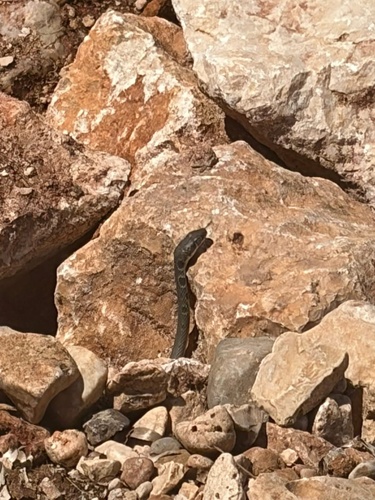 Dahl's Whip SnakePlatyceps najadumHarmless
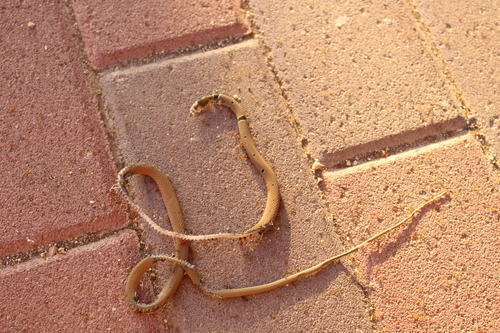 Red Whip SnakePlatyceps collarisHarmless
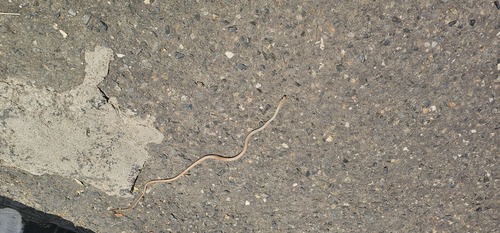 Jan’s Cliff RacerPlatyceps rhodorachisHarmless
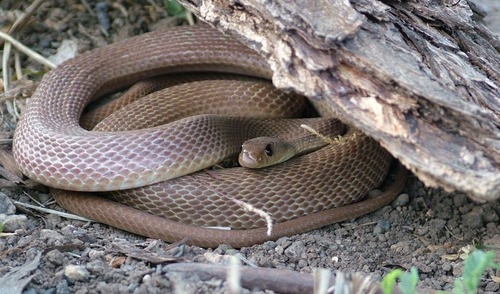 Banded RacerPlatyceps pliniiHarmless
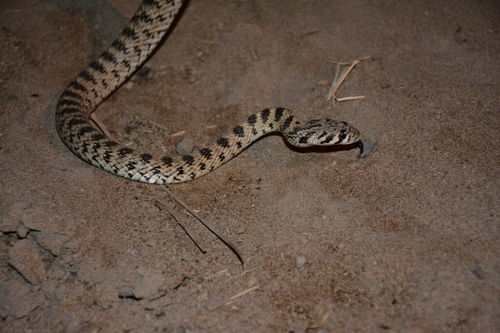 Spotted Desert RacerPlatyceps kareliniHarmless
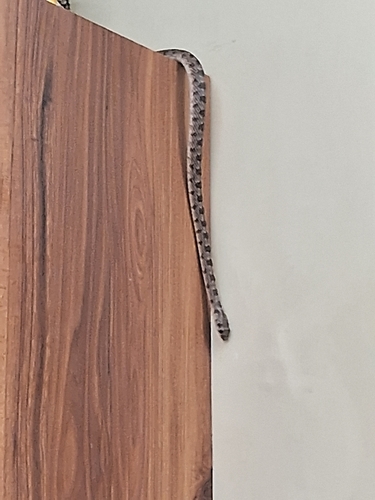 Glossy-bellied RacerPlatyceps ventromaculatusHarmless
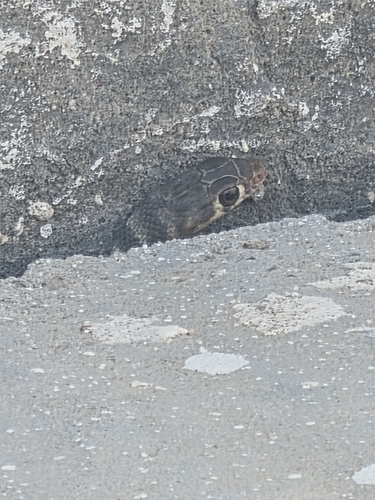 Sahara RacerPlatyceps saharicusHarmless
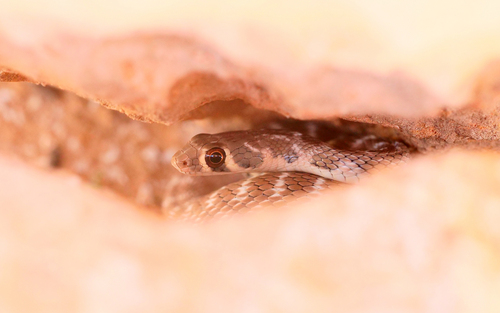 Rogers' RacerPlatyceps rogersiHarmless
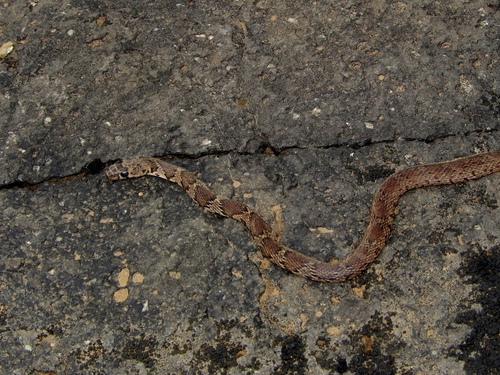 Graceful RacerPlatyceps gracilisHarmless
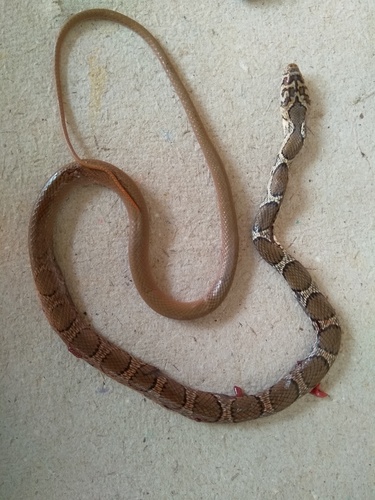 Sharma's RacerPlatyceps bholanathiHarmless
 Joseph's RacerPlatyceps josephiHarmless
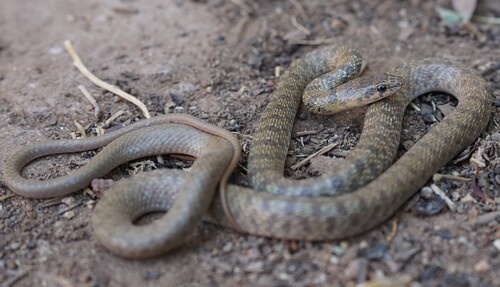 Flowered Whip SnakePlatyceps florulentusHarmless
 Thomas' Semi-banded RacerPlatyceps thomasiHarmless
 Elegant RacerPlatyceps elegantissimusHarmless
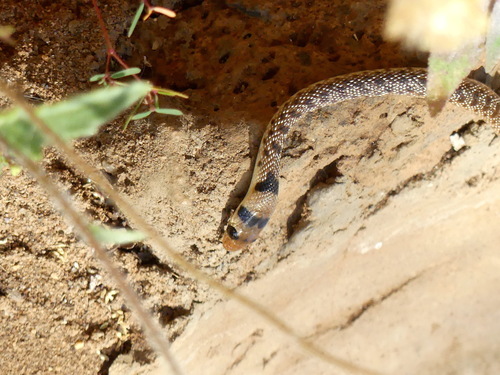 Short RacerPlatyceps brevisHarmless
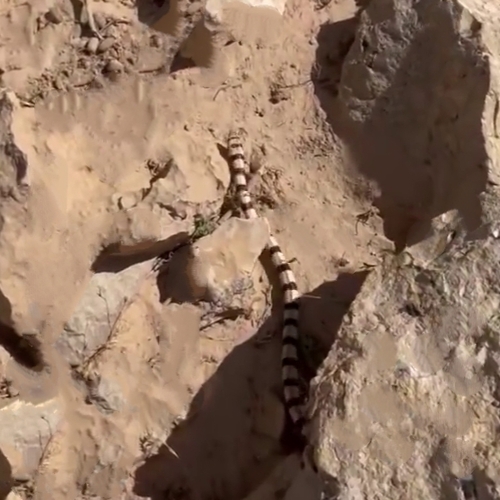 Sinai RacerPlatyceps sinaiHarmless
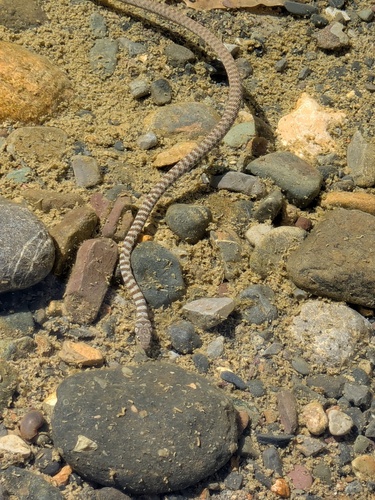 Platyceps hajarensisHarmless
- Smith's RacerPlatyceps smithiiHarmless
- No photoTaylor’s RacerPlatyceps tayloriHarmless
- No photoVariable RacerPlatyceps variabilisHarmless
Keep learning
- What Is a Snake? Anatomy and the BasicsA clear overview of what makes a snake a snake: limbless body plan, anatomy, evolution from lizards, species diversity, and why they are ectothermic.
- How Snakes Move, Hunt, and EatHow snakes move without legs, hunt as ambushers or active foragers, kill by constriction or venom, and swallow prey wider than their head.
- What Do Snakes Eat?All snakes are carnivores. Learn what snakes eat, how diet changes with size and age, how often they feed, and how they hunt and swallow prey.
- Venomous vs Nonvenomous: How to Tell the DifferenceThe folk rules for telling venomous snakes apart, where each one fails, and why location-based identification beats guessing by sight.