
Genus · Colubridae
Types of brownsnakes
4 species make up the genus Storeria, the snakes commonly called brownsnakes. None are considered dangerous to humans.
About brownsnakes and red-bellied snakes
Tiny, secretive North American colubrids that spend their lives under leaf litter, logs, and rocks hunting soft-bodied prey.
Storeria is a small genus of harmless snakes in the family Colubridae, the largest and most diverse snake family. The genus is best known for two widespread species: DeKay's Brownsnake and the Red-bellied Snake. Members are sometimes grouped under the common label brownsnakes, which can cause confusion with unrelated dangerous Australian snakes in the genus Pseudonaja that share that English name. The Storeria brownsnakes of the Americas are an entirely different lineage and pose no threat to people.
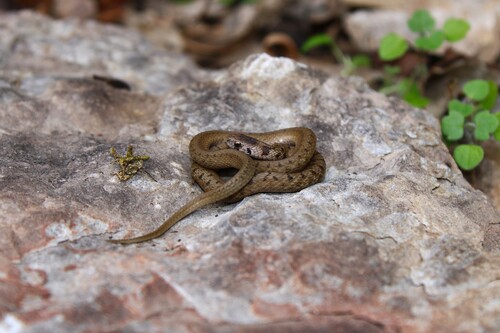
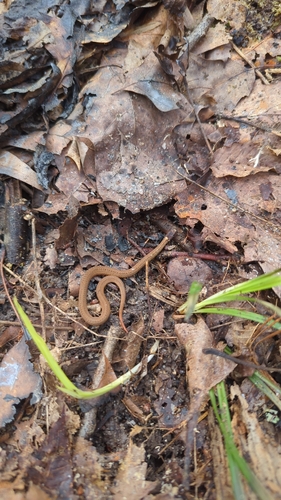
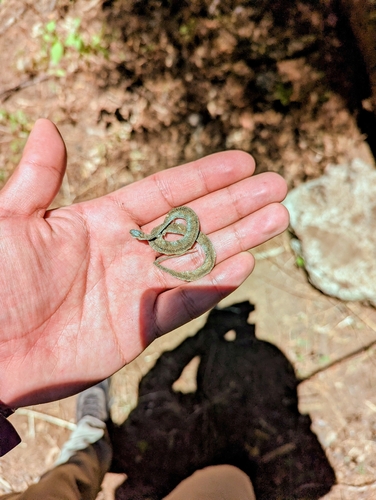
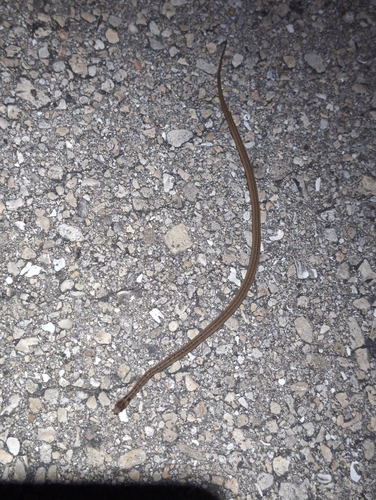
These are some of the smallest snakes you are likely to encounter, with most adults measuring roughly 9 to 13 inches. The body is slender, the head is barely wider than the neck, and the scales are keeled, giving the skin a slightly rough, matte look rather than a glossy sheen. Coloration tends toward brown, gray, or reddish-brown above, often with paired rows of small dark spots down the back. The Red-bellied Snake is named for the bright red, orange, or pinkish underside that is usually hidden until the animal is turned over.
The genus is centered on eastern and central North America, extending south into Mexico and Central America. Typical habitats include moist woodlands, meadows, marsh edges, suburban gardens, parks, and vacant lots. Storeria snakes are highly adaptable and persist even in developed areas, where they shelter under boards, flat rocks, mulch, logs, and other ground cover. They are secretive and rarely seen in the open, spending most of their time hidden or burrowing through loose soil and leaf litter.
All Storeria species are non-venomous and harmless to humans. They are not rear-fanged and produce no medically significant venom. Their defense is to hide, flee, release musk, or flatten the body rather than bite, and their tiny mouths are not built to injure people. Even so, wild snakes are best observed rather than handled, both to avoid stressing the animal and because any bite to a person can carry a minor infection risk. There is no first-aid concern specific to this genus. If anyone is ever bitten by a snake they cannot confidently identify, treat it as a medical matter and contact emergency services or US Poison Control at 1-800-222-1222.
Ecologically, these snakes are specialists on soft-bodied invertebrates. Their diet centers on earthworms, slugs, and snails, and some species have jaw and tooth adaptations suited to pulling snails from their shells. This makes them quiet allies to gardeners. Storeria species give live birth rather than laying eggs, producing small litters in late summer, and the newborns are miniature versions of the adults, immediately independent. Their small size makes them prey for birds, larger snakes, and mammals, so they rely on concealment to survive.
Storeria belongs to the Colubridae family (Colubrids). The largest snake family, and the one most snakes you meet belong to. Typically round pupils, a head only slightly wider than the neck, and no heat-sensing facial pit or rattle. Scales may be smooth and glossy or keeled and matte depending on the species.
Danger: Almost all colubrids are harmless. A small number are rear-fanged with medically significant venom, the boomslang and the twig (vine) snakes of Africa being the dangerous exceptions. Most colubrids will flee or bluff rather than bite.
All species (4)
Keep learning
- What Is a Snake? Anatomy and the BasicsA clear overview of what makes a snake a snake: limbless body plan, anatomy, evolution from lizards, species diversity, and why they are ectothermic.
- How Snakes Move, Hunt, and EatHow snakes move without legs, hunt as ambushers or active foragers, kill by constriction or venom, and swallow prey wider than their head.
- What Do Snakes Eat?All snakes are carnivores. Learn what snakes eat, how diet changes with size and age, how often they feed, and how they hunt and swallow prey.
- Venomous vs Nonvenomous: How to Tell the DifferenceThe folk rules for telling venomous snakes apart, where each one fails, and why location-based identification beats guessing by sight.