
Brown / Redbelly snake
Red-bellied Snake
HarmlessStoreria occipitomaculata
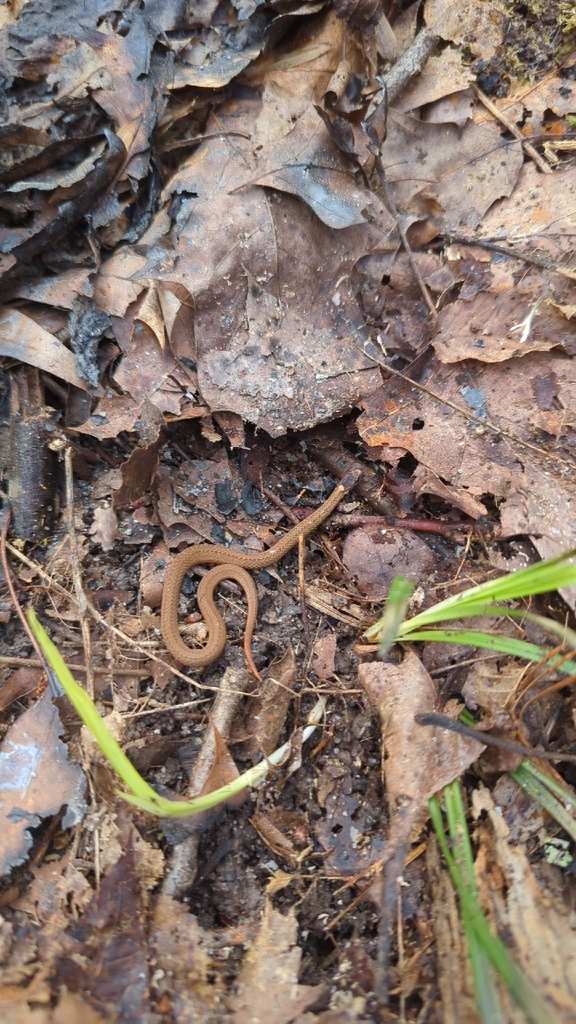
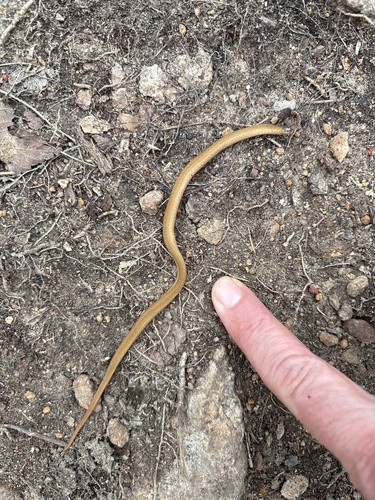
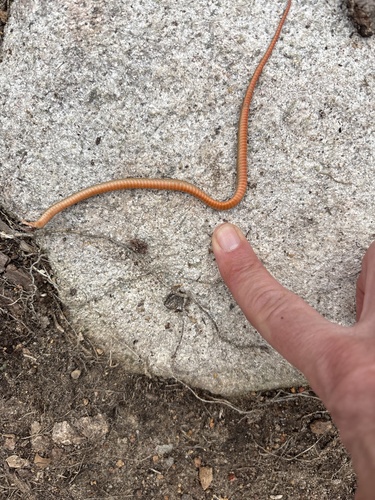
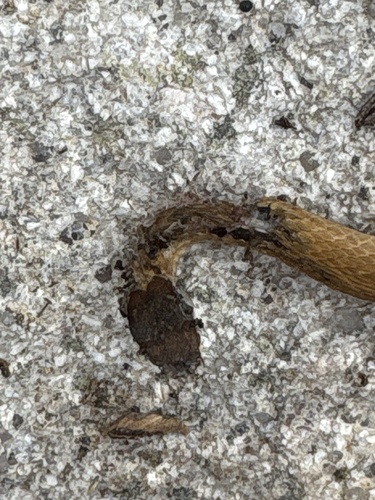
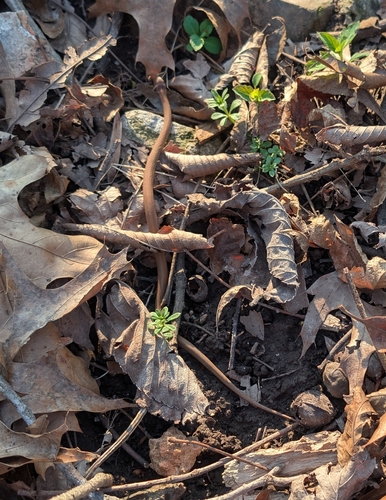
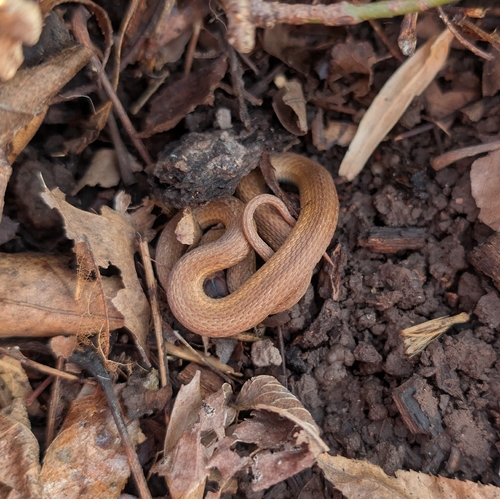
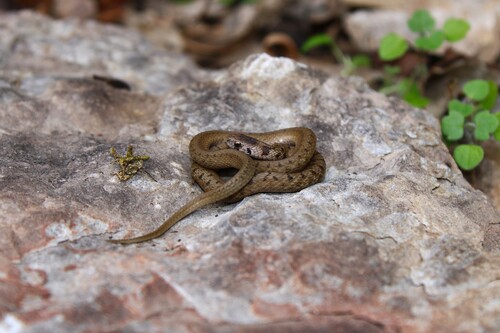
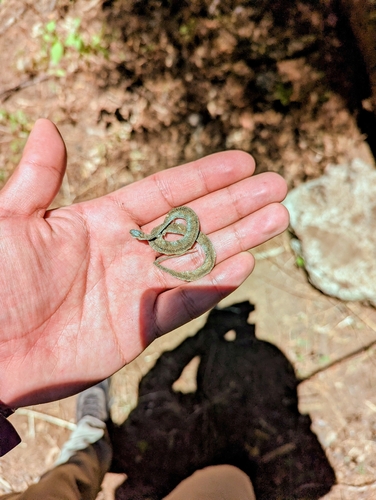
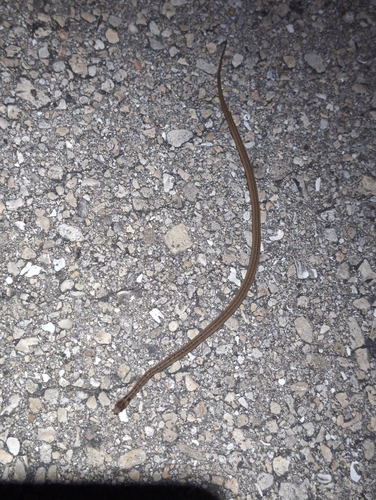
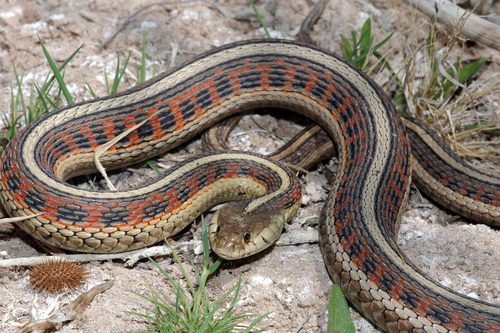
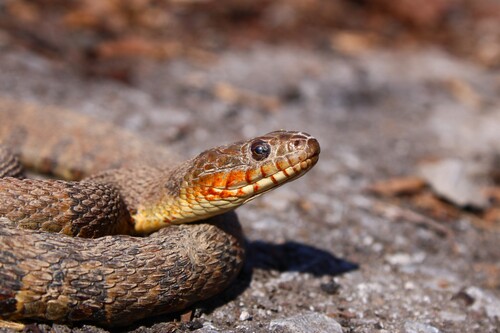
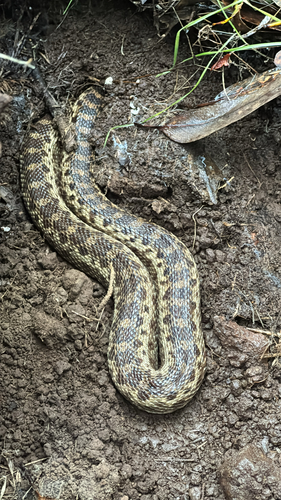
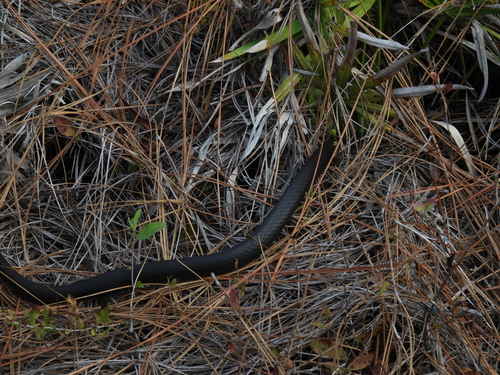
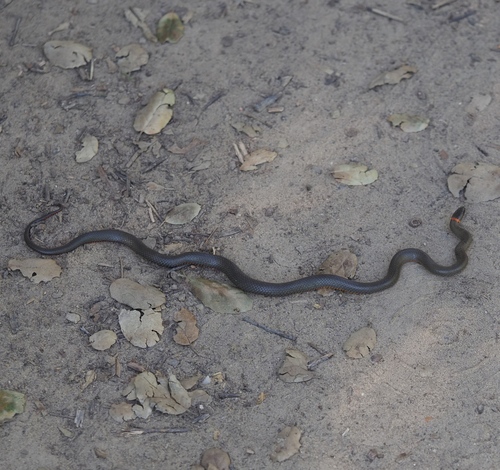
6 photographs of the Red-bellied Snake. © Daveozric.
The Red-bellied Snake (Storeria occipitomaculata) is a non-venomous snake in the Colubridae family, recorded in 4 countries.
- Also called
- Brown / Redbelly snake
- Family
- Colubridae
- Size
- Tiny, 8–14 in.
- Habitat
- Gardens, woodlands, and leaf litter; common even in cities.
- Behavior
- Secretive; eat slugs, snails, and earthworms.
- Identify
- Tiny, brown or gray, often with a pale belly or pale neck spots.
About the Red-bellied Snake
Storeria occipitomaculata, commonly known as the redbelly snake or the red-bellied snake, is a species of harmless snake in the subfamily Natricinae of the family Colubridae. The species is native to North America (Canada and the United States).
Description
Storeria occipitomaculata is a small woodland species that usually measures 4–10 in (10–25 cm) in total length (including tail). Its dorsal color ranges from orange to gray, black, or brown. It can be distinguished from other species by its bright red or orange underbelly. Many individuals have a light brown ring behind the head.
Habitat
Storeria occipitomaculata prefers warmer habitats, and in the more northern limits of its range will inhabit abandoned ant mounds. These mounds absorb solar radiation and are insulated which allows for a longer active season. This species, with large eyes and a kinetic skull, is not able to burrow on its own effectively, and abandoned ant mounds allow it access to a warm retreat. Individuals of this species can be found under logs and leafy debris due to its secretive nature.
Reproduction
Storeria occipitomaculata bears live young by ovoviviparity. Studies of the redbelly snake have determined that it reproduces annually, and females have been found to be gravid during spring and early summer. While body size varies throughout the redbelly snake's geographic range, the average litter size tends to remain the same with an average of 7–9 young per litter. The redbelly snake begins mating at around two years of age and must be a minimum of 22 centimetres (8.7 in) in order to reach sexual maturity.
Diet
The red-bellied snake, like other members of its genus, preys primarily on slugs. Its teeth are slender and distally curved to better catch slimy prey.
Behavior
Storeria occipitomaculata exhibits a distinctive behavior of lip-curling. The purposes of this behavior are still being studied, but are hypothesized to aid in prey capture and handling, and in predator deterrence. The redbelly snake has also exhibited death-feigning behavior to possible predators, in which it laterally compresses parts of its body to mimic the appearance of injuries. It can also mock the posture of venomous snakes by flattening its body, raising its head, and flexing its neck.
Etymology
The specific name, occipitomaculata, is derived from the Latin words occiput which means "the back part of the head" and maculata meaning "spotted". The generic name, Storeria, of the monophyletic clade honors zoologist David Humphreys Storer.
Subspecies
Three subspecies, including the nominotypical subspecies, are recognized as being valid:
Florida redbelly snake – Storeria occipitomaculata obscura Trapido, 1944
Adapted from Wikipedia, available under CC BY-SA.
Frequently asked: Red-bellied Snake
- Is the Red-bellied Snake venomous?
- No. The Red-bellied Snake (Storeria occipitomaculata) is non-venomous and is not considered dangerous to humans. Like most snakes, it will retreat rather than bite when given the chance.
- Is the Red-bellied Snake poisonous?
- Snakes are venomous, not poisonous. "Poisonous" means harmful to eat or touch; "venomous" means injecting toxins through a bite. The Red-bellied Snake is neither poisonous nor venomous.
- Is the Red-bellied Snake dangerous?
- The Red-bellied Snake is not dangerous to humans. It has no medically significant venom and bites only defensively if cornered or handled.
- Where does the Red-bellied Snake live?
- The Red-bellied Snake has verified records in 4 countries, including United States of America, Canada, Mexico. See the distribution section below for its full range.
- How do I identify the Red-bellied Snake?
- Tiny, brown or gray, often with a pale belly or pale neck spots.
- How big does the Red-bellied Snake get?
- Tiny, 8–14 in.
- What does the Red-bellied Snake eat?
- The red-bellied snake, like other members of its genus, preys primarily on slugs. Its teeth are slender and distally curved to better catch slimy prey.
- Why is it called the Red-bellied Snake?
- The specific name, occipitomaculata, is derived from the Latin words occiput which means "the back part of the head" and maculata meaning "spotted". The generic name, Storeria, of the monophyletic clade honors zoologist David Humphreys Storer.
Where it is found
By U.S. state
More Colubridae snakes
Classification
How scientists group this snake, from the broadest category down to the exact species. Each step narrows to its closest relatives.
- OrderThe broad group of scaled reptiles: all snakes and lizards
- Squamata
- FamilyA group of related snakes that share key traits
- Colubridae
- GenusA close-knit group of very similar species
- Storeria
- SpeciesThis exact snake, named in the two-part scientific name
- Storeria occipitomaculata
Keep learning
- What to Do If You Find a SnakeFound a snake at home or on a trail? Here is how to stay calm, give it space, identify it safely, and know when to call a professional.
- Venomous vs Nonvenomous: How to Tell the DifferenceThe folk rules for telling venomous snakes apart, where each one fails, and why location-based identification beats guessing by sight.
- What Is a Snake? Anatomy and the BasicsA clear overview of what makes a snake a snake: limbless body plan, anatomy, evolution from lizards, species diversity, and why they are ectothermic.
- How to Keep Snakes Out of Your Yard and HomeA practical guide to keeping snakes out of your yard and home using habitat changes that work, plus what to skip and what to do if one shows up.
Distribution from GBIF & iNaturalist. Venom status per CDC. Background: Wikipedia. Informational only. Never handle a snake to identify it.