
Colubridae
Common Tiger Snake
HarmlessTelescopus semiannulatus
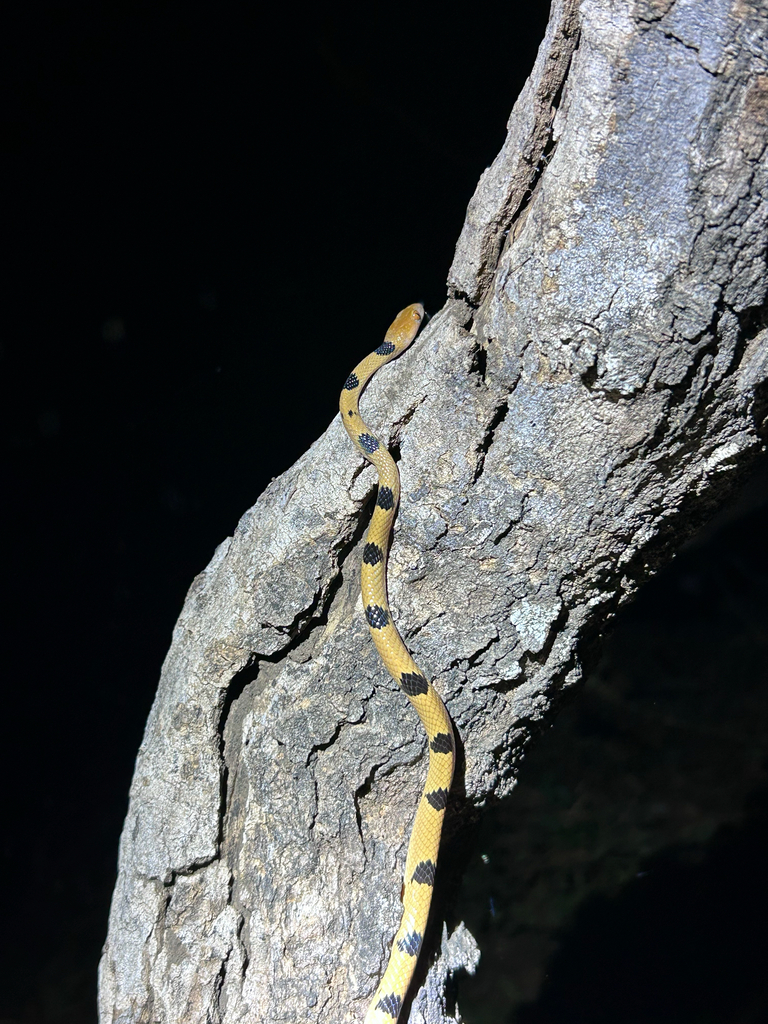
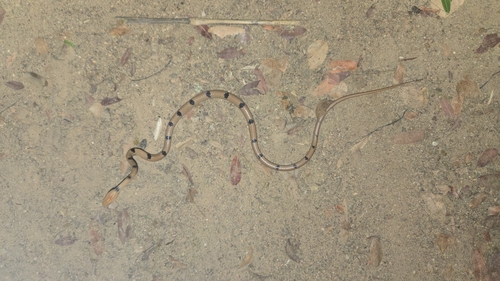
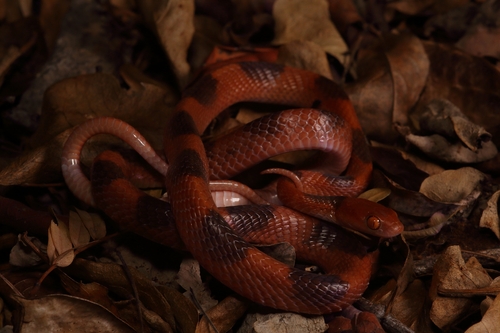
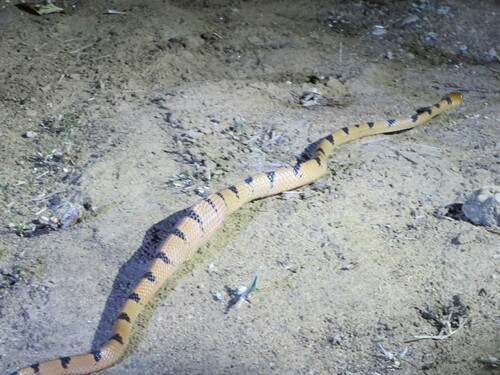
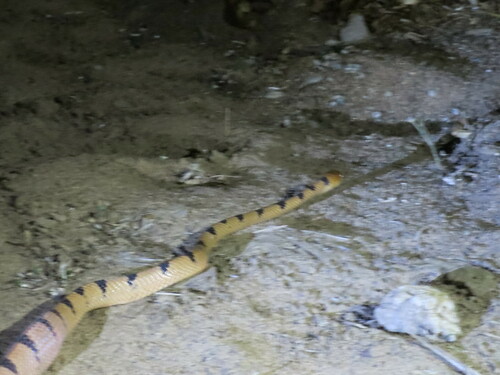
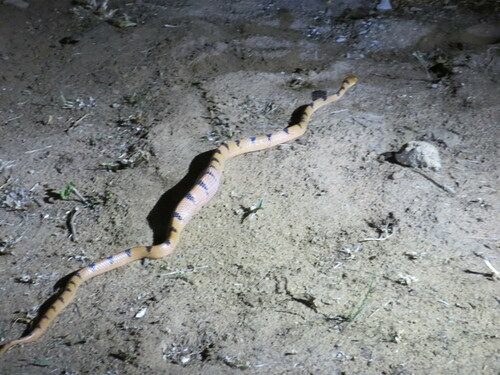
6 photographs of the Common Tiger Snake. © rosshawkins.
The Common Tiger Snake (Telescopus semiannulatus) is a rear-fanged, mildly venomous snake in the Colubridae family, recorded in 18 countries.
- Family
- Colubridae
About the Common Tiger Snake
Telescopus semiannulatus, commonly known as the common tiger snake, tiger cat snake, western tiger snake, or eastern tiger snake is a species of rear-fanged colubrid snake. It is widespread in central, eastern, and southern Africa.
Geographic range
Range by UN subregion:
Central Africa: Republic of the Congo, Democratic Republic of the Congo, Angola
Eastern Africa: Kenya, Tanzania, Rwanda, Burundi, Malawi, Zambia, Zimbabwe, Mozambique
Southern Africa: Namibia, Botswana, Eswatini, South Africa
Description
Adults average 60–90 cm (2.0–3.0 ft) in total length, with 17–21 rows of dorsal scales. The tiger snake is one of the more colorful species of snake in the family Colubridae. The upper side is pale orange to salmon pink in color with 24–48 black or dark-brown cross bars or blotches along the back and tail; the underside is pale yellow to orangish pink along the throat, paler along the rest of the body. It has a distinct head and large orange eyes with vertical pupils, and a narrow body with long tail.
Subspecies
There are two subspecies:
Telescopus semiannulatus polystictus Mertens, 1954
Telescopus semiannulatus semiannulatus Smith, 1849
The subspecies T. s. polystictus, Damara tiger snake, is found in the highveld of Namibia and northwest South Africa, has a more mottled appearance and more black bands (up to 75), and may be a separate species.
Habitat and behaviour
Telescopus semiannulatus is found in both dry and humid subtropical and tropical habitats, from rocky desert, scrub and savanna, to lowland forest. Largely terrestrial but sometimes arboreal, it shelters under bark and rock or in thatched roofs. It is a nocturnal snake.
Venom
Telescopus semiannulatus is rear-fanged and mildly venomous, but not dangerous to humans. Localized swelling might occur. Because Telescopus semiannulatus feeds mostly on lizards, the venom is more effective on other reptiles.
The fangs are grooved rather than hollow. When Telescopus semiannulatus grabs onto its prey, it holds on and chews venom into the wound, adding constriction to immobilize prey.
Diet
Its diet is largely lizards, especially geckos, but also small rodents and fledgling birds and bats.
Captivity
Initially T. semiannulatus strikes readily, but the venom is not dangerous to humans, and it tames quickly. In captivity it accepts geckos while larger individuals will take half-grown mice. Even smaller animals are eating fresh born mice. In captivity it gets really calm and is interested in the things that happen around.
Breeding
The tiger snake is oviparous. Females lay half a dozen to several dozen eggs in damp leaf litter.
Adapted from Wikipedia, available under CC BY-SA.
Frequently asked: Common Tiger Snake
- Is the Common Tiger Snake venomous?
- The Common Tiger Snake (Telescopus semiannulatus) is rear-fanged and only mildly venomous. It is not considered dangerous to humans (its venom is weak and its fangs sit at the back of the mouth) but a bite can cause local swelling or irritation, so it should not be handled.
- Is the Common Tiger Snake poisonous?
- Snakes are venomous, not poisonous. "Poisonous" means harmful to eat or touch; "venomous" means injecting toxins through a bite. The Common Tiger Snake is neither poisonous nor venomous.
- Is the Common Tiger Snake dangerous?
- The Common Tiger Snake is not dangerous to humans. It has no medically significant venom and bites only defensively if cornered or handled.
- Where does the Common Tiger Snake live?
- The Common Tiger Snake has verified records in 18 countries, including South Africa, Zambia, Zimbabwe. See the distribution section below for its full range.
- What does the Common Tiger Snake eat?
- Its diet is largely lizards, especially geckos, but also small rodents and fledgling birds and bats.
Where it is found
More Colubridae snakes
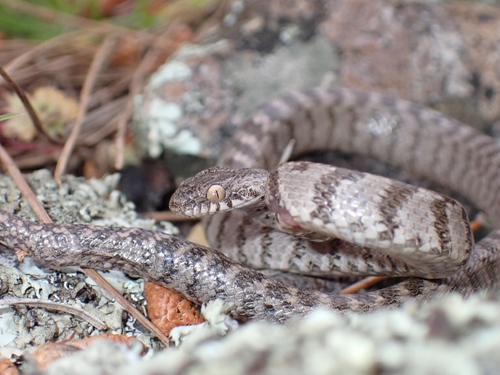 Cat SnakeTelescopus fallax
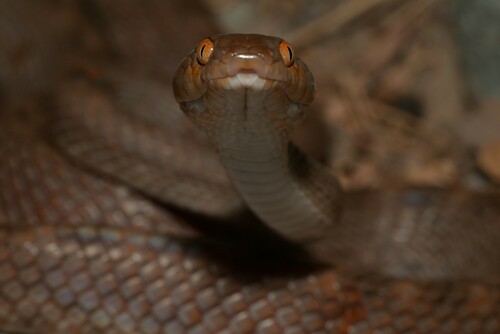 Arabian Cat SnakeTelescopus dhara
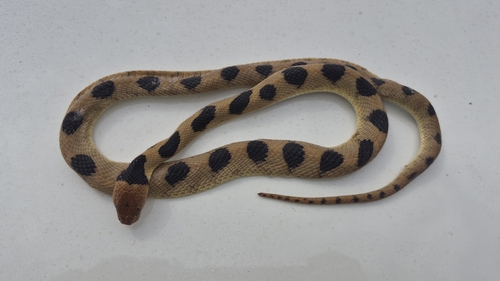 Karoo Tiger SnakeTelescopus beetzi
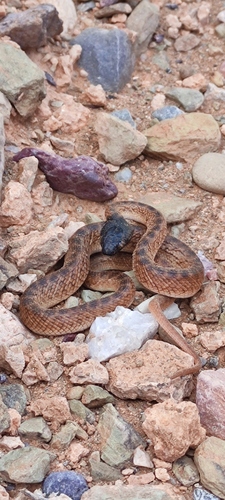 North African CatsnakeTelescopus tripolitanus
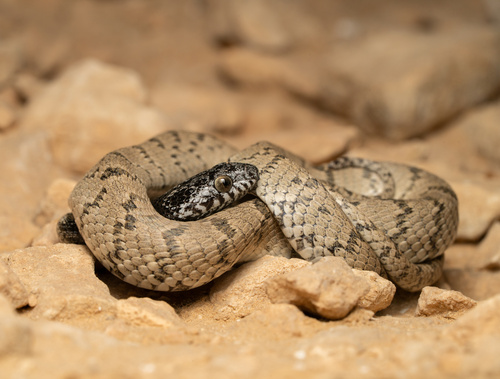 Hoogstraal's catsnakeTelescopus hoogstraali
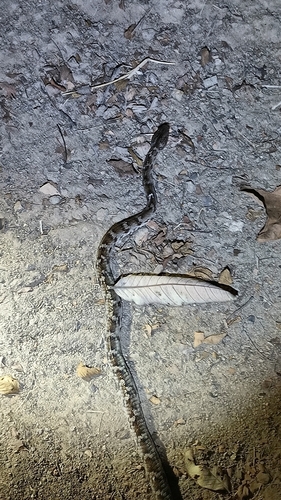 West African Cat SnakeTelescopus variegatus
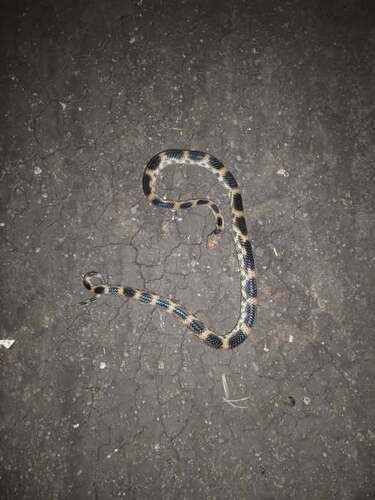 Blue Nile Cat SnakeTelescopus gezirae
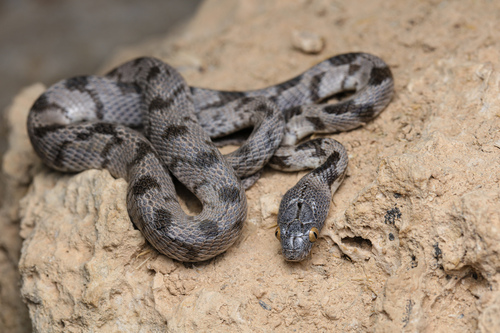 Soosan Tiger SnakeTelescopus tessellatus
Classification
How scientists group this snake, from the broadest category down to the exact species. Each step narrows to its closest relatives.
- OrderThe broad group of scaled reptiles: all snakes and lizards
- Squamata
- FamilyA group of related snakes that share key traits
- Colubridae
- GenusA close-knit group of very similar species
- Telescopus
- SpeciesThis exact snake, named in the two-part scientific name
- Telescopus semiannulatus
Keep learning
- What to Do If You Find a SnakeFound a snake at home or on a trail? Here is how to stay calm, give it space, identify it safely, and know when to call a professional.
- Venomous vs Nonvenomous: How to Tell the DifferenceThe folk rules for telling venomous snakes apart, where each one fails, and why location-based identification beats guessing by sight.
- What Is a Snake? Anatomy and the BasicsA clear overview of what makes a snake a snake: limbless body plan, anatomy, evolution from lizards, species diversity, and why they are ectothermic.
- How to Keep Snakes Out of Your Yard and HomeA practical guide to keeping snakes out of your yard and home using habitat changes that work, plus what to skip and what to do if one shows up.
Distribution from GBIF & iNaturalist. Venom status per CDC. Background: Wikipedia. Informational only. Never handle a snake to identify it.