
Genus · Colubridae
Telescopus
10+ species make up the genus Telescopus. None are considered dangerous to humans.
About Cat snakes (Old World)
Slender, vertical-pupiled night hunters of Africa and Eurasia that subdue prey with a mild rear-fanged venom.
Telescopus is a genus of snakes in the family Colubridae, the largest snake family and a sprawling group that holds the majority of the world's living snake species. Colubrids are a catch-all of mostly slim, agile, egg-laying snakes, and within that family Telescopus is best known by the English name cat snakes, a label earned by the strikingly vertical, slit-like pupils that recall a cat's eye. Our database lists 10+ species in the genus, including the Cat Snake, the Common Tiger Snake, the Arabian Cat Snake, and the Karoo Tiger Snake.
The genus is spread across the Old World rather than the Americas. Its members are found through much of Africa, around the Mediterranean and the Middle East, and eastward into parts of Central and South Asia. Typical habitats are warm and dry to semi-dry: rocky hillsides, scrubland, dry savanna, semi-desert, and stony outcrops, where cracks and crevices give the snakes daytime shelter and good hunting ground for the small animals they feed on.
In general terms, a Telescopus is a slender snake with a flattened, distinct head that is clearly set off from a narrow neck, large eyes, and those tell-tale vertical pupils. The body is often patterned with darker blotches, bars, or saddles over a paler ground color, which is where names like tiger snake come from. They are not heavy-bodied or fast like a racer; they are nocturnal, secretive, and built for moving through rock and brush after dark. Exact size varies by species, but most are modest snakes, commonly under about a meter in total length.
Telescopus is venomous in the technical sense but rear-fanged, also called opisthoglyphous: the enlarged, grooved teeth sit toward the back of the upper jaw rather than at the front like a viper's, and the venom is delivered through a chewing action rather than a fast frontal strike. The venom is adapted to overpower small prey and is generally regarded as mild and of little medical importance to humans, with bites typically causing only minor local effects. That said, individual reactions vary, no wild snake should be picked up or handled, and any bite from a snake you cannot confidently identify should be treated as a medical matter. In the United States contact Poison Control at 1-800-222-1222, and elsewhere call your local emergency services.
Ecologically these are ambush and active night hunters that feed largely on lizards and geckos, along with small mammals, nestling birds, and sometimes other small snakes, using the rear fangs and constriction to subdue a meal. Like most colubrids in this group, Telescopus species are egg layers, depositing small clutches that develop without parental care. They are shy, non-aggressive animals that rely on hiding and crepuscular activity rather than confrontation, which is part of why they are so seldom seen despite a broad range.
Telescopus belongs to the Colubridae family (Colubrids). The largest snake family, and the one most snakes you meet belong to. Typically round pupils, a head only slightly wider than the neck, and no heat-sensing facial pit or rattle. Scales may be smooth and glossy or keeled and matte depending on the species.
Danger: Almost all colubrids are harmless. A small number are rear-fanged with medically significant venom, the boomslang and the twig (vine) snakes of Africa being the dangerous exceptions. Most colubrids will flee or bluff rather than bite.
All species (13)
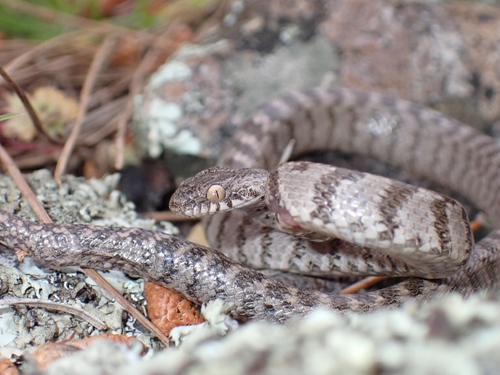 Cat SnakeTelescopus fallaxHarmless
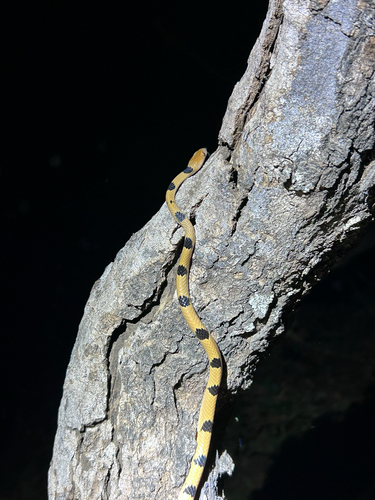 Common Tiger SnakeTelescopus semiannulatusHarmless
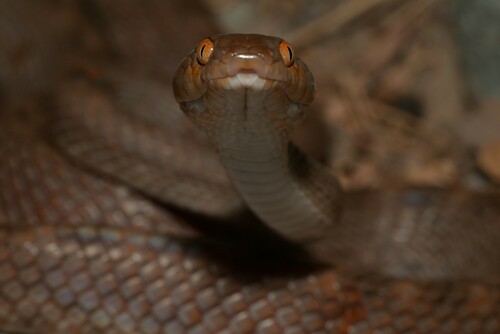 Arabian Cat SnakeTelescopus dharaHarmless
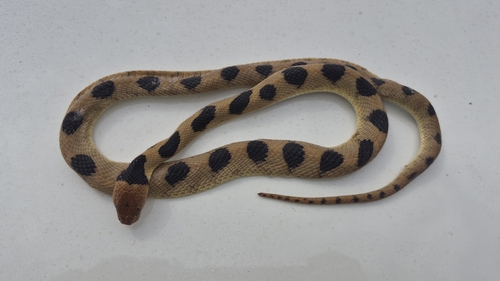 Karoo Tiger SnakeTelescopus beetziHarmless
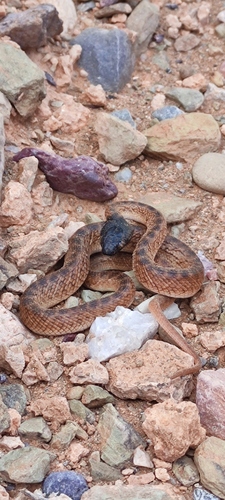 North African CatsnakeTelescopus tripolitanusHarmless
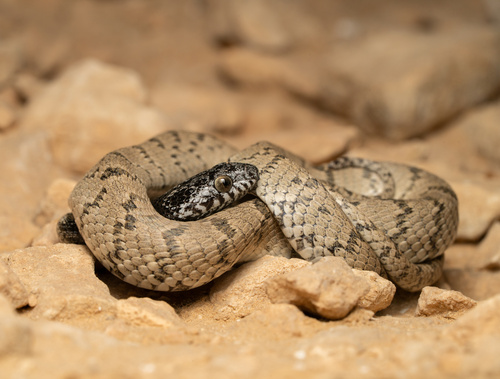 Hoogstraal's catsnakeTelescopus hoogstraaliHarmless
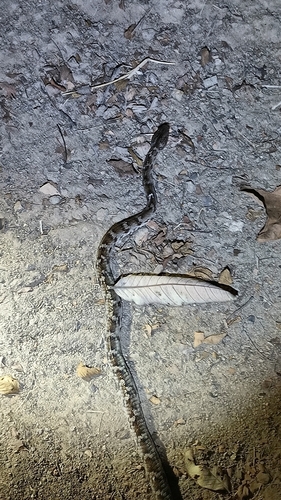 West African Cat SnakeTelescopus variegatusHarmless
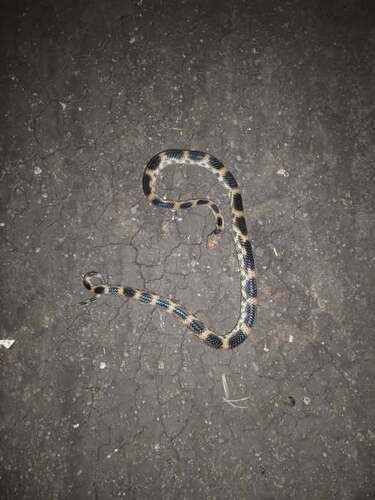 Blue Nile Cat SnakeTelescopus geziraeHarmless
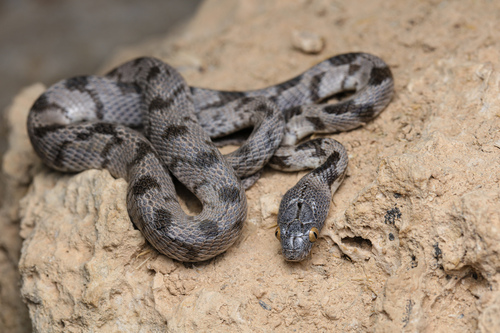 Soosan Tiger SnakeTelescopus tessellatusHarmless
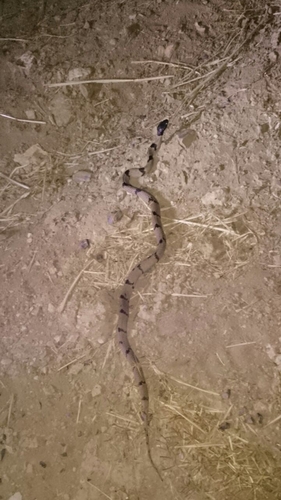 Black headed snakeTelescopus nigricepsHarmless
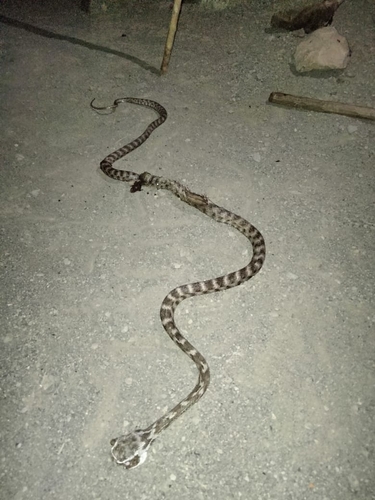 Desert Cat SnakeTelescopus rhinopomaHarmless
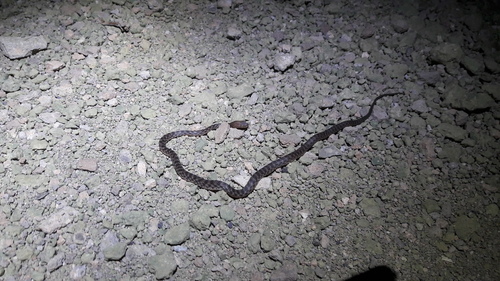 Egyptian catsnakeTelescopus obtususHarmless
- No photoDamara tiger snakeTelescopus finkeldeyiHarmless
Keep learning
- What Is a Snake? Anatomy and the BasicsA clear overview of what makes a snake a snake: limbless body plan, anatomy, evolution from lizards, species diversity, and why they are ectothermic.
- How Snakes Move, Hunt, and EatHow snakes move without legs, hunt as ambushers or active foragers, kill by constriction or venom, and swallow prey wider than their head.
- What Do Snakes Eat?All snakes are carnivores. Learn what snakes eat, how diet changes with size and age, how often they feed, and how they hunt and swallow prey.
- Venomous vs Nonvenomous: How to Tell the DifferenceThe folk rules for telling venomous snakes apart, where each one fails, and why location-based identification beats guessing by sight.