
Viperidae
White-lipped Pit Viper
VenomousTrimeresurus albolabris
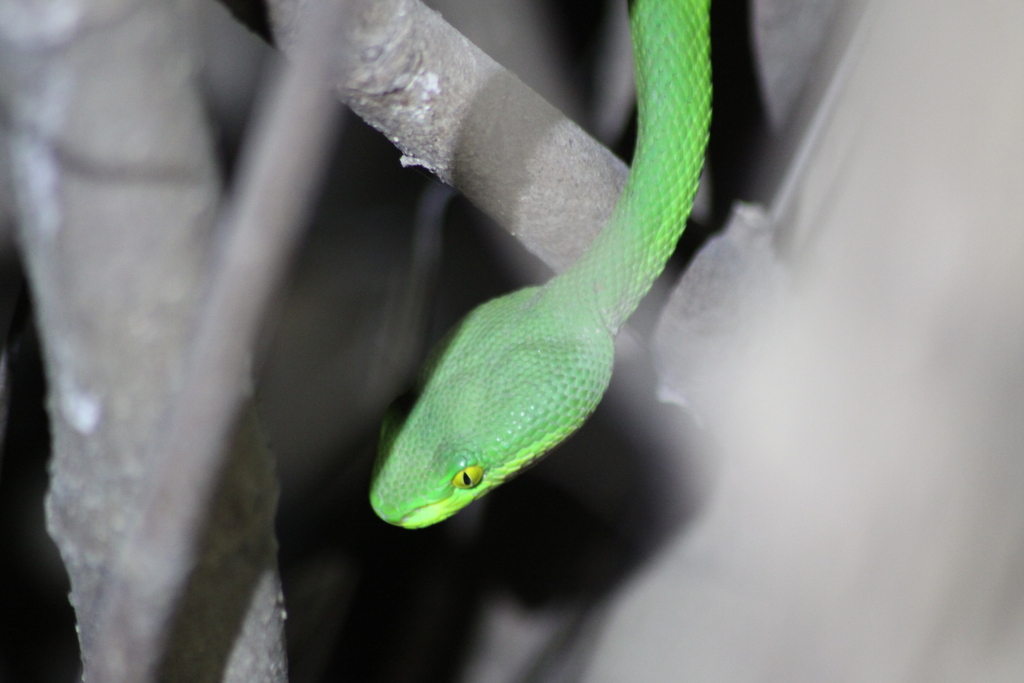
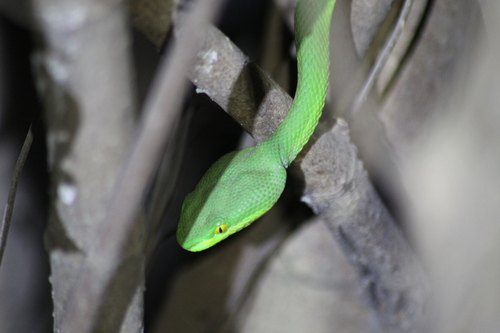
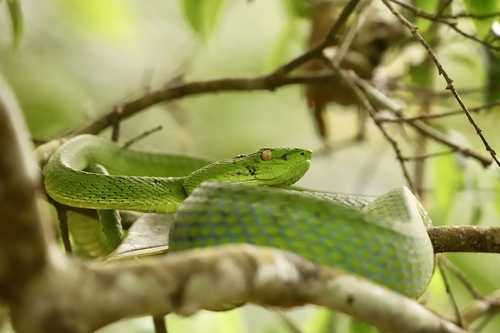
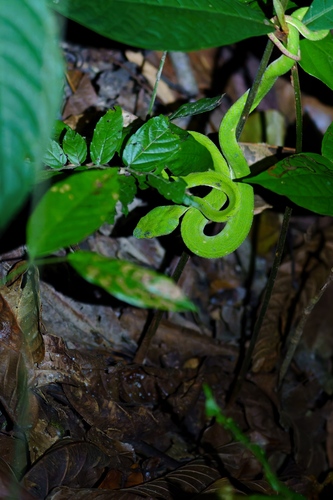
2 photographs of the White-lipped Pit Viper. © sucker69420.
The White-lipped Pit Viper (Trimeresurus albolabris) is a venomous snake in the Viperidae family, recorded in 14 countries.
If you are bitten
This is a venomous snake. Treat any bite as a medical emergency: stay calm, keep the bitten limb still and roughly level with the heart, remove rings and tight clothing, and get to emergency care immediately. Do not apply a tourniquet, cut the wound, apply ice, or try to suck out venom. Call your local emergency number or poison center.
- Family
- Viperidae
- Danger
- high
About the White-lipped Pit Viper
Trimeresurus albolabris, the white-lipped pit viper or white-lipped tree viper, is a venomous pit viper species endemic to Southeast Asia.
Taxonomy
Giannasi et al. (2001) raised insularis and septentrionalis to species level. Malhotra & Thorpe (2004) transferred this species (and a number of others) to the genus Cryptelytrops. David et al. (2011) returned it to the genus Trimeresurus and assigned it the subgenus Trimeresurus, creating the new combination Trimeresurus (Trimeresurus) albolabris.
Common names include green tree pit viper, white-lipped pit viper, white-lipped tree viper, white-lipped green pit viper and white-lipped bamboo pit viper.
Description
Maximum total length males 600 mm (24 in), females 810 mm (32 in); maximum tail length males 120 mm (4.7 in), females 130 mm (5.1 in).
Head scalation consists of 10–11(12) upper labials, the first partially or completely fused to the nasal. Head scales small, subequal, feebly imbricate, smooth or weakly keeled. The supraoculars are narrow (occasionally enlarged and undivided) with 8–12 interocular scales between them. Temporal scales smooth.
Midbody has 29 (rarely 19) longitudinal dorsal scale rows. The ventral scales are 155–166 in males, 152–176 in females. The subcaudals are paired, 60–72 in males, 49–66 in females. The hemipenes are without spines.
Color pattern: green above, the side of the head below the eyes is yellow, white or pale green, much lighter than rest of head. The belly is green, yellowish or white below. A light ventrolateral stripe is present in all males, but absent in females. The end of tail is not mottled brown.
Distribution and habitat
Found in Nepal, Bhutan, Myanmar, Thailand, Cambodia, Laos, Vietnam, southern China (Fujian, Hainan, Guangxi, Guangdong), Hong Kong, Macau, Indonesia (Sumatra, Java, Lombok, Sumbawa, Komodo, Flores, Sumba, Roti, Kisar, Wetar). The type locality given is "China".
The species is not found in India. Specimens from India have been recently re-identified as Trimeresurus salazar (Vogel et al. 2022). Specimens from the Nicobar islands have been described as Trimeresurus davidi, a new species.
Diet
Its meals consist of birds, small frogs, and small mammals. This snake doesn't strike and release its prey; like many arboreal snakes, rather holds on to the prey item until it dies.
Venom
The venom is primarily hemotoxic.
Results of bites from this species range from mild envenoming to death. The venom of white-lipped pitviper contains procoagulant properties. There have been numerous reported bites with few fatalities.
Adapted from Wikipedia, available under CC BY-SA.
Local and regional names
The White-lipped Pit Viper is known by these names across the regions where it lives:
- Chinese
- 白唇竹叶青蛇, 白唇竹葉青蛇, 青竹蛇
- Czech
- chřestýšovec běloretý
- Danish
- Hvidlæbet Palmehugorm, Sydøstasiatisk Hvidlæbet Træhugorm
- English
- White-lipped Pitviper, White-lipped Tree Viper
- German
- Weisslippen-Bambusotter
- Hungarian
- fehérajkú bambuszvipera
- Indonesian
- Ular Bangkai Laut
- Italian
- Vipera dalle labbra bianche degli alberi
- Japanese
- シロクチアオハブ
- Khmer
- ពស់ ហនុមាន បបរមាត់ស, ពស់ពព្លាក់ខៀវកន្ទុយក្រហម-ត្នោត
- Polish
- Trwożnica pospolita
- Russian
- Белогубая куфия
- Thai
- งูเขียวหางไหม้ท้องเหลือง
- Turkish
- Beyaz dudaklı yeşil ağaç engereği
- Ukrainian
- Куфія білогуба
- Vietnamese
- Rắn lục mép trắng
Frequently asked: White-lipped Pit Viper
- Is the White-lipped Pit Viper venomous?
- Yes. The White-lipped Pit Viper (Trimeresurus albolabris) is venomous and belongs to the Viperidae family (viper). Its bite is considered high risk to people. Treat any bite as a medical emergency.
- Is the White-lipped Pit Viper poisonous?
- Snakes are venomous, not poisonous. "Poisonous" means harmful to eat or touch; "venomous" means injecting toxins through a bite. The White-lipped Pit Viper is venomous, delivering venom through a bite.
- Is the White-lipped Pit Viper dangerous?
- This is a venomous snake. Treat any bite as a medical emergency: stay calm, keep the bitten limb still and roughly level with the heart, remove rings and tight clothing, and get to emergency care immediately. Do not apply a tourniquet, cut the wound, apply ice, or try to suck out venom. Call your local emergency number or poison center.
- Where does the White-lipped Pit Viper live?
- The White-lipped Pit Viper has verified records in 14 countries, including Hong Kong, China, Thailand. See the distribution section below for its full range.
- What does the White-lipped Pit Viper eat?
- Its meals consist of birds, small frogs, and small mammals. This snake doesn't strike and release its prey; like many arboreal snakes, rather holds on to the prey item until it dies.
If you are bitten by the White-lipped Pit Viper
Do
- Get away from the snake and stay calm. Most bites worsen when people panic or try again to handle the snake.
- Call 911 or Poison Control (1-800-222-1222) right away. Antivenom works best when given early.
- Note the time of the bite and, from a safe distance, the snake's color and pattern, a phone photo is enough. Do not chase it.
- Keep the bitten limb still and at roughly heart level. Sit or lie down and limit movement.
- Remove rings, watches, and tight clothing near the bite before swelling starts.
- Gently wash the bite with soap and water and cover it with a clean, dry dressing.
Do not
- Do not cut the wound or try to suck out the venom.
- Do not apply a tourniquet or ice.
- Do not drink alcohol or caffeine.
- Do not take aspirin or ibuprofen, they can worsen bleeding. Acetaminophen is safer for pain.
- Do not try to catch or kill the snake. A dead snake can still bite by reflex.
First-aid guidance adapted from the U.S. Centers for Disease Control and Prevention (CDC NIOSH), Venomous Snakes. Educational only; always follow the instructions of emergency responders.
Where it is found
More Viperidae snakes
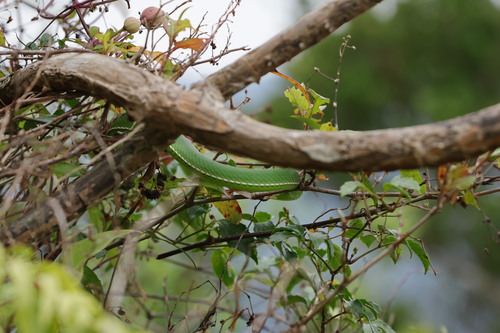 Chinese Green Tree ViperTrimeresurus stejnegeri
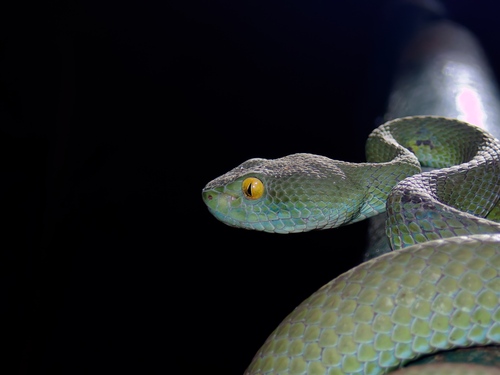 Kramer's Pit ViperTrimeresurus macrops
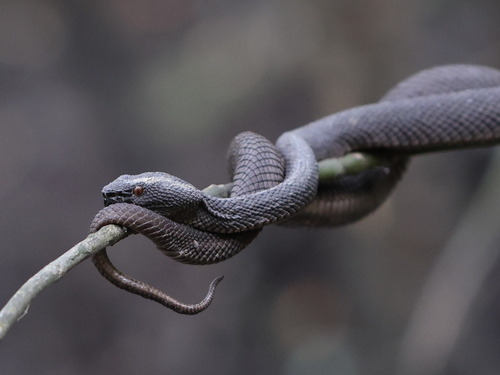 Mangrove ViperTrimeresurus purpureomaculatus
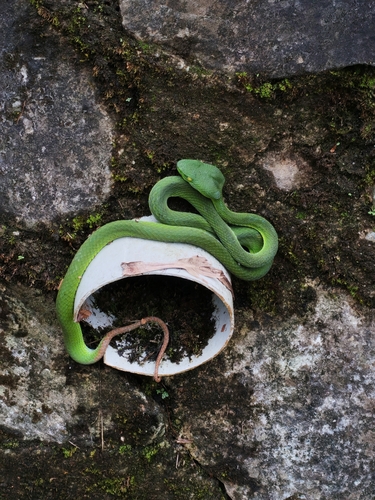 Sabah Bamboo PitviperTrimeresurus sabahi
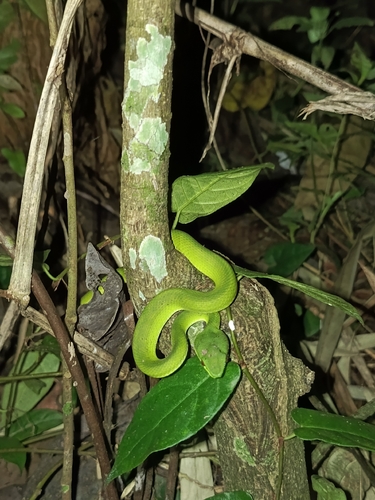 White-lipped Island PitviperTrimeresurus insularis
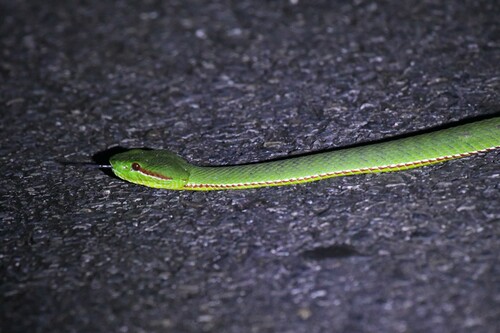 Lanna Green PitviperTrimeresurus lanna
 Vogel’s Pit ViperTrimeresurus vogeli
 Hagen’s PitviperTrimeresurus hageni
Classification
How scientists group this snake, from the broadest category down to the exact species. Each step narrows to its closest relatives.
- OrderThe broad group of scaled reptiles: all snakes and lizards
- Squamata
- FamilyA group of related snakes that share key traits
- Viperidae
- GenusA close-knit group of very similar species
- Trimeresurus
- SpeciesThis exact snake, named in the two-part scientific name
- Trimeresurus albolabris
Keep learning
- Are Snakes Dangerous? The Real Risk, in PerspectiveMost snakes are harmless and avoid people. Here is the honest picture of snakebite risk worldwide and how to lower your own.
- Snakebite First Aid: What to Do (and What Never to Do)A clear, CDC-based guide to snakebite first aid: the steps that help, the popular myths that hurt, and how to tell a serious bite from a minor one.
- Venomous vs Nonvenomous: How to Tell the DifferenceThe folk rules for telling venomous snakes apart, where each one fails, and why location-based identification beats guessing by sight.
- What to Do If You Find a SnakeFound a snake at home or on a trail? Here is how to stay calm, give it space, identify it safely, and know when to call a professional.
Distribution from GBIF & iNaturalist. Venom status per CDC. Background: Wikipedia. Informational only. Never handle a snake to identify it.