
Viperidae
Chinese Green Tree Viper
VenomousTrimeresurus stejnegeri
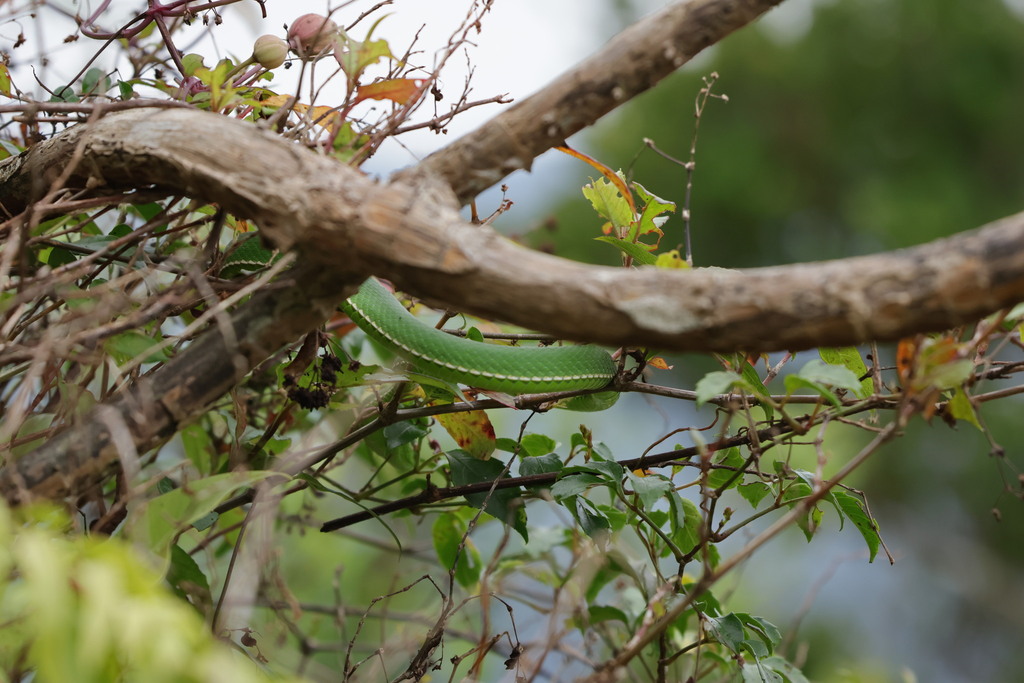
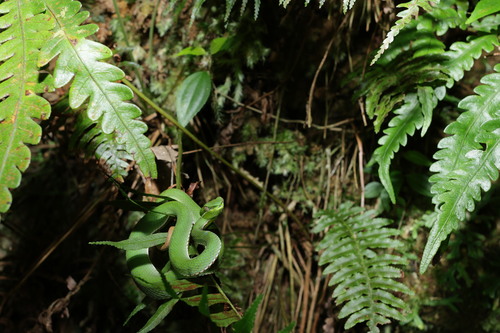
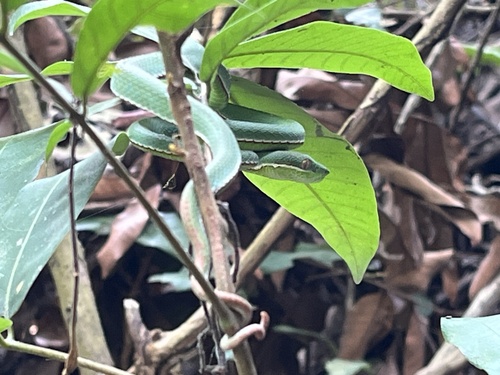
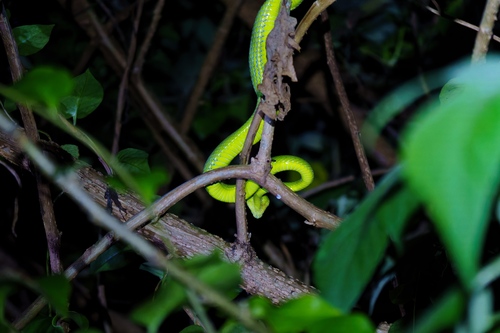
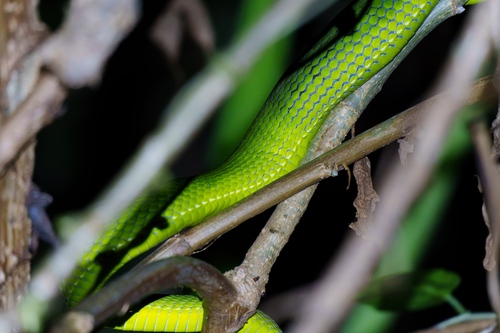
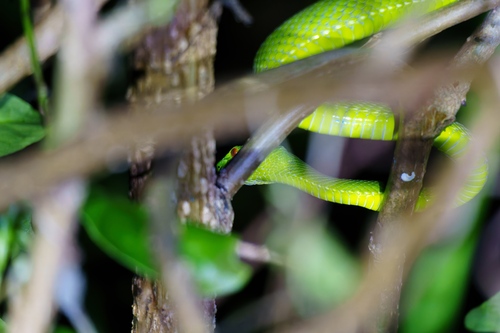
6 photographs of the Chinese Green Tree Viper. © 林正文.
The Chinese Green Tree Viper (Trimeresurus stejnegeri) is a venomous snake in the Viperidae family, recorded in 12 countries.
If you are bitten
This is a venomous snake. Treat any bite as a medical emergency: stay calm, keep the bitten limb still and roughly level with the heart, remove rings and tight clothing, and get to emergency care immediately. Do not apply a tourniquet, cut the wound, apply ice, or try to suck out venom. Call your local emergency number or poison center.
- Family
- Viperidae
- Danger
- high
About the Chinese Green Tree Viper
Trimeresurus stejnegeri is a species of venomous pit viper endemic to Asia. Two subspecies are currently recognized, including the nominate subspecies described here.
Common names for this pit viper include Stejneger's pit viper, Chinese pit viper, Chinese green tree viper, bamboo viper, Chinese bamboo pitviper, 69 bamboo viper, and Chinese tree viper. For other common, non-scientific names, see § Common names below.
Etymology
The specific name, stejnegeri, is in honor of Leonhard Stejneger, the Norwegian-born, American herpetologist who worked at the Smithsonian Institution for over 60 years.
Description
Trimeresurus stejnegeri grows to a maximum total length of 75 centimetres (30 in), which includes a tail length of 14.5 centimetres (5.7 in). The males have hemipenes that are short and spinose beyond the bifurcation.
The dorsal scales are arranged in 21 longitudinal rows at midbody. There are 9–11 upper labials, of which the first are separated from nasal scales by a distinct suture. The supraoculars are single, narrow, and sometimes divided by a transverse suture. There are 11–16 scales in a line between the supraoculars. The ventrals number 150–174, and the subcaudals are 54–77. All of the subcaudals are paired.
The color pattern is bright to dark green above, pale green to whitish below, the two separated by a bright bicolored orange or brown (below) and white (above) (males) or bicolored or white only (females) ventrolateral stripe, which occupies the whole of the outermost scale row and a portion of the second row.
Bamboo vipers are carnivores: they eat small rodents, birds, frogs, and lizards.
Yellow colored mutants have been reported.
Common names
Common names for T. stejnegeri include bamboo viper, Chinese tree viper, bamboo snake, Chinese green tree viper, Chinese bamboo viper, Stejneger's pit viper, Stejneger's palm viper, red tail snake, Stejneger's bamboo pitviper,
Geographic range
Trimeresurus stejnegeri is found in India (Western Ghats & Eastern Ghats, Northeast India) and Nepal through Myanmar and Laos to much of southern China (Yunnan, Sichuan, Gansu, Jiangxi, Jiangsu, Hunan, Hubei, Guizhou, Guangxi, Guangdong, Hainan, Fujian, Anhui, Zhejiang), Vietnam, and Taiwan. The type locality was originally listed as "Shaowu, Fukien Province, China", and later amended to "N.W. Fukien Province" by Pope & Pope (1933) (Fukien being the former romanization of Fujian). this snake is often confused with Trimeresurus, Ahaetulla oxyrhyncha in India.
Habitat
The preferred natural habitat of T. stejnegeri is forest, at altitudes from sea level to 2,000 m (6,600 ft).
Venom
Trimeresurus stejnegeri has a potent hemotoxin. The wound usually feels extremely painful, as if it had been branded with a hot iron, and the pain does not subside until about 24 hours after being bitten. Within a few minutes of being bitten, the surrounding flesh dies and turns black, highlighting the puncture wounds. The wound site quickly swells, and the skin and muscle become black due to necrosis. The size of the necrotic area depends on the amount of venom injected and the depth of the bite.
Reproduction
Adapted from Wikipedia, available under CC BY-SA.
Local and regional names
The Chinese Green Tree Viper is known by these names across the regions where it lives:
- Chinese
- 福建竹叶青蛇
- English
- Stejneger's Pit Viper
- German
- Chinesische Bambusotter, Stejnegers Bambusotter
- Khmer
- ពស់ពព្លាក់ឫស្សី
Frequently asked: Chinese Green Tree Viper
- Is the Chinese Green Tree Viper venomous?
- Yes. The Chinese Green Tree Viper (Trimeresurus stejnegeri) is venomous and belongs to the Viperidae family (viper). Its bite is considered high risk to people. Treat any bite as a medical emergency.
- Is the Chinese Green Tree Viper poisonous?
- Snakes are venomous, not poisonous. "Poisonous" means harmful to eat or touch; "venomous" means injecting toxins through a bite. The Chinese Green Tree Viper is venomous, delivering venom through a bite.
- Is the Chinese Green Tree Viper dangerous?
- This is a venomous snake. Treat any bite as a medical emergency: stay calm, keep the bitten limb still and roughly level with the heart, remove rings and tight clothing, and get to emergency care immediately. Do not apply a tourniquet, cut the wound, apply ice, or try to suck out venom. Call your local emergency number or poison center.
- Where does the Chinese Green Tree Viper live?
- The Chinese Green Tree Viper has verified records in 12 countries, including Chinese Taipei, China, Viet Nam. See the distribution section below for its full range.
- Why is it called the Chinese Green Tree Viper?
- The specific name, stejnegeri, is in honor of Leonhard Stejneger, the Norwegian-born, American herpetologist who worked at the Smithsonian Institution for over 60 years.
If you are bitten by the Chinese Green Tree Viper
Do
- Get away from the snake and stay calm. Most bites worsen when people panic or try again to handle the snake.
- Call 911 or Poison Control (1-800-222-1222) right away. Antivenom works best when given early.
- Note the time of the bite and, from a safe distance, the snake's color and pattern, a phone photo is enough. Do not chase it.
- Keep the bitten limb still and at roughly heart level. Sit or lie down and limit movement.
- Remove rings, watches, and tight clothing near the bite before swelling starts.
- Gently wash the bite with soap and water and cover it with a clean, dry dressing.
Do not
- Do not cut the wound or try to suck out the venom.
- Do not apply a tourniquet or ice.
- Do not drink alcohol or caffeine.
- Do not take aspirin or ibuprofen, they can worsen bleeding. Acetaminophen is safer for pain.
- Do not try to catch or kill the snake. A dead snake can still bite by reflex.
First-aid guidance adapted from the U.S. Centers for Disease Control and Prevention (CDC NIOSH), Venomous Snakes. Educational only; always follow the instructions of emergency responders.
Where it is found
More Viperidae snakes
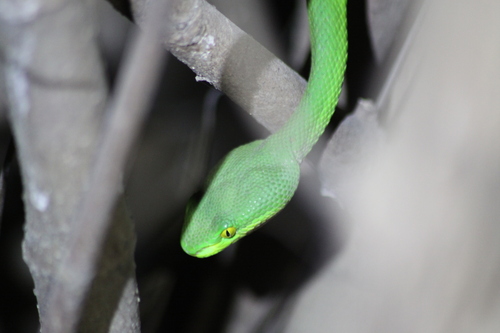 White-lipped Pit ViperTrimeresurus albolabris
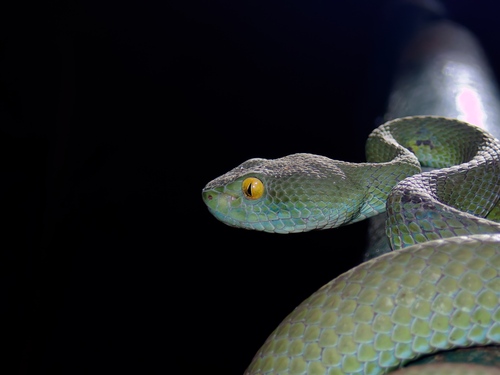 Kramer's Pit ViperTrimeresurus macrops
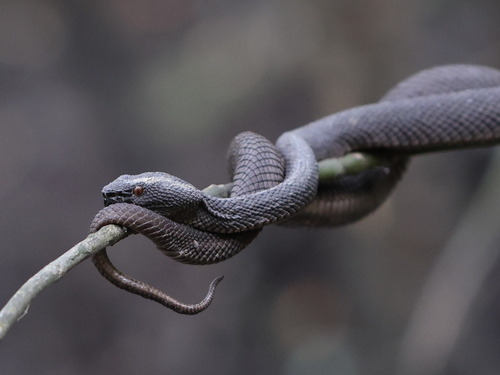 Mangrove ViperTrimeresurus purpureomaculatus
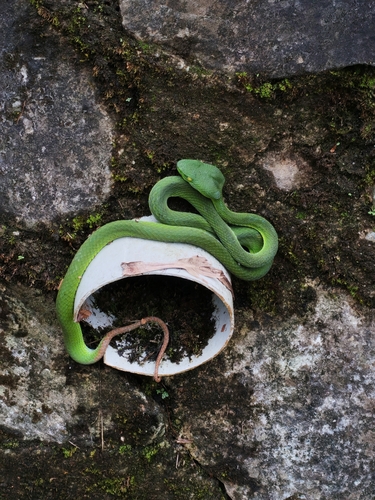 Sabah Bamboo PitviperTrimeresurus sabahi
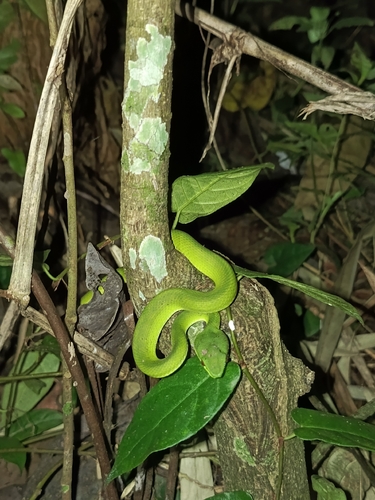 White-lipped Island PitviperTrimeresurus insularis
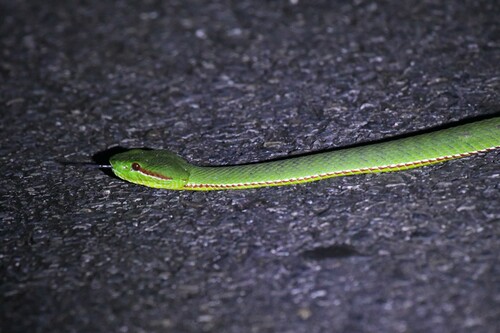 Lanna Green PitviperTrimeresurus lanna
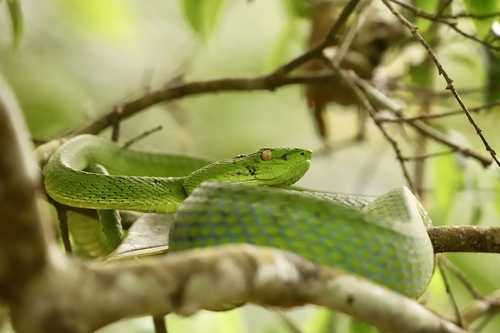 Vogel’s Pit ViperTrimeresurus vogeli
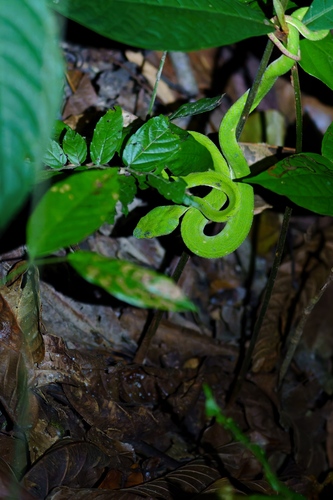 Hagen’s PitviperTrimeresurus hageni
Classification
How scientists group this snake, from the broadest category down to the exact species. Each step narrows to its closest relatives.
- OrderThe broad group of scaled reptiles: all snakes and lizards
- Squamata
- FamilyA group of related snakes that share key traits
- Viperidae
- GenusA close-knit group of very similar species
- Trimeresurus
- SpeciesThis exact snake, named in the two-part scientific name
- Trimeresurus stejnegeri
Keep learning
- Are Snakes Dangerous? The Real Risk, in PerspectiveMost snakes are harmless and avoid people. Here is the honest picture of snakebite risk worldwide and how to lower your own.
- Snakebite First Aid: What to Do (and What Never to Do)A clear, CDC-based guide to snakebite first aid: the steps that help, the popular myths that hurt, and how to tell a serious bite from a minor one.
- Venomous vs Nonvenomous: How to Tell the DifferenceThe folk rules for telling venomous snakes apart, where each one fails, and why location-based identification beats guessing by sight.
- What to Do If You Find a SnakeFound a snake at home or on a trail? Here is how to stay calm, give it space, identify it safely, and know when to call a professional.
Distribution from GBIF & iNaturalist. Venom status per CDC. Background: Wikipedia. Informational only. Never handle a snake to identify it.