
Genus · Colubridae
Coluber
The genus Coluber contains a single species. It is not considered dangerous to humans.
About racers
Coluber is the genus of fast, slender, daytime-hunting racers in the colubrid family.
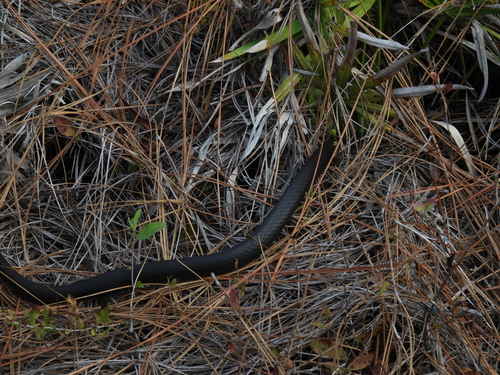
Coluber is a genus in the family Colubridae, the largest snake family in the world. As the family's name suggests, Coluber sits near the conceptual center of what a typical colubrid is: a slim, alert, fast-moving snake with smooth scales, large eyes, and no venom delivery system that matters to people. In our database the genus is represented by a single species, the North American Racer (Coluber constrictor), a familiar snake across much of the United States, southern Canada, and into Mexico and Central America.
Racers live up to the name. They are long and lean, often gray, black, blue, brown, or olive on the back with a paler belly, and they move quickly across open and edge habitats: fields, grasslands, brushy meadows, forest margins, marshes, and suburban lots. They hunt by sight and speed during the day, cruising with the head slightly raised rather than ambushing from cover. Despite the species name constrictor, racers do not truly constrict their prey the way pythons or kingsnakes do. They typically pin and overpower prey, swallowing small animals quickly. The diet is broad and includes insects, frogs, lizards, small snakes, rodents, and birds and their eggs.
Racers are harmless to people in the sense that they are non-venomous, but harmless does not mean docile. When cornered they can be defensive: they may vibrate the tail, strike repeatedly, and bite, and a bite can break skin and bleed without being dangerous. The best response to any wild snake is to leave it alone and give it room to escape, since it will almost always flee speed being its main defense. Racers reproduce by laying eggs, often in rotting wood, loose soil, or shared communal nest sites, with young hatching in late summer; juveniles are blotched and patterned and look quite different from the plain adults. If you are ever bitten by a snake you cannot confidently identify, clean the wound and seek medical advice, and in the United States you can call Poison Control at 1-800-222-1222 or contact local emergency services.
Coluber belongs to the Colubridae family (Colubrids). The largest snake family, and the one most snakes you meet belong to. Typically round pupils, a head only slightly wider than the neck, and no heat-sensing facial pit or rattle. Scales may be smooth and glossy or keeled and matte depending on the species.
Danger: Almost all colubrids are harmless. A small number are rear-fanged with medically significant venom, the boomslang and the twig (vine) snakes of Africa being the dangerous exceptions. Most colubrids will flee or bluff rather than bite.
All species (1)
Keep learning
- What Is a Snake? Anatomy and the BasicsA clear overview of what makes a snake a snake: limbless body plan, anatomy, evolution from lizards, species diversity, and why they are ectothermic.
- How Snakes Move, Hunt, and EatHow snakes move without legs, hunt as ambushers or active foragers, kill by constriction or venom, and swallow prey wider than their head.
- What Do Snakes Eat?All snakes are carnivores. Learn what snakes eat, how diet changes with size and age, how often they feed, and how they hunt and swallow prey.
- Venomous vs Nonvenomous: How to Tell the DifferenceThe folk rules for telling venomous snakes apart, where each one fails, and why location-based identification beats guessing by sight.