
Colubridae
Green Cat Snake
HarmlessBoiga cyanea
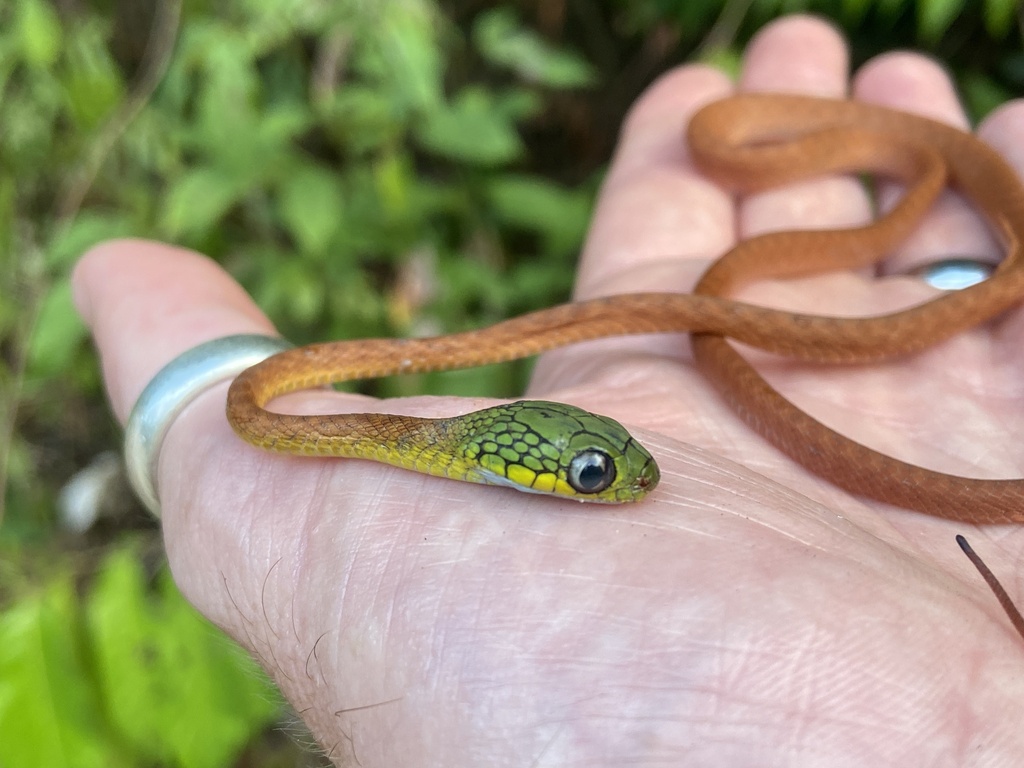
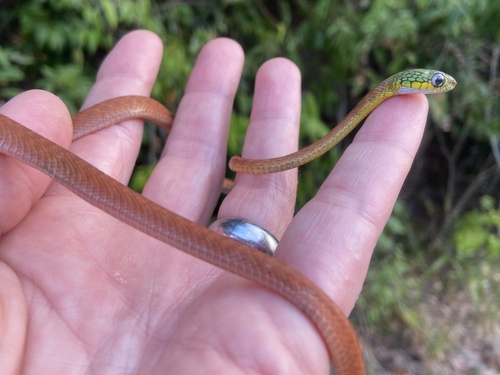
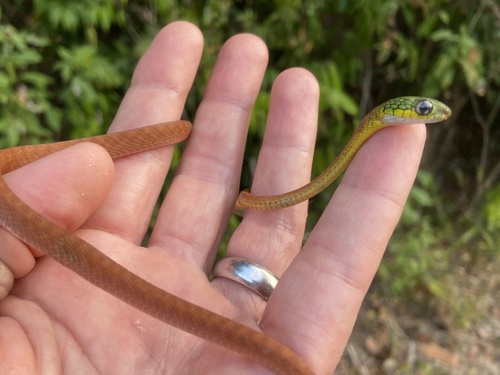
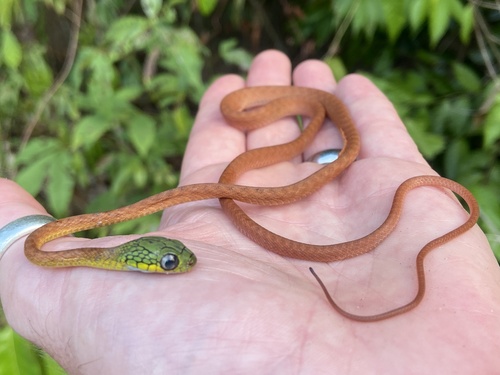
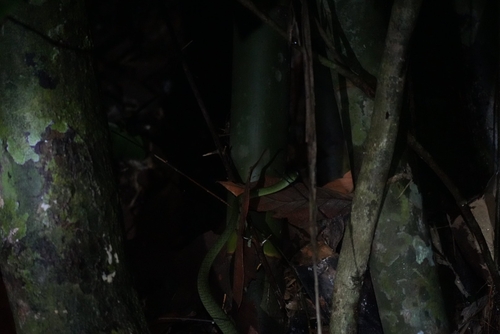
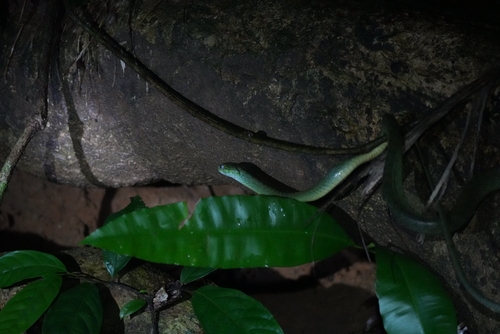
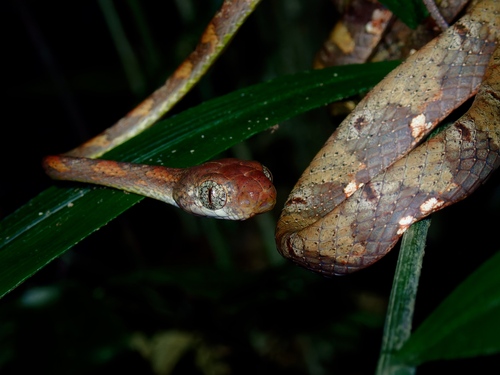
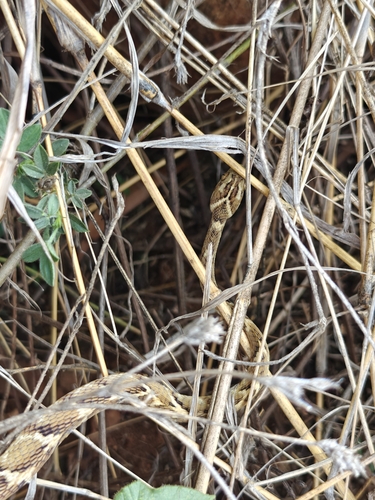
6 photographs of the Green Cat Snake. © John Witton.
The Green Cat Snake (Boiga cyanea) is a rear-fanged, mildly venomous snake in the Colubridae family, recorded in 15 countries.
- Family
- Colubridae
About the Green Cat Snake
Boiga cyanea, commonly known as the green cat snake, is a colubrid snake species found in South Asia, China and South-east Asia.
Description
Medium to large in length, slightly compressed, medium bodied snake with a moderately long tail. Head distinct from narrow neck with a rounded snout. Eyes large in size with vertically elliptical pupils. Dorsal scales smooth with single or double apical pits. Ventrals with a feeble lateral keels. Dorsal scale count usually 21 - 21 ( 23 ) - 15. Its long prehensile tail makes it purely arboreal.
Dorsal color uniform green or green mixed with grayish or bluish. Belly color greenish or yellowish white. Top of the head usually similar to dorsal color or sometimes of brownish tint. Upper lip color yellowish; most of head scaled margined with black. Eyes golden brown. Hatchlings are reddish brown with a green head. The color of the hatchlings starts to change after 8–9 months of age.
Length: Maximum: 190 cm. Common: 115 cm. (SVL. 87 cm.)
Distribution
The green cat snake found in Bangladesh, Bhutan, Cambodia, China (Yunnan- part), India (Sikkim, Darjeeling & Jalpaiguri, West Bengal, Assam, Arunachal Pradesh, Andaman & Nicobar Islands), Laos, Malaysia (West), Myanmar, Nepal, Thailand (incl. Phuket) and Vietnam.
Ecology
Habitat: Terrestrial & arboreal; inhabits primary and secondary forests, including montane zones, and can also be found at sea level in coastal forests.
Habit: Nocturnal. Occasionally seen on the ground searching for prey. Very mild disposition, sluggish, and makes no attempt to escape when approached or when handled. Difficult to provoke into striking. By day stays coiled up amongst tree branches, but by night actively hunts for prey.
Diet: Carnivorous; feeds mainly on lizards. Also takes frogs, birds, rodents and also other snakes. This rear fanged & mildly venomous snake can paralyze small prey. If threatened, it will become hostile and posture with a wide open mouth.
Reproduction: Oviparous; Eggs are laid approximately 42–50 days after mating and lays 7-14 eggs from late Winters to late Summers; incubation period approximately 85 days.
Medical significance
Bites by this species not expected to cause medically significant effects and the only risk, probably small, local secondary infection. Patients presenting with bites by these snakes do not require medical attention, other than to check for infection and ensure tetanus immune status. Patients should be advised to return if local symptoms develop, suggesting secondary infection. Bites unlikely to cause more than mild to moderate local swelling & pain, occasionally local bruising, paresthesia/numbness, erythema or bleeding, but no necrosis and no systemic effects. While most cases will be minor, not requiring admission, some cases will be more severe, requiring admission and treatment, so assess carefully before early discharge.
Adapted from Wikipedia, available under CC BY-SA.
Frequently asked: Green Cat Snake
- Is the Green Cat Snake venomous?
- The Green Cat Snake (Boiga cyanea) is rear-fanged and only mildly venomous. It is not considered dangerous to humans (its venom is weak and its fangs sit at the back of the mouth) but a bite can cause local swelling or irritation, so it should not be handled.
- Is the Green Cat Snake poisonous?
- Snakes are venomous, not poisonous. "Poisonous" means harmful to eat or touch; "venomous" means injecting toxins through a bite. The Green Cat Snake is neither poisonous nor venomous.
- Is the Green Cat Snake dangerous?
- The Green Cat Snake is not dangerous to humans. It has no medically significant venom and bites only defensively if cornered or handled.
- Where does the Green Cat Snake live?
- The Green Cat Snake has verified records in 15 countries, including Thailand, Viet Nam, Cambodia. See the distribution section below for its full range.
Where it is found
More Colubridae snakes
Classification
How scientists group this snake, from the broadest category down to the exact species. Each step narrows to its closest relatives.
- OrderThe broad group of scaled reptiles: all snakes and lizards
- Squamata
- FamilyA group of related snakes that share key traits
- Colubridae
- GenusA close-knit group of very similar species
- Boiga
- SpeciesThis exact snake, named in the two-part scientific name
- Boiga cyanea
Keep learning
- What to Do If You Find a SnakeFound a snake at home or on a trail? Here is how to stay calm, give it space, identify it safely, and know when to call a professional.
- Venomous vs Nonvenomous: How to Tell the DifferenceThe folk rules for telling venomous snakes apart, where each one fails, and why location-based identification beats guessing by sight.
- What Is a Snake? Anatomy and the BasicsA clear overview of what makes a snake a snake: limbless body plan, anatomy, evolution from lizards, species diversity, and why they are ectothermic.
- How to Keep Snakes Out of Your Yard and HomeA practical guide to keeping snakes out of your yard and home using habitat changes that work, plus what to skip and what to do if one shows up.
Distribution from GBIF & iNaturalist. Venom status per CDC. Background: Wikipedia. Informational only. Never handle a snake to identify it.