
Colubridae
Brown Tree Snake
HarmlessBoiga irregularis
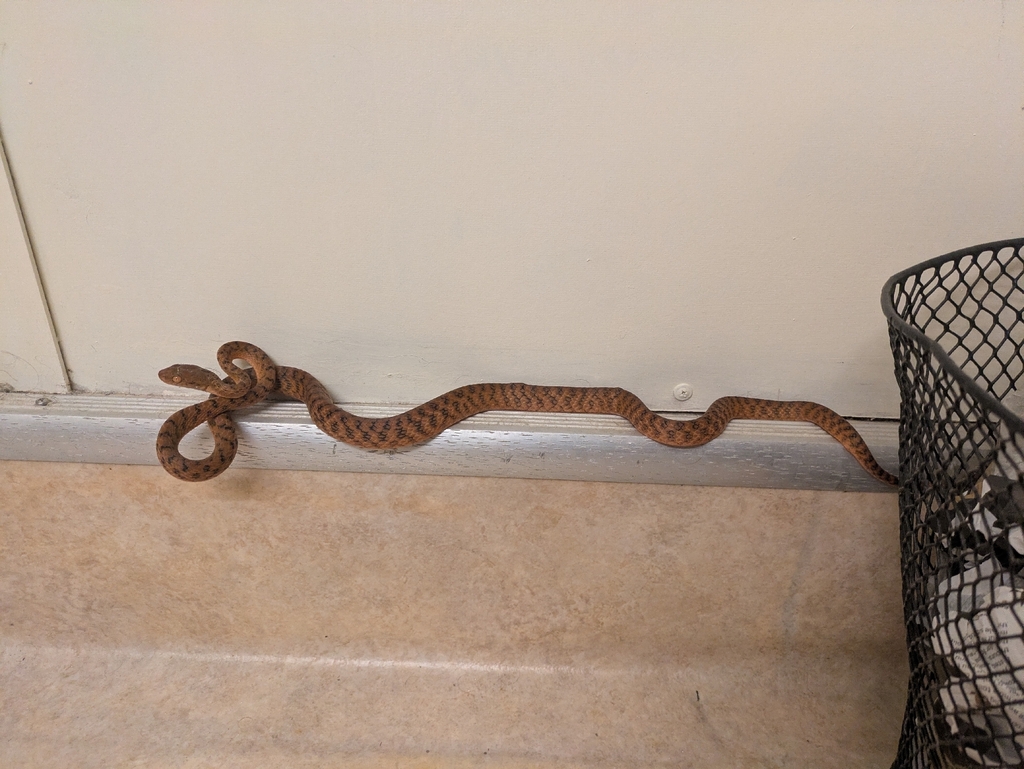
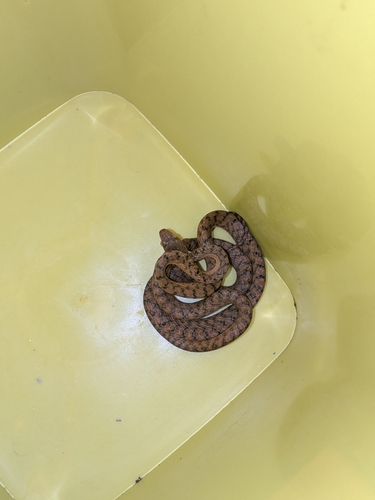
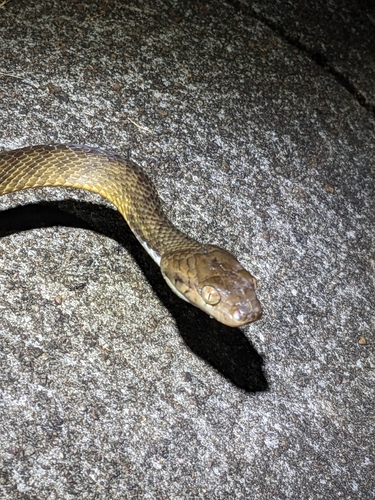
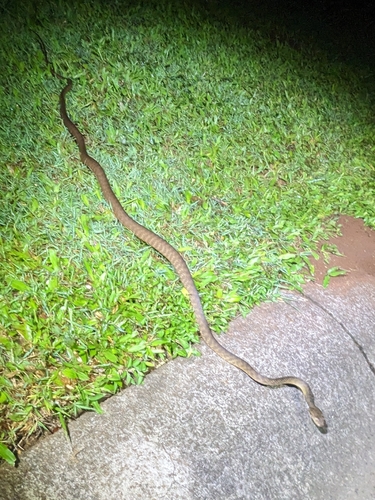
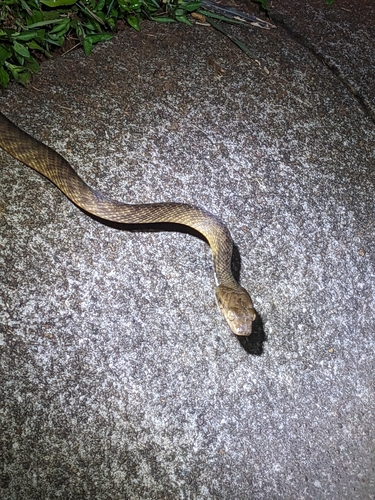
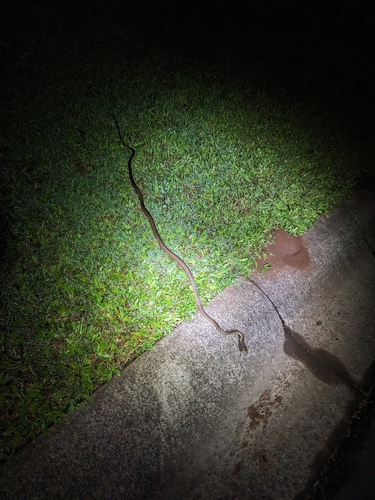
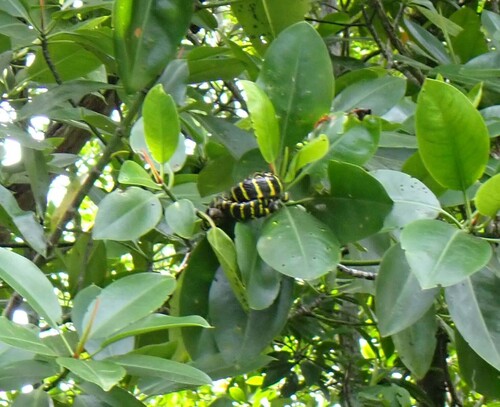
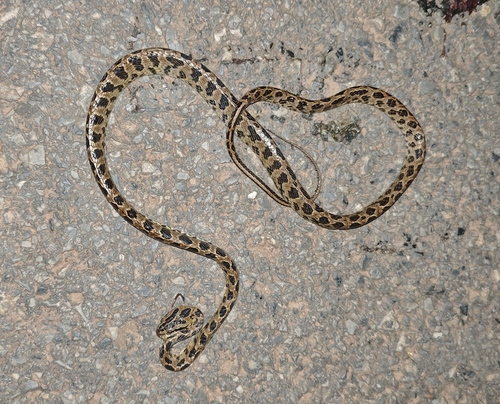
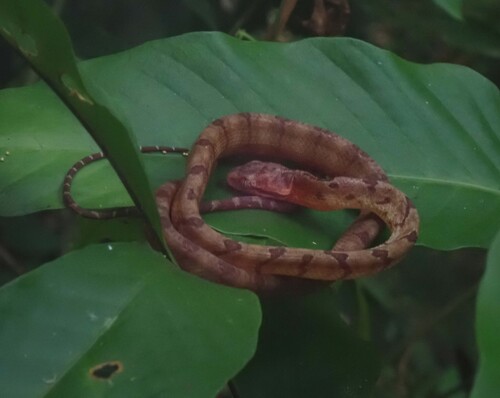
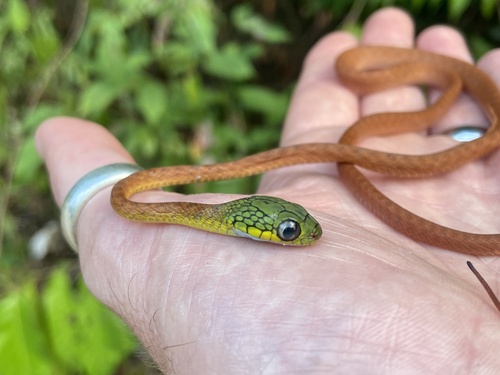
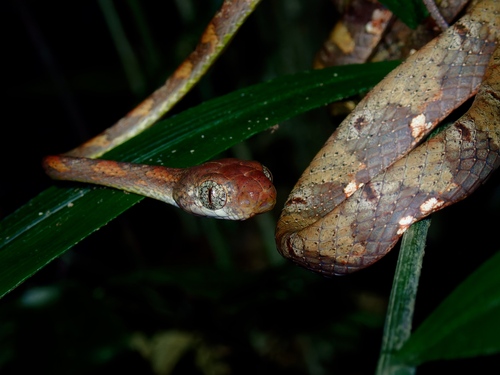
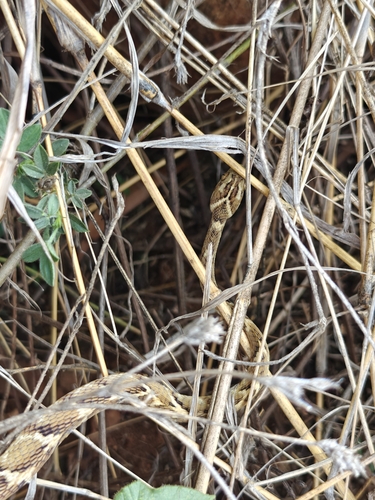
6 photographs of the Brown Tree Snake. © Damien O'Donnell.
The Brown Tree Snake (Boiga irregularis) is a rear-fanged, mildly venomous snake in the Colubridae family, recorded in 12 countries.
- Family
- Colubridae
About the Brown Tree Snake
The brown tree snake (Boiga irregularis), also known as the brown catsnake, is an arboreal rear-fanged colubrid snake native to eastern and northern coastal Australia, eastern Indonesia (Sulawesi to Papua), Papua New Guinea, and many islands in northwestern Melanesia. The snake is slender, which facilitates climbing, and can reach up to 2 metres in length. Its coloration may also vary, some being brown, green, or even red. Brown tree snakes prey on a wide range of animals, from invertebrates to birds and even some small mammals. It is one of the very few colubrids found in Australia, where elapids are more common. Due to an accidental introduction after the events of World War II, this snake is now infamous for being an invasive species responsible for extirpating the majority of the native bird population in Guam. Currently, efforts are being made to reduce and control the population on Guam and prevent the snake from spreading to other locations. Researchers are employing various methods, including aerial baiting, to attempt to control the population, while multiple agencies continue to fund and support the species' removal.
Description
The brown tree snake is a nocturnal, arboreal species that uses both visual and chemical cues when hunting, whether in the rainforest canopy or on the ground. It is a member of the subfamily Colubrinae, genus Boiga, which is a group of roughly twenty-five species that are referred to as "cat-eyed" snakes for their vertical pupils. The brown tree snake is generally 1–2 metres (3–7 ft) in length in its native range. The snake is long and slender, which facilitates its climbing ability and allows it to pass through tiny spaces in buildings, logs, and other shaded locations, where it seeks refuge during daylight. Variations in coloration occur in the snake's native range, from lightly patterned brown to yellowish/green or even beige, with red, saddle-shaped blotches. They are rear-fanged, have a large head in relation to their body, and can survive for extended periods of time without food. The median age of maturity for these snakes is estimated to be 3.1 years in males and 3.7 years in females.
Owing to the availability of prey and the lack of predators in introduced habitats such as Guam, they have been known to grow to larger sizes than their typical 1 to 2 m (3.3 to 6.6 ft) in length. The longest recorded length of this species is one found on Guam measuring 3 m (9.8 ft).
Distribution and habitat
The brown tree snake is native to coastal Australia, Papua New Guinea, and many islands in northwestern Melanesia. The species occurs on variably sized islands, extending from Sulawesi in eastern Indonesia through Papua New Guinea and the Solomon Islands and into the wettest coastal areas of Northern Australia. The snakes on Guam represent the only documented reproductive population outside the native range. Since January 2016, however, four snakes have been sighted on the island of Saipan in the Northern Mariana Islands.
Adapted from Wikipedia, available under CC BY-SA.
Frequently asked: Brown Tree Snake
- Is the Brown Tree Snake venomous?
- The Brown Tree Snake (Boiga irregularis) is rear-fanged and only mildly venomous. It is not considered dangerous to humans (its venom is weak and its fangs sit at the back of the mouth) but a bite can cause local swelling or irritation, so it should not be handled.
- Is the Brown Tree Snake poisonous?
- Snakes are venomous, not poisonous. "Poisonous" means harmful to eat or touch; "venomous" means injecting toxins through a bite. The Brown Tree Snake is neither poisonous nor venomous.
- Is the Brown Tree Snake dangerous?
- The Brown Tree Snake is not dangerous to humans. It has no medically significant venom and bites only defensively if cornered or handled.
- Where does the Brown Tree Snake live?
- The Brown Tree Snake has verified records in 12 countries, including Australia, Guam, Papua New Guinea. See the distribution section below for its full range.
- What does the Brown Tree Snake eat?
- In its native range, the brown tree snake preys upon birds, lizards, bats, and mice and other small rodents. Those of a smaller size focus on smaller prey such as frogs and lizards, while the larger individuals prey on larger vertebrates such as mammals and birds. The larger snakes are often seen shifting their diet towards endotherms rather than consuming ectotherms due to relative prey size. On Guam, this shift is prevalent because the island's prey is mostly larger ectotherms, such as lizards, which are the primary prey for smaller snakes and birds.
Where it is found
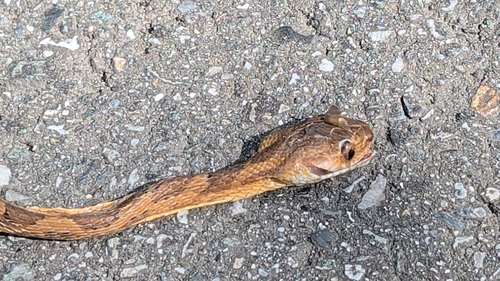
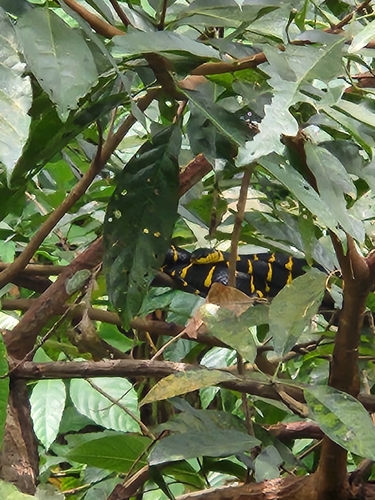
More Colubridae snakes
Classification
How scientists group this snake, from the broadest category down to the exact species. Each step narrows to its closest relatives.
- OrderThe broad group of scaled reptiles: all snakes and lizards
- Squamata
- FamilyA group of related snakes that share key traits
- Colubridae
- GenusA close-knit group of very similar species
- Boiga
- SpeciesThis exact snake, named in the two-part scientific name
- Boiga irregularis
Keep learning
- What to Do If You Find a SnakeFound a snake at home or on a trail? Here is how to stay calm, give it space, identify it safely, and know when to call a professional.
- Venomous vs Nonvenomous: How to Tell the DifferenceThe folk rules for telling venomous snakes apart, where each one fails, and why location-based identification beats guessing by sight.
- What Is a Snake? Anatomy and the BasicsA clear overview of what makes a snake a snake: limbless body plan, anatomy, evolution from lizards, species diversity, and why they are ectothermic.
- How to Keep Snakes Out of Your Yard and HomeA practical guide to keeping snakes out of your yard and home using habitat changes that work, plus what to skip and what to do if one shows up.
Distribution from GBIF & iNaturalist. Venom status per CDC. Background: Wikipedia. Informational only. Never handle a snake to identify it.