
Colubridae
Dog-toothed Cat Snake
HarmlessBoiga cynodon
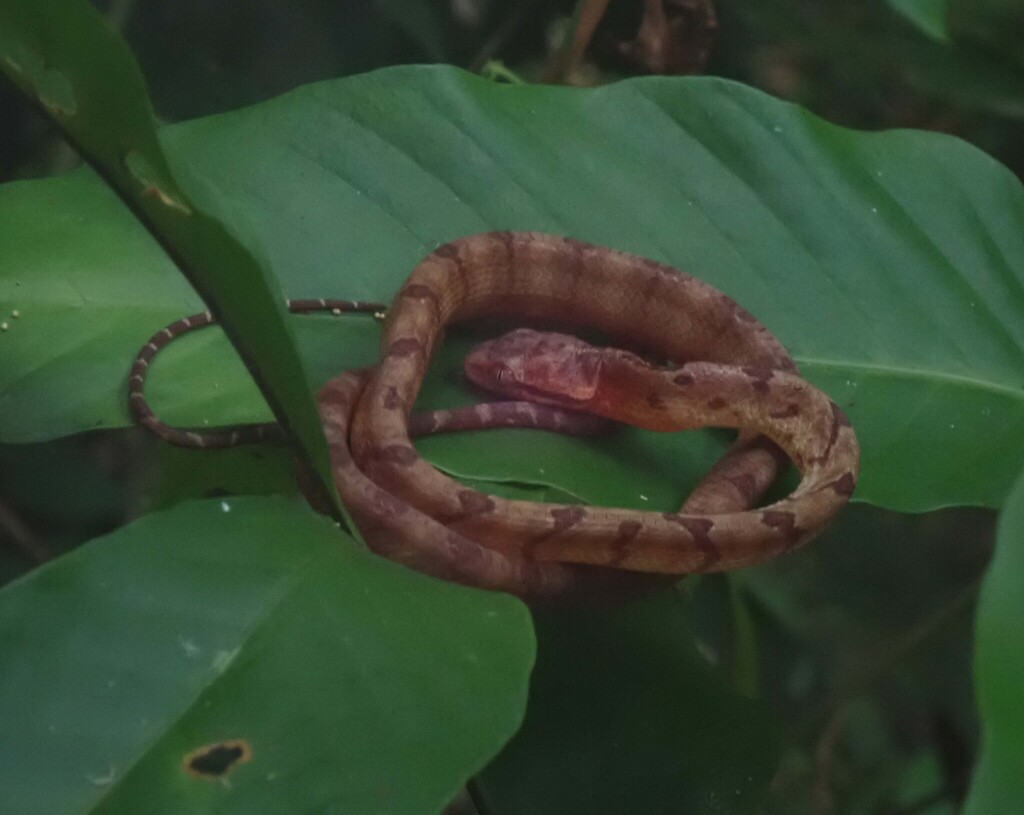
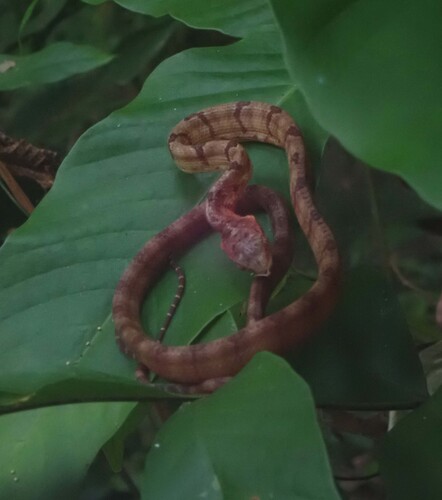
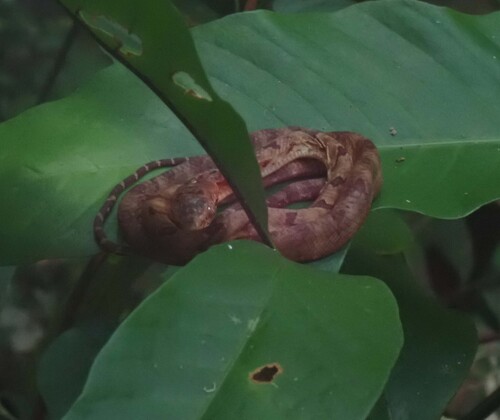
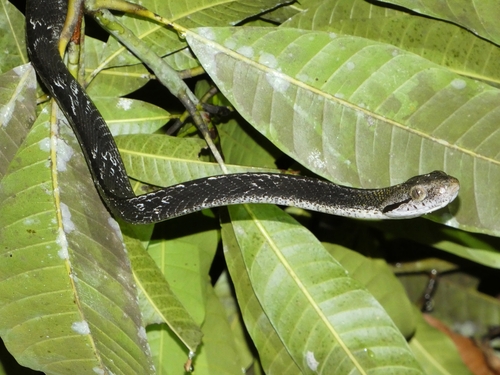
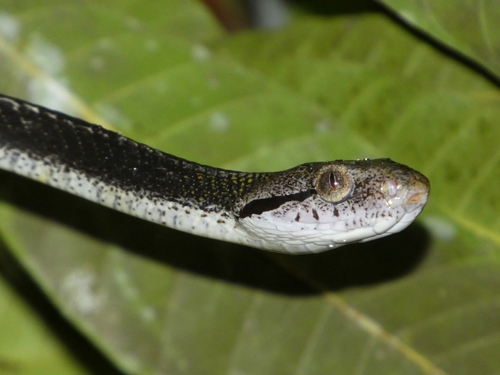
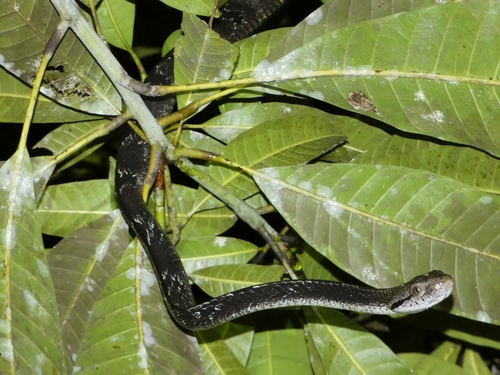
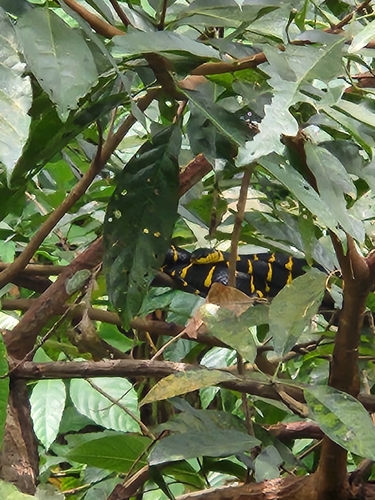
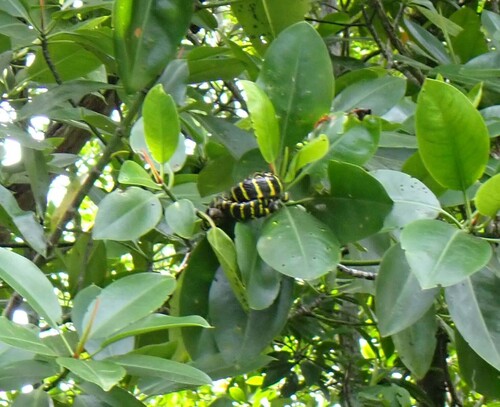
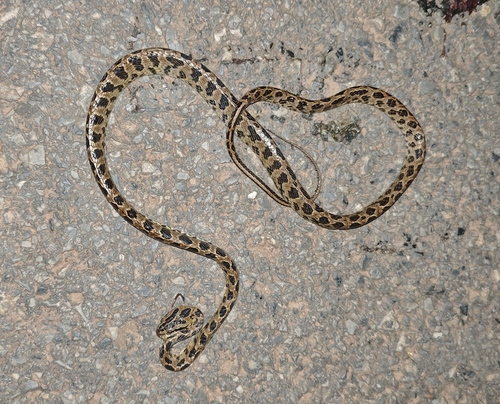
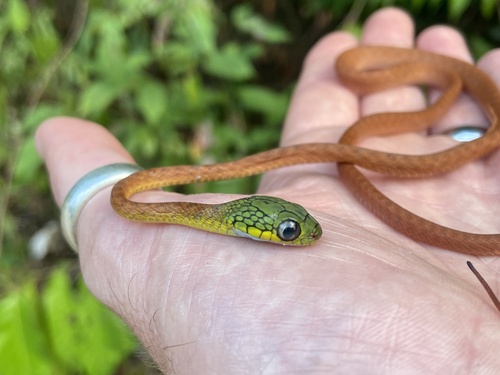
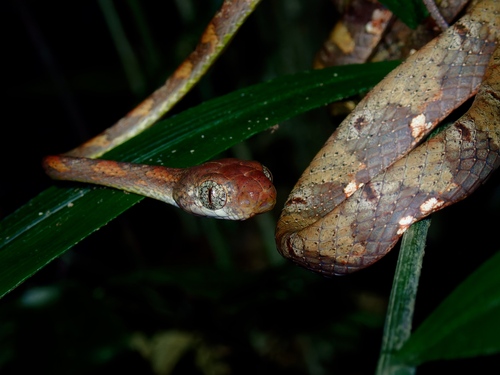
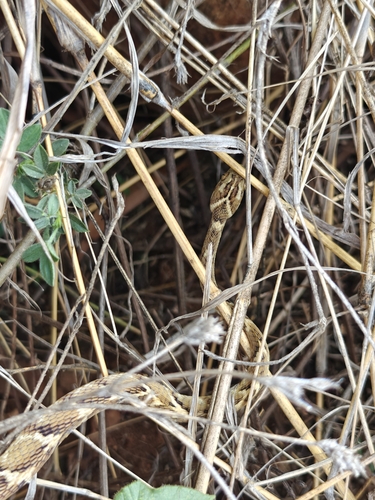
6 photographs of the Dog-toothed Cat Snake. © Andreas Manz.
The Dog-toothed Cat Snake (Boiga cynodon) is a rear-fanged, mildly venomous snake in the Colubridae family, recorded in 10 countries.
- Family
- Colubridae
About the Dog-toothed Cat Snake
Boiga cynodon, commonly known as the dog-toothed cat snake, is a nocturnal species of rear-fanged colubrid snake endemic to Asia.
Description
It is a large snake, reaching more than 2 m (6+1⁄2 ft) in total length. The front teeth of the upper jaw and the lower jaw are strongly enlarged. The anterior palatine teeth are significantly enlarged, while the posterior chin shields are larger than the anterior ones.
The dorsal scales are smooth and arranged in 23 or 33 rows at midbody, with the scales in the vertebral row being notably enlarged. The species has 248 to 290 ventral scales and 114 to 165 subcaudal scales.
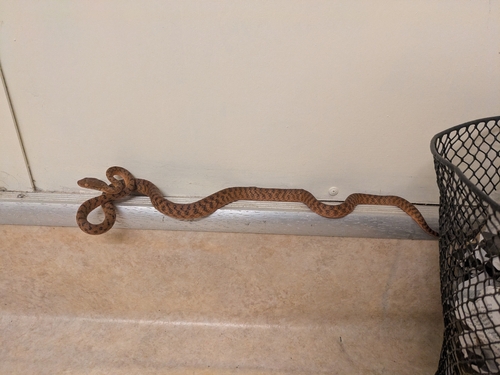
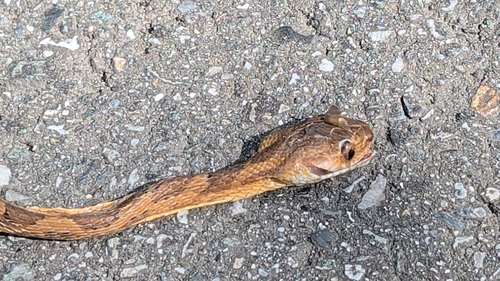
Boiga cynodon can be distinguished from other similar species by several key characteristics. It is slender and laterally compressed. Notably, it has a post-ocular stripe that is distinctly wavy or irregular, unlike the more even or nearly even upper and lower lines found in other similar species. Although coloration can vary, B. cynodon typically features a yellowish or pale reddish-brown dorsal coloration with dark brown or black transverse spots or crossbars. It also has a dark postocular streak of irregular thickness on each side of the head, and its belly is yellowish, sometimes uniformly colored or marbled with brown.
A black color variation has been reported to be found in Indonesian populations.
This species may possess a potent neurotoxic venom; however, the effects have shown to be reversible with neostigmine, suggesting that envenomation from this species is treatable with anticholinesterase therapy.
Diet
It feeds mainly upon small vertebrates such as birds and bird eggs but may also take lizards and small bats.
It has been noted that the dog-toothed cat snake hunts by pursuing and overpowering prey, using both the jaws and tail to immobilize.
Reproduction
Boiga cynodon is an oviparous species, with sexually mature females laying eggs, 6-12 per clutch. Mean egg length is reported as 52mm, while mean width is reported as 24.6mm. Eggs within a clutch often adhere to each other, and offspring have been observed to create a slit from the inside of the egg one day before emerging.
In this species, it is suspected that improper incubation temperature and/or humidity can result in the death of embryos or the emergence of young with spinal deformities.
Habitat
The dog-toothed cat snake is found in a wide range of habitats, from primary and secondary forest to cultivated areas, rural gardens and urban areas. It is often found in coconut plantations. In forested areas, it is known to live in the canopy.
On the island of Bali, Indonesia, the snake is relatively abundant in secondary forests and gardens, especially in locations where trees and bushes grow over rivers and streams. The presence of juveniles in these habitats suggests successful breeding in disturbed areas, though it is also possible that the snakes are taking refuge in the remaining patches of relatively undisturbed riverine habitats that border cultivated land.
Adapted from Wikipedia, available under CC BY-SA.
Frequently asked: Dog-toothed Cat Snake
- Is the Dog-toothed Cat Snake venomous?
- The Dog-toothed Cat Snake (Boiga cynodon) is rear-fanged and only mildly venomous. It is not considered dangerous to humans (its venom is weak and its fangs sit at the back of the mouth) but a bite can cause local swelling or irritation, so it should not be handled.
- Is the Dog-toothed Cat Snake poisonous?
- Snakes are venomous, not poisonous. "Poisonous" means harmful to eat or touch; "venomous" means injecting toxins through a bite. The Dog-toothed Cat Snake is neither poisonous nor venomous.
- Is the Dog-toothed Cat Snake dangerous?
- The Dog-toothed Cat Snake is not dangerous to humans. It has no medically significant venom and bites only defensively if cornered or handled.
- Where does the Dog-toothed Cat Snake live?
- The Dog-toothed Cat Snake has verified records in 10 countries, including Malaysia, Philippines, Indonesia. See the distribution section below for its full range.
- What does the Dog-toothed Cat Snake eat?
- It feeds mainly upon small vertebrates such as birds and bird eggs but may also take lizards and small bats. It has been noted that the dog-toothed cat snake hunts by pursuing and overpowering prey, using both the jaws and tail to immobilize.
Where it is found
More Colubridae snakes
Classification
How scientists group this snake, from the broadest category down to the exact species. Each step narrows to its closest relatives.
- OrderThe broad group of scaled reptiles: all snakes and lizards
- Squamata
- FamilyA group of related snakes that share key traits
- Colubridae
- GenusA close-knit group of very similar species
- Boiga
- SpeciesThis exact snake, named in the two-part scientific name
- Boiga cynodon
Keep learning
- What to Do If You Find a SnakeFound a snake at home or on a trail? Here is how to stay calm, give it space, identify it safely, and know when to call a professional.
- Venomous vs Nonvenomous: How to Tell the DifferenceThe folk rules for telling venomous snakes apart, where each one fails, and why location-based identification beats guessing by sight.
- What Is a Snake? Anatomy and the BasicsA clear overview of what makes a snake a snake: limbless body plan, anatomy, evolution from lizards, species diversity, and why they are ectothermic.
- How to Keep Snakes Out of Your Yard and HomeA practical guide to keeping snakes out of your yard and home using habitat changes that work, plus what to skip and what to do if one shows up.
Distribution from GBIF & iNaturalist. Venom status per CDC. Background: Wikipedia. Informational only. Never handle a snake to identify it.