
Genus · Colubridae
Types of cat snakes
30+ species make up the genus Boiga, the snakes commonly called cat snakes. None are considered dangerous to humans.
About cat snakes
Cat snakes are slender, big-eyed, rear-fanged colubrids of the Old World tropics, named for the vertical, cat-like pupils that mark them as night hunters.
Boiga is a genus of rear-fanged snakes in the family Colubridae, the largest and most diverse snake family. The common name cat snake comes from the vertical, slit-shaped pupil that contracts in bright light much like a cat's eye, a hallmark of nocturnal predators. With 30+ species in our database, Boiga is a large and well-studied group spread across the Old World tropics, and it is one of the better-known examples of mildly venomous, rear-fanged colubrids.
The genus ranges widely across South Asia, Southeast Asia, southern China, the Indonesian and Philippine archipelagos, Australia, and parts of sub-Saharan Africa. Most cat snakes are arboreal, living in trees, shrubs, and vine tangles, and many are equally at home in forest, mangrove, plantation, and garden settings. Their climbing lifestyle and tolerance for disturbed habitat means they are often found near human dwellings, including inside roofs, sheds, and outbuildings where geckos and birds are easy to find.
Cat snakes are recognizable as a group by a combination of traits: a large, distinct head that is clearly wider than the slim neck, large eyes with vertical pupils, and a long, strongly compressed body well suited to moving through branches. Coloration varies widely between species, from plain browns and grays to bold bands, blotches, and rings in yellows, oranges, and blacks. Many species are slender and ribbon-like in build. The Brown Tree Snake is the most infamous member, notorious as an invasive species that devastated native bird populations on Guam after being accidentally introduced.
On venom and safety, cat snakes are rear-fanged and mildly venomous. They carry enlarged, grooved teeth at the back of the upper jaw and a Duvernoy's gland that produces a venom used to subdue small prey. For most healthy adults a bite typically causes only local effects such as swelling, redness, and pain, and serious envenomation of humans is uncommon because the fangs sit far back and venom delivery to people is inefficient. Even so, mildly venomous is not the same as harmless, reactions can vary between individuals, and a bite from a rear-fanged snake can be more significant than expected. Never assume a wild snake is safe to pick up, do not handle a snake you cannot positively identify, and if anyone is bitten, treat it as a medical emergency and call US Poison Control at 1-800-222-1222 or your local emergency services.
Ecologically, cat snakes are mostly nocturnal, arboreal hunters. Their diet centers on lizards, especially geckos, along with birds and their eggs, bats, frogs, and small mammals, and the rear fangs and mild venom help them control active prey in the trees. Like the great majority of colubrids, Boiga species are egg-layers that produce clutches of several eggs. They tend to be alert and can be defensive if cornered, raising the forebody, gaping, and striking, but they rely first on climbing, hiding, and fleeing rather than confrontation.
Boiga belongs to the Colubridae family (Colubrids). The largest snake family, and the one most snakes you meet belong to. Typically round pupils, a head only slightly wider than the neck, and no heat-sensing facial pit or rattle. Scales may be smooth and glossy or keeled and matte depending on the species.
Danger: Almost all colubrids are harmless. A small number are rear-fanged with medically significant venom, the boomslang and the twig (vine) snakes of Africa being the dangerous exceptions. Most colubrids will flee or bluff rather than bite.
All species (35)
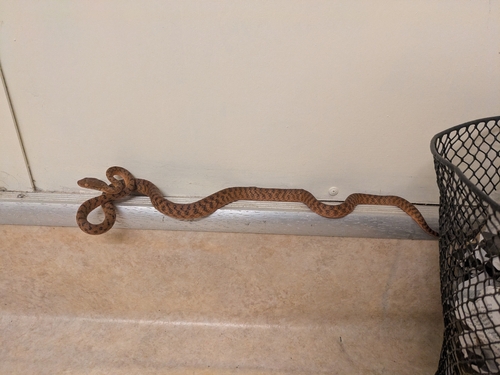 Brown Tree SnakeBoiga irregularisHarmless
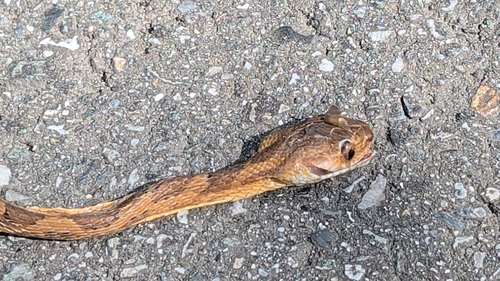 Kelung Cat SnakeBoiga kraepeliniHarmless
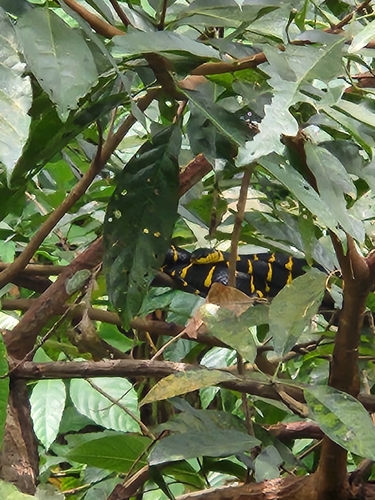 Western Mangrove Cat SnakeBoiga melanotaHarmless
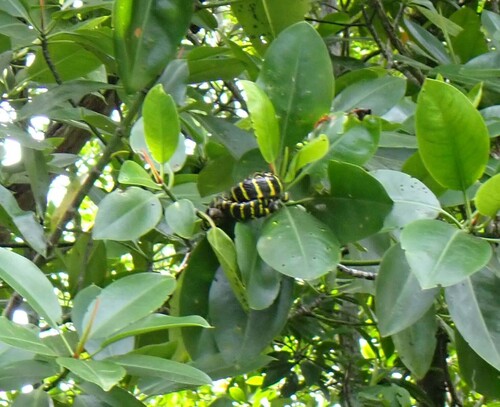 Gold-ringed Cat SnakeBoiga dendrophilaHarmless
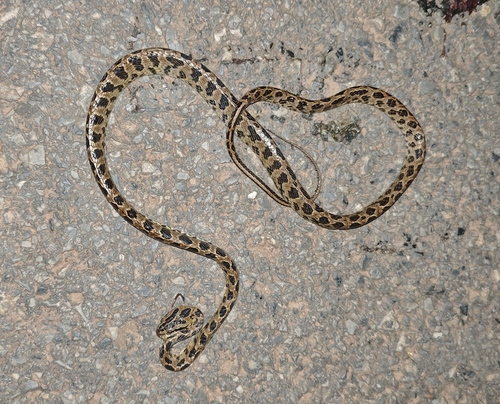 Many-spotted Cat SnakeBoiga multomaculataHarmless
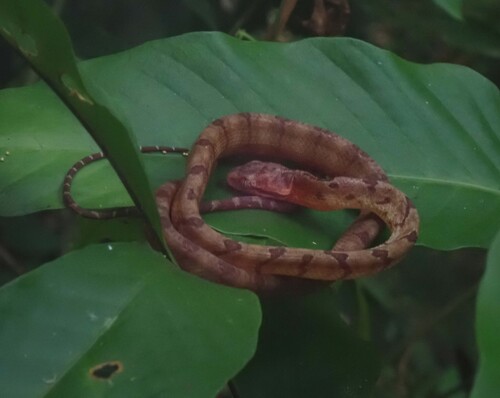 Dog-toothed Cat SnakeBoiga cynodonHarmless
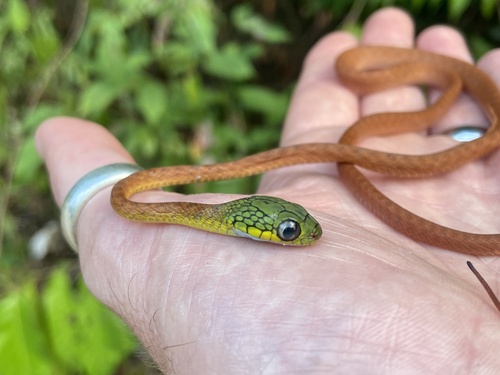 Green Cat SnakeBoiga cyaneaHarmless
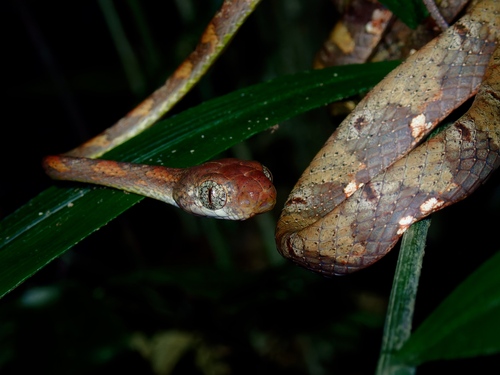 White-spotted Cat SnakeBoiga drapieziiHarmless
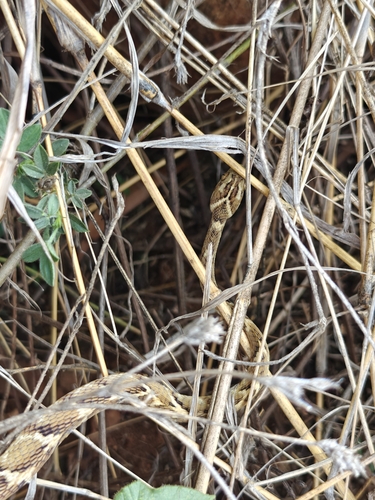 Common Cat SnakeBoiga trigonataHarmless
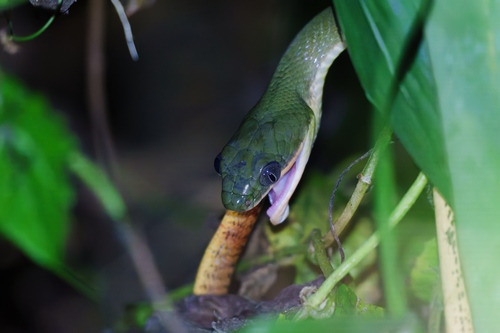 Black-headed Cat SnakeBoiga nigricepsHarmless
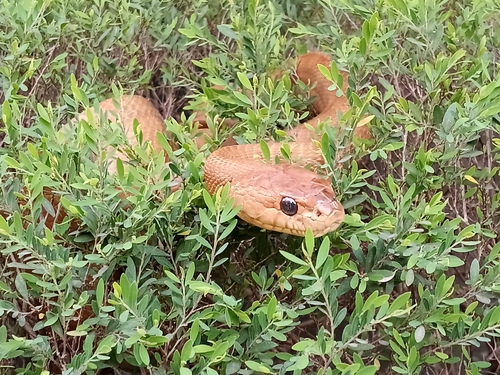 Forsten's Cat SnakeBoiga forsteniHarmless
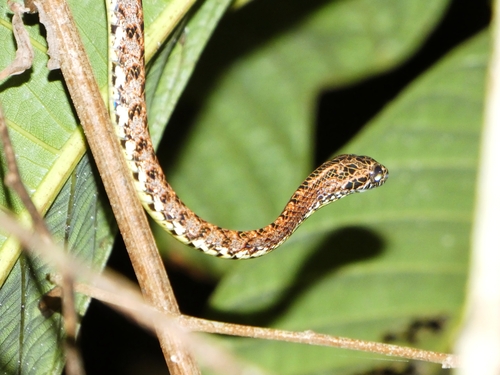 Jasper Cat SnakeBoiga jaspideaHarmless
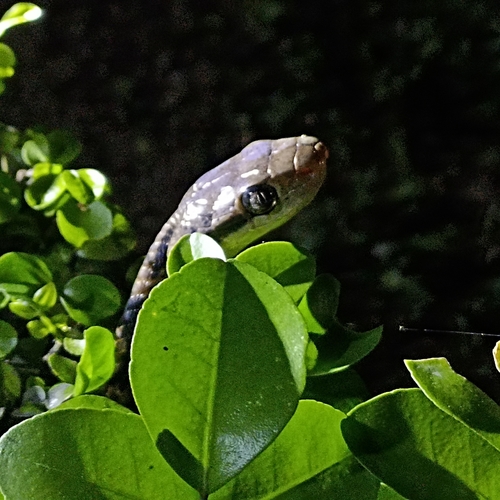 Eyed Cat SnakeBoiga siamensisHarmless
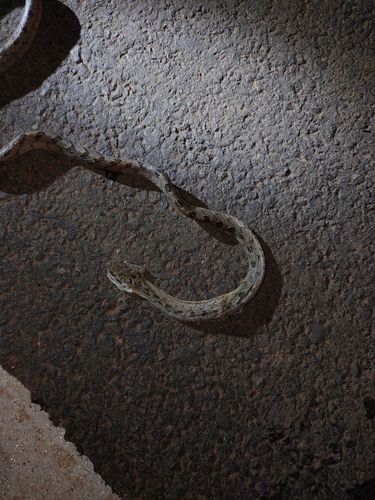 Collared Cat SnakeBoiga nuchalisHarmless
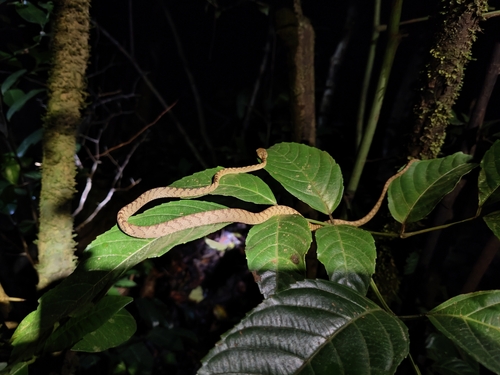 Beddome's Cat SnakeBoiga beddomeiHarmless
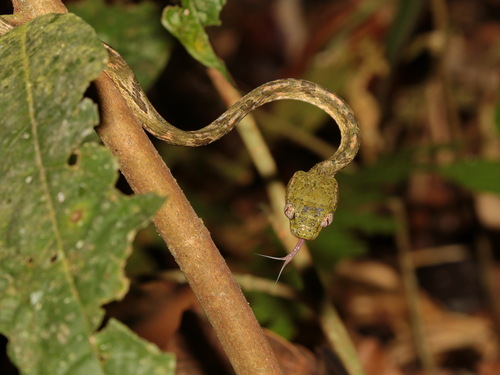 Green-headed Cat SnakeBoiga bengkuluensisHarmless
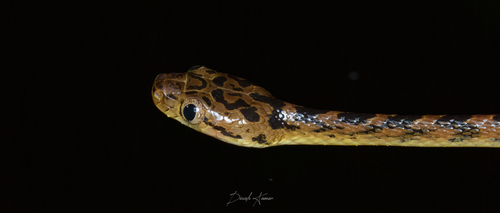 Thackeray's cat snakeBoiga thackerayiHarmless
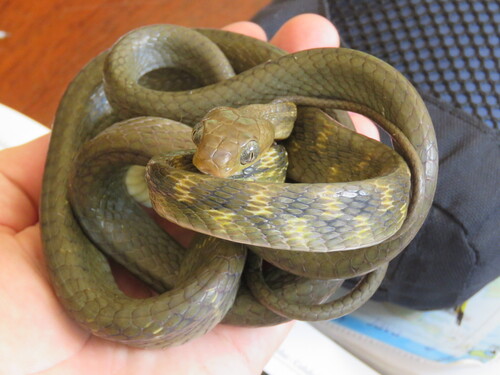 Guangxi cat snakeBoiga guangxiensisHarmless
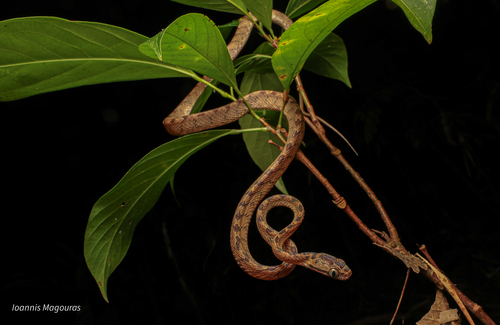 Sri Lanka Cat SnakeBoiga ceylonensisHarmless
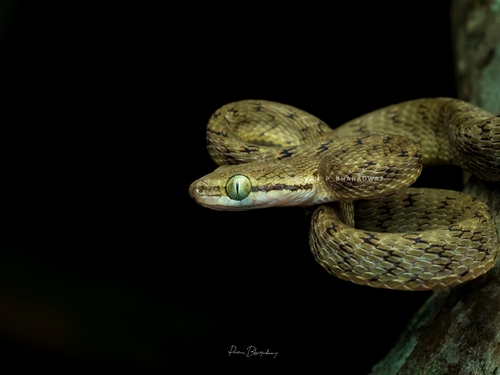 Yellow-green Cat SnakeBoiga flaviviridisHarmless
 Barnes' Cat SnakeBoiga barnesiiHarmless
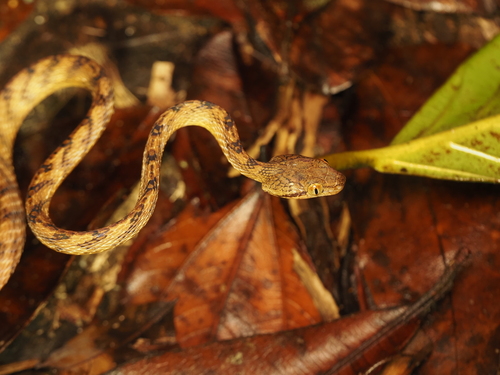 Ranawana's Cat SnakeBoiga ranawaneiHarmless
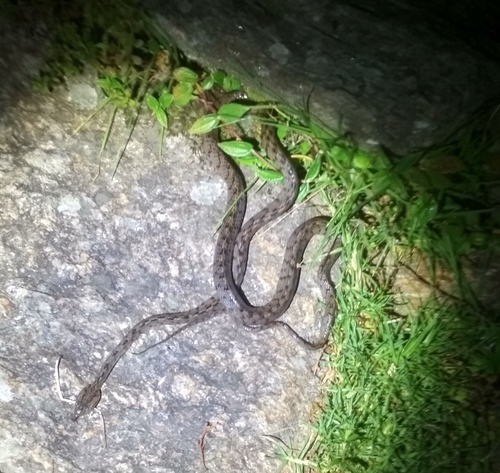 Many-banded Cat SnakeBoiga multifasciataHarmless
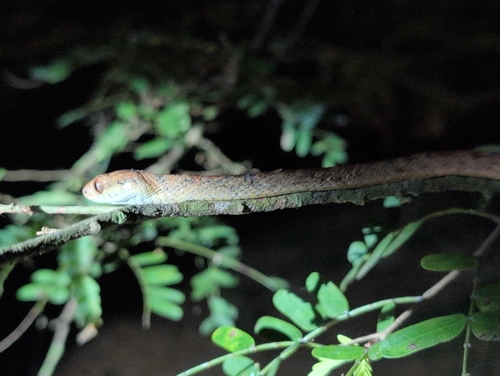 Andaman Cat SnakeBoiga andamanensisHarmless
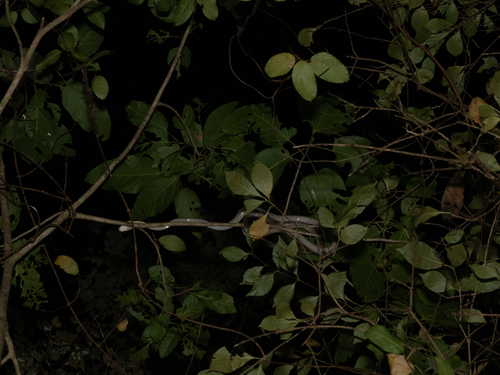 Lesser Sundas Cat SnakeBoiga hoeseliHarmless
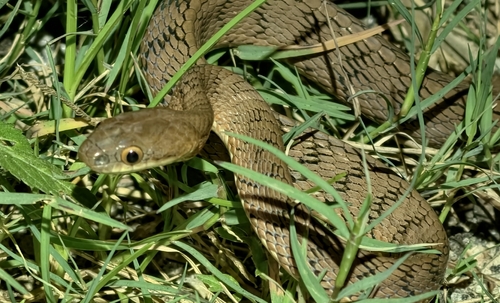 Stoliczka's Asian Cat SnakeBoiga stoliczkaeHarmless
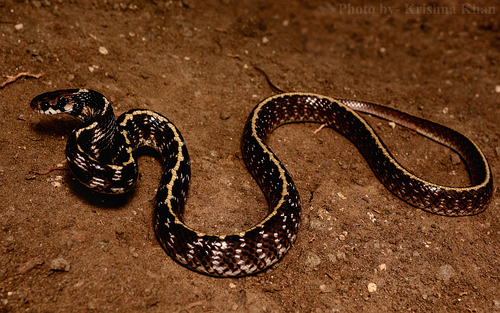 Indian Egg-eaterBoiga westermanniHarmless
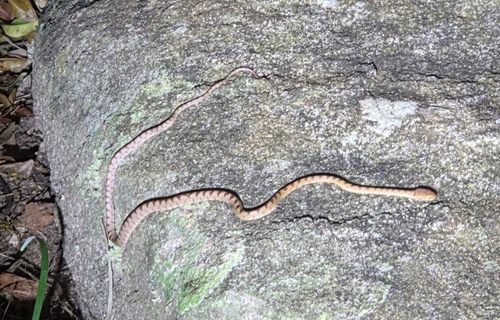 Pirmad Cat SnakeBoiga dightoniHarmless
 Arrowback Tree SnakeBoiga gocoolHarmless
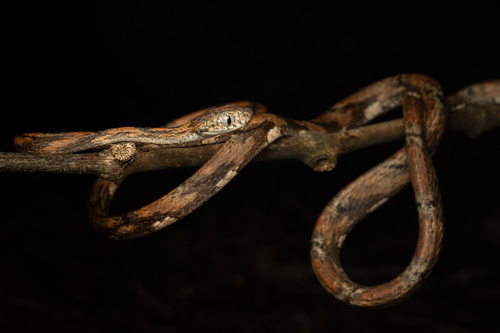 Philippine Blunt-headed Tree SnakeBoiga angulataHarmless
 Boiga quincunciataHarmless
 Nicobar Cat SnakeBoiga wallachiHarmless
 Philippine Cat SnakeBoiga philippinaHarmless
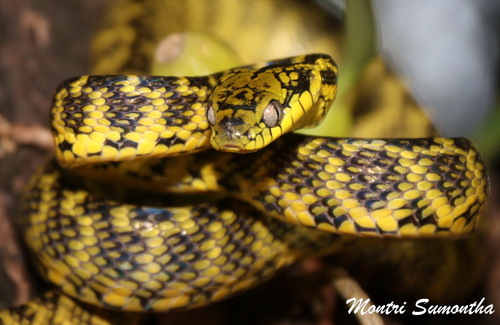 Banded Cat SnakeBoiga saengsomiHarmless
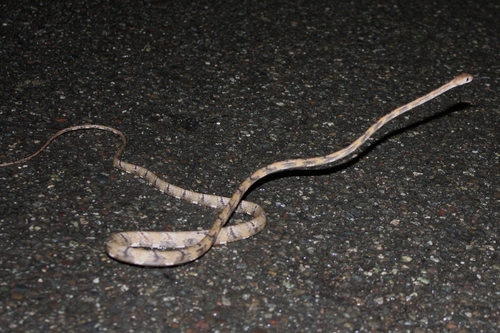 White-spotted Cat SnakeBoiga schultzeiHarmless
Keep learning
- What Is a Snake? Anatomy and the BasicsA clear overview of what makes a snake a snake: limbless body plan, anatomy, evolution from lizards, species diversity, and why they are ectothermic.
- How Snakes Move, Hunt, and EatHow snakes move without legs, hunt as ambushers or active foragers, kill by constriction or venom, and swallow prey wider than their head.
- What Do Snakes Eat?All snakes are carnivores. Learn what snakes eat, how diet changes with size and age, how often they feed, and how they hunt and swallow prey.
- Venomous vs Nonvenomous: How to Tell the DifferenceThe folk rules for telling venomous snakes apart, where each one fails, and why location-based identification beats guessing by sight.