
Colubridae
Collared Dwarf Snake
HarmlessEirenis collaris
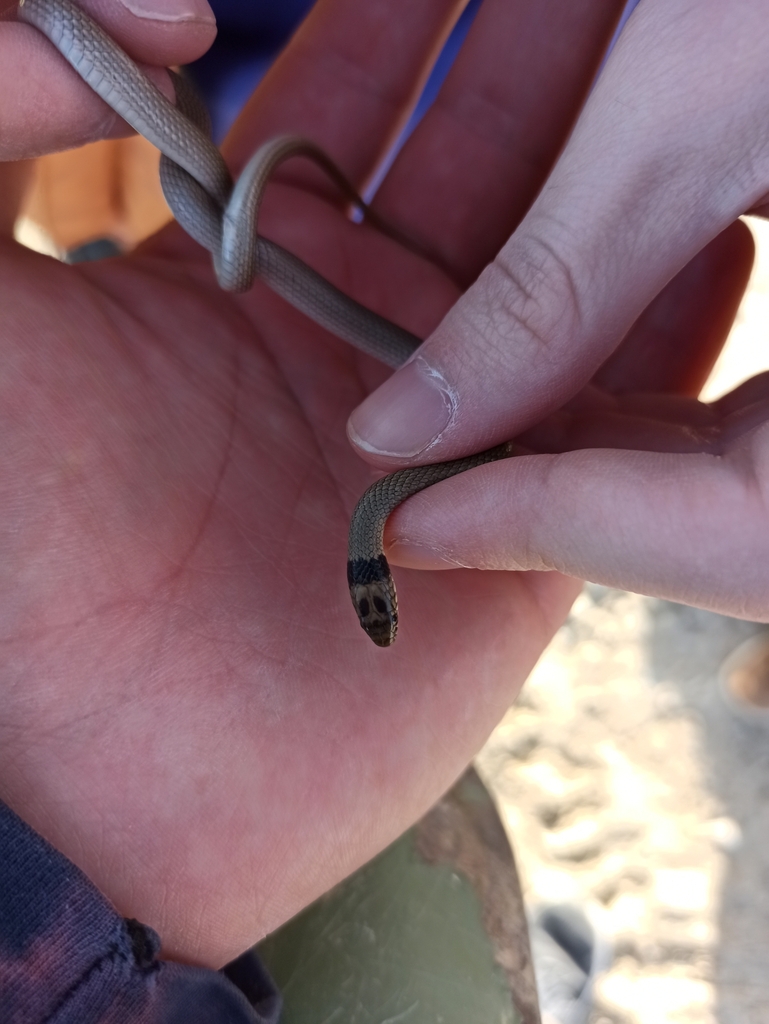
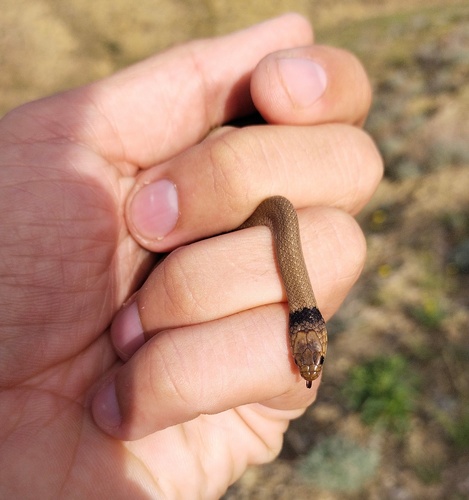
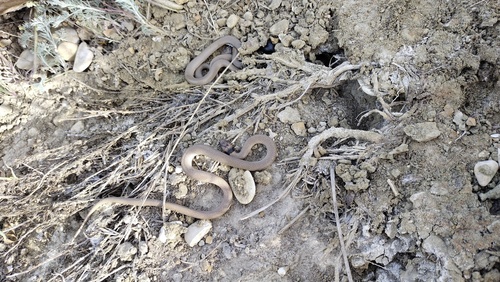
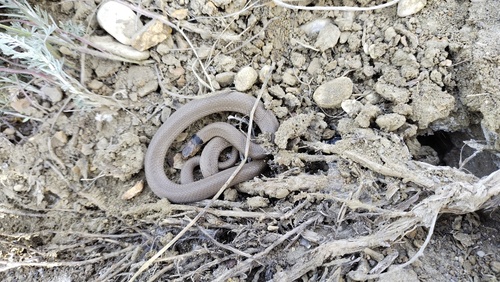
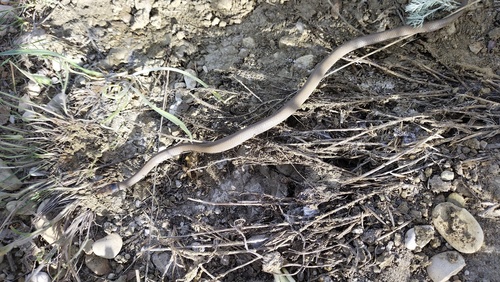
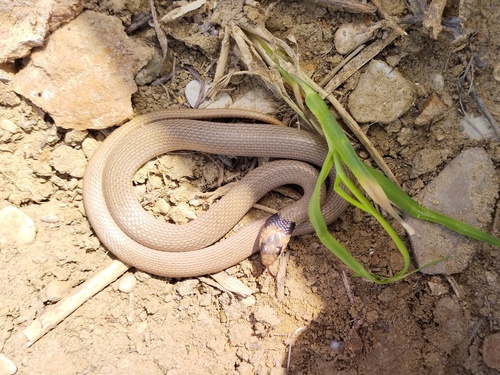
6 photographs of the Collared Dwarf Snake. © Qədirov Hüseyn.
The Collared Dwarf Snake (Eirenis collaris) is a non-venomous snake in the Colubridae family, recorded in 14 countries.
- Family
- Colubridae
About the Collared Dwarf Snake
Eirenis collaris, the collared dwarf racer or collared dwarf snake, is a species of non-venomous snake in the family Colubridae. The species is found in West Asia in eastern Turkey, the Caucasus (the range thus marginally extending into Europe), Iraq, and Iran. The Reptile Database also lists it from Lebanon and Bulgaria.
History and taxonomy
The species was first described as Coluber collaris by Édouard Ménétries in 1832, who wrote "I caught this beautiful species under rocks near the Bèchebermak, not far from the Caspian Sea, in July". The type locality is Besh Barmag, Azerbaijan.
Jan and Sordelli published the first drawings of the specimens they collected in 1866. The nomenclature has been fairly stable.
Anatomy and physiology
The collared dwarf racer is recognized by the 15 to 19 rows of unkeeled dorsal scales on its back. They are roughly 30 to 40 centimeters in size; in the original description, Ménétries wrote "Elle est de la grosseur d'une plume d'ote" ("It is the size of a goose feather").
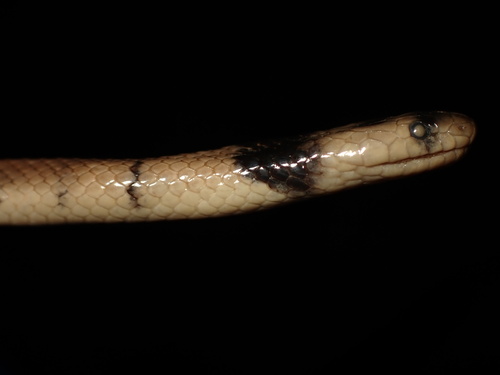
The overall color is a golden brown (Ménétries called it "café-au-lait") with a dark brown or black collar encircling the neck.
Sexual dimorphism
In 2014, 33 specimens of collared dwarf racer were measured based on head and tail length to examine differences in sexual dimorphism. The results showed that male snakes had longer tails, whereas females has larger heads, presumably an adaptation allowing them to prey on larger organisms, which is useful for obtaining additional nutrients needed for reproduction.
Distribution and habitat
The collared dwarf snake typically lives in dry, rocky plains with vegetation that thrives in arid conditions. They live in mountainous areas and are often found close to water.
Behaviors and diet
The collared dwarf snake is a carnivorous species that devours its prey whole. They feed particularly on insects, as well as on spiders and small lizards. Snakes in the genus Eirenis are known to be agile hunters that will climb in order to find and feed on prey.
Adapted from Wikipedia, available under CC BY-SA.
Frequently asked: Collared Dwarf Snake
- Is the Collared Dwarf Snake venomous?
- No. The Collared Dwarf Snake (Eirenis collaris) is non-venomous and is not considered dangerous to humans. Like most snakes, it will retreat rather than bite when given the chance.
- Is the Collared Dwarf Snake poisonous?
- Snakes are venomous, not poisonous. "Poisonous" means harmful to eat or touch; "venomous" means injecting toxins through a bite. The Collared Dwarf Snake is neither poisonous nor venomous.
- Is the Collared Dwarf Snake dangerous?
- The Collared Dwarf Snake is not dangerous to humans. It has no medically significant venom and bites only defensively if cornered or handled.
- Where does the Collared Dwarf Snake live?
- The Collared Dwarf Snake has verified records in 14 countries, including Israel, Russian Federation, Iran (Islamic Republic of). See the distribution section below for its full range.
- What does the Collared Dwarf Snake eat?
- The collared dwarf snake is a carnivorous species that devours its prey whole. They feed particularly on insects, as well as on spiders and small lizards. Snakes in the genus Eirenis are known to be agile hunters that will climb in order to find and feed on prey.
Where it is found
More Colubridae snakes
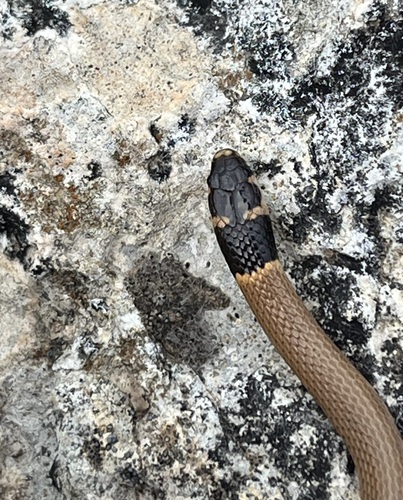 Roth's Dwarf SnakeEirenis rothii
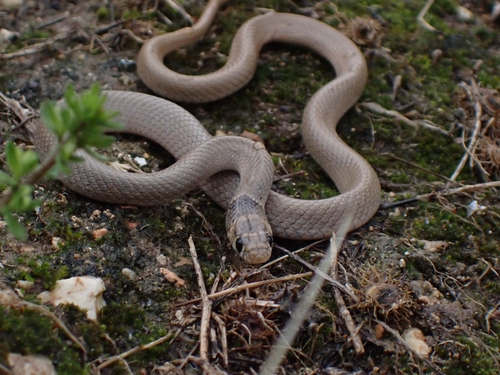 Ring-Headed Dwarf SnakeEirenis modestus
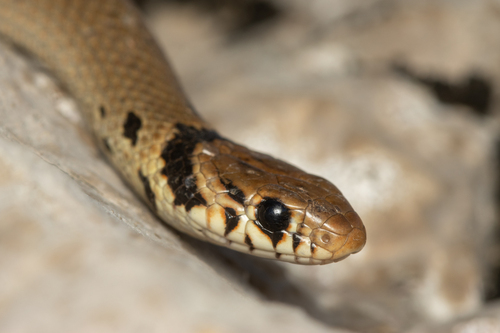 Levantine Dwarf SnakeEirenis levantinus
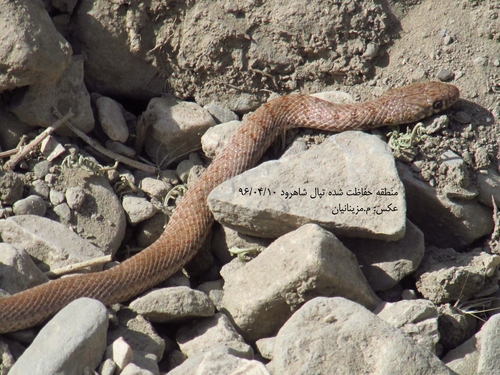 Dotted Dwarf SnakeEirenis punctatolineatus
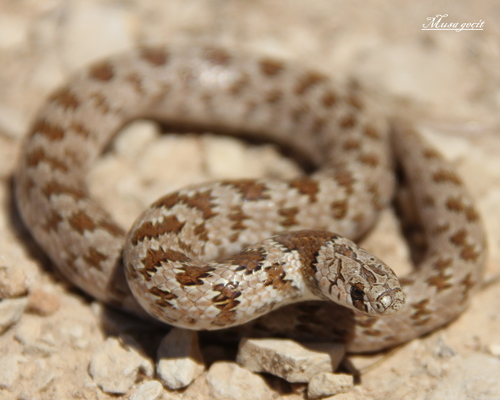 Spotted Line Dwarf SnakeEirenis lineomaculatus
 Narrow-striped Dwarf SnakeEirenis decemlineatus
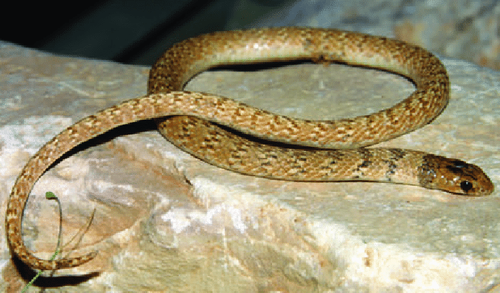 Crowned Dwarf RacerEirenis coronella
 Dark-headed Dwarf RacerEirenis persicus
Classification
How scientists group this snake, from the broadest category down to the exact species. Each step narrows to its closest relatives.
- OrderThe broad group of scaled reptiles: all snakes and lizards
- Squamata
- FamilyA group of related snakes that share key traits
- Colubridae
- GenusA close-knit group of very similar species
- Eirenis
- SpeciesThis exact snake, named in the two-part scientific name
- Eirenis collaris
Keep learning
- What to Do If You Find a SnakeFound a snake at home or on a trail? Here is how to stay calm, give it space, identify it safely, and know when to call a professional.
- Venomous vs Nonvenomous: How to Tell the DifferenceThe folk rules for telling venomous snakes apart, where each one fails, and why location-based identification beats guessing by sight.
- What Is a Snake? Anatomy and the BasicsA clear overview of what makes a snake a snake: limbless body plan, anatomy, evolution from lizards, species diversity, and why they are ectothermic.
- How to Keep Snakes Out of Your Yard and HomeA practical guide to keeping snakes out of your yard and home using habitat changes that work, plus what to skip and what to do if one shows up.
Distribution from GBIF & iNaturalist. Venom status per CDC. Background: Wikipedia. Informational only. Never handle a snake to identify it.