
Lamprophiidae
Cape File Snake
HarmlessLimaformosa capensis
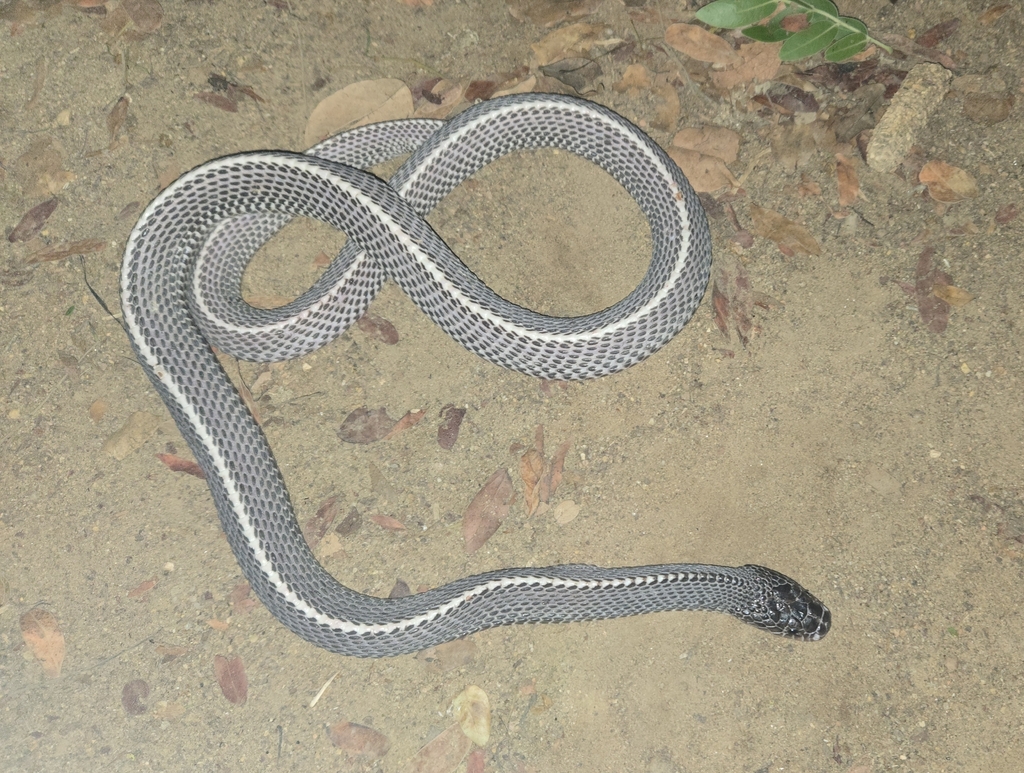
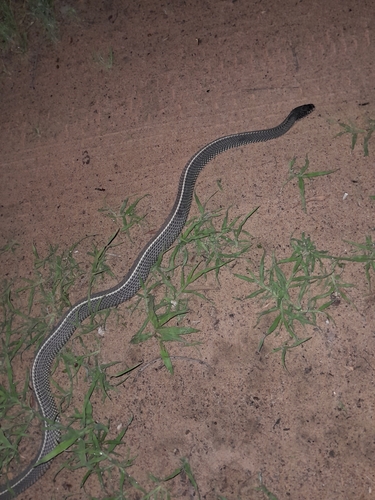
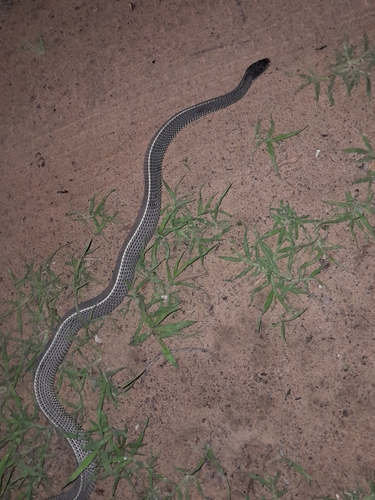
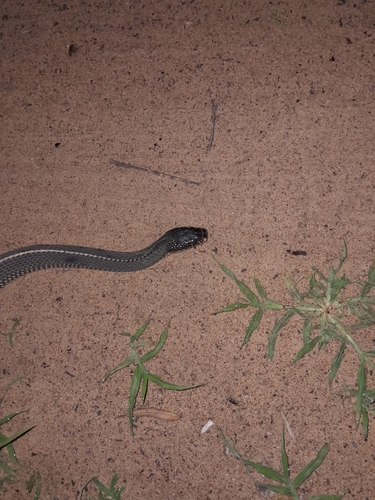
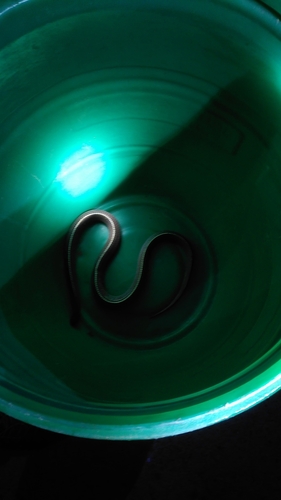
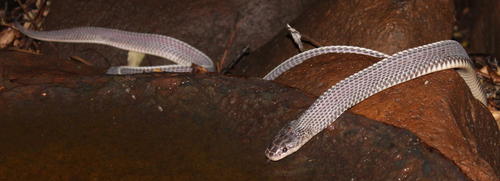
6 photographs of the Cape File Snake. © Dan Lee.
The Cape File Snake (Limaformosa capensis) is a non-venomous snake in the Lamprophiidae family, recorded in 18 countries.
- Family
- Lamprophiidae
About the Cape File Snake
The Cape file snake (Limaformosa capensis) is a species of medium-sized, non-venomous snake endemic to Africa, belonging to the family Lamprophiidae.
Geographic range
L. capensis is found from Natal northwards through the former Transvaal and Zimbabwe, and westwards to the Caprivi Strip and Namibia, thence northwards to Cameroon and Somalia.
Description
L. capensis is a medium to large snake. With an average total length (including tail) of about 120 centimetres (3 ft 11 in), specimens of 165 cm (5 ft 5 in) total length have been recorded. It has a very flat head, and its body is strikingly triangular in cross-section.
The Cape file snake's dorsal scales are strongly keeled with extensive pink-purple bare skin between the scales. Its colour is mostly grey to grey-brown, but occasionally dark olive to purple-brown. The prominent vertebral stripe is white to yellow, while the belly is ivory white to cream.
The dorsal scales, in addition to the strong primary keel, have secondary keels and tubercles, but no apical pits. The dorsal scales are arranged in 15 rows at midbody (in 17 rows on the neck). The ventrals number 203-241. The anal plate is undivided. The subcaudals number 45-61, and are divided (in two rows).
Habitat
The preferred natural habitats of L. capensis are shrubland, savanna, and coastal forest, at altitudes from sea level to 1,500 m (4,900 ft).
Diet
Though it is not venomous, the Cape file snake is a highly successful predator of other snakes, easily following a scent trail and apparently immune to all venom. It also preys on small vertebrates.
Defense
Rarely attempting to bite when captured, L. capensis may defecate in self-defence.
Reproduction
L. capensis is oviparous. In the summer, an adult female may lay one or two clutches of eggs. Clutch size varies from 5-13. The eggs are large, 47–55 mm (about 2 inches) long, by 20–31 mm (about 1 inch) wide. Each hatchling is 39–42 cm (about 16 inches) in total length (including tail).
Adapted from Wikipedia, available under CC BY-SA.
Frequently asked: Cape File Snake
- Is the Cape File Snake venomous?
- No. The Cape File Snake (Limaformosa capensis) is non-venomous and is not considered dangerous to humans. Like most snakes, it will retreat rather than bite when given the chance.
- Is the Cape File Snake poisonous?
- Snakes are venomous, not poisonous. "Poisonous" means harmful to eat or touch; "venomous" means injecting toxins through a bite. The Cape File Snake is neither poisonous nor venomous.
- Is the Cape File Snake dangerous?
- The Cape File Snake is not dangerous to humans. It has no medically significant venom and bites only defensively if cornered or handled.
- Where does the Cape File Snake live?
- The Cape File Snake has verified records in 18 countries, including South Africa, Zimbabwe, Zambia. See the distribution section below for its full range.
- What does the Cape File Snake eat?
- Though it is not venomous, the Cape file snake is a highly successful predator of other snakes, easily following a scent trail and apparently immune to all venom. It also preys on small vertebrates.
Where it is found
More Lamprophiidae snakes
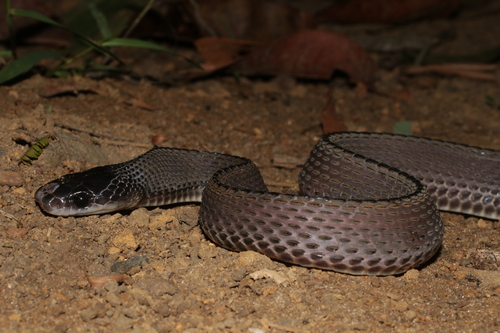 Central African Forest File SnakeLimaformosa savorgnani
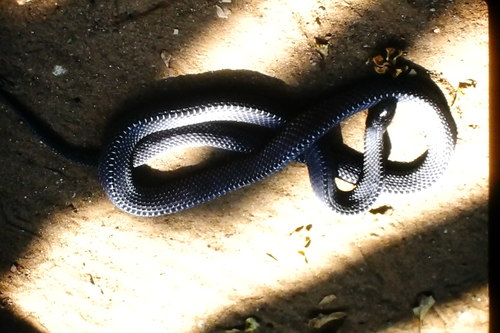 Unicolor File SnakeLimaformosa chanleri
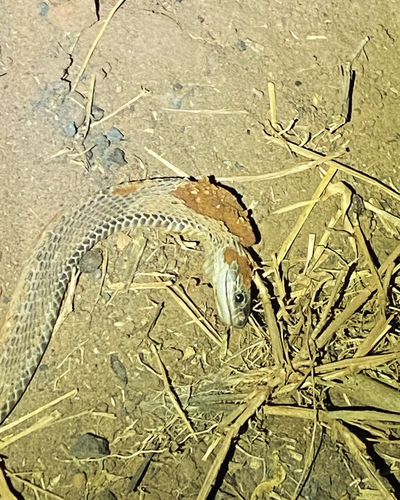 African File SnakeLimaformosa crossi
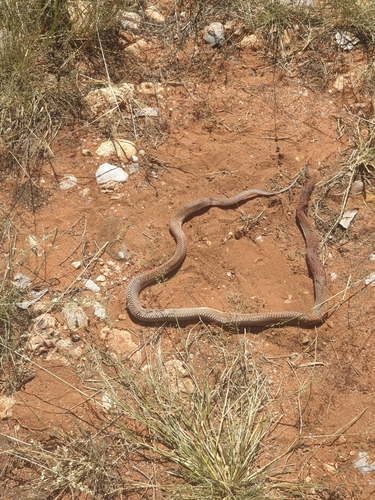 Angola File SnakeLimaformosa vernayi
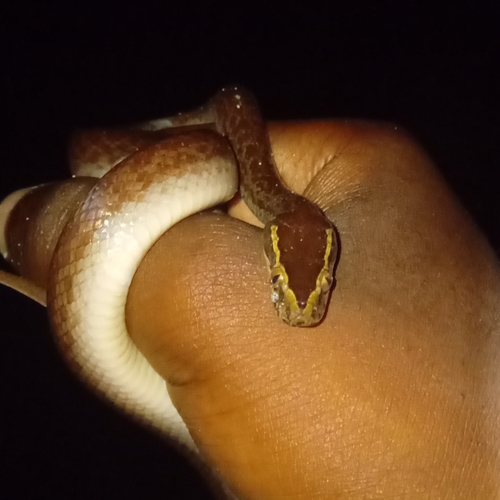 Cape House SnakeBoaedon capensis
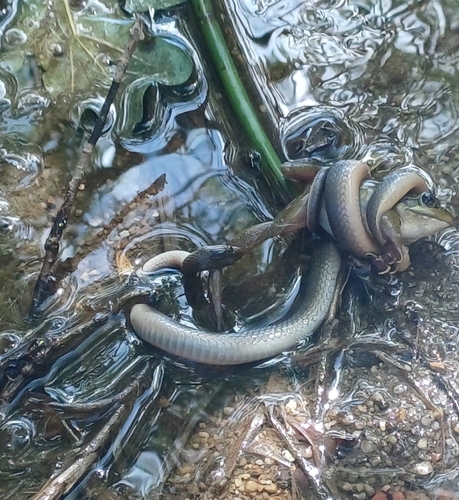 Common Brown Water SnakeLycodonomorphus rufulus
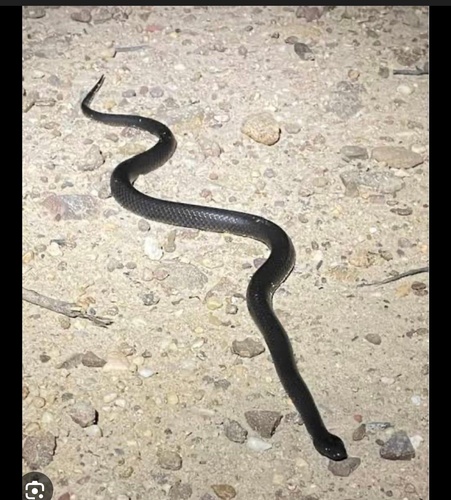 Cape Wolf SnakeLycophidion capense
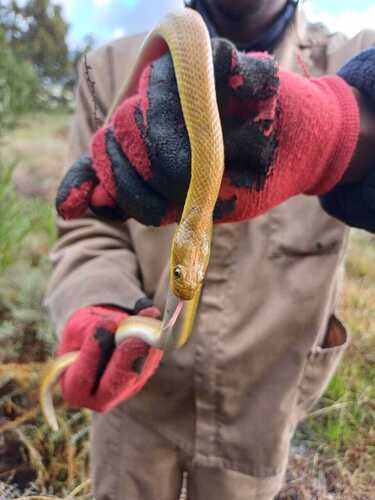 Aurora House SnakeLamprophis aurora
Classification
How scientists group this snake, from the broadest category down to the exact species. Each step narrows to its closest relatives.
- OrderThe broad group of scaled reptiles: all snakes and lizards
- Squamata
- FamilyA group of related snakes that share key traits
- Lamprophiidae
- GenusA close-knit group of very similar species
- Limaformosa
- SpeciesThis exact snake, named in the two-part scientific name
- Limaformosa capensis
Keep learning
- What to Do If You Find a SnakeFound a snake at home or on a trail? Here is how to stay calm, give it space, identify it safely, and know when to call a professional.
- Venomous vs Nonvenomous: How to Tell the DifferenceThe folk rules for telling venomous snakes apart, where each one fails, and why location-based identification beats guessing by sight.
- What Is a Snake? Anatomy and the BasicsA clear overview of what makes a snake a snake: limbless body plan, anatomy, evolution from lizards, species diversity, and why they are ectothermic.
- How to Keep Snakes Out of Your Yard and HomeA practical guide to keeping snakes out of your yard and home using habitat changes that work, plus what to skip and what to do if one shows up.
Distribution from GBIF & iNaturalist. Venom status per CDC. Background: Wikipedia. Informational only. Never handle a snake to identify it.