
Pythonidae
Water Python
HarmlessLiasis fuscus
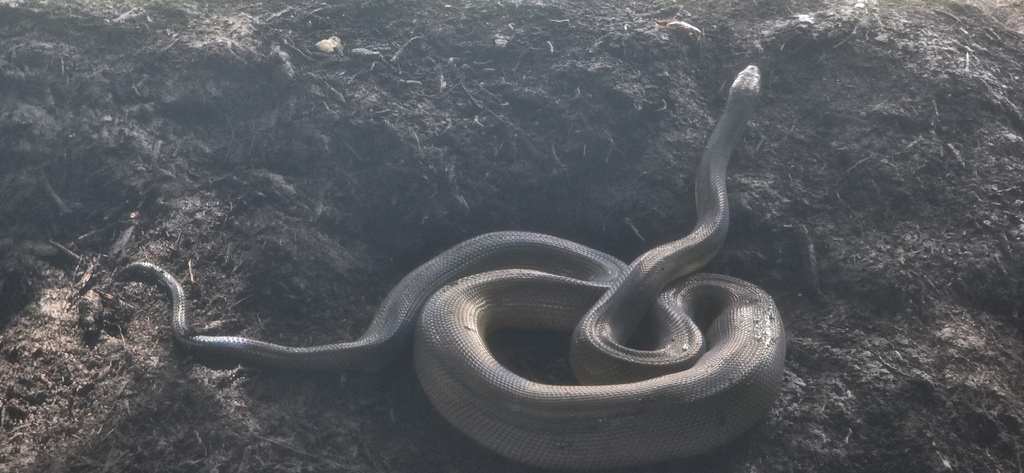
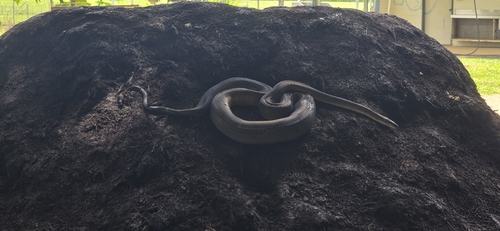
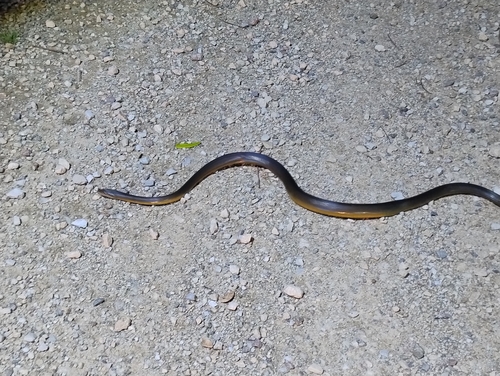
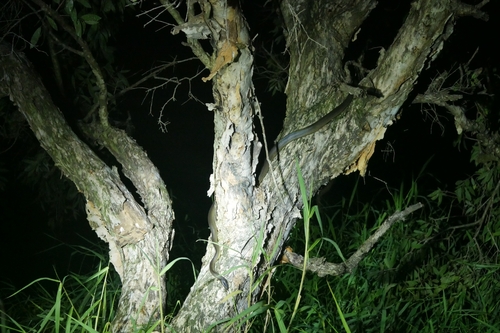
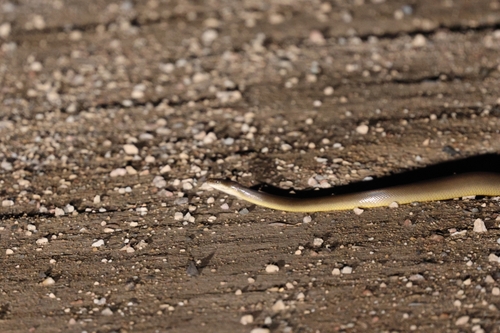
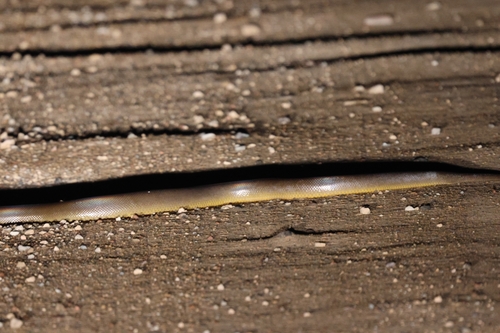
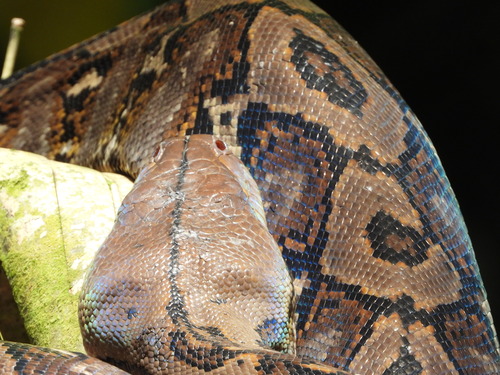
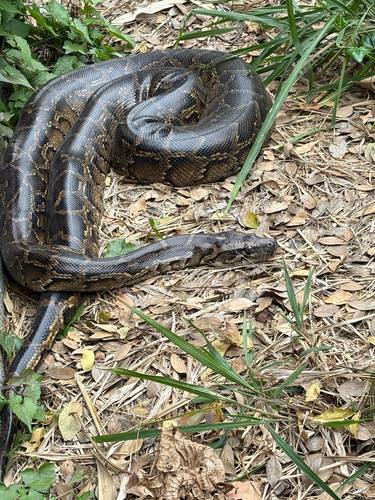
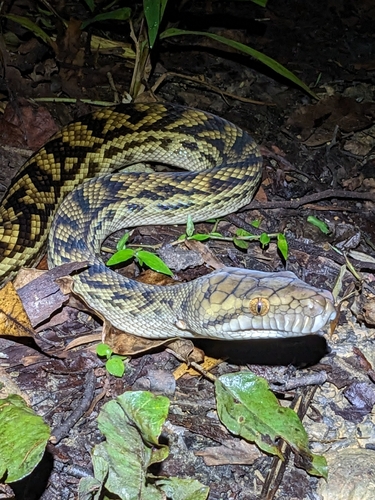
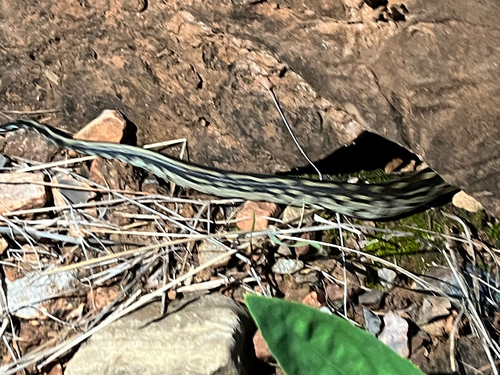
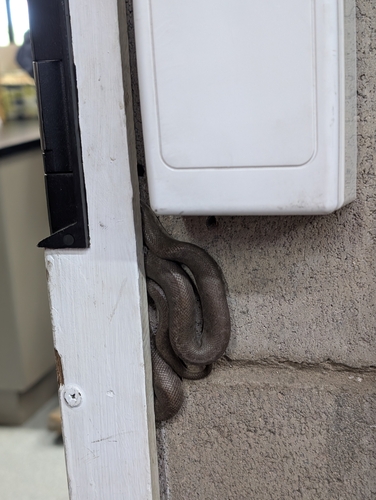
6 photographs of the Water Python. © Jane C Frost.
The Water Python (Liasis fuscus) is a non-venomous snake in the Pythonidae family, recorded in 5 countries.
- Family
- Pythonidae
About the Water Python
The water python (Liasis fuscus) is a python species found in Australia and Papua New Guinea. No subspecies are currently recognized. Like all other pythons, it is not venomous.
Taxonomy
German naturalist Wilhelm Peters described the water python in 1873. It is also known as the brown water python.
Description
Adults average about 6–8 feet (2+ meters) in length, but may reach 10 feet (3.0 meters). Robustly built, it has a long head that is slightly distinct from the neck. The anterior supralabials have thermosensitive pits.
Scalation includes a pair of undivided parietal scales and a single loreal scale on either side of the head. On the body, the dorsal scales number 45-55 at midbody, the ventral scales 270-300, the anal scale is single, with 60-90 paired subcaudal scales.
The color pattern consists of a uniform, iridescent dark blackish brown dorsal color. The belly is a dull to bright yellow that includes the first few rows of dorsal scales. The throat is cream colored, while the upper labials are light gray-brown with dark brown or black spots.
Distribution and habitat
They are found in Australia in the Kimberley district of northern Western Australia from around Broome east through Northern Territory at least as far south as Mataranka to the coast of central Queensland to near Mackay. Also found in the Sir Charles Hardy Islands, on Cornwallis Island in the Torres Strait, and in Papua New Guinea, Western District, in the lower Fly River region at least as far inland as Lake Daviumbo. It can also be found in the southern part of Papuan province of Indonesia. The type locality given is "Port Bowen" (Port Clinton, Queensland, Australia).
The highest population density is reached on the Adelaide River floodplains in the Northern Territory.
Behavior
Despite its common name, many individuals are found far from water for most of the year. They are usually nocturnal, seeking shelter during the day in hollow logs, in riverbank dens, and in vegetation. When surprised, most attempt to flee into any available water.
Feeding
An opportunistic feeder, its diet consists of a variety of vertebrates. However, on the Adelaide River floodplains, this species preys mainly on dusky rats (Rattus colletti).
In North Johnstone River, potential prey of water pythons include long-finned eels, freshwater catfish, bullrout, sooty grunters, spotted tilapia, sleepy cod, and prawns.
Reproduction
Mating takes place in July–August, which is the middle of the dry season. This is followed by a gestation period of about a month, after which females lay an average of 12 eggs. The hatchlings emerge after 57–61 days of incubation and are each about 30 cm in length.
Adapted from Wikipedia, available under CC BY-SA.
Frequently asked: Water Python
- Is the Water Python venomous?
- No. The Water Python (Liasis fuscus) is non-venomous and is not considered dangerous to humans. Like most snakes, it will retreat rather than bite when given the chance.
- Is the Water Python poisonous?
- Snakes are venomous, not poisonous. "Poisonous" means harmful to eat or touch; "venomous" means injecting toxins through a bite. The Water Python is neither poisonous nor venomous.
- Is the Water Python dangerous?
- The Water Python is not dangerous to humans. It has no medically significant venom and bites only defensively if cornered or handled.
- Where does the Water Python live?
- The Water Python has verified records in 5 countries, including Australia, Papua New Guinea, Indonesia. See the distribution section below for its full range.
- What does the Water Python eat?
- An opportunistic feeder, its diet consists of a variety of vertebrates. However, on the Adelaide River floodplains, this species preys mainly on dusky rats (Rattus colletti). In North Johnstone River, potential prey of water pythons include long-finned eels, freshwater catfish, bullrout, sooty grunters, spotted tilapia, sleepy cod, and prawns.
Where it is found
More Pythonidae snakes

Classification
How scientists group this snake, from the broadest category down to the exact species. Each step narrows to its closest relatives.
- OrderThe broad group of scaled reptiles: all snakes and lizards
- Squamata
- FamilyA group of related snakes that share key traits
- Pythonidae
- GenusA close-knit group of very similar species
- Liasis
- SpeciesThis exact snake, named in the two-part scientific name
- Liasis fuscus
Keep learning
- What to Do If You Find a SnakeFound a snake at home or on a trail? Here is how to stay calm, give it space, identify it safely, and know when to call a professional.
- Venomous vs Nonvenomous: How to Tell the DifferenceThe folk rules for telling venomous snakes apart, where each one fails, and why location-based identification beats guessing by sight.
- What Is a Snake? Anatomy and the BasicsA clear overview of what makes a snake a snake: limbless body plan, anatomy, evolution from lizards, species diversity, and why they are ectothermic.
- How to Keep Snakes Out of Your Yard and HomeA practical guide to keeping snakes out of your yard and home using habitat changes that work, plus what to skip and what to do if one shows up.
Distribution from GBIF & iNaturalist. Venom status per CDC. Background: Wikipedia. Informational only. Never handle a snake to identify it.