
Pythonidae
Olive Python
HarmlessLiasis olivaceus
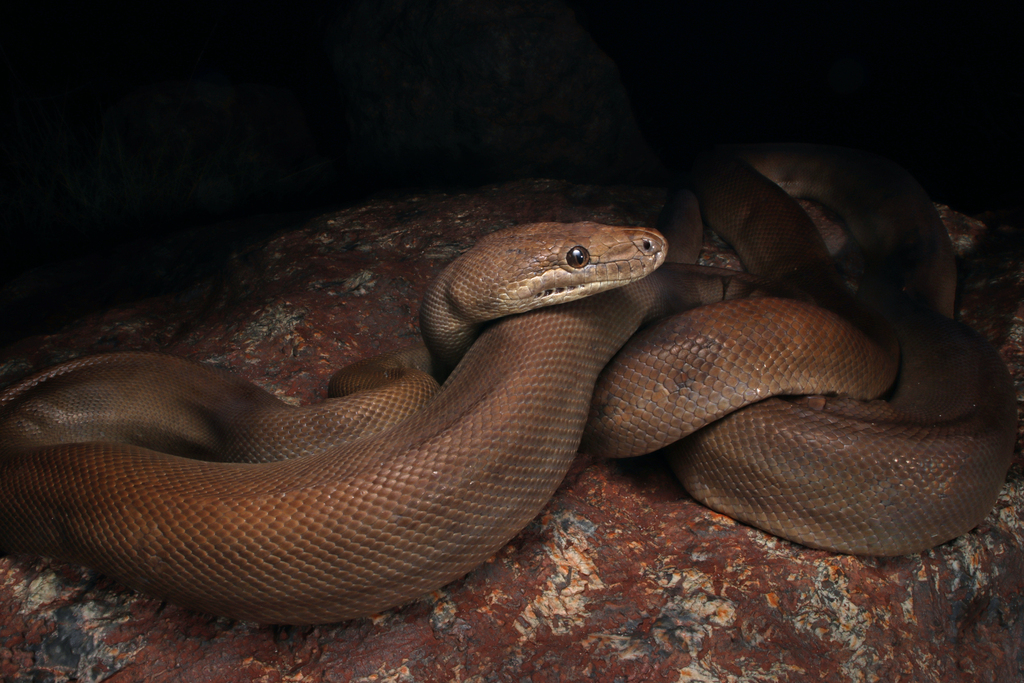
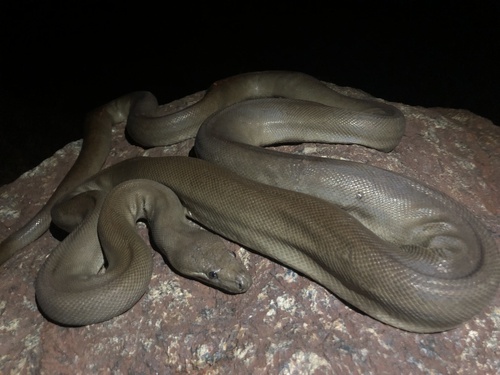
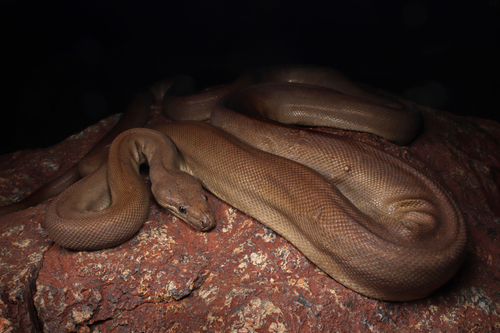
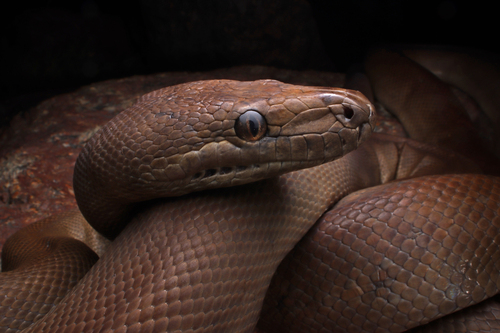
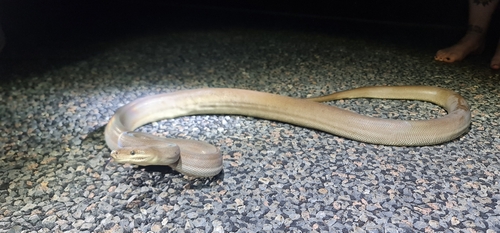
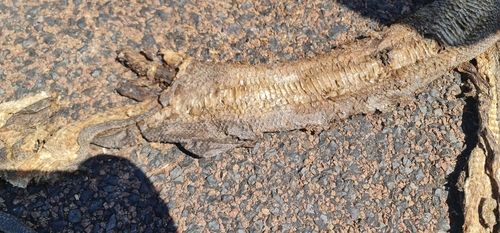
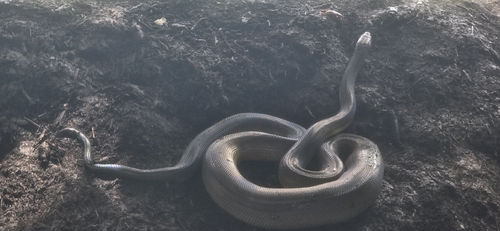
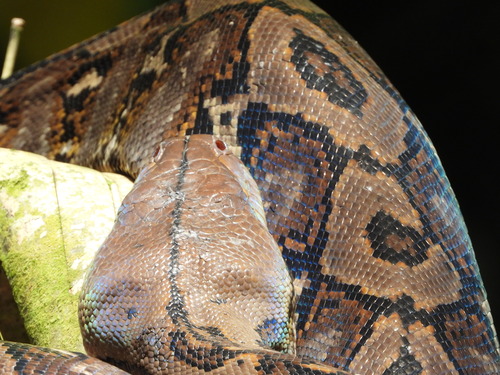
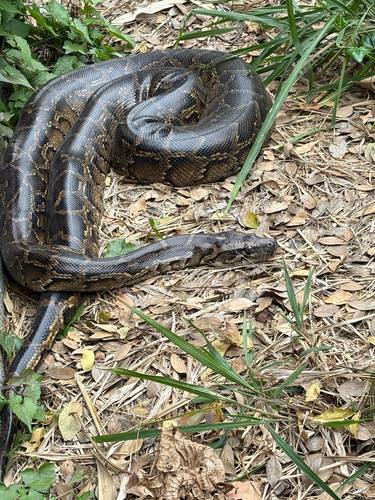
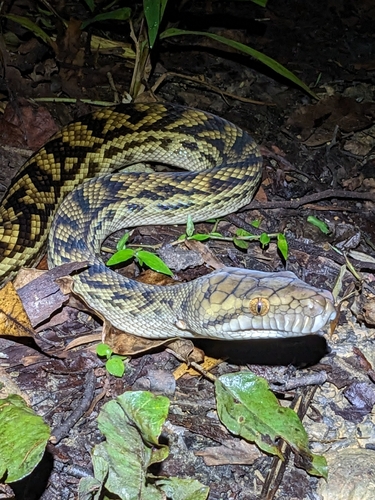
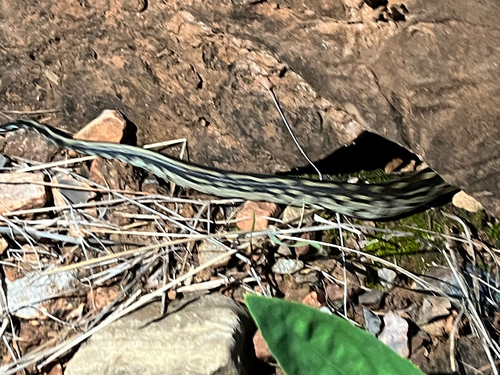
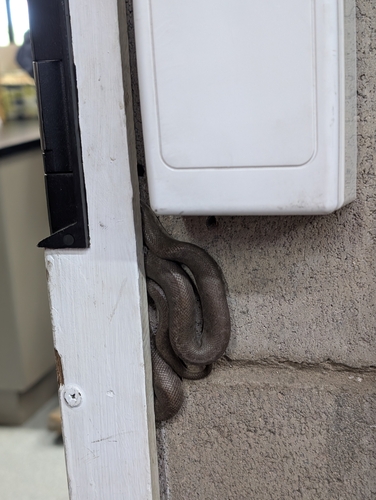
6 photographs of the Olive Python. © Connor Margetts.
The Olive Python (Liasis olivaceus) is a non-venomous snake in the Pythonidae family, recorded in 1 country.
- Family
- Pythonidae
About the Olive Python
The olive python (Liasis olivaceus) is a species of snake in the family Pythonidae. The species is endemic to Australia. Two subspecies are recognized, including the nominate subspecies described here.
Description
With adults reaching over 4 m (13 ft) in total length (including the tail), L. olivaceus is Australia's third-largest snake species (surpassed only by the amethystine python and Oenpelli python). Its high number of dorsal scale rows (61–72 at midbody), makes the skin look smoother than that of other pythons. The number of ventral scales is 355–377. The colour pattern is a uniform chocolate brown to olive green, while the belly is usually cream-coloured. The adult weight is typically 10–20 kilograms (22–44 lb), and a large female can exceed 20 kilograms (44 lb) in captivity.
Unfortunately, this species is occasionally confused with the venomous king brown snake, Pseudechis australis, and may be mistakenly killed based on the misidentification.
Distribution
L. olivaceus is found in Western Australia, the Northern Territory, and Queensland. The type locality given is "North Australia; Port Essington" (Northern Territory, Australia).
Habitat
The olive python occurs in rocky areas, gorges, and especially rocky areas near sources of water. Typically, shelter is sought in caves and rock crevices, but individuals have also been found in hollow logs and burrows under rocks.
Diet
The diet of L. olivaceus consists of birds (ducks and spinifex pigeons), mammals (including rock wallabies and fruit bats), and other reptiles. It prefers to lie in wait next to an animal trail to ambush its prey. Alternatively, it is a strong swimmer and also hunts in waterholes, striking at prey from under the water.
It is also known to prey on monitor lizards and juvenile freshwater crocodiles.
Reproduction
Mating activity of olive pythons starts in May and continues until mid-July. When successful, this is followed by a gestation period of 81–85 days, after which the oviparous female lays 12–40 eggs in late spring. The average clutch size is around 19 eggs. The hatchlings emerge after an incubation period around 50 days, each measuring about 35 cm in length.
Subspecies
Captivity
The olive python is often kept as a pet and is bred in captivity. It is technically an advanced-level species due to its size, habitat requirements, and strong feeding response, requiring a terrarium of a minimum of 2.4 metres (8 ft) long, by 1 metre (3 ft) high and 1 metre (3 ft) wide. If raised properly, it is noted to be friendly, curious, and calm. In removing it from its enclosure, snake hooks be used so as to prevent the feeding response from being triggered, and once out, it can generally be freely handled calmly due to its placid nature.
Images
Adapted from Wikipedia, available under CC BY-SA.
Frequently asked: Olive Python
- Is the Olive Python venomous?
- No. The Olive Python (Liasis olivaceus) is non-venomous and is not considered dangerous to humans. Like most snakes, it will retreat rather than bite when given the chance.
- Is the Olive Python poisonous?
- Snakes are venomous, not poisonous. "Poisonous" means harmful to eat or touch; "venomous" means injecting toxins through a bite. The Olive Python is neither poisonous nor venomous.
- Is the Olive Python dangerous?
- The Olive Python is not dangerous to humans. It has no medically significant venom and bites only defensively if cornered or handled.
- Where does the Olive Python live?
- The Olive Python has verified records in 1 country, including Australia. See the distribution section below for its full range.
- What does the Olive Python eat?
- The diet of L. olivaceus consists of birds (ducks and spinifex pigeons), mammals (including rock wallabies and fruit bats), and other reptiles. It prefers to lie in wait next to an animal trail to ambush its prey. Alternatively, it is a strong swimmer and also hunts in waterholes, striking at prey from under the water. It is also known to prey on monitor lizards and juvenile freshwater crocodiles.
Where it is found
More Pythonidae snakes

Classification
How scientists group this snake, from the broadest category down to the exact species. Each step narrows to its closest relatives.
- OrderThe broad group of scaled reptiles: all snakes and lizards
- Squamata
- FamilyA group of related snakes that share key traits
- Pythonidae
- GenusA close-knit group of very similar species
- Liasis
- SpeciesThis exact snake, named in the two-part scientific name
- Liasis olivaceus
Keep learning
- What to Do If You Find a SnakeFound a snake at home or on a trail? Here is how to stay calm, give it space, identify it safely, and know when to call a professional.
- Venomous vs Nonvenomous: How to Tell the DifferenceThe folk rules for telling venomous snakes apart, where each one fails, and why location-based identification beats guessing by sight.
- What Is a Snake? Anatomy and the BasicsA clear overview of what makes a snake a snake: limbless body plan, anatomy, evolution from lizards, species diversity, and why they are ectothermic.
- How to Keep Snakes Out of Your Yard and HomeA practical guide to keeping snakes out of your yard and home using habitat changes that work, plus what to skip and what to do if one shows up.
Distribution from GBIF & iNaturalist. Venom status per CDC. Background: Wikipedia. Informational only. Never handle a snake to identify it.